Las Vegas has a name for big time, big money gamblers. They are called whales, and they are the lifeblood of every casino on the Strip. When a whale lands in your casino and starts betting tens of thousands (or more!) dollars at a time, executives do whatever it takes to keep him or her happy and gambling in the casino.
In terms of whales, Nebraska-born businessman Terry Watanabe was a whale of a whale. Actually, he was a whale of a whale, of a whale, of a whale of a whale.
During a year-long gambling streak, Terry lost a mind-melting $204 million at two Vegas casinos. And it didn't take him a decade. He blew it all in ONE YEAR.
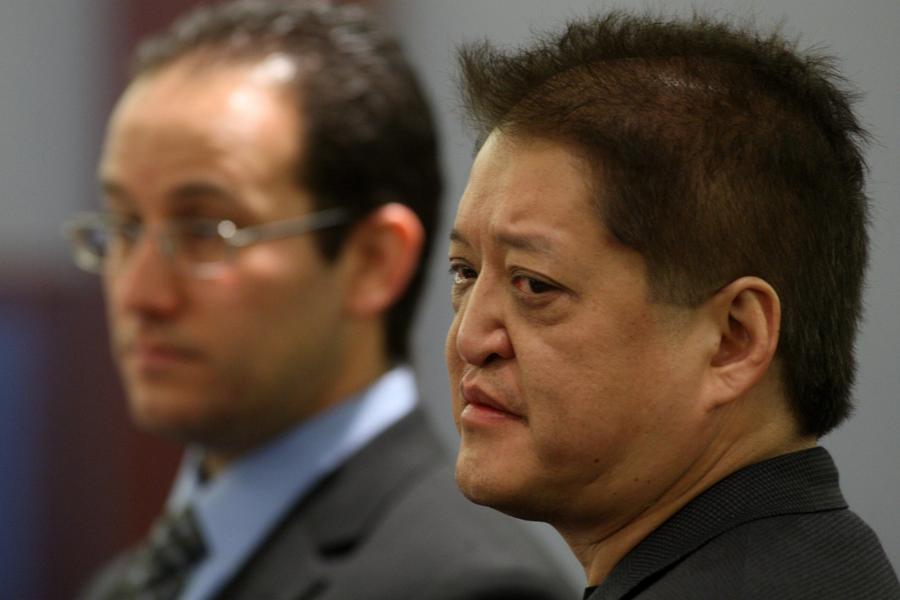
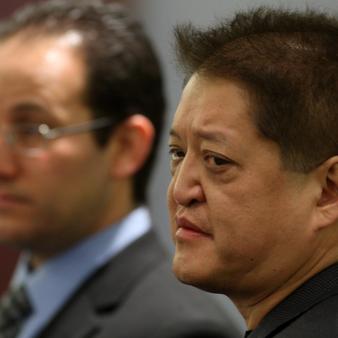
(Photo by STEVE MARCUS, Licensed via LAS VEGAS SUN)
Who is Terry Watanabe and How Was he Rich?
Terry Watanabe was born in 1957 in Omaha, Nebraska. His father Harry founded the plastic trinket business Oriental Trading Company in 1932 after immigrating to the U.S. from Japan. The company deals in plastic trinkets, party decorations, and supplies. As a child Terry and his siblings worked with their father after school. His mom was the company secretary. It was a family business.
Terry's father asked him if he wanted to take over the company when he was 15 years old. This is the Japanese custom for the first-born son. When he turned 20 years old, he was named CEO of Oriental Trading, Co. Watanabe has been described as a guarded and shy man during this period. He also exhibited a remarkable sense of marketing in choosing which products to integrate into the Oriental Trading catalogue. Terry grew his father's modest toy and trinket business into a thriving mail order empire that was bringing in $300 million in revenue per year by 2000.
As good as he was at his day job, it consumed his life to the exclusion of everything else. He traveled abroad for long periods of time checking out merchandise in far flung countries. He never had a serious romantic relationship, never married, and never had children. His life was the Oriental Trading Company.
In 1995, Watanabe bought an 18,000 square foot home in Omaha for $1.8 million. He was a major donor to Omaha philanthropies, donating millions to AIDS charities and services. In 2000, Watanabe sold Oriental Trading Co. for an undisclosed sum. His plans for life after the sale were to become even more involved philanthropically and have more fun.
"If it's not fun, it's not worth doing," Watanabe told the Omaha World-Herald in 2000.
Casinos Are Fun
Unfortunately Terry Watanabe found the life of a philanthropist to be dull. He'd invested so much of his life in Oriental Trading Co. that he didn't know what to do with all his newfound free time. And then he discovered casinos.
Across the river from Omaha there is a Harrah's casino in Council Bluffs, Iowa. In 2003, Watanabe started gambling there to pass the time. He quickly became one of the casino's best customers.
In 2005, Watanabe began traveling to Las Vegas. Not surprisingly, the bright lights and glitter of Vegas only served to make his gambling and drinking grow exponentially. Within a year, Watanabe was living and gambling pretty much full-time at the Wynn Las Vegas. His heavy betting eventually caught the eye of then-owner Steve Wynn, who met with Watanabe and came to the conclusion that he was not only a compulsive gambler, but also an alcoholic. Wynn banned Watanabe from his casino, not wanting to run afoul of Nevada Gaming Control Board rules that stipulate it is illegal for casinos to allow visibly intoxicated and abusive people to gamble.
But never fear! Las Vegas is chock full of casinos that are eager to feed any alcoholic gambling addict's needs.
Harrah's offered Watanabe lucrative incentives to come and gamble at their casinos. The casino offered a stipend of $12,500 a month for airfare, tickets exclusive rock concerts and shows. It also gave him a $500,000 credit to use at the gift stores. To top it all off, Watanabe was given 15% cash back on table losses greater than $500,000.
Watanabe had a free three-bedroom suite at Caesars. He was provided a special brand of vodka, and was surrounded by Harrah's-supplied assistants at all times to attend to his every whim and need. He even had seven-course meals from the casino's Bradley Ogden restaurant served to him while he was at the tables gambling.
With all of these extras provided to make the whale feel at home, who is to blame for Terry's massive losses? Does the casino hold some responsibility in providing a sort of golden handcuff situation that made it impossible for a man like Terry Watanabe to walk away? Remember, he was known as a guarded and shy workaholic without many personal relationships outside of his siblings. In Las Vegas, he was King. You can understand how that alone might be extremely intoxicating.
Watanabe was an unusual sort of whale. While most high rollers prefer higher stakes games like baccarat, poker, even blackjack, Watanabe was drawn to games with low odds like roulette and slot machines. They call this a "house player" in Vegas, because slots and roulette have terrible odds for the player. Watanabe played blackjack as well, but did it with such little skill and strategy that he basically turned it into a house game.
Terry would frequently gamble for 24 straight hours, losing millions of dollars in a single day's binge. He played three blackjack hands simultaneously that had a $50,000 limit for each hand. Harrah's increased his credit line to $17 million at one point. This is not an unusual practice for high rollers.
At his peak in 2006, Terry Watanabe was consistently losing…
$5 million a day
At some point employees at Caesars and Rio began to voice concerns about Watanabe to managers. He was often severely intoxicated and incoherent. Under Nevada Gaming Controls, the casino's responsibility would be to immediately cut off the intoxicated gambler and escort him from the premises.
Clearly Harrah's didn't do this. Watanabe was their cash cow… or cash whale, as the case may be.
There was no official policy to keep Watanabe drunk and gambling. However, a picture of him was hung in employee back rooms. They all knew who he was and knew Harrah's wanted to keep one of the most lucrative gamblers in history in their casinos.
His situation is indicative of the strange relationships casinos have with their whales. They lure them in with incentives and free suites and unlimited booze and credit. They get private jet travel, a team of personal handlers to attend to every need. Competition for these high rollers is fierce, but managing them is fraught with trouble. Many are compulsive gamblers with more money than sense whose losses – and therefore lives – spin more and more out of control with every spin of the roulette wheel, every hand of blackjack dealt.
A few gamblers, including Watanabe, have tried to turn the blame around on casinos by filing civil suits. Such attempts are rarely successful.
Terry was generous with casino employees—handing out bundles of $100 bills that totaled as much as $20,000 for tips along with other lavish gifts.
Halfway through the year, Terry had lost more than $50 million.
A few months later he had lost more than $100 million.
When his lawyers finally attempted to tally the annual losses, they pegged the number at $127 million. After a lawsuit was filed and Harrah's was forced to turn over their internal records, Terry's lawyers concluded that the real number was a staggering…
$204 million
Keep in mind, that's $204 million lost in ONE YEAR.
Watanabe opened up to his sister and brother about his gambling losses over Thanksgiving in 2007 when they visited him in Las Vegas. They had no idea of the extent of his gambling problem before then. Two weeks after that admission, his sister returned to Las Vegas, packed up his stuff, and brought him home to Omaha. He entered a residential treatment facility and has not entered a casino since.
Watanabe sold his Omaha mansion for $2.66 million in 2008 and moved to San Francisco.
Amazingly, he actually paid back $112 million of his losses before filing a civil suit against Harrah's. His suit alleged that casino staff plied him with liquor as part of a well orchestrated plan to keep him gambling. Watanabe also insisted that the casino reneged on their promises to give him cash back on certain losses.
In 2009, the Clark County District Attorney's office charged Watanabe with four felony counts of theft and intent to defraud Harrah's of $14.7 million.
In 2010, the criminal charges against Watanabe were dismissed and he entered into arbitration with Harrah's to resolve his additional debts. The undisclosed settlement brought an end to the largest criminal case ever filed by the Clark County District Attorney's office.
To this day, Terry Watanabe's yearlong $204 million gambling binge is the single biggest losing streak by an individual in Las Vegas history. It might even be the largest gambling loss by an individual in any casino worldwide.