Showing posts with label 1967. Show all posts

Tuesday, September 2, 2025

 The Battle of Dak To

The Battle of Dak To took place between 3 and 22 November, and was one of the major battles of the Vietnam War and one of the bloodiest.

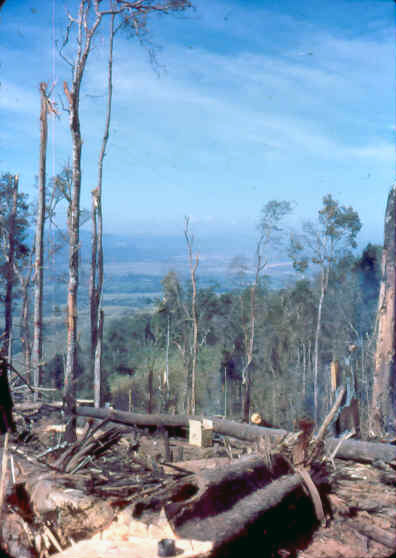
In late October, intelligence reports indicated that a large NVA force was preparing to attack US military units and installations at Dak To, located in Kontum Province, and close to the tri-border region where South Vietnam, Laos and Cambodia meet. Dak To lies on a flat valley floor adjacent to a river, and is completely surrounded by mountains with waves of ridgelines and peaks that stretch for many miles in all directions. Some of these ridges and peaks vary between 2500 and 4000 feet in height, and the slopes are very steep and covered with double and triple-canopy trees that are from 100 to 200 feet high and up to four feet in diameter. November was the beginning of the monsoon season, and temperatures in the mountains could reach 95 degrees during the day and drop to as low as 55 degrees at night.

An NVA soldier captured during the battle stated that all of October was used to prepare fortified positions on the key ridgelines surrounding Dak To, and carrying munitions and supplies to these positions from Laos. On 2 November, an NVA reconnaissance sergeant surrendered to Allied Forces at Dak To. When interrogated, he provided a detailed and accurate battle plan for the attack on the Dak To – Tan Canh area, which was to be conducted by four infantry regiments and one artillery regiment of the 1st NVA Division. Several other NVA formations participated in this large-scale operation and the total enemy strength was about 12,000 soldiers. The main NVA objective was to compel the US senior headquarters, Military Assistance Command Vietnam (MACV) to send reinforcements to Dak To and then to inflict heavy casualties on these units. Documents captured during the battle show that each NVA infantry regiment was assigned the mission of destroying one US battalion. A captured NVA battalion executive officer had a hand written directive in his pocket stating that he would defend his position to the last man. All of this demonstrates the fierce determination of the enemy and for the NVA leadership in Hanoi, this was an important political confrontation designed to send a crystal-clear signal on the vulnerability of US forces and that the NVA had the capability to launch large-scale attacks against American forces and installations.  

MACV responded to this enemy encirclement of Dak To – Tan Canh area by deploying several units to reinforce the US 4th Infantry Division. These formations were placed under the operational control of the 4th Infantry Division and included the 173rd Airborne Brigade and our unit, 1st Brigade, 1st Cavalry Division. According to a secret message prepared by MACV Deputy Commander, General Creighton Abrams (date/time 221325Z Nov 67), the 1st Brigade units arrived at Dak To as follows: 1st Battalion, 8th Cavalry arrived on 10 November; 1st Battalion, 12th Cavalry on 11 November; 1st Brigade Headquarters and our battalion, 2nd Battalion, 8th Cavalry on 14 November.  

The fighting had started on 4 November when US 4th Infantry Division units attacked to secure the ridges to the south of Dak To. Three days later, 173rd Airborne Brigade units pushed west and then southwest, while South Vietnamese Army (ARVN) units pushed north and east. All of these friendly units met stiff resistance from sizeable enemy forces occupying fortified positions on the tops of the peaks and ridges, which confirmed the accuracy of the detailed battle plan obtained from the NVA deserter. In conjunction with these ground attacks, the US initiated a massive bombardment of enemy positions employing all available means. The extent of this massive bombardment is evident from the munitions expended during the Battle of Dak To: 257 B-52 strikes, 2,096 tactical air sorties and a total of 151,000 artillery rounds. It is hard to imagine how anyone could survive such a  bombing inferno, however, during the course of the battle we discovered that some of the NVA fortified positions consisted of three concentric trenches around the top of a mountain and they had dug a series of holes deep into the mountain which they used as bomb shelters.

There were two phases to the Battle of Dak To; the first phase was between 4-12 November, and the second and most violent phase was from 17-22 November. According to General Abrahm’s message, our battalion arrived in the area on 14 November, however, the 4th Infantry Division Combat After Action Report states that our Battalion arrived on 18 November (other evidence supports our deployment on 14 November). The latter report went on to state that our battalion was deployed “into the hills east of TAN CANH and encountered strong enemy defences. The battalion operated in the area six days, again blasting the enemy out”.
 

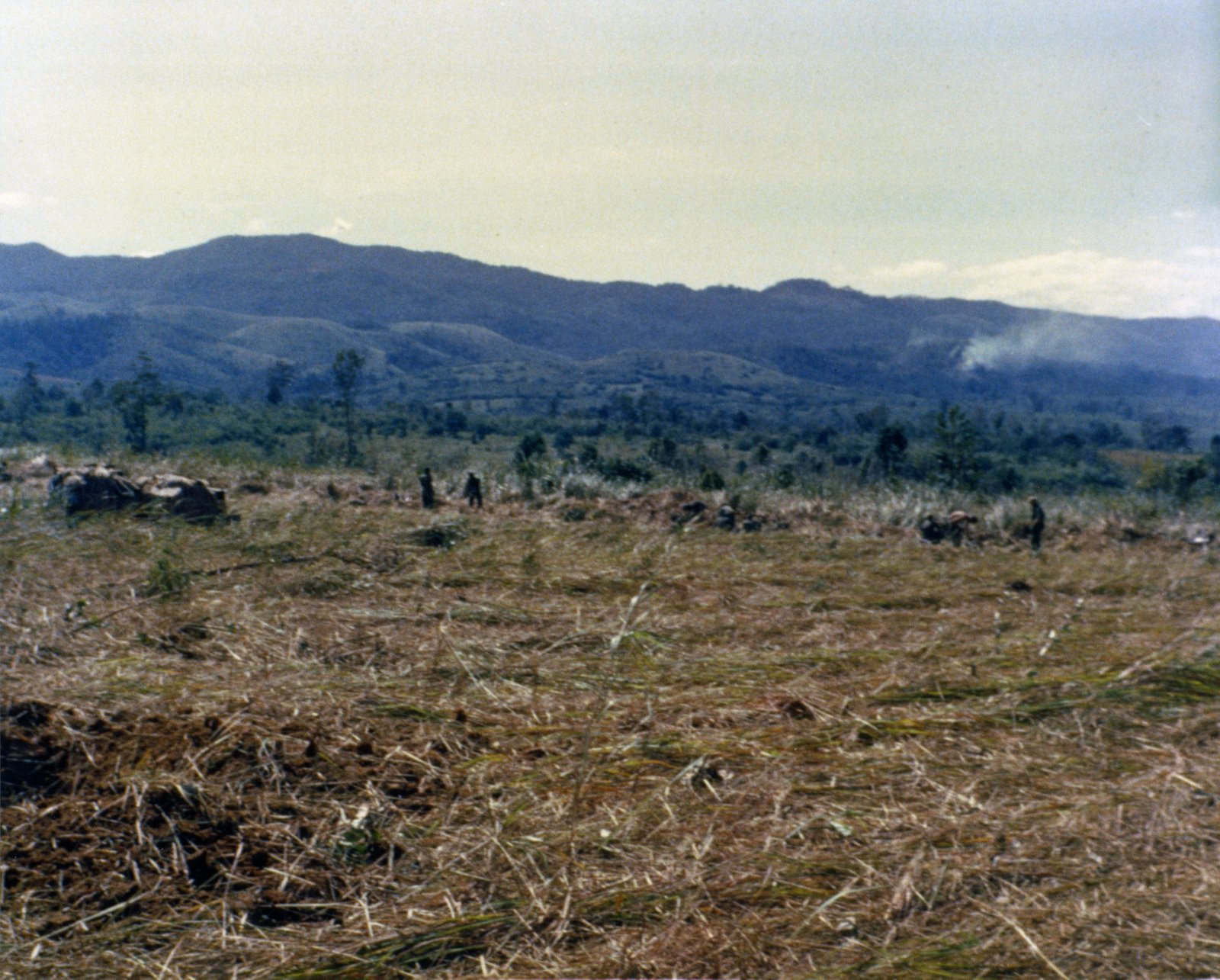
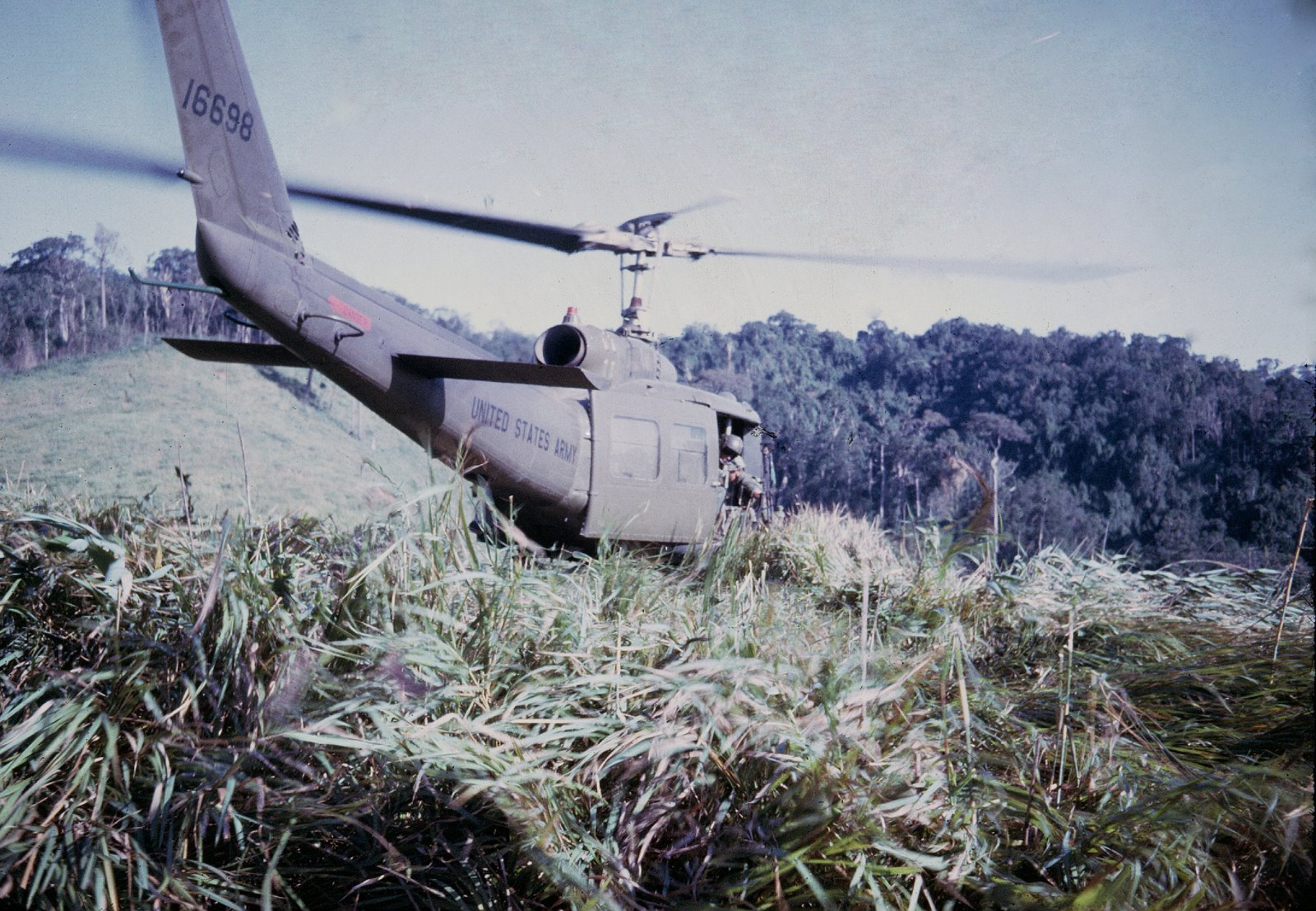
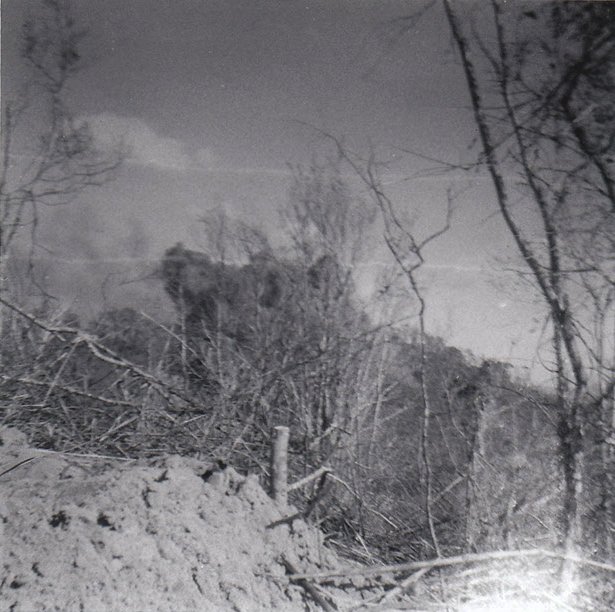
 LANDING ZONE ON ARRIVAL AT DAK TO


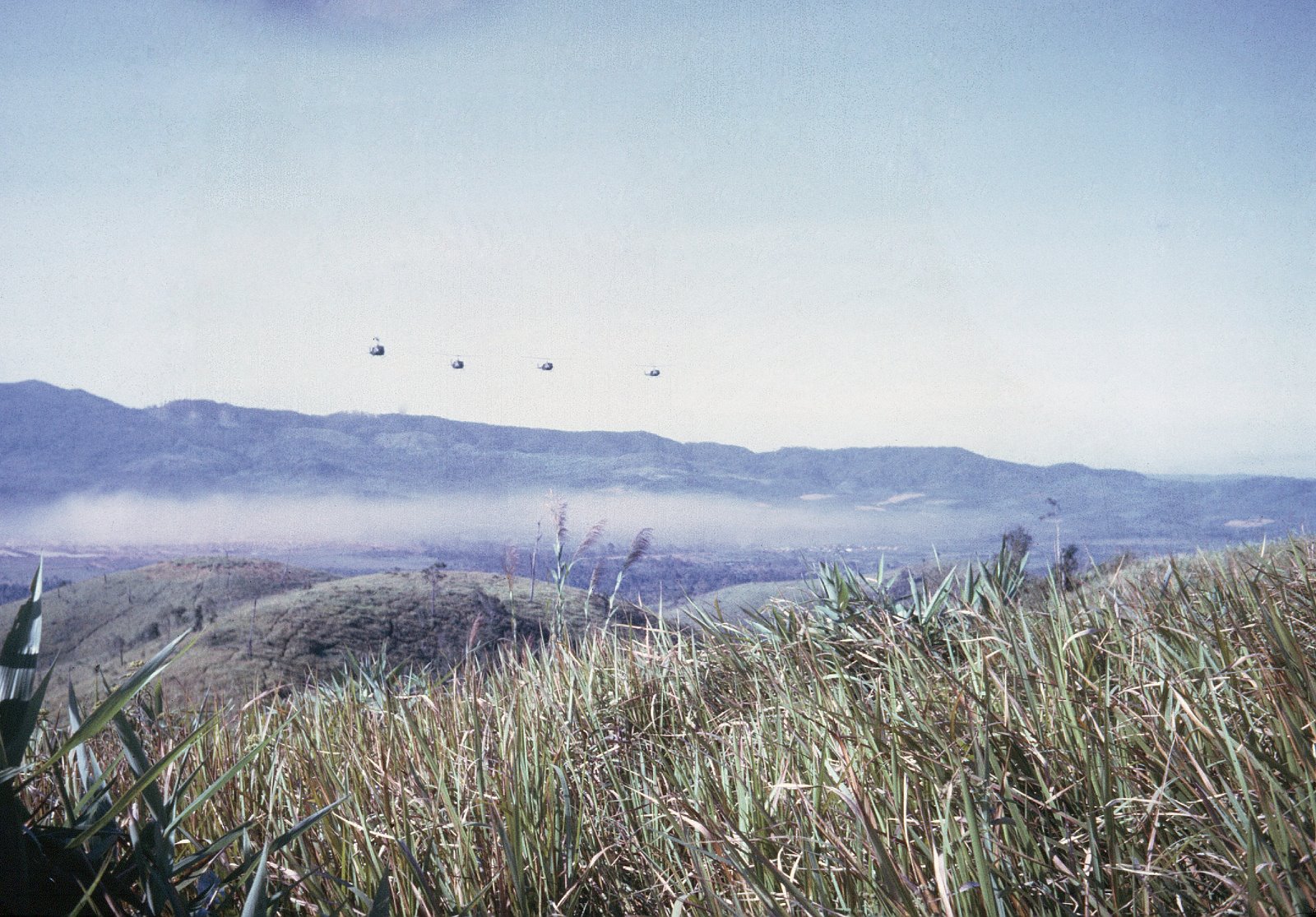
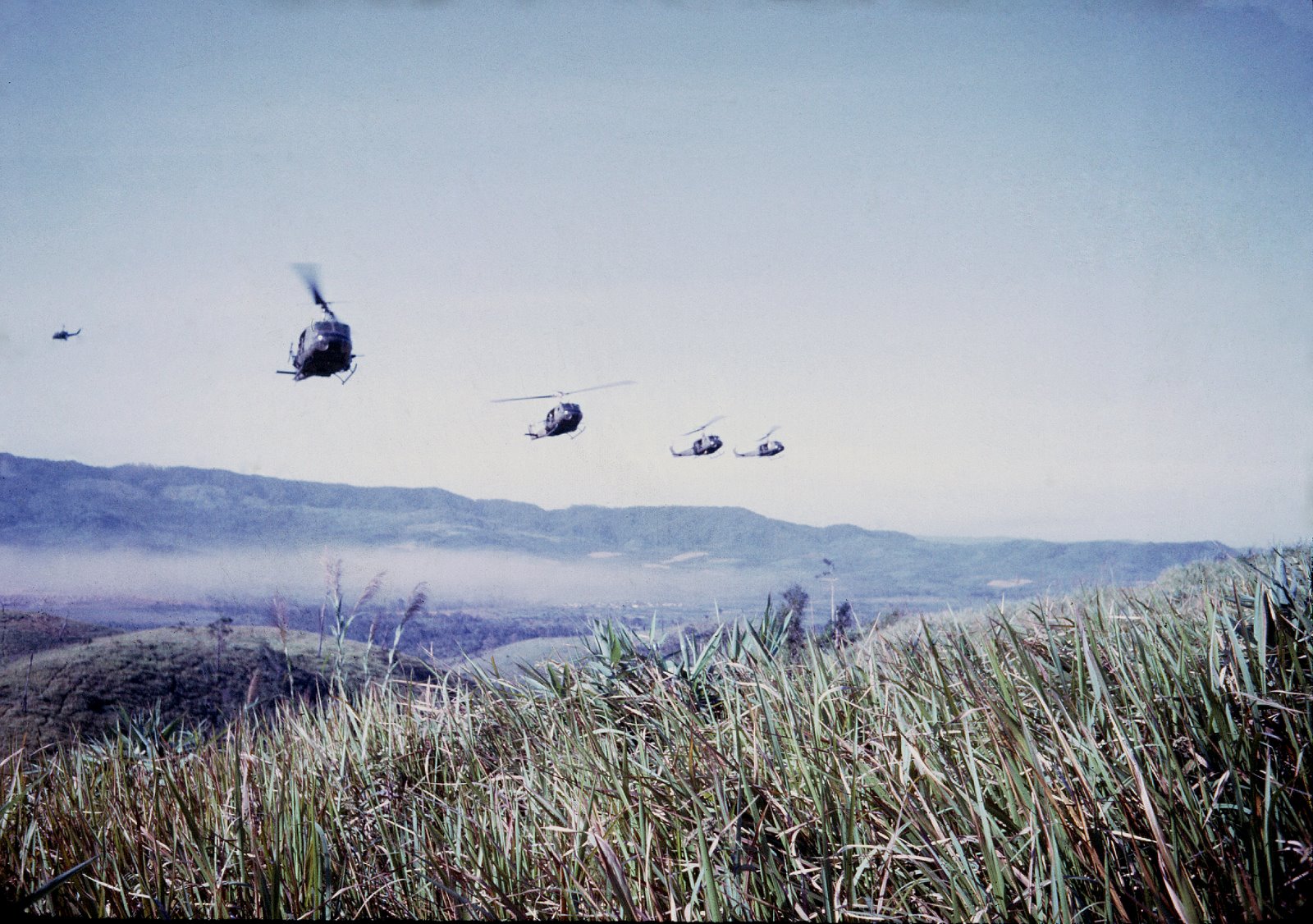
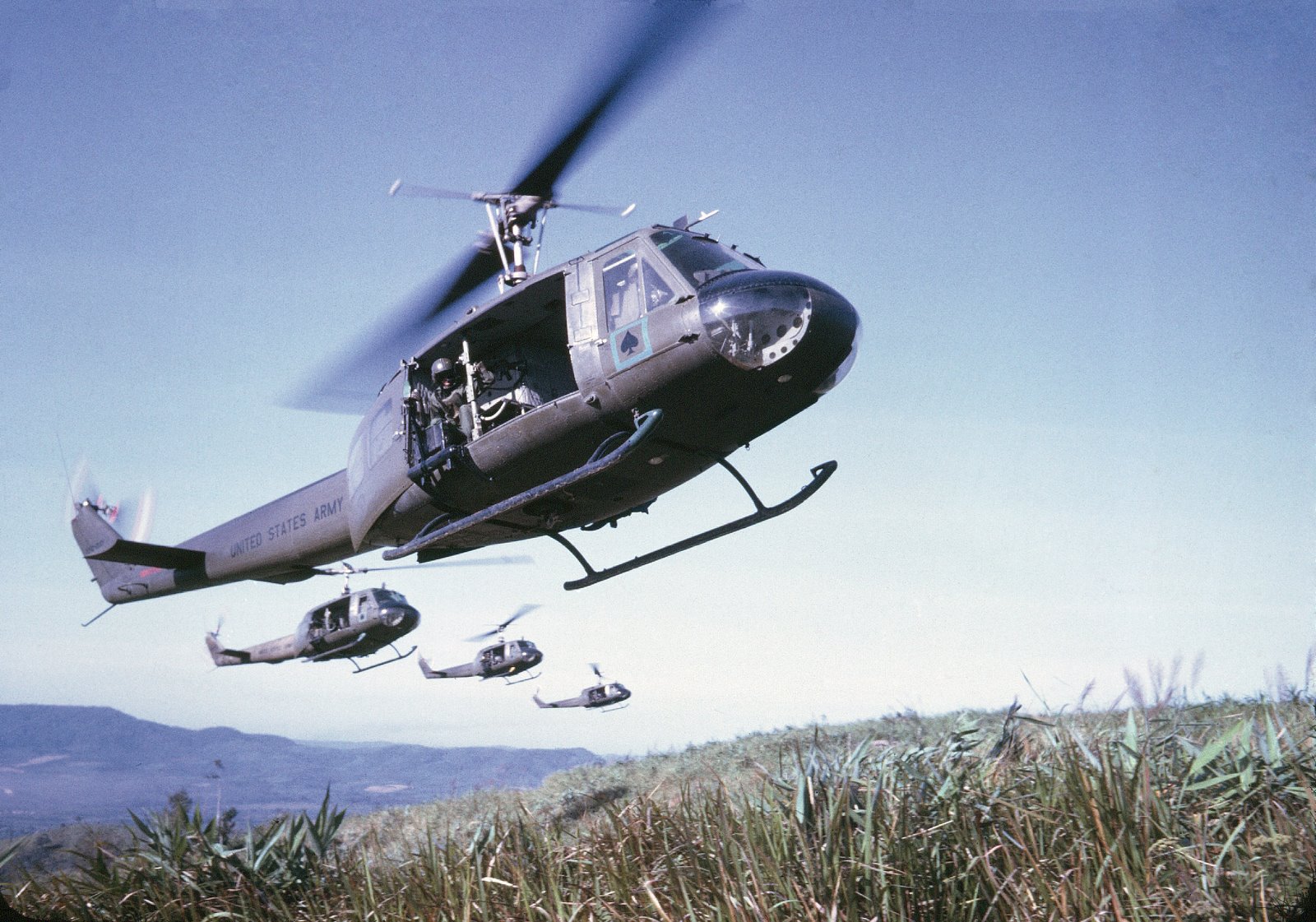
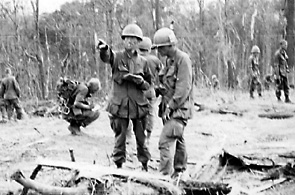
EXTRACTION OF BRAVO COMPANY 17-18 NOV (LOOKING TOWARDS SPECIAL FORCES CAMP)

Thanks to Fred Fish for the above photos

19 November will always be remembered by the many relatives who lost a loved one on this date at Dak To and by the many veterans who participated in this battle. The strongest enemy resistance was on the infamous Hill 875, located southwest of Dak To where two battalions of the 173rd Airborne Brigade, the 2nd Battalion and 4th Battalion, 503rd Infantry Regiment, fought for several days to seize this hilltop. The attack began on 19 November and Hill 875 was finally secured on Thanksgiving Day, 23 November. Both battalions suffered very heavy casualties and the fighting was so violent that the infantry companies were calling in artillery and air strikes 
dangerously close to their own positions. The casualty figures for these two battalions were158 killed and 402 wounded in action.


Bravo Company was also engaged in a fierce firefight on Hill 1034 on 19 Nov, but first some relevant background details from the 1st Bde, 1st ACD, Combat After Action Report, dated 1 Dec 1967. The 1st Brigade Task Force that deployed to Dak To consisted of two battalions; 2nd Bn 8th Cav Regt and 1st Bn 12th Cav Regt. Major supporting units included; 2-19th  Arty(-), A/2-20 Arty (ARA), B/229th AH Co(-),  and 228th ASH Co(-). Other supporting units included platoons or detachments of MPs, scout dogs, pathfinders, engineers, Military Intelligence, Tactical Air Control Party, and several others. 1st Brigade combat units deployed to Dak To on 14 Nov by C-130 from LZ English. A total of 37 C-130 sorties were required to move combat units and their essential equipment, while logistical and other units moved by road with an overnight at An Khe.

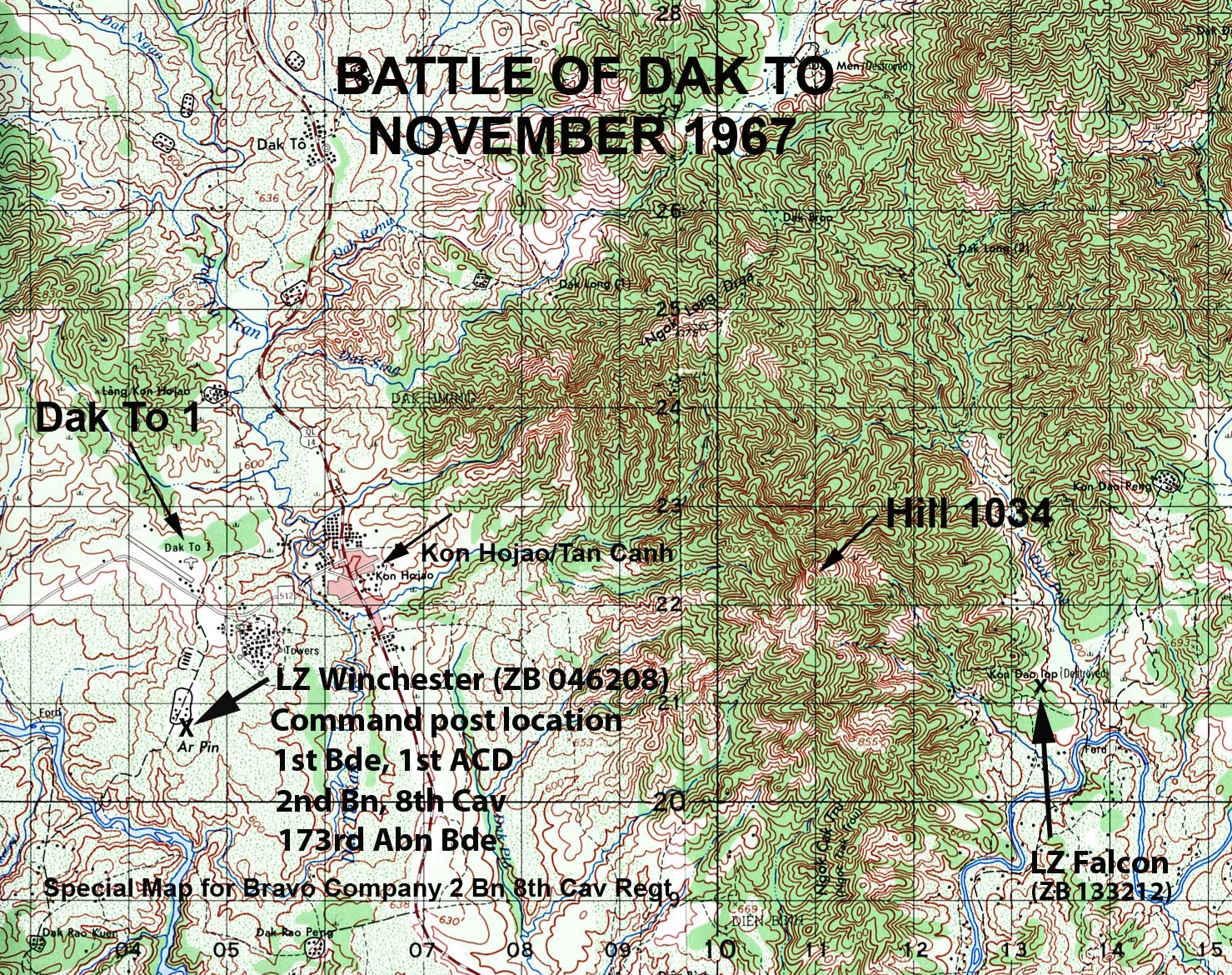
On 15 Nov, the 2-8th Cav initially released two companies to the 1st Bde, 4th Inf Div for the defense of Dak To. On 16 Nov, the 2-8th Cav Command Post moved from Kontum to the Dak To area (LZ Winchester), resumed control of their rifle companies and operated under the 1st Bde, 4th Div to assist in the defense of Dak To. D Co worked generally to the south, B Co to the north and C Co to the east of Dak To. C Co made contact with estimated NVA company at ZB 110210 and conducted a two day battle finally securing the hill top. A Co, 2-8th Cav, remained under the operational control of the 1st Bde, 1st ACD, and secured the proposed forward CP location at LZ Polly. It was determined on 16 Nov that the proposed forward CP location for the 1st Bde , 1st ACD, would not be at LZ Polly but instead be at LZ Winchester (ZB 046208), which was the location for the 2-8thCav CP and the 173d Abn Bde Rear CP.

On 19 Nov, the 2-8th  Cav (-) returned to the operational control of the 1st Bde, 1st ACD, and the battalion was assigned an area of operation in the general vicinity of where C Co had contact with enemy forces at ZB110210. This area of operation was called the WHITEHORSE AO.

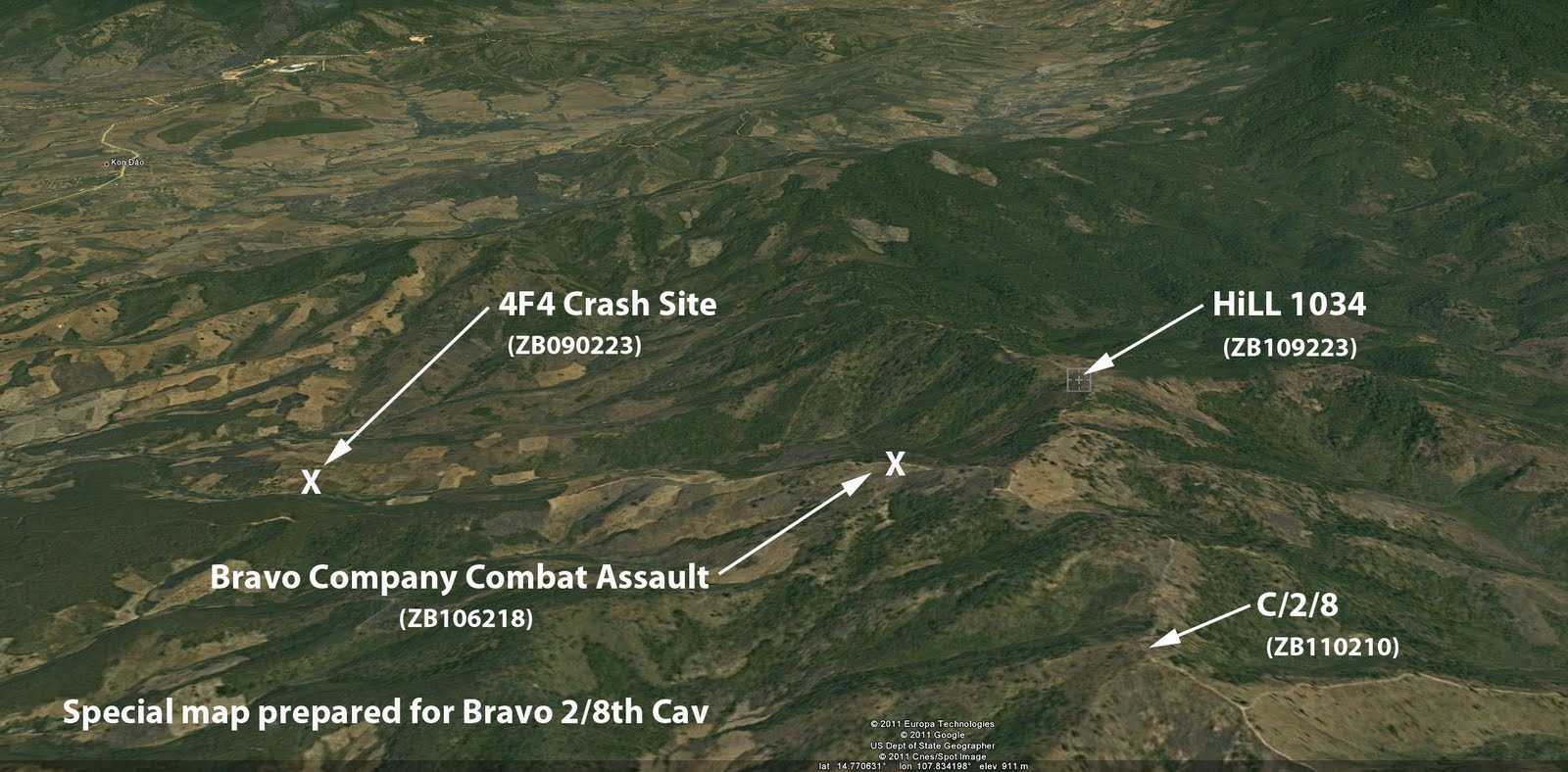
On 19 Nov, B Co conducted a combat assault on a narrow ridgeline at ZB 106218 with the mission of securing Hill 1034, located at ZB 109223. Bravo Company was not aware of any intelligence indicating that enemy forces had established extensive fortifications on Hill 1034. For their defense of Hill 1034 and to survive massive bombardments by US artillery and air-strikes, enemy forces had established a horseshoe defense consisting of an elaborate bunker system with connecting tunnels and the whole complex was skillfully camouflaged. Immediately prior to the beginning of this firefight, the lead elements of Blackfoot Platoon had reached the southern tip of Hill 1034 and had started occupying hasty defense positions, while the remainder of Bravo Company continued to close on Hill 1034. It is highly likely that Blackfoot approached Hill 1034 from one direction, while Cheyenne was the lead platoon for the remainder of Bravo Company who approached Hill 1034 from another direction. The command group with Captain Decker and his radio operator, SP4 Fowler, was located with Cheyenne.

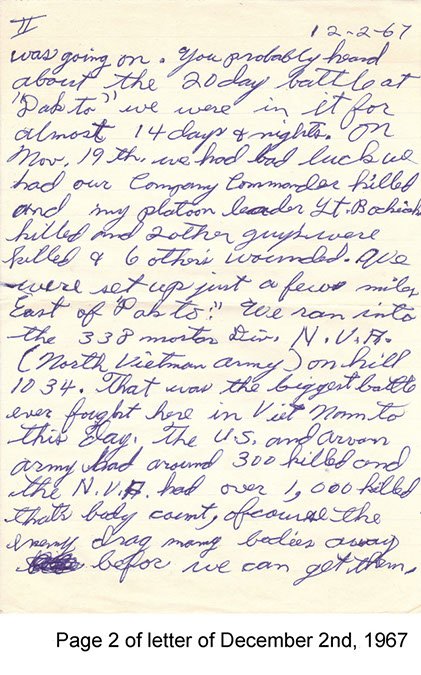
This was the situation when Bravo came under intense and accurate fire from enemy forces occupying fortified positions on Hill 1034. It all started abruptly when enemy forces engaged Blackfoot from well-camouflaged fighting positions and our first casualty was Lieutenant Rodreick. In the course of a short period, Bravo Company sustained 10 casualties, representing 9% of our field strength. Among those killed in action was Captain David Decker, Commanding Officer of Bravo Company; Specialist William Fowler, Captain Decker’s radio operator; and Lieutenant Ronald Rodreick, Blackfoot Platoon Leader.  Specialist Thomas Olearnick, who was the pointman for Cheyenne on the approach to Hill 1034, was listed as missing in action but his status was later changed to “died while missing”. Based on a letter written home by one of our troopers, Bravo Company had a total of six troopers wounded during this action and they were medevaced by helicopters. Aztec Platoon was in a position to provide covering fire while Blackfoot and Cheyenne withdrew from the top of Hill 1034 with our casualties. The assault on Hill 1034 was suspended while we evacuated all of our casualties and it was also necessary to reorganize due to the loss of several leaders.     

Late in the afternoon of 19 Nov, B Co was extracted from ZB 106218 and inserted in the vicinity of C Co at ZB 110210. During the evening, night and the morning of 20 Nov, the entire ridge complex from ZB 110210 to ZB 103237 was pounded by artillery and air strikes. Estimates of the enemy strength on the ridgelines, based on contacts by B and C Co, 2-8th Cav and visual sightings by aerial observers, indicated a well dug-in enemy battalion.

During the night of 19-20 Nov, a F4F aircraft conducting an air strike on Hill 1034 received ground to air fire and crashed in the vicinity of ZB 09022. One of the pilots ejected safely and ARA gunships covered his extraction immediately after the crash. D Co returned to 2-8th Cav control on 20 Nov and conducted a combat assault to secure the wreckage of the downed aircraft, recover the body of the pilot who failed to eject and to extract sensitive items of equipment.

Early in the morning of 20 November, Captain Peter O’Sullivan assumed command of Bravo Company and landed at the company location at ZB 110210 with two replacement platoon leaders; Lt. Thomas Beach (Cheyenne) and Lt. Gus Pappas (Mohawk). On the same date, Lt. Thomas De Young (Blackfoot) was transferred from Charlie to Bravo Company to provide Bravo Company with a combat experienced platoon leader. Another replacement platoon leader, Lt. Charles Ready (Aztec), joined Bravo Company sometime during the afternoon of 19 Nov. The former platoon leader of Aztec, Lt. Bill Berry, was assigned duties as Bravo Company Executive Officer on 16 November. Another former platoon leader (Cheyenne) of Bravo Company, Lt. Alfred Lehman, was assigned to our Battalion Headquarters Company with an effective date of 21 November. 

The following two photos on the bombing of Hill 1034 were taken during the morning of 20 Nov from our location at ZB 110210 and before we assaulted the hill. 


BOMBING OF HILL 1034

Thanks to Ralph Mercado

BOMBING OF HILL 1034

Thanks to Jimmie Hentkowski

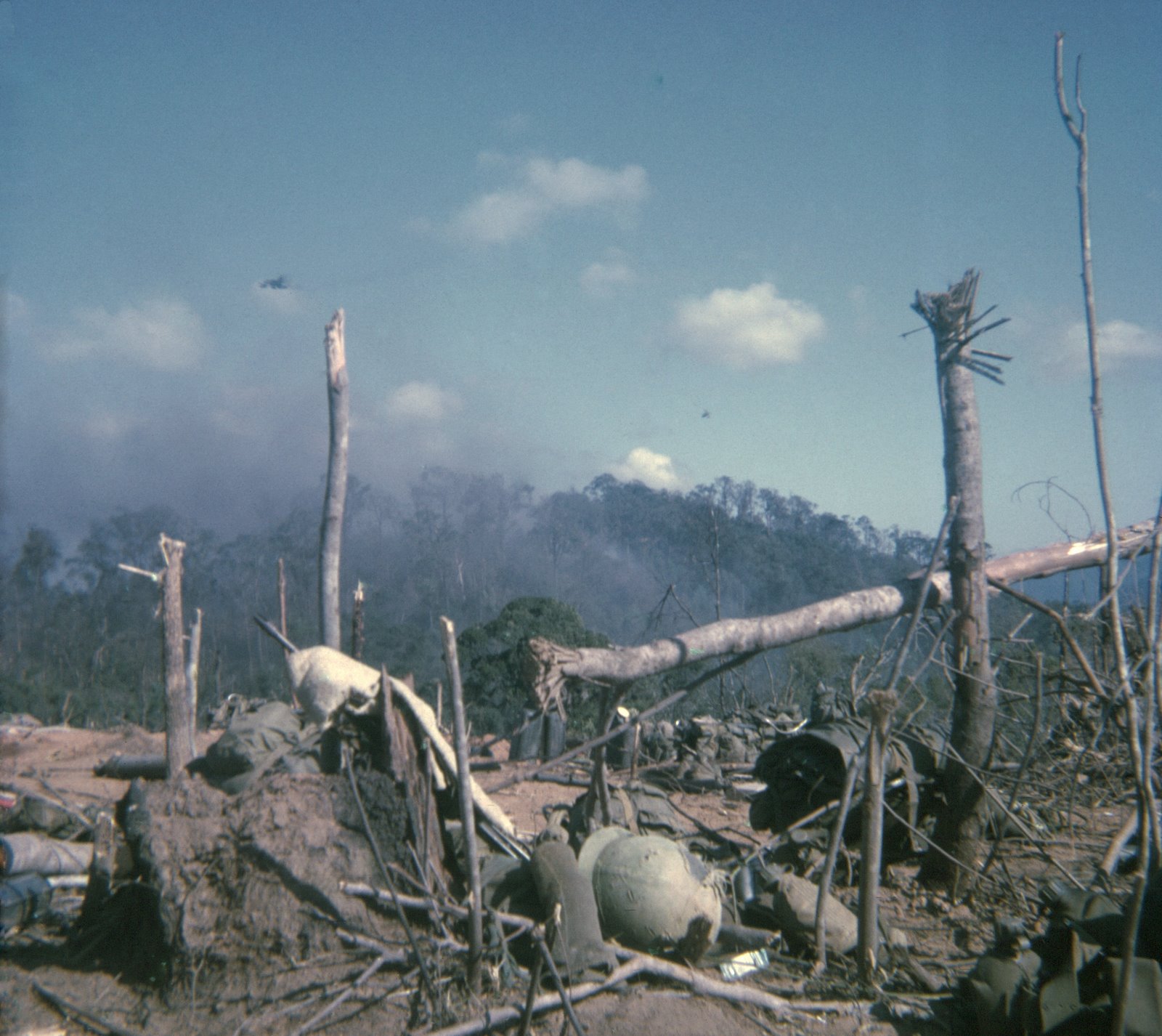
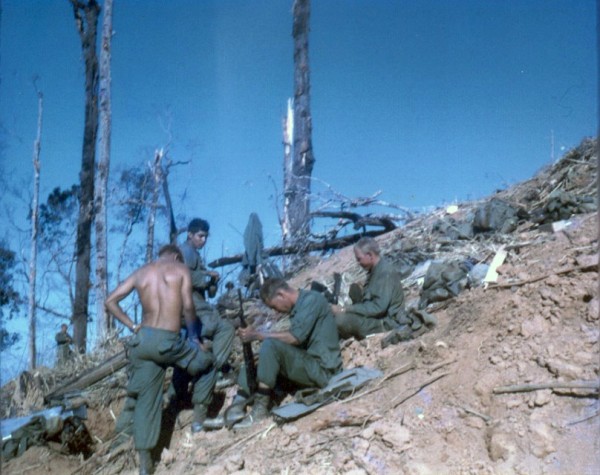
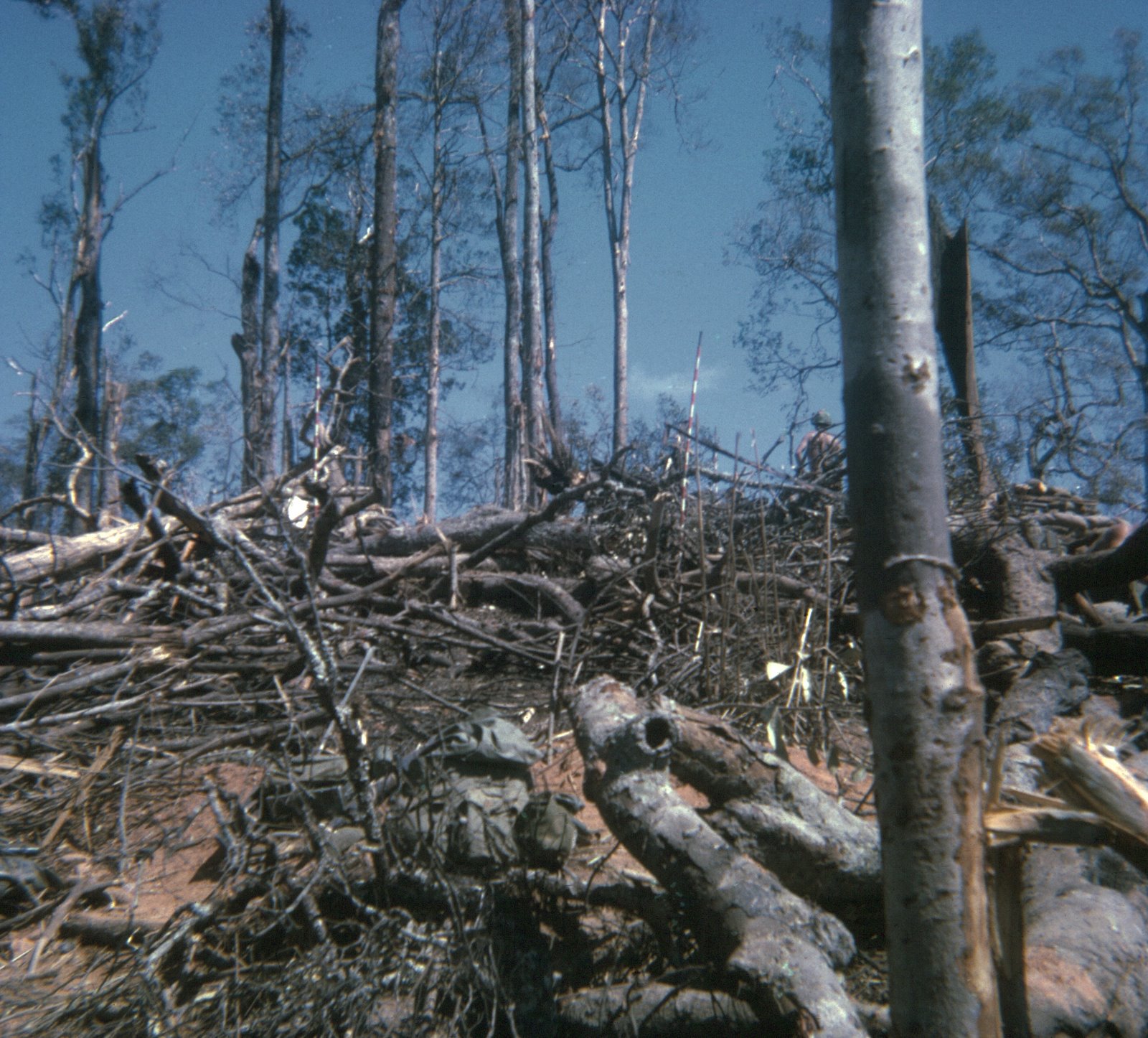
The following photograph was taken of shortly after we occupied Hill 1034 on 20 November 1967, and these troopers portray the anguish and sorrow that affected all of the members of Bravo Company.

 BRAVO COMPANY ON HILL 1034, DAK TO,
20 NOVEMBER 1967

Captain O'Sullivan and 1st SGT Rodriguez
 
HILL 1034


Thanks to Jimmie Hentkowski
 AFTER THE BATTLE FOR HILL 1034, DAK TO, 20 NOVEMBER 1967

Thanks to Sam Walker. Cheyenne - Ricky Day shirtless (?), Byron Shaw with canteen (?).
 

LOOKING TOWARDS DAK TO FROM HILL 1034

Thanks to Tom De Young


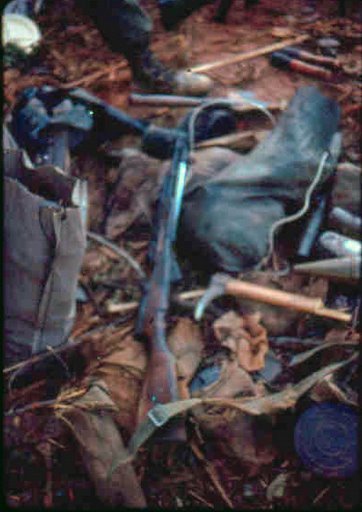
CAPTURED ENEMY WEAPONS AND
EQUIPMENT ON HILL 1034

Thanks to Tom De Young

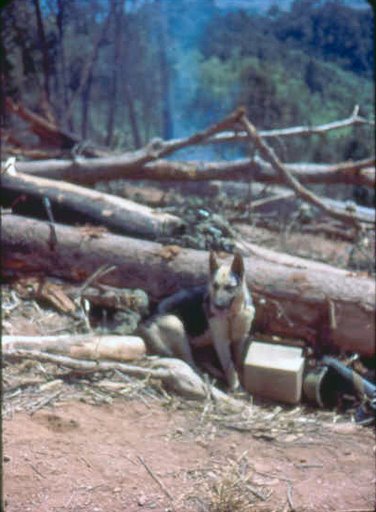
SCOUT DOG ON HILL 1034


Thanks to Tom De Young

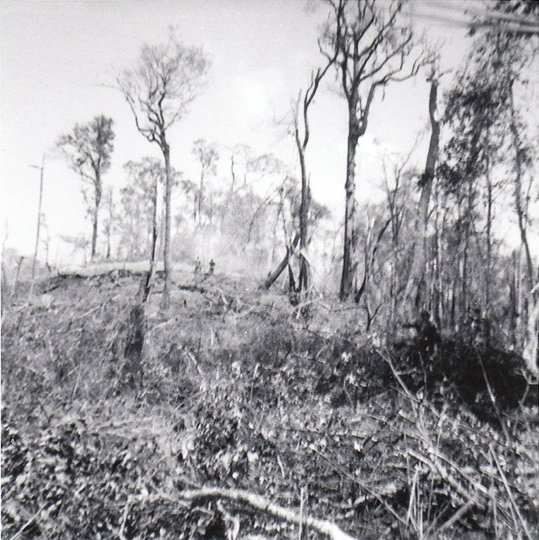
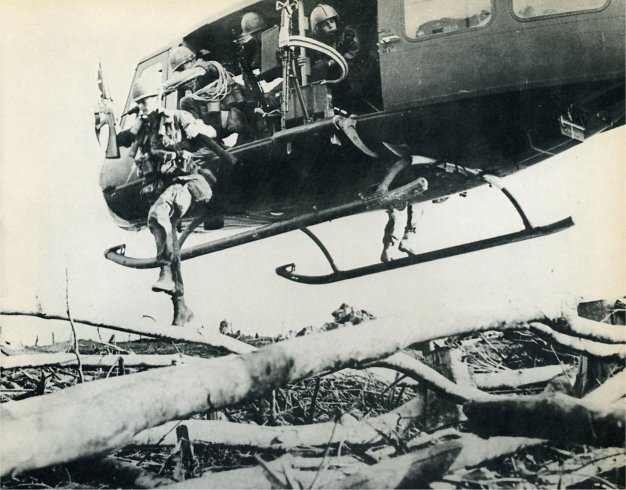
The difficulties of conducting combat assaults in the hills surrounding Dak To with double and triple-canopy trees is clearly evident from this photograph.

 COMBAT ASSAULT AT DAK TO DURING NOVEMBER 1967
 NIGHT DEFENSE POSITION

Thanks to Ralph Mercado

In the afternoon of 20 Nov and proceeded by a devastating air and artillery barrage, Bravo Company completed the assault of Hill 1034. We spent most of the evening and the following two days clearing the extensive enemy bunker complex surrounding Hill 1034, and collecting captured NVA weapons and a large supply of artillery and mortar ammunition, some of which had markings showing that they were manufactured in Russia. According to information recorded in a letter home, one of the enemy units occupying Hill 1034 was an NVA mortar unit with an identification number of 338. This information was obtained from enemy documents found in the bunkers. Another dangerous situation confronting us was the presence of numerous unexploded cluster bombs that were scattered all over Hill 1034 and an Explosive Ordinance Team spent many hours blowing them up. The entire ridgeline was cleared and secured by 21 Nov. On 23 or 24 Nov, Bravo was assigned the mission of securing LZ Winchester with three platoons, and one platoon (Blackfoot) was sent to Kontum to secure the 1st Bde, 1st ACD, rear command post.

On Thanksgiving Day, 23 November, we received the news that the battle of Dak To was over and the enemy had probably returned to their sanctuaries in Laos and Cambodia. Bravo Company (minus Blackfoot) was on another hilltop, called LZ Winchester, and late in the afternoon, choppers arrived with our Thanksgiving dinner, consisting of turkey with all the trimmings. Although we enjoyed our meal, there was a noticeable sadness among the troops as if they were silently thinking of their friends and colleagues who were not present.

On 23 Nov, the WHITEHORSE AO was expanded to the north and east to allow for pursuit to the northeast. A firebase, LZ FALCON (ZB 133212), was opened on 23 Nov. On 24 Nov, A and C Co’s combat assaulted to the northeast with no significant findings. Both companies were subsequently extracted to LZ WINCHESTER on 24 Nov in preparation for the return of the 1st Bde, 1st ACD, to the Pershing AO on 25 Nov.

On 25 Nov, the 1st Bde combat units moved by air on 37 C-130 sorties to LZ ENGLISH and the last unit landed at the Arrival Airfield at 1800H. 2-8th Cav units were moved from the Arrival Airfield by helicopters to their new missions:  C Co, 2-8th Cav assumed the security mission at LZ MUSTANG-TAPE at 251530H Nov 67. B Co 2-8th Cav(-) assumed the security mission at LZ LARAMIE at 251600H Nov 67 and provided two platoons to assist in securing LZ ENGLISH by 1600H. A and D Co 2-8th Cav conducted search and clear operations in the Bong Son AO.

NVA casualties during the Battle of Dak To were between 1200-1455 killed in action and it is likely that the figure for NVA wounded in action would be somewhere around 3000. Provoked by these high casualties, a NVA officer called Dak To a “useless and bloody battle”. US casualties during the Battle of Dak To were 289 killed in action, 985 wounded and 16 missing in action. Forty helicopters, two C-130 Hercules and one a F4F aircraft were destroyed by enemy fire. Because of the steep slopes and triple-canopy trees, there was a serious lack of suitable sites for landing helicopters and this meant that most troop movements had to be conducted on foot. There is no doubt that the scarcity of suitable landing sites made it very difficult to conduct airmobile operations in the Dak To area, and this greatly reduced not only our combat effectiveness but also our combat advantage over our opponents. In fact, there are numerous cases where the Battle of Dak To was a traditional “one on one” infantry contest and where we assaulted hills just like the US infantry did during the Korean War. Most military experts would agree that the battles of Dak To in November and Tam Quan in December were preliminary battles to the Tet Offensive in January 1968.

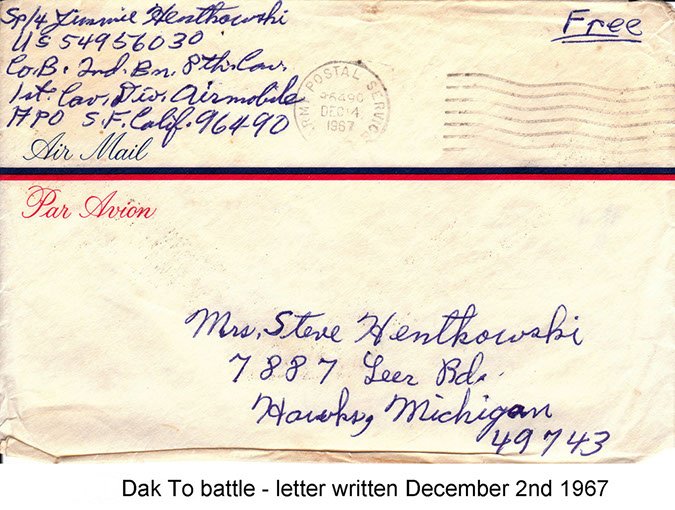
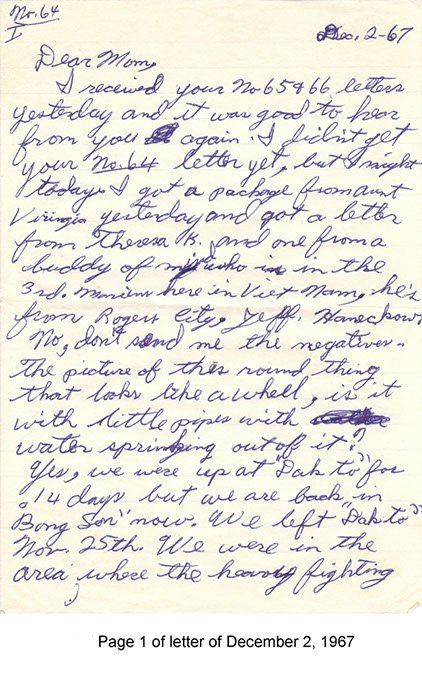
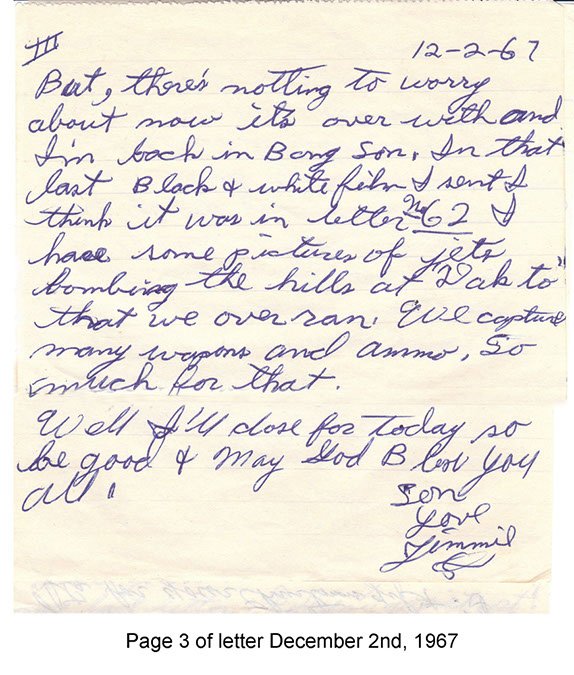
Mail was extremely important to all in Bravo Company and the following letter from one of our troopers to his mother shows how parents were kept informed  of the activities of Bravo Company. In addition, this letter contained very important information on the Battle of Dak To that was used for this article, in particular, the identification of Hill 1034 and the number of Bravo Company casualties. Notice that instead of using postage stamps, we wrote “FREE” on the envelope.


Many thanks to Jimmie Hentkowski.


Dro

Sunday, August 31, 2025


Battle Memories:

1st Bn, 8th Infantry & A Btry, 6/29 FA

Near Pleiku, South Vietnam

18 - 23 May 1967


by
Raymond A. Harton
LTC, FA, Retired


Preface:  The 1/8th Infantry Battalion and A Btry 6/29th Artillery were part of the 1st Brigade,
4th Infantry Division during Operation "Francis Marion". The mission was: Search and Destroy.

        The Infantry Battalion and A 6/29th airlifted into position just West of Duc Co at coordinates YA 790239 on 13 May 67. The artillery (Commanded by Cpt. McCreight) hurriedly prepared their firing position and prepared to support the infantry. The FSB was initially secured by C Company 1/8th Infantry. The infantry companies A & B continued their normal sweeping and patrolling action with little contact.

14 May            Quiet
        This is my analysis as to what took place during the period 18-23 May 1967. The general scenario is related in the book, 4th Infantry Division, Vietnam, on pages 96-100. The artillery was placed on restrictive firing. No recon by fire missions were authorized unless personnel we're in contact. I told my Forward Observers that if they were in contact that I would give them all the support they required. Early in the afternoon of 18 May 67 the FO told me and the FDO (Lt. Dlugosz) that they were in contact. I authorized firing the artillery. The Infantry had a platoon that was receiving fire. I went with the Infantry Battalion Commander (Ltc. Gannon (MUSTANG)) in his C&C chopper to monitor the battle and assist in any way possible. The FO had A Btry 6/29th firing for him, while I had C 5/16th (Cpt. Meek) firing for me. Other artillery and air assisted in fire support.
18 May
        An Infantry platoon (4th platoon, B Company) had got ambushed and were pinned down. I placed blocking fires to the west of the pinned down platoon (C 5/16th 155mm howitzers). This went on for quite a while. Suddenly MUSTANG (BN CO) tapped me on the shoulder and told me they (the platoon) wanted the artillery on top of them. I said "Are you sure that is what they want?". He said "YES" put it on top of them. I immediately made a correction for C 5/16th and fired many rounds of 155 mm artillery on top of the platoon. Ltc. Gannon made the decision. I made the correction and ordered the firing. In the meantime, the Bn S-2 with personnel of the Bn formed a Company Minus and they were dropped in by chopper to try and find the platoon. At darkness, MUSTANG and I went back to the TOC (Tactical Operation Center of the Battalion). Around 9 p.m., MUSTANG told the Company Minus to secure for the night and told them to start at first light in the morning. We got the Company Minus's coordinates and I got the did hit data from C 5/16th. After checking the two plots, I can remember telling Mustang that if they went so many mils in that direction that they would find the platoon. I recall this vividly because MUSTANG said "That is Artillery talk (mils), put it in Infantry talk". I converted the mils to degrees. The platoon was only 500-600 meters from the Company Minus. The Company Minus pushed out at first light and found the platoon shortly after they started. They found 8 people left alive. They had been stripped of their valuables, weapons etc.
        On 19 May 67,we regrouped and MUSTANG stayed on the ground with the troops that evening (forward CP). I declined to stay on the ground because I would not be able to get up in the air to assist if trouble began again. We fired many DEFCONS (defensive concentrations) and H&I"s (harrassing & interdiction fires) for the people on the ground throughout the night.
19 May
        The following morning, I took the C&C chopper with some replacements into the area. Mustang called me enroute and told me not to shut it down. I was to take a passenger to the hospital. When they set the stetcher in the chopper,the BN S-2 looked up at me and said "What the f--- happened? I told him I did not know. (It seems like he had been sitting on his helmet briefing his troops,when a large limb came down and landed on his head. Got hurt pretty bad. I was told that they evacuated him to the states for surgery.). While laying on the stretcher in the chopper enroute to the aid station I asked him what the conditions were like where the platoon was at. He told me he could not see how people got out of there alive. The artillery had cut everything to shreds. After bringing the S-2 to the aid station I returned to pick up MUSTANG and we went back to the TOC.
        The Infantry set up their perimeters and security and the artillery prepared their DEFCON's. About dusk the sh-t hit the fan. On 20 May 67, MUSTANG and I flew for 20 hours. The only time we were not in the air was when we ran from one chopper to another chopper. There was always another one waiting with radio's,food etc. During the evening and early morning hours A Btry fired continuous fire. Lt. Dlugosz (FDO) called me a couple of times. Once he told me his tubes were getting hot. I asked him if he could put his hands on them. He said "Barely". I told him that they were not hot enough and to continue to fire. What made it worse is that all the firing was "DANGER CLOSE" (Less than 100 meters from the troops). In one instance,I asked Lt. Schoeck, one of the FO's on the ground if he was sure he wanted that correction. He said "Yes". I told him "get in your holes" (The next morning he showed me his back which had shrapnel burns through his clothes).
20 May            21 May
        Another time Lt. Dlugosz (the FDO) called me and told me he was running low on ammunition. I told him to call the S-4 (Cpt. Borders). He told me the S-4 could not get any birds (choppers). I also called the S-4 and he told me he could not get any birds. I told him he better sh-t some birds. A few minutes later he called me and told me he had four birds on the way with some passengers. The 6/29th had gathered up cooks, mechanics and anyone else around and flew them into the firebase to help with the ammo etc.
        During the period 18-23 May 67 A Btry 6/29th fired 8300 rounds of 105mm rounds in support of the operation. C Btry 5/16th fired 1845 rounds of 155 mm rounds. B Btry 6/14th fired 1794 rounds of 8 inch and 690 rounds of 175mm rounds in support of this operattion. In addition 57 air sorties were utilized in this operation (18-26 May 67). On 23 May 67, a decision was made to pull the 1/8th Infantry and A 6/29th from the field. All the preparations were made. Control of the fire base was passed on and we went to bed early for a change. Suddenly we heard thump-thump of mortar rounds coming in. Lt Dlugosz said "Are those good guys or bad guys"?. We hustled out of our tent into the TOC.I called my counterpart, who had taken control of the security and asked him if he was going to fire or should we fire. He told me he had a patrol out but didn't know exactly where it was. I told him "You better fire or I will". I gave the Firing Battery clearance to fire and told them to fire vt fuze with a zero time setting and to fire at such and such an elevation and azimuth. The mortar firing stopped. Lt. Dlugosz and I had both saw the light from the mortars being fired. That woke up the patrol and the rest of the night passed without incident. The following morning the 1/8th Infantry and A Btry 6/29th artillery retired from the field. We became the palace guard for a short time in order to lick our wounds and get replacements.
        During this operation the 6/29th lost one man, SGT Leland Thompson. He was acting as the observer for the platoon that was ambushed. Others were wounded. The 1/8th infantry lost 45 KIA and 96 WIA. Enemy body count was 157 KIA. The 1/8th Infantry had three "Medal of Honor" recipients during this operation. Platoon Sgt Bruce Grandstaff, Staff Sgt Frankie Molnar and PFC Leslie Bellrichard. Sgt Thompson received the Silvar Star. Unfortunately all these awards were posthumously.
        These memories are based on my recollection of the events. No attempt was made to corelate them with the actions of the 1/8th Infantry.These events have stayed with me for the past 33 years.I think you might understand why some nights I wake up in the IA DRANG valley.

Raymond A Harton, LTC, FA, Retired
Artillery Liaison Officer with 1/8 Infantry

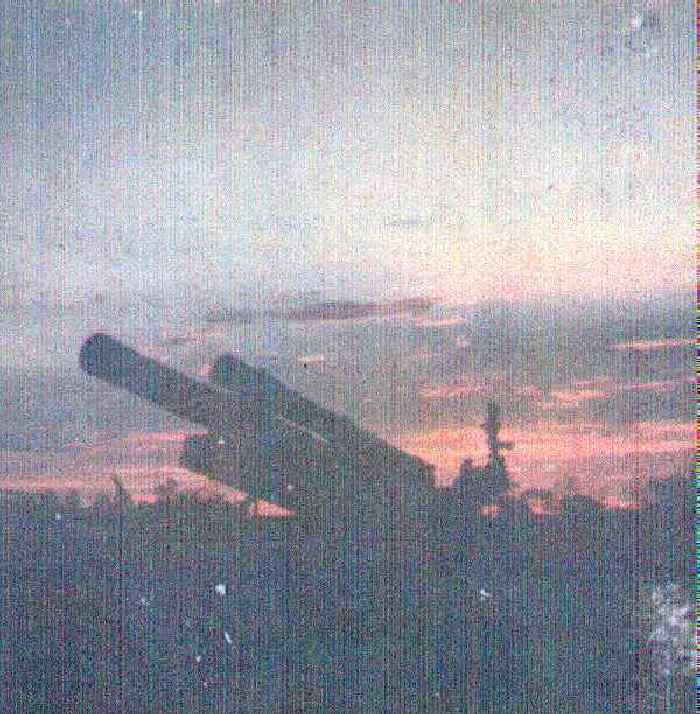
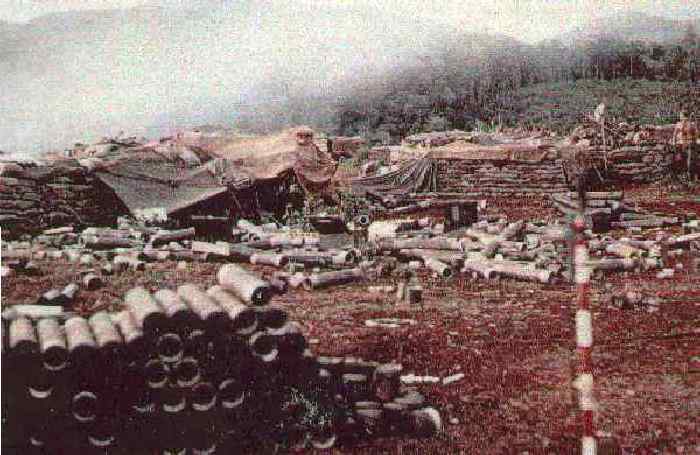
Photos were provided by Cpt. McCreight, A Btry, 6/29th Arty


Return to Stories of Vietnam


Home Page

Rings

Our Regimental History ] Our Separate Unit Histories ]
Our Memorial Tribute of Honor to Fallen Comrades ]
He Was My Friend, And, I Remember... ]
Our Vietnam War POW-MIA Pages ] Our Korean War POW-MIA Pages ]
Our Medal of Honor Tribute ]
Individual Combat Awards ] Individual Service Awards ]
Our Email Listings ] Our Postal Listings ]
Message Archives ] Related Links ] Favorite Links ]
Acknowledgements ] Our Site Awards ] About the Webmaster ]
Sign Our Guestbook ] View Our Guestbook ]
Discussion/Message Board ]
Our Member's Personal Home Pages ]
Stories of WWII ] Stories of Vietnam ] Stories of the Gulf War ]
WW I Photo's ] WW II Photo's ] Vietnam Photo's ]
Gulf War Photo's ] Bosnia Photo's ] Peacetime Photo's ]
Our Supplemental Web Site Pages ]
Awards We Give ]

Master Site Index ]


Thursday, July 10, 2025


TRẬN BÃI ĐÁP X-RAY


 Landing Zone X-RAY

The spoiling attack, code-named BILLINGS, soon to encompass eight battalions, began on 12 June as 1st Division troops moved at first ten, then thirty, kilometers north of Phuoc Vinh searching for the enemy. The absence of resistance led Hay to conclude that the 271 had moved even farther north, most likely to a large, bean-shaped clearing designated Landing Zone X-RAY. Hay had a hunch that the Viet Cong would be lying in wait for an airmobile insertion, so he sent Col. Sidney M. Marks' 3d Brigade overland from Landing Zone RUFE. On the morning of 17 June Lt. Col. Rufus C. Lazzell's 1st Battalion, 16th Infantry, led the way to X-RAY, preceded by a walking artillery barrage. After positioning his men thirty to fifty meters into the tree line around the clearing, Lazzell awaited the arrival of Lt. Col. Jerry S. Edwards' 2d Battal ion, 28th Infantry, which was to close Ru~c and follow in Lazzell's footsteps. No sooner had Edwards' first elements reached X-RAy than a patrol reported a group of Viet Cong approaching from the northwest. About 1300 the enemy attacked, punching through the northern and northwest ern perimeters. Only prompt artillery and gunship support and the com mitment of a reserve platoon prevented the attackers from reaching the central clearing. Hardly had the Americans beaten back these assaults when the Viet Cong launched a second attack, this time from the southeast. The defend ers met the onslaught with determined fire, and at first it looked as though the enemy would falter. "We were stacking them up like cord wood," one platoon leader later said, but it was not enough to turn back the attack. The enemy soon overran the position, and Lazzell lost radio contact with the platoon. The few survivors withdrew into a clearing to join adjacent units, forming a defensive line to halt the assault.' What at first had appeared a chance engagement soon proved to be the well-executed, possibly rehearsed, attack of a force estimated at two battalions. Alerted by the marching artillery fire and further informed by scouts with telephones positioned around the clearing, the Viet Cong commander had ample time to prepare. His men, wearing khaki uniforms and steel helmets and armed with recently acquired Soviet-type AK47s and RPG2s, had been well rested and well trained. When told to move out, they traveled over ca refully marked trails under the jungle canopy to their assault positions, attacking the Americans before they had a chance to fortify their perimeter. The arrival of the first air strikes at 1345 stabilized the situation, and soon after the Viet Cong began to withdraw, covered by a twenty-minute mortar barrage. By the time the division's reaction force, the 1st Battalion, 18th Infantry, under Lt. Col. Richard E. Cavazos, had air-assaulted into a nearby clearing, the battle was already over. Lazzell's battalion had been mauled, with 35 dead and 150 wounded. (Mnp 35) Marks evacuated Lazzell's casualties and placed Cavazos in overall command. A hasty search of the battle area on the late afternoon of 17 June produced 72 enemy bodies. When the 1st Division asked for a body count later that night, the 3d Brigade reported 135; shortly past midnight the total increased to 196. The next morning sweeps conducted deeper into the jungle resulted in the discovery of an additional 26 bodies. On succeeding days the Americans found more enemy dead a few kilometers away. In one Viet Cong camp, which a prisoner captured on the seventeenth identified as his assembly area, were 35 dead, apparently killed by artillery fire and air strikes, an indication of the haste with which the enemy had withdrawn. In an attempt to mete out more punishment, General Hay placed heavy fire, including B-52 strikes, on likely withdrawal routes. Assuming that the 271st Regiment would head deeper into War Zone D, he also established blocking positions east and northeast of X-RAY, but the insur gents stayed out of the way. When the operation ended on 26 June, the 1st Division claimed to have killed 347 Viet Cong and captured 1 prisoner. Yet, during the two-week effort, the division also reported that it had found only 6 enemy weapons, casting suspicion on the high body count claim. Overall American losses were 57 killed and 196 wounded.3

Wednesday, July 9, 2025

 Battle of Ong Thanh

17 October 1967

2nd Battalion, 28th Infantry

1st Infantry Division
"No Mission Too Difficult, No Sacrifice Too Great - Duty First!"

28th Inf Rgt               1st Infantry Division

The 2nd Battalion, 28th Infantry had been operating west of the village of Chon Thanh since October 8th, conducting "search and destroy" operations in an area known to be occupied by large Viet Cong forces. Only four of the battalion's five companies (HHC, A, B, and D) were involved; C Company was providing fire base security for the supporting artillery unit.

D Company had engaged a large enemy force on 16 October directly south of the Battalion's night defensive position, killing at least 30 VC soldiers with direct fire, mortars, and artillery at the cost of only four men wounded in action. Captain Bernard F. Jones, a MACV Advisor with a Vietnamese Provincial reconnaissance unit attached to D Company, was killed in the action. In the late afternoon the 2/28 elements withdrew to the Battalion position.

LTC Terry Allen, commanding 2/28, set his plans for 17 October based on a two-company search-and-destroy operation led by A Company with the Battalion Command Group and D Company in trail. The two companies would be protected by artillery "marching fire" to its front and flanks.

On the morning of 17 October, Alpha Company, with a total of 65 men, led out from the night defensive perimeter moving south toward the area where the 16 October fight had occurred. D Company, with 73 men and the command group, followed in trail. A Company was moving very cautiously, with point and flank patrols; by late morning the force had moved only about 1200 meters. Shortly before noon Alpha was engaged by a very much larger enemy force.

The action took place in heavy jungle west of the Village of Chon Thanh (Highway 13) in Binh Long Province. Although considered the dry season, it was humid and moist with daytime temperatures in excess of 90 degrees. The double canopy jungle was in relatively flat ground surrounded by intermittent streams (such as Suoi Ong-Thanh), which flowed south and west.

The opposing force consisted of two battalions of the 271st VC Regiment (300-400 or more soldiers). The VC had suffered heavy losses in an engagement with the 1/18 Infantry on 06-10 October and the firefight with Delta 2/28 the previous day. They had withdrawn to a base camp called the "Long Nuguyen Secret Zone" to refit and rearm. The VC did have plentiful supplies of ammunition for AK-47 rifles, RPD machine guns, some captured .50 caliber machine guns, perhaps some Chinese 12.7 mm heavy machine guns, Chicom claymores, and many RPGs.

The action was initiated when the Alpha Company point reported sighting a small group of enemy soldiers moving across their front. CPT George, Alpha's commander, ordered a hasty ambush. As the ambush force moved forward they were engaged by a heavy volume of automatic weapons fire and Claymore mines. The friendly force was not so much surprised by the enemy fire as they were overwhelmed by it. Two platoon leaders were immediately killed, and within 15 minutes, after trying to regain control of the situation, CPT George was blinded, deafened and wounded by an enemy Claymore while attempting to personally attack an enemy machine gun with hand grenades. Alpha's First Sergeant moved forward, retrieved CPT George, and led CPT George east away from the enemy fire which coming from the west. This action, while saving CPT George, left A Company leaderless. Practically every man in A Company was killed or wounded in the first 30 minutes of action.

D Company, commanded by 1LT Welch, formed a perimeter around the battalion command group. LTC Allen had no radio contact with A Company, and enemy fire was now hitting D Company. LTC Allen directed 1LT Welch to move forward to contact with A Company. 1LT Welch moved part of Delta forward, but found only Alpha's dead and wounded rather than a fighting force. Welch then directed a fighting withdrawal to the Delta perimeter, collecting as many of Alpha's wounded as possible. LTC Allen was on the radio requesting air strikes when Welch reported that it appeared that A Company had ceased to exist as an effective fighting force. Delta pulled into a tight perimeter approximately 60 feet in diameter and prepared to defend itself.

Enemy fire was heavy, with small arms, machine guns, and RPGs chopping through the underbrush into the Delta position. It became apparent that the enemy was maneuvering around both sides of the Delta perimeter, intent on destroying the Americans. LTC Allen was desperately trying to direct air strikes against the enemy, but they were ineffective due to the nature of the double-canopy jungle and the proximity of friend and foe. Delta's Artillery Forward Observer, 2LT Durham, brought artillery fire closer into his position while avoiding the area to Delta's front where Alpha's dead and wounded were laying in the jungle. Enemy soldiers were already maneuvering through that location, killing any Alpha Company wounded they found.

Practically all the D company radios had been destroyed or damaged by enemy fire and radio communications were maintained only by gathering damaged radios so they could be cannibalized. 2LT Durham, the artillery forward observer, was protecting his artillery net radio with his body while operating his radio handset to talk with the stub of his wrist, as his hand had been blown off by enemy fire. He continued to adjust the artillery fire more closely in, still smiling and calling to both 1LT Welch and Delta's First Sergeant.

At this point LTC Allen ordered 1LT Welch to withdraw along their ingress route, but doing so would have required abandoning the wounded and Welch ignored the order. Enemy fire continued to hit the Delta perimeter from three directions and casualties continued to mount.

At about 1400, some 2-1/2 hours after the contact began, a relief force fought its way to the Delta perimeter. By that time LTC Allen and everyone in the Battalion Command Group was dead, Alpha was destroyed, and Delta was more than decimated.

The fight at Ong Thanh resulted in the loss of at least 60 Americans - 55 killed in the action, 2 missing, and 3 who would die of their wounds. The VC left 163 bodies on the battlefield. The American dead were


You may read more about events of the Battle of Ong Thanh here and also at Black Widows website here and more about Lieutenant Colonel Terry Allen here

Thursday, July 3, 2025

 Route 20 lnterdicted in Lam Dong Province 4 Early on 12 November, an enemy force of un- known size blew up a bridge on strategic Route 20, some 25 miles east of Bao Loc, the capital of Lam Dong Province. A South Vietnamese reaction force, sent to the scene, was ambushed along the highway near the bridge site. At the same time, another enemy force attacked South Vietnamese military com- pounds at nearby Di Linh. Both of these engagements continued on 13 November and South Vietnamese and American reinforce- ments have been moved into the area. Incomplete casualty reports list 65 South Vietnamese soldiers killed, 25 wounded,and 25 missing. Two enemy soldiers have been killed thus far. Traffic between Bao Lac and Da Lat in neighboring Tuyen Duc Province has been temporarily suspended. I —l TOP RET 13 November 1967 A 3501 350 - (2) 395 D-\/ -°°$ X2) 3.5 3-5<° \//6 Approved for Release: 2019/03/29 C03029764 Approved for Release: 2019/03/29 003029704 4. \-y\J,l-I\.Il.\..l-l.l. _\ ‘ 6. ‘ The recent increase in Communist military activity directed at South Vietnamese forces in this area of southern II Corps is consistent with the avowed enemy objective of destroying security forces and degrading government authority. Since last May, South Vietnamese forces have secured Route 20, denying the Viet Cong some one to two million piasters a day in tax booty. Current enemy action also draws friendly forces from southwestern Lam Dong Province, where most enemy tax collection points were located, thus allowing an opportunity for renewed collection in that area.

Wednesday, June 19, 2024

Ba đại đội của 4/503 dù (trừ*) hành quân phía nam Ben Hét.

* Vì đ.đ. Bravo vẫn ở Ben Het. 

Chú ý: Trong QĐ Mỹ, để tránh hiểu lầm khi giao chiến, các đ.đ. A B C và D có thể được gọi là các đ.đ. Alpha, Bravo, Charlie, và Delta; và cũng có thể gọi tắt là Alpha, Bravo, Charlie Delta.

Trung tá Johnson TĐ trưởng của 4/503 thuộc lữ đoàn 173 Dù đã tin rằng TĐ ông sẽ đụng địch tại hay gần một thung lũng nhỏ 7 km tây nam của CCHL mới tại Ben Het. Do phải giữ lại đ.đ. B để bảo vệ và giúp xây dựng căn cứ, ông nhanh chóng cho TĐ trừ (vì chỉ còn 3 đ.đ. A C và D) hành quân trên 3 trục hơi song về phía nam và tây nam. Ông nói các đ.đ. trưởng rằng có tới hai TĐ quân csbv đang chờ họ.

Ngày đầu tiên cuộc hành quân vô sự. Có vẻ vào lúc này Dak To không bị đe dọa tấn công bởi bộ binh từ hướng tây. Ba đ.đ. này lúc đầu đi cách xa nhau (divergent) đến nỗi các vị trí đóng quân đêm của họ cách khoảng 1.600 m -- đ.đ. D ở giữa, đ.đ. C ở phía tây, và đ.đ. A ở phía đông.

Không giống như các đ.đ. khác trong một TĐ Dù diển hình, đ.đ. D là một lực lượng chắp vá (provision), tạo thành bằng cách lấy người từ nhiều đv khác nhau trong cùng TĐ. Đ.đ. chỉ có 3 sq và 85 lính, tổ chức thành hai thay vì bốn trung đội, như các đ.đ. khác. Ko có trung đội vũ khí nặng, đ.đ. có 6 súng M60, mỗi khẩu cho 1 tiểu đội. Đ.đ. ko có cối hay súng không giựt.

Cũng như mọi người lính bộ binh khác tại VN, mỗi lính dù mang 1 ba-lô nặng 50 cân hay 22.68 kg. Mỗi người lính mang theo 3 ngày ăn, 500 viên M16 (thường bỏ trong một túi vải), 4 lựu đạn miểng và 2 lựu đạn khói, 200 viên M60, và ba bi-đông nước.

Ngày 4/11, trục tiến quân của 3 đ.đ. ở khoảng cách xa nhứt (maximum divergence). Nhận được tin của phòng 2 sđ 4 rằng BCH của trung đoàn 40 pháo của csbv ở 5 km tây nam Ben Het, Johnson ra lịnh đ.đ. Alpha tạm thời đổi hướng và lục soát khu vực tình nghi. Khoảng 1300 Alpha chuyển vì hướng đông và đi bộ tới 2000 đêm. Đêm đó 3 đ.đ. cách nhau từ 1.800 đến 2.200 mét. Tình hình vô sự. Lúc đó có hai TĐ của sđ 4 bộ binh đụng địch ở nam và tây nam của Dak To.

Vào buổi sáng của 5/11, vẫn ko thấy dấu địch địch, Alpha đổi hướng về tây bắc về với TĐ trừ. Lần này Alpha đi sau Delta, thay vì ở sườn trái của Delta. Ở vị trí này, Alpha trở thành trừ bị của TĐ trừ. Tuy nhiên để bắt kịp TĐ trừ, lính của Alpha rất vất vả và họ chỉ ngừng quân lúc 1600.

Đ.đ. Charlie đã phát hiện đường mòn của csbv lúc 1130, 5 km từ CCHL. Sau khi trèo lên cao điểm của cụm đồi Ngọc Kom Liệt, đ.đ. Charlie đã khám phá một số hầm hố địch bỏ hoang. Chưa tới 1 giờ sau, Charlie tìm thấy một số hố khác 500 m về phía nam.

Khoảng cách giữa 3 đ.đ. và Ben Het ngày càng xa. TL của lữ đoàn 1 của sđ 4 bộ binh, ra lịnh cho TĐ trưởng lập 1 CCHL để yểm trợ khu vực dự định tiến vào. Sau khi cùng nhau không thám, họ đã chọn Đồi 823 bởi vì nó khống chế địa thế chung quanh và phối hợp hỏa lực với Ben Het. Đ.đ. Bravo, được lịnh chuẩn bị rời Ben Het, để trực thặng vận vào đồi 823 ngày hôm sau, 6/11/1967 và TĐ trừ sẽ bắt tay với Bravo ở đồi 823.

Ngày 6/11 là ngày thứ tư của hành quân. Tối hôm trước, cả 3 đ.đ. đã chặt cây để tạo bãi đáp nhận tiếp tế. Sáng này 6/11, Alpha xuất phát khoảng 0900 để gặp đ.đ. Delta. Trung sĩ (TS) nhứt David Terrazas và tiểu đội viễn thám vẫn ở lại chỗ đóng quân để phục kích nếu địch đến để kiếm thức ăn, v.v... -- vì tối hôm trước họ đã nhận tiếp tế. Sau đó 1 giờ, họ sẽ xuất phát để gặp lại Alpha. 

Khoảng 1.500 phía trước của Alpha, Delta đã rời chỗ đóng quân đêm để tiến về nam, đi xuống một thung lũng, kế đó chuyển về tây nam và tây, để tìm cách di chuyển dễ dàng trên đường sống núi hẹp và thấp hơn* của Ngọc Kom Liệt. (*lower ridgeline). 

Chuyên viên 4, viết tắt SP4, Jorgensen, đi khinh binh, đã phát hiện một dây điện thoại, dẫn đến một đường mòn. Lúc đó là 1130. Đi thám sát 200 m theo dây này họ thấy một nón cối trắng. Dây chạy về phía tây, hướng về những nhánh cao hơn của sống núi. 

Đ.u. Baird hỏi TĐ trưởng muốn đi theo dây tới đầu mút của nó, ông này đồng ý. Baird lập 1 chu vi phòng thủ, và với pháo yểm, y gửi 2 tiểu đội thám sát kỹ lưỡng, theo đội hình cỏ ba lá (cloverleaf formation). Họ ko thấy gì hết và lúc 1230 trở về vị trí đ.đ.

Đ.u. cho lính tiến lên theo đường mòn, với 2 mủi đi đầu (mỗi mủi 2 khinh binh), của trung đội 2, kế đó trung đội DSCĐ người Thượng của trại Ben Hét và trung đội 1 sau cùng. Lúc gần 1300, khinh binh báo cáo đường mòn đang mở rộng sau khi họ tiến lên đường sống núi, và sắp gần một đồi nhỏ cách đó 100 m.

Một cảm giác căng thẳng đã tràn ngập đại đội khi họ tới đồi nhỏ này. Những vết chân trần mới tinh trên đất mềm, một miếng tre chữ thập để cuộn dây điện thoại, cứt người mới ỉa--tất cả cho thấy địch rất gần. Baird ra lịnh đ.đ. đề cao cảnh giác, kế đó sẽ tiến tới từng đợt, mỗi đợt sẽ tung ra 4 tiểu đội lục soát về phía trước và hai bên theo đội hình cỏ ba lá trong cố gắng phòng ngừa mọi phục kích nếu có của địch. Thiếu úy Burton là trung đội đi đầu hôm đó, tung ra hai tiểu đội để lục soát sống núi. Khi tiểu đội 1 của TS nhứt Worley bắt đầu rời vị trí phòng thủ của trung đội, đạn súng liên thanh đã nổ từ trên núi cách họ chưa tới 50 m. 

Trung úy Burton rút tiểu đội này về lập tức, và sau đó cho tiểu này bọc sườn trái và hướng lên núi trở lại. Ở hướng phải, tiểu đội 2 yểm trợ cho họ, sẵn sàng trấn át hỏa lực địch với M60 và M79. Khi tiểu đội này tiến lên để bọc sườn đối phương, họ đã gặp một khoảnh rừng thưa. Ở đó chuyên viên bậc 4 Moss đã phát hiện 1 lính csbv mặc đồng phục xanh mang AK47. Khi y bỏ chạy, Moss đã bắn gục bằng một loạt M16. Trận chiến bùng nổ.

Baird ra lịnh cho trung đội của Burton rút về chu vi của đ.đ. Việc đoạn chiến này ko dễ dàng gì nhưng vẫn tốt hơn là để đ.đ. bị xé lẻ (piecemeal destruction). Trong khi người của Worley rút về, tiểu đội 2 và 3 tiếp tục bắn yểm trợ. Đúng như mọi người nghĩ (as if on cue), hỏa lực dữ dội của đối phương từ phía trên của đường mòn đã bắn vào hai tiểu đội này và cả vào vị trí đ.đ. Hai xạ thủ M60 và một người lính bị thương. 


Tuesday, February 15, 2022

 The Battle of Dak To


Eager Arms 1967-1968


The Battle of Dak To took place between 3 and 22 November, and was one of the major battles of the Vietnam War and one of the bloodiest.

In late October, intelligence reports indicated that a large NVA force was preparing to attack US military units and installations at Dak To, located in Kontum Province, and close to the tri-border region where South Vietnam, Laos and Cambodia meet. Dak To lies on a flat valley floor adjacent to a river, and is completely surrounded by mountains with waves of ridgelines and peaks that stretch for many miles in all directions. Some of these ridges and peaks vary between 2500 and 4000 feet in height, and the slopes are very steep and covered with double and triple-canopy trees that are from 100 to 200 feet high and up to four feet in diameter. November was the beginning of the monsoon season, and temperatures in the mountains could reach 95 degrees during the day and drop to as low as 55 degrees at night.


An NVA soldier captured during the battle stated that all of October was used to prepare fortified positions on the key ridgelines surrounding Dak To, and carrying munitions and supplies to these positions from Laos. On 2 November, an NVA reconnaissance sergeant surrendered to Allied Forces at Dak To. When interrogated, he provided a detailed and accurate battle plan for the attack on the Dak To – Tan Canh area, which was to be conducted by four infantry regiments and one artillery regiment of the 1st NVA Division. Several other NVA formations participated in this large-scale operation and the total enemy strength was about 12,000 soldiers. The main NVA objective was to compel the US senior headquarters, Military Assistance Command Vietnam (MACV) to send reinforcements to Dak To and then to inflict heavy casualties on these units. Documents captured during the battle show that each NVA infantry regiment was assigned the mission of destroying one US battalion. A captured NVA battalion executive officer had a hand written directive in his pocket stating that he would defend his position to the last man. All of this demonstrates the fierce determination of the enemy and for the NVA leadership in Hanoi, this was an important political confrontation designed to send a crystal-clear signal on the vulnerability of US forces and that the NVA had the capability to launch large-scale attacks against American forces and installations.  


MACV responded to this enemy encirclement of Dak To – Tan Canh area by deploying several units to reinforce the US 4th Infantry Division. These formations were placed under the operational control of the 4th Infantry Division and included the 173rd Airborne Brigade and our unit, 1st Brigade, 1st Cavalry Division. According to a secret message prepared by MACV Deputy Commander, General Creighton Abrams (date/time 221325Z Nov 67), the 1st Brigade units arrived at Dak To as follows: 1st Battalion, 8th Cavalry arrived on 10 November; 1st Battalion, 12th Cavalry on 11 November; 1st Brigade Headquarters and our battalion, 2nd Battalion, 8th Cavalry on 14 November.  


The fighting had started on 4 November when US 4th Infantry Division units attacked to secure the ridges to the south of Dak To. Three days later, 173rd Airborne Brigade units pushed west and then southwest, while South Vietnamese Army (ARVN) units pushed north and east. All of these friendly units met stiff resistance from sizeable enemy forces occupying fortified positions on the tops of the peaks and ridges, which confirmed the accuracy of the detailed battle plan obtained from the NVA deserter. In conjunction with these ground attacks, the US initiated a massive bombardment of enemy positions employing all available means. The extent of this massive bombardment is evident from the munitions expended during the Battle of Dak To: 257 B-52 strikes, 2,096 tactical air sorties and a total of 151,000 artillery rounds. It is hard to imagine how anyone could survive such a  bombing inferno, however, during the course of the battle we discovered that some of the NVA fortified positions consisted of three concentric trenches around the top of a mountain and they had dug a series of holes deep into the mountain which they used as bomb shelters.


There were two phases to the Battle of Dak To; the first phase was between 4-12 November, and the second and most violent phase was from 17-22 November. According to General Abrahm’s message, our battalion arrived in the area on 14 November, however, the 4th Infantry Division Combat After Action Report states that our Battalion arrived on 18 November (other evidence supports our deployment on 14 November). The latter report went on to state that our battalion was deployed “into the hills east of TAN CANH and encountered strong enemy defences. The battalion operated in the area six days, again blasting the enemy out”.


  LANDING ZONE ON ARRIVAL AT DAK TO


EXTRACTION OF BRAVO COMPANY 17-18 NOV (LOOKING TOWARDS SPECIAL FORCES CAMP)


Thanks to Fred Fish for the above photos


19 November will always be remembered by the many relatives who lost a loved one on this date at Dak To and by the many veterans who participated in this battle. The strongest enemy resistance was on the infamous Hill 875, located southwest of Dak To where two battalions of the 173rd Airborne Brigade, the 2nd Battalion and 4th Battalion, 503rd Infantry Regiment, fought for several days to seize this hilltop. The attack began on 19 November and Hill 875 was finally secured on Thanksgiving Day, 23 November. Both battalions suffered very heavy casualties and the fighting was so violent that the infantry companies were calling in artillery and air strikes dangerously close to their own positions. The casualty figures for these two battalions were158 killed and 402 wounded in action.


Bravo Company was also engaged in a fierce firefight on Hill 1034 on 19 Nov, but first some relevant background details from the 1st Bde, 1st ACD, Combat After Action Report, dated 1 Dec 1967. The 1st Brigade Task Force that deployed to Dak To consisted of two battalions; 2nd Bn 8th Cav Regt and 1st Bn 12th Cav Regt. Major supporting units included; 2-19th  Arty(-), A/2-20 Arty (ARA), B/229th AH Co(-),  and 228th ASH Co(-). Other supporting units included platoons or detachments of MPs, scout dogs, pathfinders, engineers, Military Intelligence, Tactical Air Control Party, and several others. 1st Brigade combat units deployed to Dak To on 14 Nov by C-130 from LZ English. A total of 37 C-130 sorties were required to move combat units and their essential equipment, while logistical and other units moved by road with an overnight at An Khe.


On 15 Nov, the 2-8th Cav initially released two companies to the 1st Bde, 4th Inf Div for the defense of Dak To. On 16 Nov, the 2-8th Cav Command Post moved from Kontum to the Dak To area (LZ Winchester), resumed control of their rifle companies and operated under the 1st Bde, 4th Div to assist in the defense of Dak To. D Co worked generally to the south, B Co to the north and C Co to the east of Dak To. C Co made contact with estimated NVA company at ZB 110210 and conducted a two day battle finally securing the hill top. A Co, 2-8th Cav, remained under the operational control of the 1st Bde, 1st ACD, and secured the proposed forward CP location at LZ Polly. It was determined on 16 Nov that the proposed forward CP location for the 1st Bde , 1st ACD, would not be at LZ Polly but instead be at LZ Winchester (ZB 046208), which was the location for the 2-8thCav CP and the 173d Abn Bde Rear CP.


On 19 Nov, the 2-8th  Cav (-) returned to the operational control of the 1st Bde, 1st ACD, and the battalion was assigned an area of operation in the general vicinity of where C Co had contact with enemy forces at ZB110210. This area of operation was called the WHITEHORSE AO.


On 19 Nov, B Co conducted a combat assault on a narrow ridgeline at ZB 106218 with the mission of securing Hill 1034, located at ZB 109223. Bravo Company was not aware of any intelligence indicating that enemy forces had established extensive fortifications on Hill 1034. For their defense of Hill 1034 and to survive massive bombardments by US artillery and air-strikes, enemy forces had established a horseshoe defense consisting of an elaborate bunker system with connecting tunnels and the whole complex was skillfully camouflaged. Immediately prior to the beginning of this firefight, the lead elements of Blackfoot Platoon had reached the southern tip of Hill 1034 and had started occupying hasty defense positions, while the remainder of Bravo Company continued to close on Hill 1034. It is highly likely that Blackfoot approached Hill 1034 from one direction, while Cheyenne was the lead platoon for the remainder of Bravo Company who approached Hill 1034 from another direction. The command group with Captain Decker and his radio operator, SP4 Fowler, was located with Cheyenne.


This was the situation when Bravo came under intense and accurate fire from enemy forces occupying fortified positions on Hill 1034. It all started abruptly when enemy forces engaged Blackfoot from well-camouflaged fighting positions and our first casualty was Lieutenant Rodreick. In the course of a short period, Bravo Company sustained 10 casualties, representing 9% of our field strength. Among those killed in action was Captain David Decker, Commanding Officer of Bravo Company; Specialist William Fowler, Captain Decker’s radio operator; and Lieutenant Ronald Rodreick, Blackfoot Platoon Leader.  Specialist Thomas Olearnick, who was the pointman for Cheyenne on the approach to Hill 1034, was listed as missing in action but his status was later changed to “died while missing”. Based on a letter written home by one of our troopers, Bravo Company had a total of six troopers wounded during this action and they were medevaced by helicopters. Aztec Platoon was in a position to provide covering fire while Blackfoot and Cheyenne withdrew from the top of Hill 1034 with our casualties. The assault on Hill 1034 was suspended while we evacuated all of our casualties and it was also necessary to reorganize due to the loss of several leaders.     


Late in the afternoon of 19 Nov, B Co was extracted from ZB 106218 and inserted in the vicinity of C Co at ZB 110210. During the evening, night and the morning of 20 Nov, the entire ridge complex from ZB 110210 to ZB 103237 was pounded by artillery and air strikes. Estimates of the enemy strength on the ridgelines, based on contacts by B and C Co, 2-8th Cav and visual sightings by aerial observers, indicated a well dug-in enemy battalion.


During the night of 19-20 Nov, a F4F aircraft conducting an air strike on Hill 1034 received ground to air fire and crashed in the vicinity of ZB 09022. One of the pilots ejected safely and ARA gunships covered his extraction immediately after the crash. D Co returned to 2-8th Cav control on 20 Nov and conducted a combat assault to secure the wreckage of the downed aircraft, recover the body of the pilot who failed to eject and to extract sensitive items of equipment.


Early in the morning of 20 November, Captain Peter O’Sullivan assumed command of Bravo Company and landed at the company location at ZB 110210 with two replacement platoon leaders; Lt. Thomas Beach (Cheyenne) and Lt. Gus Pappas (Mohawk). On the same date, Lt. Thomas De Young (Blackfoot) was transferred from Charlie to Bravo Company to provide Bravo Company with a combat experienced platoon leader. Another replacement platoon leader, Lt. Charles Ready (Aztec), joined Bravo Company sometime during the afternoon of 19 Nov. The former platoon leader of Aztec, Lt. Bill Berry, was assigned duties as Bravo Company Executive Officer on 16 November. Another former platoon leader (Cheyenne) of Bravo Company, Lt. Alfred Lehman, was assigned to our Battalion Headquarters Company with an effective date of 21 November. 


The following two photos on the bombing of Hill 1034 were taken during the morning of 20 Nov from our location at ZB 110210 and before we assaulted the hill. 


BOMBING OF HILL 1034


Thanks to Ralph Mercado


BOMBING OF HILL 1034


Thanks to Jimmie Hentkowski


The following photograph was taken of shortly after we occupied Hill 1034 on 20 November 1967, and these troopers portray the anguish and sorrow that affected all of the members of Bravo Company.


  BRAVO COMPANY ON HILL 1034, DAK TO,

20 NOVEMBER 1967


Captain O'Sullivan and 1st SGT Rodriguez

  HILL 1034


Thanks to Jimmie Hentkowski

  AFTER THE BATTLE FOR HILL 1034, DAK TO, 20 NOVEMBER 1967


Thanks to Sam Walker. Cheyenne - Ricky Day shirtless (?), Byron Shaw with canteen (?).


LOOKING TOWARDS DAK TO FROM HILL 1034


Thanks to Tom De Young


CAPTURED ENEMY WEAPONS AND

EQUIPMENT ON HILL 1034


Thanks to Tom De Young


SCOUT DOG ON HILL 1034


Thanks to Tom De Young

The difficulties of conducting combat assaults in the hills surrounding Dak To with double and triple-canopy trees is clearly evident from this photograph.


  COMBAT ASSAULT AT DAK TO DURING NOVEMBER 1967


  NIGHT DEFENSE POSITION


Thanks to Ralph Mercado

In the afternoon of 20 Nov and proceeded by a devastating air and artillery barrage, Bravo Company completed the assault of Hill 1034. We spent most of the evening and the following two days clearing the extensive enemy bunker complex surrounding Hill 1034, and collecting captured NVA weapons and a large supply of artillery and mortar ammunition, some of which had markings showing that they were manufactured in Russia. According to information recorded in a letter home, one of the enemy units occupying Hill 1034 was an NVA mortar unit with an identification number of 338. This information was obtained from enemy documents found in the bunkers. Another dangerous situation confronting us was the presence of numerous unexploded cluster bombs that were scattered all over Hill 1034 and an Explosive Ordinance Team spent many hours blowing them up. The entire ridgeline was cleared and secured by 21 Nov. On 23 or 24 Nov, Bravo was assigned the mission of securing LZ Winchester with three platoons, and one platoon (Blackfoot) was sent to Kontum to secure the 1st Bde, 1st ACD, rear command post.


On Thanksgiving Day, 23 November, we received the news that the battle of Dak To was over and the enemy had probably returned to their sanctuaries in Laos and Cambodia. Bravo Company (minus Blackfoot) was on another hilltop, called LZ Winchester, and late in the afternoon, choppers arrived with our Thanksgiving dinner, consisting of turkey with all the trimmings. Although we enjoyed our meal, there was a noticeable sadness among the troops as if they were silently thinking of their friends and colleagues who were not present.


On 23 Nov, the WHITEHORSE AO was expanded to the north and east to allow for pursuit to the northeast. A firebase, LZ FALCON (ZB 133212), was opened on 23 Nov. On 24 Nov, A and C Co’s combat assaulted to the northeast with no significant findings. Both companies were subsequently extracted to LZ WINCHESTER on 24 Nov in preparation for the return of the 1st Bde, 1st ACD, to the Pershing AO on 25 Nov.


On 25 Nov, the 1st Bde combat units moved by air on 37 C-130 sorties to LZ ENGLISH and the last unit landed at the Arrival Airfield at 1800H. 2-8th Cav units were moved from the Arrival Airfield by helicopters to their new missions:  C Co, 2-8th Cav assumed the security mission at LZ MUSTANG-TAPE at 251530H Nov 67. B Co 2-8th Cav(-) assumed the security mission at LZ LARAMIE at 251600H Nov 67 and provided two platoons to assist in securing LZ ENGLISH by 1600H. A and D Co 2-8th Cav conducted search and clear operations in the Bong Son AO.


NVA casualties during the Battle of Dak To were between 1200-1455 killed in action and it is likely that the figure for NVA wounded in action would be somewhere around 3000. Provoked by these high casualties, a NVA officer called Dak To a “useless and bloody battle”. US casualties during the Battle of Dak To were 289 killed in action, 985 wounded and 16 missing in action. Forty helicopters, two C-130 Hercules and one a F4F aircraft were destroyed by enemy fire. Because of the steep slopes and triple-canopy trees, there was a serious lack of suitable sites for landing helicopters and this meant that most troop movements had to be conducted on foot. There is no doubt that the scarcity of suitable landing sites made it very difficult to conduct airmobile operations in the Dak To area, and this greatly reduced not only our combat effectiveness but also our combat advantage over our opponents. In fact, there are numerous cases where the Battle of Dak To was a traditional “one on one” infantry contest and where we assaulted hills just like the US infantry did during the Korean War. Most military experts would agree that the battles of Dak To in November and Tam Quan in December were preliminary battles to the Tet Offensive in January 1968.


Mail was extremely important to all in Bravo Company and the following letter from one of our troopers to his mother shows how parents were kept informed  of the activities of Bravo Company. In addition, this letter contained very important information on the Battle of Dak To that was used for this article, in particular, the identification of Hill 1034 and the number of Bravo Company casualties. Notice that instead of using postage stamps, we wrote “FREE” on the envelope.