Showing posts with label xe số tự động. Show all posts

Tuesday, February 6, 2018


7 điều nên tránh khi lái xe số tự động/7 Things To Avoid While Driving An Automatic Transmission Car


Cheapest Online Car Selling


Save
4.5 (90.14%) 69votes

Automatic transmission is ,without a doubt, one of the greatest invention in the car industry. Automatic car opens the whole new era for car owners thanks for the safety it provides. This car type is favored not only by the professional drivers but also by people with basic driving skills. However, does this greatest invention provide total safety for its driver? Sadly it is not.

7 Mistakes To Avoid When You Drive An Automatic Transmission Car/7 sai lầm nên tránh khi lái xe tự động

Even though automatic vehicle is amazingly safety, you should avoid a few things at any cost while steering the wheel. Here’s a list of 7 mistakes that can damage a vehicle badly and put the owner on the hook for some huge repair bills.

1/ Sliding The Vehicle Down A Slope In The Neutral Mode/Trượt dốc trong khi xe ở Neutral 

This habit won’t let you accelerate the car except for slowing it down/Thói quen này ko giúp bạn tăng tốc xe mà chỉ làm xe chạy chậm. It cuts the oil supply, so the transmission does not get the proper lubrication for smooth operation/Nó sẽ ko tốn xăng , do đó hộp số sẽ ko có nhớt cho nó . It results in significant wear and damage/Hậu quả là hao mòn và hư hại đáng kể cho hộp số. Discard his habit because the repair costs don’t worth the negligible fuel savings/Hảy bỏ thói quen này vì ko tiết kiệm bao nhiêu so với hư xe .
>> Best deals for automatic cars:  Subaru Impreza 2011 for saleToyota RAV4 2006 for sale

2/ Revving The Engine Before Switching To The Gear/Tăng tốc xe trước khi sang số
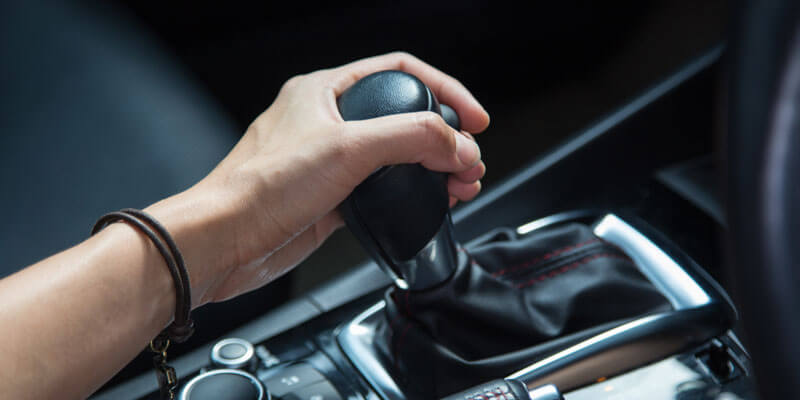


automatic gearbox
Revving the engine before switching to the gear is not a good habit for automatic car owners

We all have done it as teenagers. But, don’t be that stupid because your parents are not going to pay the bills this time! It gives the transmission a massive shock that leads to more friction between the internal components, causing damage to engine parts/Sẽ khiến phần truyền động bị ảnh hưởng mạnh dẫn tới ma sát những thành phần trong máy , khiến hư hại động cơ .

3/ Shifting Gears When The Car Is Rolling/Sang số khi xe đang chạy

It makes your transmission components to change direction rapidly, wearing out the gearbox at an astounding pace/Sẽ làm mòn hộp số với tốc độ kinh ngạc. Use your brakes instead to stop the vehicle/Hảy dùng thắng để ngừng xe . Some people shift into the Park without the pushing the brakes, which is also bad for the gearbox/Một số người chuyển số sang P mà ko đạp thắng , sẽ phá hộp số .

4/ Keeping In Neutral At The Red Light/Giử N ở đèn đỏ 

Many people do this to save fuel and protect the driveline from unnecessary wear/Nhiều người làm vậy để tết kiệm xăng và bảo vệ xe khỏi hao mòn ko cần thiết . In fact, the loss is minimal if you push the brakes by keeping the gearbox in Drive mode/Thực tế , hao mòn này rất nhỏ nếu bạn đạp thắng và giử xe ở số D . The actual damage takes place when you switch into and out of the neutral mode/Xe sẽ hư hỏng nếu bạn vào và khỏi số N .

5/ Switching Into The Parking Mode Before Completely Stopping The Car/Chuyển sang số P trước khi ngừng xe hoàn toàn 


driving automatic car
You shouldn’t switch into the parking mode unless your car is completely stopped.

     SEE MORE:
Shifting to the Park mode will cause a locking pin to be inserted into a gear attached to the output shaft of the gearbox/Chuyển sang số P sẽ khiến 1 chốt khóa sẽ cắm vào 1 bánh răng nối kết với trục ra của hộp số . The wheels are also connected to the same shaft/Bánh xe cũng nối với trục này . So, when you lock it and keep the vehicle rolling at the same time, there’s a risk of breaking the locking pin/Như vậy , khi bạn dùng chốt này và cùng lúc để xe lăn bánh , có nguy cơ gảy chốt này .

6/ Driving Hard Without Warming Up The Engine/Lái xe mà ko làm nóng máy 

It’s a blunder, especially in the winter season/Đây là 1 nhầm lẫn , đặc biệt trong mùa đông . The oil thickens and moves slowly when the weather is cold/Dầu sẽ đặc và di chuyển khi thời tiết lạnh. Give the fuel a minute to run into the transmission and all of its parts/Hảy cho dầu chạy vào bộ phận truyền động và tất cả các thành phần của nó . If you shift into gear and start driving at high speed from the beginning, it will lead to severe internal damage./Nếu bạn sang số và bắt đầu lái xe ở tốc độ cao , sẽ dẩn tới hư hỏng nặng . 
Habits you should avoid when driving an automatic

7/ Keeping The Fuel Tank Low/Để bình xăng ko đầy

An automatic transmission car largely depends on fluid pressure to run properly/Xe số tự động phần lớn dựa vào áp lực của xăng để chạy tốt . Fuel also helps a vehicle’s engine and other elements to stay cool and lubricated/Xăng cũng giúp máy xe và các bộ phận khác ko nóng và được bôi trơn . So, these will wear out a lot faster if you continuously keep the tank low on fluid/Những thứ này sẽ hao mòn nhanh nếu bạn tiếp tục để xăng ko đầy .

Conclusion

Gearheads may find these tips no-brainer, but every driver is not an expert on car mechanism. Avoiding these practices is not harder than changing some habits. They will extend the life of your automatic transmission car, keep you safe on the road and save you a lot of money from car maintenance.
https://carfromjapan.com/article/car-maintenance/7-things-avoid-driving-automatic-transmission-car/
Save
Buy 2 Get 3
Bài học Lái xe Thực tế : Học lái xe tự động /An Actual Driving Lesson : Learning to drive an automatic car 
Where are the controls that I might have to use in my driving: Knowing where the controls are, and being able to locate and use them without looking away from the road is important. 
Remember in each vehicle these controls could be in different places:
- Washer and wiper, front and back 
- Head lights, high and low beam 
- Hand brake 
- Demisters, front and back 
- Horn 
- Hazard lights - Indicators 
How to adjust the seat: When adjusting the seat, your right leg should be able to reach the accelerator and brake pedals comfortable and have a slight bend in it (about 15 degrees). The leg should not be fully extended. 
Push your shoulder into the back of the seat, and put your arms out in front of you at the top of the steering wheel, now adjust the back of the seat so your wrists are on top of the steering wheel rim (not your hand or arm but your wrist). 
Most cars now can adjust the height of the steering wheel. Move the steering wheel up or down so you can see the speedo clearly. 
How to adjust your mirrors: The mirrors should be adjusted so when you look into them, you are only moving your eyes not your head. 
The centre mirror: The top of your mirror should run along the top of your back window, you should be able to see the whole back window. 
The side mirrors: On a flat road, you should see road from the middle of the mirror to the bottom of the mirror, and from the middle of the mirror to the top of the mirror you should see houses, trees, sky etc. 
The bottom corner near the door of the mirror you should be able to see the back door handle 
Stage 1 
BUILDING A SOLID FOUNDATION 
In this part of learning you do it until you get it right. You will do lots of driving and hopefully turn action into habits, fix your mistakes. Repetition after repetition, do the same thing hundreds times of the correct repetition. (Sounds like fun doesn’t it). Learning the basic driving skills 
During this stage the focus is on stopping and starting, acceleration and slowing down and steering (this is the frustrating stage of driving). Get the licensed driver to drive the car to a clear open road. We need a quiet road with few vehicles - a long straight road is perfect, no intersections. 
The safe way to get started 
Once a quiet road is found pull over to the side of the road, make the car safe (hand brake on, switch off the car). Change seats so the learner is in the driver’s seat and adjust the seat, mirror and steering wheel as demonstrated in that chapter. 
What are these pedals on the floor for? 
Look down at your feet - you will see two pedals. The pedal on the left is the brake (which stops or slows down the car). That pedal is used by the right leg only. The pedal on the right is the accelerator (which makes the car gather speed, or give it more power) that is also used by the right leg. 
 Your left leg is for balance only, not to operate any of the pedals. It should be on the floor or on the foot rest if your car has one. 
 How do I work the gear shift/Điều khiển hộp số 
Different automatic cars have different type of gear panels , but most common is this panel/Mỗi xe số tự động có hộp số hơi khác nhau , nhưng thông thường đều có các phần sau. 
P - PARK. This locks the transmission. Use this when stationary. Some cars require stepping on the brake pedal before you can push into another gear/P - ĐẬU XE . Sẽ khóa sự truyền động . Dùng khi đậu . Một số xe đòi hỏi đạp thắng trước khi sang số .
R - REVERSE. To make the car go backward/R-THỤT LUI . Xe sẽ thụt lui . 
N - Neutral. No gear. This can be selected when stationary at an intersection / traffic lights but make sure you have your foot on the brake because in this position the car can roll forwards or backwards if you are on a slope/N-Neutral . Không vô số. Dùng khi ngừng ở ngả tư/đèn lưu thông nhưng bạn phải để chân lên thắng vì ở vị trí này xe có thể lăn về phía trước hay thụt lui nếu xe bạn trên dốc . 
D - Drive. To make the car go forward/D-Vô số D . Xe sẽ chạy tới
1 - First Gear. The car is locked in 1st gear. Used for when you need high rev driving. In sand, mud, going up or down steep hills. Bad weather conditions/1-Vô số 1 . Dùng khi muốn máy chạy mạnh hơn khi chạy trên cát , bùn , lên hay xuống đèo .
2 - Second Gear . The car will move between 1st and 2nd gear. Used for when you need more power. E.G. Use when over taking a car. Bad weather conditions like snow/2- Vô số hai . Xe sẽ di chuyển giửa số 1 và 2 . Dùng khi bạn muốn máy chạy mạnh hơn . Ví dụ : khi kéo xe khác . Thời tiết như có tuyết 
Starting the car/Khởi động xe
Make sure you follow this procedure or else the car will more likely take off without warning. “We don’t want any mishaps yet because at this stage we are doing well”/Bạn phải theo các bước sau , nếu ko xe sẽ vọt bất ngờ . 
- Make sure the gear shift is in “P”/Hộp số phải ở P
- Make sure the hand brake is fully on/Thắng tay ở ON 
- Foot on the brake pedal/Chân để trên thắng. 
- Turn the ignition key clockwise/Vặn chìa theo chiều kim đồng hồ .
- As soon as the engine revs up let the key go. (The key will spring back in to position.)/Khi máy nổ cứ để khóa tại chỗ . (Khóa sẽ trở về vị trí cũ) .  
Congratulations! you have now started the car/Chào mừng , giờ bạn đã khởi động xe  
Make sure the gear shift is still in “P” and hand brake is on; relax for a minute or two. The car should be idling along (there is no hurry)/Cứ để hộp số ở P và thắng tay ở ON : thư giản 1 hay 2 phút . Xe vẫn đứng 1 chỗ (ko có gì gấp) . 
Let’s get the car moving/Hảy cho xe di chuyển  
At this stage we only going to get the car to roll forward a few metres. We are not driving off yet/Ở giai đoạn này , chúng ta chỉ cho xe chạy vài mét .
- Right foot depressed on the brake pedal. (This will stop the car moving forward unexpectedly)/Chân phải đè lên thắng. Để xe ko vọt bất ngờ .  
- Move the gear shift into “D” position. (The car is now in gear)/Chuyển sang số D . (Xe đã sang số) .  
- Release the hand brake/Nhả thắng tay. 
- Slow release your foot from the brake pedal. (As you release the foot brake the car will start moving forward)/Từ từ nhả thắng chân . (Khi bạn nhả thắng chân , xe sẽ chuyển về phía trước) . 
- After few metres smoothly bring the car to a stop with your brake pedal/Sau vài mét , cho xe ngừng bằng cách đạp thắng
- Put gear shift in “P” position/Chuyển sang số P . 
- Hand brake on/Thắng tay về ON 
- Repeat, repeat, repeat until you feel confident/Lập lại , lập lại , lập lại cho tới khi bạn cảm thấy tự tin .  
Common errors may occur/Những sai lầm thông thường có thể xảy ra .
- If you cannot move the gear shift to ”D” position press down on the brake pedal a bit harder/Nếu bạn ko thể chuyển sang số D , đạp thắng chân mạnh hơn một chút . 
- Have not properly selected the “D” position (The “N” position is the common error)/Đã ko chọn đúng vị trí P (Nghĩa là bạn đã chọn N) .  
- If you are on an up slope, it may need a slight accelerator to get the car moving/Nếu bạn đang lên dốc , bạn cần đạp nhẹ ga để xe chạy . 
We are really doing it for real for the first time/Bạn đã làm đúng trong lần đầu . 
(“Watch out everybody I’m coming”) 
We are going to drive on the road now. We will only take the car up to about 60km/h and hold it there to get the feel of the car moving. Let’s do it/Chúng ta sắp chạy ra đường . Chúng ta chỉ chạy khoảng 60km/g và cứ giử tốc độ như vậy . Hảy làm điều ấy  
- Right foot on the brake pedal/Chân phải trên thắng
- Move the gear shift to “D”/Chuyển sang số D  
- Hand brake off/Nhả thắng tay
- Check to see if it is safe to merge onto the road. (If it’s not safe, wait until it is)/Quan sát xem có an toàn để nhập vào đường. (Nếu ko an toàn , hảy chờ)  
- Slowly release your foot off the brake pedal/Từ từ nhả thắng chân. 
- Very slowly accelerate and steer onto the road . Keep it slow until you are on the road - Gently accelerate until you reach about 60km/h/Rất từ từ đạp ga và lái xe vào đường . Giử xe chạy chậm cho tới khi vào đường . Nhẹ nhàng đạp ga (tăng tốc) cho tới khi đạt 60km/g . 
- When you reach that speed keep the speed steady. Just practice holding the car steady for a few minutes. Its takes practise to do this. It looks easy when another driver does it, but this takes practise too do it. You will find the speed will be going up and down like a yoyo/Khi bạn đạt tốc độ đó thì giử nguyên . Để xe chạy như vậy trong vài phút . Bạn cần thực hành để làm điều này .
 We did it for the first time, yippee!!!!!!!/Hoan hô , chúng ta lần đầu đã làm được điều ấy !!!! 
Calm down! Remember we’re driving on the road. Keep our concentration on the road shall we. Let’s pull over to the side of the road and start again/Đừng hồ hơi ! Hảy nhớ chúng ta đang chạy trên đường . Hảy tập trung vào lái xe . Hảy tấp vào lề và sau đó chạy lại . 
- Check your mirrors for cars behind you/Nhìn kiếng để xem có xe phía sau . 
- Indicate to show you going to pull over/Ra dấu hiệu cho biết bạn muốn tấp vào lề . 
- Gently start to brake/Bắt đầu đạp nhẹ thắng . 
- When you got to about 40 km/h gently steer the car off the road. Before you steer off the road it’s really important to get the speed off the car first/Khi bạn còn khoảng 40 km/g , nhẹ nhàng đưa xe vào lề . Nên nhớ , trước khi tấp vào lề , phải giảm tốc độ . 
- When off the road gently bring the car to a stop/Khi rời đường nhẹ nhàng ngừng xe . 
- Select “P” (remember you need your foot on the brake)/Sang số sang P (nhớ : vẫn để chân trên thắng) .  
- Hand brake on/Thắng tay sang ON .
- Repeat, repeat until you are confident with the Acceleration, steering and braking/Lập đi lập lại cho tới khi bạn tự tin khi tăng tốc , lái xe và thắng . 
Stopping the car where we need it to stop/Ngừng xe ở chỗ bạn muốn ngừng
While we are on the quiet road let’s practise stopping the car where we need the car to stop/Khi ở đường vắng , hảy tập ngừng xe nơi bạn muốn ngừng . 
Just imagine we are coming to an intersection with a stop sign. The object is to stop the car close as possible to the stop line without going over the stop line/Hảy tưởng tượng bạn sắp tới 1 ngả tư có bảng stop . Làm sao ngừng xe càng gần lắn sơn trắng (chỉ cách 1 m) nhưng ko được cán lên . If we can’t do that we are in big trouble, so let’s practise this where there are no cars around/Hảy thực hành khi ko có xe chung quanh. What I do is to have an imaginary white line across the road, or better still look at the white guide posts along the side of the road - have an imaginary white line between the white posts. What we’ve got to do is the stop the car as close possible, at least within 1 metre of the imaginary line without going over. Can you see why I said start off in the quietest road you can find? 
We need to have a smooth stop. Not brake-accelerate-brake situation. Do the bulk of your braking first, than release the pressure on the brake pedals as you get closer/Chúng ta phải ngừng đúng cách . Trước nhứt là đạp thắng , rồi nhả thắng khi bạn gần lằn sơn trắng . It should feel like if you are rolling in. You are only releasing the pressure on the brake not releasing it fully, if you do that the car will gather speed/Bạn chỉ nhả thắng chứ ko bỏ chân ra khỏi thắng , vì xe sẽ chạy nhanh hơn  It takes practice to know how much pressure to put on the brake pedal and how much pressure to release from the brake pedals/Bạn phải tập nhiều về đạp và nhả thắng . 
Common errors to look out for/Những lỗi thông thường . 
- Braking too hard, if you do that than you will stop short of your line and you will have to accelerate again to reach the correct position/Đạp thắng quá mạnh , bạn sẽ ngừng khá xa lằn sơn trắng và bạn sẽ phải tăng tốc lần nữa để tới lằn sơn .  
- Braking too soft, if you do that you will have to brake harder at the end or you finish up in the intersection. That’s dangerous. This will be unpleasant for the passengers and dangerous/Đạp thắng quá nhẹ khiến bạn vượt qua lằn sơn và ngừng giửa giao lộ . Rất nguy hiểm . 
How’s that. Hopefully you will able to take control of your driving. This is the most dangerous part of your driving because you need to stop and start a lot. Always make sure it safe before you do something. I wish you good luck and safe driving. We still have a long way to go yet. Basic car control may take up to 15 to 20 hour of experience before you are ready for the next stage/Phần cân bản lái xe có thể từ 15 đến 20 giờ trước khi bạn sang giai đoạn kế . At this stage its only open road driving. Everyone learns at a different pace. Driving instructors can push you a little bit harder because they should have dual control in their car you don’t. The next stage will be light traffic driving in residential.
http://www.driverighttraining.com.au/docs/How-to-Drive-an-Automatic-Car.pdf