NVA SKETCHBOOK’S LONG STRANGE TRIP
By RONALD D. WARD AND ROBERT B. SIMPSON2/21/2018
NVA Sketchbook’s Long Strange Trip (historynet.com)
"Lost in a bloody fight during Tet 1968, a captured NVA fighter’s sketchbook chronicle finally finds it way back home.
North Vietnamese Army Private Le Duc Tuan crouched in a hastily dug fighting position with two fellow squad members in the early hours of March 26, 1968. For the last eight days, his squad had been attacking a U.S. base on a 995-meter- high peak of Chu Tang Kra Hill, a location the Americans called Fire Support Base (FSB) 14 on Hill 995, in Sa Thay District, Kontum Province. The skirmishes had cut some American elements off from their main force and gave the rest of Tuan’s unit, the 1st Company, 7th Battalion, 209th Regiment, time to make final battle preparations to wipe out any remaining obstacles to its main objective, the South Vietnamese Special Forces camp and airstrip at Polei Kleng. The main fight to come was to be a regiment-sized attack to annihilate the American encampment.
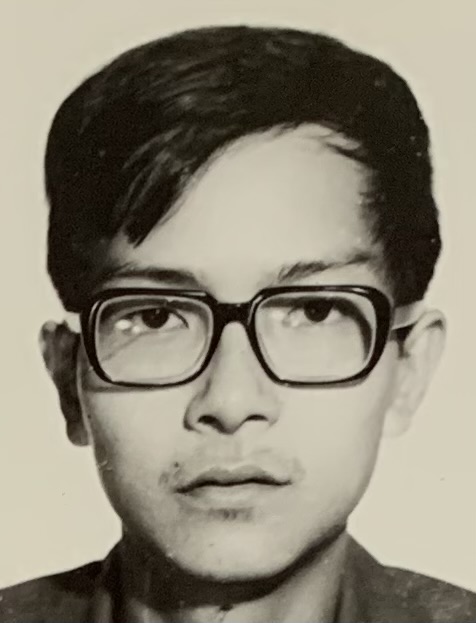
By his small flashlight’s dim glow, Tuan scrawled a few lines in a pocket diary. With a twinge of regret, he recalled the yearlong trip from his hometown of Hanoi. A graduate of Hanoi’s Industrial Arts College, Tuan had studied painting before joining the People’s Army of Vietnam almost exactly a year earlier on March 27, 1967. The young soldier-artist had faithfully chronicled his unit’s march south into the Central Highlands, drawing and painting rural and village tableaux, portraits of fellow soldiers and, as he neared his unit’s intended battlegrounds, scenes of bivouacs, battle plan meetings and soldiers training. Tuan’s sketchbook, filled with more than 100 paintings and sketches, comprised a pictorial diary of his life for the past year. As his unit’s first big battle at Chu Tang Kra loomed, however, he and the other soldiers had been ordered to leave all unnecessary items behind at a supply area in a saddle below the peak of the hill. Along with a book of poetry, Tuan had placed his sketchbook in a rucksack and carefully hid it. He expected to return and retrieve it, but as he made his diary entry moments before the battle began, fear that the precious book might be lost gnawed at him. Suddenly, the roar of a Bangalore torpedo jerked him back to reality, and he saw the glow of flamethrowers as the 7th Battalion initiated its assault. Bugles sounded the attack as Tuan grasped his AK-47 and charged up the hill into the maelstrom.
FORMED IN 1947 and fighting at Dien Bien Phu in 1954, the 209th Regiment was an old unit by North Vietnamese standards. However, the 1967 version of the unit was actually only a cookie-cutter replica of the original. To get more full-strength units to the south faster, the North Vietnamese Army (NVA) took established units, such as the 209th, and borrowed from their command structure to create the “frame” of a new unit, leaving the old designation intact. It was well-equipped, and its men even wore steel helmets, earning the nickname “Hanoi Helmets.” Its mission was to destroy the Republic of Vietnam Armed Forces (RVNAF) bases in western Kontum Province as a precursor to an attack on Kontum Township during the 1968 Tet Offensive. The battle at Chu Tang Kra, one month after the 209th Regiment’s arrival in South Vietnam, would be the unit’s first in the “war against America.” And for many of the Hanoi Helmets who waited in the darkness for combat early on the morning of the fiercest day of the battle, it would be their last. In the end, Private Tuan would never retrieve his precious sketchbook from the unit’s supply area.
The Americans at Hill 995 had intelligence that North Vietnamese units were moving east toward Polei Kleng and Kontum City. “We conducted a combat assault onto that small hilltop [Hill 995] to find and block the movement of an NVA regiment into the country,” recalls Major Robert B. Simpson, operations officer of the 3rd Battalion, 8th Regiment, 4th Infantry Division (3-8th). “They found us before we had time to find them. There was sporadic fighting from the moment the first helicopters touched down on March 20.” Over the next few days, the American forces were being worn down from skirmishes with the North Vietnamese.
Then, at 0320 hours on the morning of March 26, the outer wire of FSB 14’s west and northwest perimeters was breached by an element of the NVA 209th Regiment employing DH-10 directional mines and a Bangalore torpedo. Using flamethrowers and AK-47s, and with mortar and rocket support, the North Vietnamese pushed one of the 3-8th rifle companies back into the artillery positions. An attack on the southern perimeter began at 0400, and another from the west shortly thereafter. As all three of the 209th Regiment’s battalions struck, it became a fierce parapet-to-parapet affair.
In the face of the NVA onslaught and despite being surrounded by superior numbers, the 3-8th resisted staunchly. United States artillery and air support kept the North Vietnamese from completely overrunning the Americans, but the battalion was in an untenable position. “At about 0430-0530 that morning,” Major Simpson said, “I felt sure I’d not live to see daylight. They were very close to overrunning us, with hand-to-hand battles in the perimeter bunkers.”
The 3rd Battalion, 8th Infantry was instructed to prepare for another, possibly larger, assault, and was warned that it could be cut off from outside support.
At Daylight on the 26th, during a lull before the fighting continued, the battalion refitted, received replacements and policed the battlefield. Among the 60mm mortars, B-40 rockets, 82mm mortar rounds and hundreds of grenades, the Americans captured 15 pounds of documents.
“The morning after the big battle,” Simpson said, “Maj. Gen. William R. Peers, 4th Infantry Division commander, flew in by helicopter. We showed him the pile of NVA stuff being collected.” Among the documents was a 6 x 8-inch bound book, with paintings and sketches signed by a “Le D Tuan.” On the page before the first painting was an inscription in Vietnamese: “Dear L D Tuan—Wishing you good health on your road to duty. Your close friend, Hoang Thu. 15 March 1967.”
Regarded as possibly being of some intelligence value, the book fell into the category of “NVA materiel losses” and was placed with the other confiscated documents. But it was unique among the usual Party documents and NVA identification cards. Simpson tore out three pages as souvenirs and later mailed them to his wife. Before handing the book over to General Peers, someone wrote inside the front cover: “To General Peers from the officers and men of the 3d Battalion, 8th Infantry. 26 March 1968.”
The Battle of Chu Tang Kra continued until April 2 and left 32 Americans killed, 165 wounded and one soldier missing. The North Vietnamese losses numbered 184 confirmed killed in action, though estimates were closer to 300. Some 200 NVA soldiers are still listed as missing from this battle.
Back at Fort Benning, GA., Simpson’s wife Bernice received the sketches and showed them to a newspaper reporter. On May 20 the Columbus Enquirer ran a front-page story about the captured North Vietnamese sketchbook. Of the book’s artist, the newspaper reported, “Le D. Tuan…was killed last month in a nameless hill saddle, 10 miles or so west of a Montagnard settlement named Polei Kreng, in the wilderness of the Central Highlands near Cambodia.”
Meanwhile, minus the three pages, the original sketchbook was scoured by General Peers’ intelligence team, which inserted a typewritten appendix describing each painting or sketch. The pictures, some with titles and most dated and signed by the author, told a story of a young soldier traveling with his unit through North Vietnam toward the southern battlefield. Initially carefree and pastoral, the scenes grew more serious as the artist’s southward march progressed.
“Young barefoot boy and village, 1 April 67,” read one sketch inscription. Others included: “NVA soldier with AK-47 sitting in hammock in forest” and “Weapon Inspection, 6 August 67.”
After the sketchbook was cleared of containing any serious intelligence, General Peers added the book to his personal collection of memorabilia from his long service with the OSS in the China-Burma-India Theater during World War II and with the CIA on covert operations with Nationalist Chinese forces during the Korean War. The sketchbook would not surface again until 1984 when, after General Peers’death, his daughter, Penny Hicks, discovered it. It was 25 years later, in 2009, that Hicks decided to ask U.S. Ambassador to Vietnam Michael Michalak for help in returning the book to Le D Tuan’s family.
Deputy chief of mission at the U.S. Embassy in Hanoi, Virginia Palmer, asked the Hanoi Detachment (Detachment 2) of the Joint POW/MIA Accounting Command (JPAC) to help find an avenue for returning the sketchbook. The Hanoi JPAC office contacted the Defense POW/Missing Personnel Office (DPMO) in Washington, which is responsible for policy related to the search for unaccounted for military personnel. It turned out that Robert Newberry, DPMO Director, Deputy Assistant Secretary of Defense for POW/Missing Personnel Affairs, was scheduled to visit Hanoi and agreed to turn the sketchbook over to the Vietnamese Ministry of National Defense.
During formal meetings in Hanoi in November 2009, Newberry turned the sketchbook over to Lt. Gen. Nguyen Chi Vinh, a vice minister of defense of the Socialist Republic of Vietnam. The Vietnamese were visibly moved by the presentation, expressing gratitude to Penny Hicks for having kept the sketchbook safe and to the U.S. Government for facilitating its return. General Vinh pledged Vietnam’s continued cooperation to find missing U.S. personnel in Vietnam, and welcomed assistance and information from the United States and American veterans onVietnamese soldiers still missing from the war. Expressing regret that Le D Tuan had not survived the war, the Vietnamese promised to do their best to return the sketchbook to his family.
The return of a significant wartime artifact from one former enemy to another, a pledge of cooperation to put the war behind them and a note of reconciliation between the two countries’ veterans would seem to be a fitting end to a remarkable saga. A similar scenario had played out in 2005 when the captured diaries of a woman NVA doctor had been returned to Vietnam. The doctor, Dang Thuy Tram, had been killed when U.S. forces overran a field hospital in 1970 in Quang Tri Province. American soldier Frederic Whitehurst prevented the diaries from being burned and kept them for 35 years before he was able to contact Tram’s family and return them. Publication of the diaries in Vietnam—and in the United States as Last Night I Dreamed of Peace—and the subsequent Vietnamese documentary film Don’t Burn It captured the imagination of the Vietnamese people and generated goodwill for the American veteran who saved the books and for veteran-to-veteran initiatives in general.
By December 2009, the Tuan sketchbook had been turned over to Hanoi’s Museum of Military History, and soon after Vietnam’s Pioneer newspaper published a story titled “Another Don’t Burn It—in Pictures,” citing the similarity between the Tuan sketchbook and Dang Thuy Tram’s diary. The Pioneer article on the sketchbook caught the attention of a Hanoi man to whom the circumstances of the sketchbook sounded vaguely familiar. Inquiries led reporters to the man’s wife, Le Thi Kim Dung, the sister of Le Duc Tuan. She revealed yet another twist to the unfolding saga. “When I saw the pictures of the sketches printed in the newspaper, I suspected they were his,” she said. “Well, he is still alive.”
Realizing that their story had just become twice as compelling, reporters scrambled to interview Le Duc Tuan in Hanoi. Despite Tuan’s reluctance to step into the limelight, Pioneer reporters managed to conduct the first of several interviews with him in January 2010. Suddenly Tuan was thrust into the public eye, and two months later his sketchbook became the centerpiece of a new exhibit at the Museum of Military History. At the exhibit’s opening in March, Vietnam President Le Minh Triet personally congratulated Tuan on the sketchbook.
“I never thought the day would come when I would hold this again,” Tuan said. “Along the way to the battlefield, the drawings were my passion when I had time to rest. Now, looking at the pages, I can envision my unit’s deployment route.” While engaged in a training exercise in Hoa Binh Province in early 1968, Tuan’s unit was ordered to deploy to Kontum Province to participate in the second phase of the Tet Offensive. They moved in tarpaulin-covered vehicles by night down the narrow strip of central Vietnam to northern Quang Tri Province, where they turned west and followed Route 14 into Laos. From there, they followed the Ho Chi Minh Trail south to where the borders of Vietnam, Laos and Cambodia meet, and reentered Vietnam at Kontum’s Sa Thay District. There, at the NVA’s regional headquarters, the 209th Regiment prepared for the battle in which the fates of Le Duc Tuan and Robert Simpson would intersect, where so many would die and where his sketchbook would be lost, seemingly forever.
“Before departing for the battle, we left all our personal items in the supply area, only carrying battle-related gear,” Tuan said. “I left my backpack containing three notebooks, including the sketchbook, plus a book of poetry, and only took with me a pocket-sized notebook to use as a diary.”
More than half his company did not survive the battle, and three days later Tuan wrote in his diary: “So sad, I’ve lost all the pictures I drew from the time I joined the Army, along with all my drawing supplies. What will I do now? From now on I won’t be able to draw. What a shame—those vivid drawings of my comrades, all lost.”
In March 2010, Tuan told reporters: “I thought the sketchbook was a casualty of war, and now here it is, still intact. Thanks to those on the other side of the battle lines who didn’t destroy it.”
After Chu Tang Kra, the 209th Regiment fought at Duc Lap, where Tuan was wounded. He subsequently served as an artist and editor for the wartime Central Highlands Newspaper. After he left active duty in 1974, Le Duc Tuan went to work on the staff of the People’s Army Newspaper until he retired in 2005. Each year, he and the survivors of his old unit meet on March 27 to commemorate the battles of their youth.
Robert Simpson retired as a colonel and is now a freelance writer for the Georgia Ledger-Enquirer. Upon learning early this year that Tuan survived the war, Simpson said: “I was told, or maybe I just assumed under the circumstances, that the sketchbook owner had been killed. It had been a really fierce fight….I’m glad he’s alive. I just wish more of them—and of ours—still were.”
Editor’s note: The authors are solely responsible for the editorial content of this article, which is not necessarily endorsed by JPAC or the United States Government.
SHARE THIS ARTICLE
BY RONALD D. WARD AND ROBERT B. SIMPSON
Ronald D. Ward and Robert B. Simpson (7/20/2023) NVA Sketchbook’s Long Strange Trip. HistoryNet Retrieved from https://www.historynet.com/nva-sketchbooks-long-strange-trip/."
====
Đọc thêm ở: (1) IndoChinaWars on Twitter: "26 March 1968- Battle of Chu Tan Kra: NVA assault on 3/8 4th Infantry at FB 14 west of Kontum #VietnamWar https://t.co/WT3OeSf7wh" / Twitter