
TẠM DỊCH: BỨC ẢNH RẤT ĐỘC ĐÁO VỀ BÀ (CỦA MỘT FACEBOOK) THEO CHỒNG* TRONG GIAI ĐOẠN 1916-19 TẠI ĐÔNG DƯƠNG. BỨC ẢNH CÒN LỚN TUỔI HƠN BA TÔI (SANH NĂM 1920). *TÊN EMILE NORY.
Chỉ xảy ra ở Mỹ
NHỮNG ĐẶC TÍNH ĐỘC ĐÁO CỦA MÁY BAY VẬN TẢI C-7 CARIBOU DO ÚC CHẾ TẠO.
| Given the availability of an Army 6 by, this was the standard method of loading and unloading a Caribou. Unfortunately, we rarely had the use of the truck in the boonies. This photo was taken at Ham Tan. | |
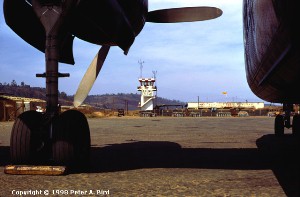 | This photo was taken at Dalat Cam Ly in the Central Highlands |
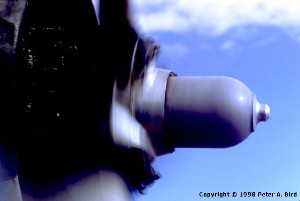 | The prop hub of the mighty Pratt & Whitney R-2000 7M2. |
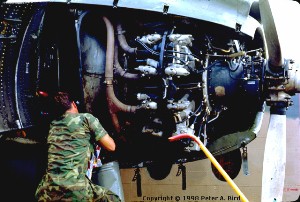 | The mighty Pratt & Whitney R2000 7M2. This particular one was sick enough that I had to throttle it back to idle and fly a single engine approach. Picture taken on the ramp at Bien Hoa. VÌ ĐỘNG CƠ NÀY HƯ, NÊN CHỈ BAY BẰNG 1 MÁY. |
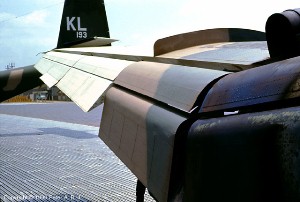 | This picture, taken on the ramp at Cam Ranh Bay, shows the flaps at full extension. One can clearly see that the entire trailing edge of the wing is part of the flap system. One can also understand why one had to point the nose at the ground to get the thing down with the flaps fully extended. |
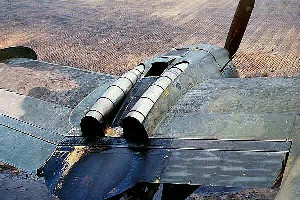 | The augmentor tubes on the top of the Caribou engine nacelle. These large tubes served to collect the 14 individual exhaust stacks and direct the exhaust gas out over the rear edge of the wing. Since they were open at the front where the stacks entered, a venturi effect resulted which drew in outside air to mix with the exhaust gas. This served not only to help cool the very hot exhaust, but also actually added a little extra thrust. |
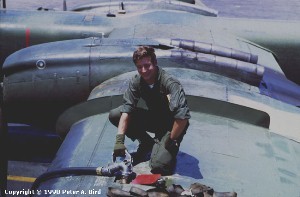 | This is the Petester fueling his own airplane. Actually, it was a major nuisance and the crew members each took turns. The fuel tanks were filled with an open cell foam material to make them less likely to explode if penetrated by a projectile, so the fuel would not run in at the rate the fuel truck would pump. The fueller had to constantly stop the flow to allow the gas to seep out through the foam. Since it took quite a while and the top surface of that wing was very hot, this was not the most desirable of jobs. |
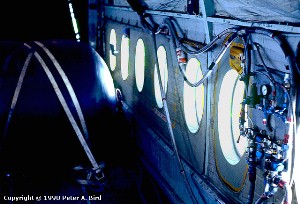 | Long range flying wasn't exactly uppermost in the minds of the Caribou's designers. When long overwater flights were necessary, additional fuel and oil was carried in the cargo compartment. The rubber fuel bladders were filled with avgas and then pressurized with the deicing pumps. As fuel was burned from the wing tanks, more could be added by operating the valves shown at the right. This particular picture was taken somewhere along the route from Cam Ranh Bay to Kadena AFB in Okinawa (by way of Clark AB in the Philippines). |
| This picture, taken on the ramp at Cam Ranh Bay, shows the flaps at full extension. One can clearly see that the entire trailing edge of the wing is part of the flap system. One can also understand why one had to point the nose at the ground to get the thing down with the flaps fully extended// | |
| The augmentor tubes on the top of the Caribou engine nacelle. These large tubes served to collect the 14 individual exhaust stacks and direct the exhaust gas out over the rear edge of the wing. Since they were open at the front where the stacks entered, a venturi effect resulted which drew in outside air to mix with the exhaust gas. This served not only to help cool the very hot exhaust, but also actually added a little extra thrust. | |
| This is the Petester fueling his own airplane. Actually, it was a major nuisance and the crew members each took turns. The fuel tanks were filled with an open cell foam material to make them less likely to explode if penetrated by a projectile, so the fuel would not run in at the rate the fuel truck would pump. The fueller had to constantly stop the flow to allow the gas to seep out through the foam. Since it took quite a while and the top surface of that wing was very hot, this was not the most desirable of jobs. | |
| Long range flying wasn't exactly uppermost in the minds of the Caribou's designers. When long overwater flights were necessary, additional fuel and oil was carried in the cargo compartment. The rubber fuel bladders were filled with avgas and then pressurized with the deicing pumps. As fuel was burned from the wing tanks, more could be added by operating the valves shown at the right. This particular picture was taken somewhere along the route from Cam Ranh Bay to Kadena AFB in Okinawa (by way of Clark AB in the Philippines). |
ẢNH HIẾM VỀ TRẠI LLĐB PLATEAU GI, Ở ĐÔNG BẮC KON TUM, NẰM TRÊN LTL-5B, ĐI TỪ KONTUM ĐẾN QUẢNG NGẢI. SAU NÀY TRỞ THÀNH TRẠI LLĐB CHƯƠNG NGHĨA.


