Monday, July 28, 2025


The Surprising Upside of Disappointment, from a Medal of Honor Recipient Who Lived in a Cave
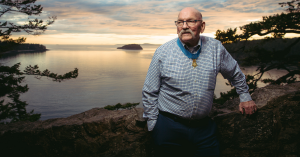
Medal of Honor recipient Gary Beikirch, today. After coming out of the cave, he returned to SUNY-Brockport, eventually earning a master’s degree in educational counseling. He enjoyed a 33 year career working in public schools. His students affectionately referred to him as “Mr. B.” 
Medal of Honor recipient Gary Beikirch, today. After coming out of the cave, he returned to SUNY-Brockport, eventually earning a master’s degree in educational counseling. He enjoyed a 33 year career working in public schools. His students affectionately referred to him as “Mr. B.

If there’s one new consistent in the world today, it’s disappointment due to changed plans. But that might not be such a bad thing overall for a person’s psyche, according to Gary Beikirch, 72, an elite former Green Beret Army medic who lives today near Rochester, New York.

Beikirch learned important lessons from a historic self-imposed season of isolation he undertook after coming home from the Vietnam War.

Today, as people around the world wrestle with loss and life-changing uncertainties, the lessons Beikirch learned are more important than ever.

Gary was told, “The military will either kill you or make you a better man. You have to decide. He enlisted. This is him just out of basic training, ready to serve.

Beikirch was severely wounded during a devastating firefight in Vietnam’s Central Highlands region. On April 1, 1970, he and some 400 Montagnard soldiers and 12 Green Berets were shellacked by enemy fire while trying to protect 2,300 women and children inside a tiny village called Dak Seang.

Some 10,000 enemy soldiers had surrounded the village in secret, intent on wiping it off the face of the map. The Green Berets and indigenous fighters fought back with all they had. Still, they were outnumbered 24 to 1.

Gary as an official Green Beret, a few days before he left for Vietnam. As a medic, he was a specialist fourth class, US Army, Company B, Fifth Special Forces Group. (He would eventually become a sergeant.)

Inside the village, the carnage was horrific. Soldiers were getting hit and dying—and so were the women and children.

Beikirch was hit three times in his stomach, hip, and back, and paralyzed from the waist down. His war should have been over. But as the medic lay bleeding on the battlefield, he knew he still had a job to do. With the battle still raging, he called two helpers to his side and ordered them to carry him.

For hours, still under a hail of fire, Beikirch was dragged from person to person as he continued to do his job, administering aide to the wounded, helping anyone he encountered.

For his selfless actions above and beyond the call of duty, Beikirch would later receive the Medal of Honor, the United States’ highest and most prestigious military distinction for acts of valor.

An aerial view of Camp A-245, Dak Seang, in the Central Highlands region of Vietnam. The airstrip is along the top. Rows of barbed and concertina wire surround the camp.

You would think Beikirch would have received a hero’s welcome and ticker tape parade when he came home. But like so many of his generation of military personnel, that was far from the case.

After being medivacked off the battlefield to a series of hospitals and then flown back to the United States, Beikirch eventually healed in body and learned to walk again. But he was still wounded in spirit from his combat horrors.

The trauma was only compounded when he returned to university. He was called names, shoved in the hallways, literally spit upon, and harassed just for being a veteran.

A Vietnam version of the Band of Brothers, 1969. Gary (front row, in hat) with fellow Green Beret forces and Montagnard fighters. They became close friends and allies.

So Beikirch took a cue from Thoreau. With disappointment mounting and threatening to unravel his tenuous mental and emotional state, Beikirch decided to “drop out” of society.

He grabbed a notebook and his guitar and hiked far out into the craggy, vastly-treed Northern Appalachians.

There, for 18 months, he lived inside a cave. Yes, you read that correctly. Inside his self-imposed mountain seclusion, Beikirch endured two frigid winters.

He bathed in streams, ate army rations, and talked to the walls about the dismay inside of him. It was social distancing of the rawest kind.

Montagnard children in the Central Highlands region. The enemy considered the Montagnards an inferior race, worthy only of extinction. This is who Gary was helping to defend.

To be clear, Beikirch’s disappointment stemmed from responses of fellow citizens who didn’t understand or respect his service, not from missed opportunities while social distancing.

But the solution to overcoming disappointment ended up emerging from his radical change of plans. Only by avoiding people, canceling life as he knew it, and hunkering down inside protective walls, was he buffeted into the person he was meant to be.

Mais la solution pour surmonter la déception a fini par émerger de son changement radical de plans. Ce n’est qu’en évitant les gens, en annulant la vie telle qu’il la connaissait et en s’enfermant dans des murs de protection qu’il a été frappé contre la personne qu’il était censé être.

Nhưng

His goals were clarified. His vision and perspective were redefined. The same can be true for us, Beikirch said today. Disappointment can actually become a professor, teaching us life’s richest lessons.

Mục tiêu của ông được làm rõ. Tầm nhìn và quan điểm của ông đã được tái định hình. Điều tương tự cũng có thể đúng với chúng ta, Bieirch nói hôm nay. Sự thất vọng có thể là 1 giáo sư, dạy cho chúng ta những bài học quý gió nhất của cuộc sống.

Snapshot of an article in Stars & Stripes that described the Siege of Dak Seang, a horrific battle that ultimately raged for 38 days. Despite overwhelming odds and aggression, the village did not fall into enemy hands.

For instance, late one autumn during his season of living in the cave, Beikirch hiked toward the summit of Mount Adams. The trail felt slippery.

Ví dụ, vào cuối mùa thu năm ấy, trong mùa sống trong hang động, Beikirch đã đi bộ lên đỉnh núi Adams. Đường mòn khá trơn trượt.

Early snow nearly froze his gloved fingers. In steep places, he needed to climb boulders hand over hand, and Beikirch initially cursed the obstacles. The boulders were cold and unyielding, surely an impediment to his progress.

Yet when the summit came into view at last, so did a new awareness. As Beikirch looked down the trail from the top of the mountain, he saw how the very challenges he had cursed had actually helped him succeed.

The boulders in his way hadn’t been obstacles after all. During the slippery climb, the boulders had acted as rungs on a ladder. The perceived disappointments had actually given him traction, boosting him to reach his goal.

President Nixon presents Gary Beikirch with the Medal of Honor.

Later, back at the cave, Beikirch found a serious blizzard brewing. Temperatures plummeted. The wind shrieked. Anxiety welled up within the young veteran, but he chose to stay calm. During Green Beret training, he’d learned not to complain no matter his circumstances.

Complaining only compounded hardship and eroded confidence. So now he simply shook the blood to his extremities, bundled up in his sleeping bag, and hoped for the storm to pass. He couldn’t control the blizzard. But he could control his response.

“If I had chosen to complain, it would have only undermined my strength and motivation,” Beikirch said. “That’s the same for any of us today, too. Complaining only hurts yourself, not to mention the morale of the people around you.

The key is to focus on what you can do—on what you can control. Then you’ll find the determination to go forward.”

No photographs exist of the cave that Gary lived in. In latter years, Gary returned several times to the spot, sometimes with friends. Note the ruggedness of the terrain. Gary describes the wilderness as his professor, teaching him how to live.

Today, as the COVID-19 pandemic continues to impact lives worldwide, Beikirch said he’s comforted by the thought that despite the massive disappointment and life-altering changes, people are pulling together.

When the 101st Airborne Saved Friend and Foe

He admits that dealing with disappointment is seldom easy, even though he learned important lessons and grew from his time inside the cave. He hopes that people will win their mind-and-heart battles by perspective and faith.

Medal of Honor, Gary Beikirch is pictured with his biographer, New York Times bestselling author Marcus Brotherton. Gary’s biography is titled “Blaze of Light.”

Marcus Brotherton is a four-time New York Times bestselling author.

His newest book, Blaze of Light, is a biography of Medal of Honor recipient Gary Beikirch.  You can purchase the book here: Amazon / WMBooks

And he wears the Medal of Honor in tribute to something far greater than himself, with the hope of encouraging anyone who’s ever fought through a battle or sheltered in a cave.

Marcus Brotherton

Marcus Brotherton is one of the authors writing for WAR HISTORY ONLINE

Sunday, July 27, 2025

QUÂN CSBV CHIẾM 1 TIỀN ĐỒN Ở CAO NGUYÊN

Nguồn: Hãng AP ngày 3/11.1972.

Sài gòn, nam VN, thứ Sáu, 3/11/1972 -- Hôm qua, Bắc quân dẫn đầu bởi xe tăng đã tràn ngập 1 trại biên phòng khác ở Cao nguyên Trung phần trong khi quân hai bên chiến đấu để mở rộng lãnh thổ trước khi ngừng bắn.

Đức Cơ, 12 dặm cách biên giới Cao Miên và 27 dặm tây nam Pleiku, tin cho biết đã bị tràn ngập trước rạng đông dù cho những cố gắng suốt 24 giờ của gunship và oanh tạc cơ nhằm đẩy lui kẻ thù. Trại này là 1 trong loạt các căn cứ biên phòng được lập ra để quấy rối đường xâm nhập.

Phát ngôn viên CP cho biết địch đã mở 142 cuộc tấn công khắp nam VN trong 24 g chấm dứt lúc rạng đông. Phát ngôn viên nói đây là số lượng nhiều nhất chỉ trong 24 giờ trong vài năm qua, nhưng phần lớn là pháo kích quy mô nhỏ bằng cối và hỏa tiển.

Đài Hà Nội nói việc Mỹ trì hoãn ký kết bản dự thảo hiệp định Paris đã khiến họ "ko có chọn lựa nào khác là đẩy mạnh chiến đấu trên mọi mặt trận." Trong trận Đức Cơ, có tin ít nhất 3 xe tăng bị không quân đồng minh phá hủy.

BĐQ bảo vệ trại đã rút bỏ sau khi bị pháo bằng đại bác và hỏa tiển và bộ binh tấn công 3 mặt. Một số rút chạy về một khu rừng cách đó khoảng 500 m, và bắt tay với những đv khác.

Máy bay tiếp tục ném bom suốt ngày vào quân địch trong khu vực, để chuẩn bị 1 phản công.

BA TRẠI BỊ TRÀN NGẬP

Có tin ngày hôm qua Bắc quân xâm nhập 1 ấp cách Pleiku 4 dặm. Tin cho biết, đó là ấp Pleiblang 3, đã được tái chiếm sau đó, với 4 tên chết và 1 số tài liệu bị tich thu. (Pleibang 3 nằm trên một tỉnh lộ chạy từ Pleiku về phía chính tây -- ND).

Các viên chức ở Pleiku nói biến cố này cho thấy các đv chính quy của CSBV đã chia thành nhiều toán nhỏ và cố gắng xâm nhập càng nhiều khu vực càng tốt để chuẩn bị cho 1 ngưng bắn. 

Phát ngôn viên CP thông tin về trận đánh gần SG, nói rằng quân cs đã bị đẩy lui khỏi 4 ấp mà chúng đã chiếm trong khu vực và những QL chánh trong vùng thủ đô đã mở lại. 

Thông cáo cho biết các ấp được tái chiếm ở 12 dặm tây bắc của SG tới 20 dặm đông của thủ đô./.


ENEMY CAPTURES A HIGHLANDS POST

About the Archive
T

SAIGON, South Vietnam, Friday, Nov. 3—Tank‐led North Vietnamese troops overran another border camp in the Central Highlands yesterday as both Communist and South Vietnamese forces fought to expand their territorial control before a cease‐fire.

Ducco, 12 miles from the Cambodian border and 27 miles southwest of Pleiku, reportedly fell before dawn despite roundthe‐clock efforts by United States and South Vietnamese gunships and bombers to turn back the enemy attacks. Ducco was one of a series of frontier base camps set up to counter enemy infiltration.

The Saigon command reported that enemy forces made 142 attacks throughout South Vietnam in the 24 hours ended at dawn. Spokesmen said it was the largest number recorded in any 24‐hour period in several years, but many of them were small‐scale rocket and mortar barrages.

The Hanoi radio said the United States delay in signing the draft peace settlement had left “no other choice than to step up the fight on all fronts.” In the battle for Ducco, at least three enemy tanks were reported knocked out by allied air attacks.

Advertisement

SKIP ADVERTISEMENT

Government rangers defending the base abandoned it after being pounded by artillery and missiles and assaulted on three sides on the ground. Scores of defenders reportedly broke out to the relative safety of a jungle plateau 500 yards away where, according to reports from the field, they joined other Government troops.

Air strikes ‘on Communist troops in the area continued through the day, it was reported, to prepare for a Government counterattack.

3 Camps Overrun

Ducco was the third border camp to be overrun in the Central Highlands in less than month. Benhet and Dakseang fell in October.

In other action yesterday, North Vietnamese troops were reported to have penetrated a hamlet less than four miles outside Pleiku. Reports from the field said Government troops retook the hamlet, known as Pleiblang 3, yesterday morning, killing four enemy soldiers and capturing a number of documents.

Advertisement

SKIP ADVERTISEMENT

Officers in Pleiku said the incident indicated that units of the North Vietnamese main forces were breaking into small groups and trying to penetrate as many areas as possible in preparation for a cease‐fire. Similar reports came from Danang, headquarters for the country's northern military region.

Reporting on the fighting near Saigon, a South Vietnamese military spokesman said that Communist troops had been driven out of four hamlets they had seized in the area and that all major highways in the captal region were open.

A communiqué said the reoccupied hamlets ranged from 12 miles northwest of Saigon to 20 miles east of the capital

Related Content

More in Archives