WILLIAM = 6133114 = 19 = 10 = 1
SHAKESPEARE = 35125385125 = 40 = 4
San Jose, CA 1987 — They no longer call the shots, but they still wish they could, those former generals and admirals of the defeated Republic of Vietnam. They meet regularly in the San Jose area to secretly map the political future of the Vietnamese, both here and in the homeland. Their meetings are private, and they prefer that they stay that way.
“We don’t look for publicity,” said Do Kien Nhieu, once a brigadier general, now a mail room supervisor in a Bay Area city hall. “Even the Vietnamese press does not write about us. No one in this office knows who I am.”Today a dozen of the generals live in the San Jose area selling insurance, investing in real estate and working at such diverse jobs as electronics technician, social worker and catering-truck driver. They live almost anonymously in two worlds, making a living in one and working behind the scenes to influence the future in the second. The defeated warriors in exile, once leaders of one of the best-equipped military forces in history, meet to discuss their future roles in two areas a world apart: Vietnam and California’s Republican Party. Nhieu was a general in the South Vietnamese army and the last mayor of Saigon, a post he held from 1968 until his escape on one of the last flights from the U.S. Embassy in 1975. Shortly after Nhieu left, Saigon ceased to exist when the victorious communists renamed it Ho Chi Minh City.For 12 years in Vietnam, from the assassination of President Ngo Dinh Diem in 1963 to the fall of Saigon on April 30, 1975, the generals ran South Vietnam. Sixty-seven generals and admirals escaped from Communist Vietnam. A dozen did not get away. Their fate is uncertain.”A lot of them are in re-education camps. We don’t know what happened to them. They are our MIAs,” said Maj. Gen. Bui Dinh Dam, chairman of the San Jose-based Vietnamese National Military Academy Alumni Association.
Dam is a Santa Clara County social worker. He was one of President Diem’s favorite officers and later was in charge of mobilization in the Ministry of Defense.
While some of the generals insist that they meet strictly to socialize, their real purpose is clear in the name they have chosen for themselves: Dien Hong, the name of the assembly of elders that fought the Chinese during the centuries when they occupied Vietnam.
Nhieu, the last mayor of Saigon and now the secretary general of Dien Hong, is also coordinator of the Indochinese Republican League.
”We (the generals) have monthly meetings in San Jose,” Nhieu said. “We just sit together and talk together. It’s a social gathering.”
”We talk about the country (Vietnam),” said Lt. Gen. Hoang Xuan Lam, former commanding general of the northern provinces and the commander of the ill-fated invasion of Laos in 1971. When he first arrived in the United States, Lam sold insurance in Santa Clara. After his son was killed in an accident, he moved to Sacramento, where he still sells insurance.
”We’re not political yet,” Lam said. “We just stand together.”
But Dien Hong is more than just an occasional social gathering of old soldiers, acquaintances of the generals said.
Dr. Nguyen Ton Hoan, one-time deputy prime minister of the Republic of Vietnam and a resident of Mountain View, has worked with and against the generals in and out of Vietnam for more than 30 years. Hoan said topic A on the generals’ agenda is retaking Vietnam through political means.
Waiting for right person
”They study the issues and are ready to support someone serious,” Hoan said. Today Hoan operates the Mekong Restaurant in Mountain View and said he helps run a clandestine resistance movement in Vietnam.
But Hoan said he is not ready to discuss his role in the resistance.
”Serious people do not talk about their movement in Vietnam, only later when they have strength,” he said.
In this country, the Vietnamese who fled communism, sometimes at great risk, are staunchly Republican.
Nhut Ho, chairman of the League of Vietnamese American Voters in the United States, said an estimated 90 percent of the Vietnamese register with the Republican Party after earning their citizenship. He said there are about 7,000 Vietnamese registered voters in Santa Clara County.
Robert Walker, executive director of the Republican Central Committee of Santa Clara County, placed the percentage of Vietnamese registering as Republicans in Santa Clara County at 70 to 80 percent. Walker said the party welcomes the Vietnamese as “a potent new political force” that already is changing the political tone of some San Jose precincts.
Ho said most Vietnamese are more at home philosophically with Republicans.
Of like minds
”The Republicans are conservative and anti-communist. We are conservative and anti-communist,” said Ho, a San Jose insurance agent who said he was a high school teacher in Vietnam.
”They are involved in politics,” Ho said of the generals. “One goal is to liberate Vietnam. I have a lot of friends in that group.”
Dam, chairman of the national military academy alumni group, said life for the generals, most of whom have settled in the United States, has been difficult. ”It takes time to adjust to a new life. I had to go to San Jose State to get a degree so I could be a social worker.” He politely cut short a telephone interview, saying he had nothing more to say.
Most of the generals are publicity-shy, preferring to plan their strategy in private. None would allow his photograph to be published. They fear that a discussion of their efforts to once again influence Vietnamese affairs might spark unwanted debate, criticism or a backlash.
”They are the true cause of the loss of Vietnam,” said Hoan, the former civilian leader.
Members of Dien Hong refuse to discuss its purpose except to say that it is social.
”Our meetings are private. It is a private group,” insisted Lam, the northern provinces commander.
”I don’t know anything. I’m just a member,” said a tight- lipped Lt. Gen. Lam Quang Thi, who lives in Milpitas and said he works in real estate. Thi was the commandant of the Vietnamese National Military Academy, South Vietnam’s West Point, near the highland resort city of Dalat.
Meeting place
The generals, usually 30 to 35 at a meeting, sometimes gather at Hoan’s Mekong restaurant, said Col. Ngo The Linh, a Sunnyvale Realtor and former commander of a special operations intelligence unit. Linh is not a member of Dien Hong because he left Vietnam as a colonel, but he, like Hoan, still follows the ebb and flow of politics in the Vietnamese community.
”They keep ready,” Linh said of the generals. “If the situation changes they are ready to move.”
Meanwhile, Linh said, Nhieu and the other generals are a power bloc in the Vietnamese branch of the California Republican Party. Hoan said the Vietnamese Republicans are looking over prospective candidates to run next year in a state race.
Hoan, once head of South Vietnam’s rightist Dai Viet Party, is a veteran of Vietnamese politics and intrigue. In 1955 he was exiled to France after scheming to unseat President Diem. He opened a restaurant in Paris.
In 1964 he was summoned back to Vietnam by Gen. Nguyen Khanh to become prime minister. But the general changed his mind, took the prime minister’s job himself and appointed Hoan his deputy. Hoan felt betrayed and conspired to unseat Khanh. Once again, Hoan was banished, this time to the United States and Mountain View, where he opened a restaurant.
Hoan, a deceptively mild-looking medical doctor who no longer practices, continued to dabble long-distance in Saigon politics. In spring 1975, as communist forces moved on Saigon, Hoan offered his services as head of a coalition government. When Saigon fell he appealed to the U.S. government and the United Nations to establish a Vietnam-in-exile on a Pacific island.
Typical strategy
Here’s what Stanley Karnow said of Hoan’s 1955 banishment in his book “Vietnam”: “Typically he opened a restaurant, meanwhile maneuvering from afar to influence events inside South Vietnam through a clandestine network of associates there.”
Thirty-two years and one more banishment later, Hoan is still at it as the generals mark time.
The Vietnamese generals and admirals in the United States run the spectrum from top-notch battle leaders to the corrupt and inefficient.
There are at least 11 generals in the Bay Area and two in the Sacramento area, Lam and Brig. Gen. Nguyen Van Chuc, who was a commander in the corps of engineers. Chuc ran a gas station near Sacramento for a short period but now spends his time traveling around the country as head of one of the three main resistance movements.
Dam is a social worker and Nhieu a mail room supervisor. Air force Chief Lt. Gen. Tran Van Minh, Dien Hong’s chairman; air force division commanders Brig. Gen. Huynh Ba Tinh, Brig. Gen. Nguyen Huu and Brig. Gen. Nguyen Van Luong; and artillery commander Maj. Gen. Bui Huu Nhon are electronics technicians in Silicon Valley. Lt. Gen. Nguyen Van Manh, former chief of the general staff, is retired. And the last navy chief of staff, Rear Adm. Diep Quang Thuy, runs a catering truck in San Jose.
Controversial figure
Other generals in the area include Thi of Milpitas and Maj. Gen. Nguyen Khac Binh of San Mateo. In addition to running the military academy, Thi served as commander of I Corps, the northern provinces. Binh was commander of the national police and was a controversial figure because he was responsible for keeping thousands of political prisoners.
While the generals talk of a return home or a return to power, time ran out for at least one.
Maj. Gen. Nguyen Van Lanh, former deputy chief of air force operations, died in 1983 of cancer.
https://drockstroh.wordpress.com/2007/04/16/many-old-saigon-generals-settled-in-san-jose/
The prospect for saving the government of General Nguyen Van Thieu, last in a long line of military dictators propped up by the United States, was rapidly slipping from reality to fantasy. The situation was dire and deteriorating: Thieu was making decisions based on his daily astrological chart, while Graham Martin, U.S. ambassador to Vietnam, had terminated daily CIA briefings, threatened to “cut the balls off” CIA Saigon station chief Tom Polgar, and was becoming increasingly detached from the reality on the ground. Recently declassified documents and fresh insights from Frank Snepp, the CIA’s chief analyst in Vietnam during 1975, present a new and revealing picture of the final fiasco, cutting through political propaganda and undermining many of the myths.
In January 1975, after a nearly monthlong battle, People’s Army of Vietnam (PAVN) units took Phuoc Long, and by early March the complete unraveling of South Vietnam was in full swing. On March 12, the PAVN captured Buon Ma Thuot, a provincial capital on the southern edge of the strategic Central Highlands. And, even though his paratroopers had repelled an enemy attack east of Route 1 from the DMZ on March 13, Thieu ordered his elite Airborne Division to deploy from Quang Tri to Saigon. In deciding to abandon Military Regions 1 and 2 to protect Saigon and the Mekong Delta, Thieu told his commanders the loss of two of four military regions was preferable to a coalition government with the Communists. However, he had greater fears than a coalition government. Like all his predecessors, Thieu had achieved power via a military coup and now feared being victim of another. He wanted elite military units nearby to protect him from his enemies in the South. Telling his National Security Council that he planned to withdraw all military forces from the Central Highlands, Thieu warned them not to divulge his decision to anyone.
“After the fall of Phuoc Long, Thieu realized the United States was not going to save him,” recalled Snepp. “He decided to retrench, but it was too little, too late. He conceived a strategy as of March 14 called ‘light at the top, heavy at the bottom,’ pulling forces out of northern South Vietnam and concentrating them around the palace…because he was concerned his military commanders might move against him.” He went to Cam Ranh Bay and his message was, let’s pull the Airborne back, let’s shift them around. “But he didn’t follow through,” Snepp said. “He didn’t tell his commanders about his timetable, so when the North Vietnamese moved out of the Central Highlands and concentrated in Military Region 1, the South Vietnamese army was in a confused state. That was one of the reasons they collapsed so rapidly.
“We didn’t know what Thieu was planning because he had deliberately deceived us,” said Snepp. “Only belatedly, from when the Communists began talking about it, we learned from our electronic intercepts and began to understand what he was doing. It was the one time during the war—to my knowledge—that the South Vietnamese were so cagey that we were in the dark about their plans.”
The North Vietnamese quickly turned their forces and cut off the retreating South Vietnamese army. “It was brilliant strategy,” Snepp recalled, “because they had brilliant intelligence. They had an operative inside the South Vietnamese military command.” A corporal, the chief documents manager for the commander of the South Vietnamese army, had been working for the Communists for many years. “You couldn’t have a better spy than that,” Snepp said.
Meanwhile, in the United States, before heading to Palm Springs for a weeklong golf vacation during the Easter holiday in early April, President Gerald Ford ordered General Fred Weyand, Army chief of staff and former commander of the Military Assistance Command Vietnam (MACV), to go to Saigon to assess the situation and come back with recommendations. Weyand was accompanied by Ambassador Martin, who had been lobbying Congress for more military and financial aide for Thieu. Weyand and Martin believed that the lack of ammunition and fuel was the primary reason for the Army of the Republic of Vietnam’s (ARVN) collapse and that a rapid injection of military aid would enable South Vietnam to survive another six weeks until the rainy season began, which supposedly would curtail North Vietnamese military operations.
Other senior U.S. officials were not as optimistic. Colonel William LeGro, the Defense Attaché Office intelligence chief, told Weyand on March 31 that it was “already too late” for military aid. In his report to Weyand, he wrote, “defeat is all but certain within 90 days.” LeGro thought the only solution was strategic air power—massive B-52 bombing raids.
Subscribe to our HistoryNet Now! newsletter for the best of the past, delivered every Monday and Thursday.
CIA Director William Colby told President Ford’s Washington Special Action Group (WSAG) on April 2: “The balance of forces in South Vietnam has now shifted decisively in the Communists’ favor.” Colby’s conclusion came upon learning that Nha Trang, capital of Khanh Hoa province, 450 kilometers northeast of Saigon, had been abandoned by the ARVN even though the city had not been attacked or even probed by the North Vietnamese. After learning of the ARVN’s departure, George Jacobson, special assistant to Ambassador Martin, sent the U.S. consul general in Nha Trang a cable from Saigon instructing him to “get the hell out of the city now.” The American evacuation then caused local military units and civilians to panic. In fact, it wasn’t until April 5 that several small North Vietnamese military units entered the city.
Thomas Polgar, CIA station chief in Saigon, believed the North Vietnamese could capture Saigon but thought they would prefer a coalition government led by a South Vietnamese neutralist such as General Duong Van Minh, whose brother was a North Vietnamese Army officer. Indeed, on March 31, the Provisional Revolutionary Government (PRG) had announced over Liberation Radio that it would consider talks with South Vietnamese leaders, but only after “traitor Thieu” was removed from office. Polgar thought the Soviets would pressure the North to accept a coalition government as an interim step. He didn’t think the North Vietnamese had the military or political resources to conquer and administer South Vietnam in the two months before the rainy season would start. “I should have sent Polgar out,” Martin later said. “He didn’t know what the hell was going on.”
The day after Nha Trang was abandoned, April 2, South Vietnam’s National Assembly accused Thieu of “abuse of power, corruption and social injustice” and called for a new “government of national union.” The same day, Polgar sent a top-secret cable to the White House warning that South Vietnam would collapse within “the next few months” if Thieu was not removed from office. The French ambassador to South Vietnam began actively supporting General Minh as Thieu’s successor. Two days later, the Roman Catholic archbishop for Saigon, Nguyen Van Binh, demanded that Thieu resign, saying, “Everyone wishes an orderly change.” Almost immediately after that, former premier Nguyen Cao Ky endorsed the archbishop’s demand and secretly began to organize a coup.
“Ky said he would kill Thieu and take over,” said Snepp. “I think he was bluffing but his bluffs were at a time when the country and the situation in Saigon was so volatile that you took it seriously, even the most outrageous of threats.”
Ambassador Martin and General Weyand met with Thieu in Saigon on April 3. The beleaguered president asked for more military aid and support from B-52s. Weyand rejected the B-52 request, but promised to continue the daily airlift of guns and ammunition. Weyand also proposed a new line of defense at Phan Rang, 370 kilometers northeast of Saigon, and a second line along Highway 4, between Saigon and the Cambodian border. After the meeting, Martin told assembled journalists that Saigon was not in danger.
Across the Cambodian border, the situation was just as bleak. On April 3, U.S. Ambassador to Cambodia John Gunther Dean sent a top-secret request to President Ford for permission to evacuate all Americans from Phnom Penh as the Khmer Rouge had cut all supply routes into the city and were shelling the airport. Secretary of State Henry Kissinger urged Ford to delay the evacuation, claiming he could negotiate a coalition government or convince former Cambodian leader Norodom Sihanouk to abandon his Chinese benefactors in favor of the United States. Ford acquiesced to Kissinger and the evacuation was postponed until April 11.
Thieu fired Prime Minister Tran Thien Khiem on April 4 because he thought Khiem, a former Army general and coup leader, was collaborating with Ky. Thieu named the National Assembly Speaker Nguyen Ba Can as prime minister and asked him to form a new “government of war and national union.” The new prime minister couldn’t convince any others to accept positions in the new government, leaving South Vietnam without a functioning government except for Thieu and ARVN generals who still supported him.
Before departing Saigon, General Weyand told reporters that the South Vietnamese military forces “are still strong and have the capability to defeat the North Vietnamese.” However, he privately told a different story to Ford and Kissinger in Palm Springs on April 5. In his report, Weyand wrote: “The current military situation is critical and the probability of the survival of South Vietnam as a truncated nation is marginal at best. The Government of Vietnam is on the brink of military defeat. Given the speed at which events are moving and for reasons of prudence, the United States should plan now for a mass evacuation of some 6,000 American citizens and tens of thousands of South Vietnamese and Third Country Nationals.” To buy time, Weyand urged the president to ask Congress for $722 million in emergency military aid. He also told Ford, “Thieu will have to step down.”
Upon learning of Weyand’s proposal, Secretary of Defense James Schlesinger openly opposed it, as did most of Ford’s political advisers who did not want to see the president politically wounded by a losing situation. Kissinger, however, endorsed Weyand’s plan, and back in Washington the next day, he met with Ford and Lt. Gen. Brent Scowcroft, deputy assistant to the president for national security. Declassified transcripts of the meeting reveal Kissinger’s candid assessment of the unfolding situation in Phnom Penh and Saigon: “We have two nutty ambassadors. Dean wants to bug out. Martin wants a new version of the Easter Rebellion. He is supporting Thieu too strongly.”
Ford asked his secretary of state, “Supposing Ike, Kennedy, Johnson or Nixon were president, what would they have done?” Kissinger responded, “Kennedy would have ratted out. Nixon may have bombed, he was vicious in these things.”
“How about Johnson?” asked Ford.
“He wouldn’t have bugged out,” replied Kissinger. “His advisers would have tried to bug out.”
Then Ford took a shot at President Kennedy: “Without appearing to do so, Kennedy probably would have bugged out, with some famous statement that would have disguised it.”
Kissinger told the president: “I must say it would be popular to say we have done enough….Give only humanitarian aid, negotiate with North Vietnam to take out those who want to go and say if the North won’t agree, we’ll do it by force.”
“It goes against my grain,” replied Ford.
“Mine too,” said Kissinger.
“I don’t feel I can do it,” said Ford.
Kissinger then took charge. Referring to a planned presidential address to Congress, he said: “Then say in the speech you considered it and you don’t know how we can withdraw aid from those who know the odds more than us and still want to go on fighting.” Kissinger knew, however, that the CIA had reported that some 150,000 South Vietnamese soldiers in the northern half of the country had been annihilated or simply disappeared since March 25, 1975, and that the North Vietnamese had captured more than $1 billion worth of equipment, including 400 airplanes and helicopters.
Anticipating a congressional rebuff, Ford said, “If Congress wants to vote this way, the efforts of five presidents, 55,000 dead and five Congressional efforts are in vain.”
“We should put the withdrawal option before the NSC [National Security Council],” Kissinger pushed. “I will present the withdrawal option, $300 million in humanitarian aid and the $722 million. Then various evacuation options….Martin is a gutsy guy but he is heading for a debacle. He won’t give us any planning. We have got to go in by the end of the week to Thieu and say frankly we may not get the aid and we must now be prepared.” Ford did not respond, and the discussion ended.
On April 9 and 10, at meetings of the WSAG and NSC, Kissinger convinced Ford that financial support of South Vietnam was crucial to future American foreign policy. In the meetings, Schlesinger, Colby and Joint Chiefs of Staff Chairman General Harold K. Brown called for immediate evacuation of American personnel and citizens. Kissinger, paraphrasing Martin’s opinion that a rapid withdrawal would trigger collapse of South Vietnam’s government and endanger all remaining Americans, opposed them. Ford feared being blamed for the loss. Again, as with the aid proposal, Kissinger prevailed, but he agreed that Martin should expedite “thinning out” nonessential personnel and retired Americans.
In a televised speech to a joint session of Congress on April 10, Ford blamed Congress for not providing “adequate support” to South Vietnam and implied that North Vietnam’s invasion was a direct result. He made no mention of Weyand’s and Colby’s warnings that South Vietnam was on the brink of collapse, but he did ask for the $722 million and an additional $250 million for refugee relief. He also urged Congress to amend immigration laws so “tens of thousands of South Vietnamese to whom we have a profound moral obligation” could immediately enter the United States. Then the president shocked Congress and many Americans when he requested suspension of restrictions on the use of military forces, claiming he needed unrestricted use of military combat units to protect Americans.
Ford’s top domestic political advisers, including Donald Rumsfeld, John Marsh and speechwriter Bob Hartmann, were taken aback by the president’s confrontational stance. They had underestimated Kissinger, who had worked with Ford on the speech until 1:30 a.m. the night before.
The day after the speech, New Mexico Democratic Sen. Joseph Montoya of the Senate Appropriations Committee questioned Kissinger: “You want $396 million to sustain South Vietnam for 60 days and the other $326 million of the $722 million is for the purpose of organizing ranger units and training more manpower for self-defense….What happens after the 60 days?”
Kissinger replied, “Senator, after the 60 days, depending of course on the military situation and assuming there has been no negotiation, we would be requesting from Congress the sum that we have previously submitted, which is $1.3 billion.”
Senator Walter Huddleston pressed the secretary of state. “The American people want to know whether or not after all these years this additional funding will lead toward any conclusion that is any better than what is going to happen when we stop. Is there any answer to that?”
“There is no certain answer to that question,” replied Kissinger. “I wish there were.” Senator John McClellan, committee chairman and a longtime supporter of the war, expressed the general consensus in Congress: “I think it is too late to do any good. Further military aid could merely prolong the conflict and perhaps postpone briefly the inevitable—a Communist victory.”
Ford blamed Congress for the loss of South Vietnam. The action of Congress, “didn’t make me proud to be an American,” he told the American Society of Newspaper Editors on April 16. “The United States did not carry out its commitment in the supplying of military hardware and economic aid. If we had, this present tragic situation in South Vietnam would not have occurred.” Senate Majority Leader Mike Mansfield angrily called Ford’s accusation “a distortion so immense that it borders on the irrational.”
“Those bastards!” yelled Ford when informed on April 17 that the Senate Armed Forces Committee rejected his emergency aid request. Two days later, CIA director William Colby told Ford, “South Vietnam faces total defeat and soon.”
The situation in Saigon was now far beyond repair by U.S. aid, regardless of what Ford claimed or who he blamed. The so-called Weyand line of defense at Phan Rang was penetrated on April 16 by two PAVN divisions. And, according to Snepp: “We knew Nguyen Cao Ky was agitating to overthrow President Thieu. We knew it and we warned him that he should not do it.” Ky claimed he was encouraged by unnamed Americans to take action against Thieu.
Graham Martin, figuring he was being made a scapegoat, sent Kissinger a secret cable on April 19 claiming Defense, State and the intelligence community had taken actions to avert blame and that “the only person whose ass isn’t covered is me.” Kissinger fired back: “My ass isn’t covered. I can assure you it will be hanging several yards higher than you when this is over.”
During the evening of April 20, South Vietnamese Army units withdrew from Xuan Loc, the last line of defense for Saigon. Seeing the writing on the wall, at noon the next day Thieu told close advisers that he intended to resign that evening during a speech to South Vietnam’s National Assembly. In a command performance, he tearfully said the United States “ran away and left us.” Thieu handed control to Tran Van Huong, the 72-year-old half-blind vice president.
The night before Thieu resigned, Polgar told Snepp: “I have a major mission for you. I want you to collect Thieu at the deputy prime minister’s house tomorrow night and take him to Tan Son Nhut airbase so he can escape the country.”
Recalled Snepp: “When I arrived at the deputy prime minister’s house, Thieu was dressed in a gray sharkskin suit. His hair was slicked, his face oiled. He was a dashing figure, but he was drunk. As I invited him to get into the car, his aides came running out of the bushes with suitcases. They shoved them in the back of my car. I could hear the clink of metal upon metal. He was moving the last of his personal fortune in gold bullion out of the country. We headed for Tan Son Nhut airbase in totally blacked-out conditions. It was a very tense moment. The great fear was that Ky was going to attack our motorcade and kill Thieu.”
Polgar was standing by at the CIA’s black C-130 aircraft waiting to whisk Thieu to Taiwan. Snepp recounted the poignant scene: “Thieu leaned over and said ‘thank you.’ I was stunned. I had no idea what he was thanking me for. All the lives that had been lost, all the American lives? He stumbled out and went up the ramp steps to the aircraft. Ambassador Martin was holding on to the ramp. After Thieu went through the doorway, Martin grabbed the ramp and yanked it away from the aircraft, as if he was severing the umbilical that had kept us attached to South Vietnam.”
From then on, the fog around Graham Martin deepened, according to Snepp. “He was convinced Thieu’s departure would give us one more chance of a negotiated settlement. That eventually a neutralist such as General Minh would take Thieu’s place and the Communists would be satisfied. We had no intelligence suggesting that scenario. On the contrary, our electronic intercepts indicated the North Vietnamese army was continuing to move at top speed, and two additional divisions were on the move from North Vietnam. So where the wishful thinking was anchored, I don’t know.”
Bob Hartmann wrote the speech President Ford delivered on April 24 at Tulane University and got some revenge against Kissinger for Ford’s speech to Congress on April 10. Hartmann wrote about American pride, and Ford declared, “it cannot be achieved by fighting a war that is finished as far as America is concerned.” The predominantly student audience exploded with wild cheers. Ford displayed a mile-wide smile.
On April 28, Martin sent Kissinger a classified cable in which he predicted Americans would be in Saigon “for a year or more.” Snepp recalled, “Graham Martin remained committed to the belief that a fig leaf surrender was a possibility.”
“On the last day, the Communists followed through with their plans,” said Snepp. “The airbase was shelled. Fixed wing aircraft could not arrive or depart Tan Son Nhut. We had to go to a helicopter airlift. Because of the inaction of the ambassador to plan for an evacuation, a lot of young officers in the Embassy, CIA and State Department officers had, several weeks before, begun stuffing their Vietnamese friends onto outgoing empty cargo aircraft….Graham Martin in the midst of all this, in his wishful thinking, ordered the unofficial airlifts to stop.”
But Martin’s wishful thinking and procrastination created a far greater problem. “We had waited so long to destroy classified documents that we had mountains on the last day,” said Snepp. “We were heaving them into the incinerators and the shredding machines on the top floors of the embassy. We took bags of the half shredded documents outside to the embassy parking lot to be eventually taken to the incinerator. When the choppers arrived, the downdraft tore open the bags. We had top-secret confetti in the embassy courtyard….The chaos was so total that the South Vietnamese evacuated their military and intelligence headquarters without destroying any of their classified files….The disaster was total.”
On April 30, evacuation from the embassy was to be terminated on orders from the White House. Helicopter pilots flying over Vietnam received the following radio transmission: “The following message is from the president of the United States and should be passed on by the first helicopter in contact with Ambassador Martin. Americans only will be transported. Ambassador Martin will board the first available helicopter and that helicopter will broadcast ‘Tiger, Tiger, Tiger,’ once it is airborne and en route.”
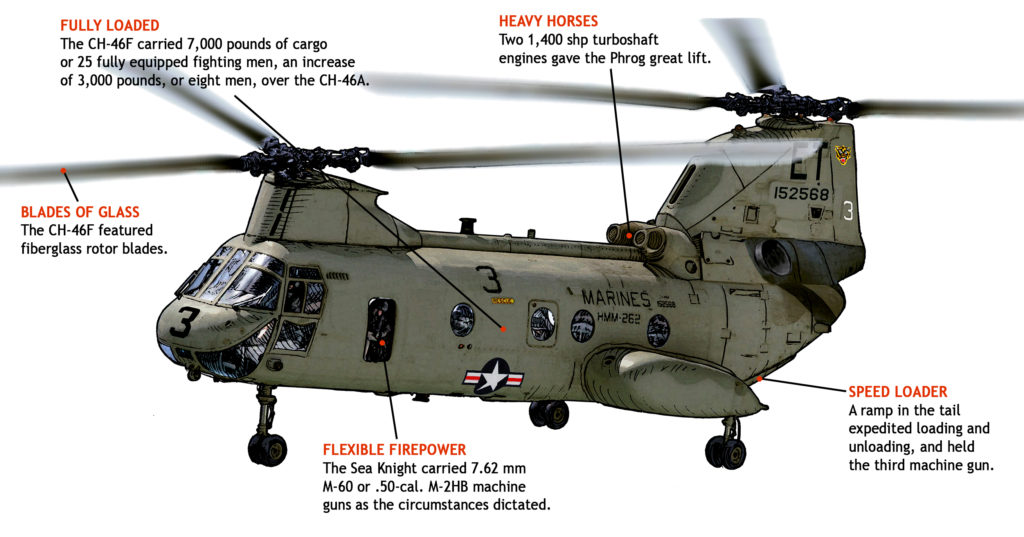
A CH-46 helicopter flown by Captain Jerry Berry landed on the embassy rooftop at approximately 4:45 a.m. Berry refused to load the evacuees led to the aircraft by U.S. Marines, explaining he was under presidential orders to evacuate Ambassador Martin and his staff. Martin boarded minutes later and at 4:58 the chopper departed. Another CH-46 landed shortly after and evacuated the remaining embassy staff, except for the U.S. Marines guard detachment.
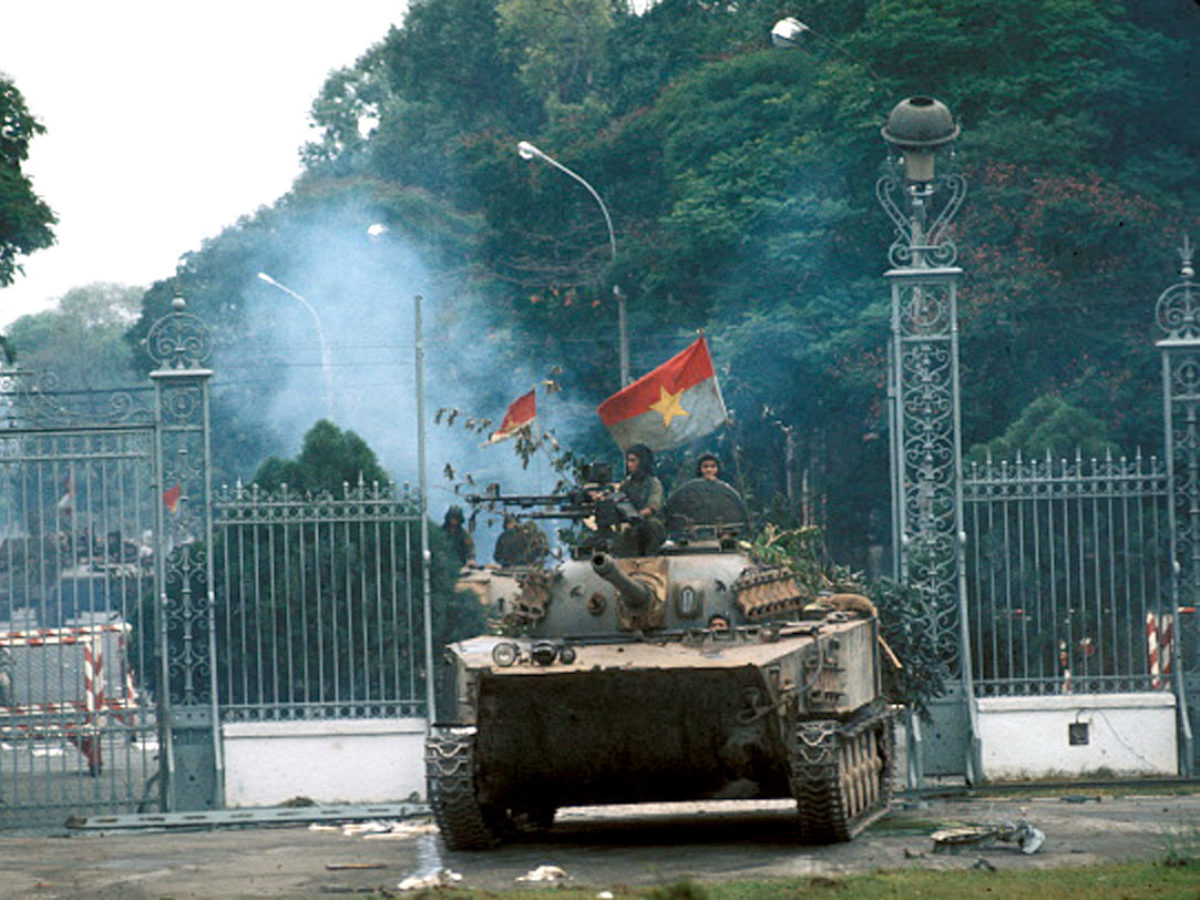
Company 4 of PAVN Huong Giang Tank Brigade 203 smashed through the steel gate of South Vietnam’s Presidential Palace at approximately 11 a.m. The company commander and some of his soldiers ran to the palace and climbed to the roof, where they raised the National Liberation Front flag. When they entered the building, they found General Duong Van Minh, the last president of South Vietnam, and Prime Minister Vu Van Mau.
“We have been waiting impatiently for you since morning to hand over power,” said Minh. But, the North Vietnamese told Minh, “You cannot hand over what you no longer have.” And that was the end of the Republic of Vietnam, slightly less than 20 years after the CIA created it.
The next morning President Ford, Henry Kissinger and Brent Scowcroft met in the Oval Office from 9:50 to 10:30. Ford began the meeting by saying: “Tommy the Cork [Tom Corcoran] said Anna Chennault [Nixon’s initial conduit to General Nguyen Van Thieu] is going to Taiwan and will see Thieu. Do we want to send a letter?”
“I would send a warm message,” replied Kissinger. “He is not helping with his critical comments.” That was the final comment about the Government of South Vietnam.
“I told Ron [Ron Nessen, White House press secretary] to say that I didn’t want to be critical of Graham Martin who had been under so much pressure,” said Ford. Kissinger corrected him: “I would say you didn’t want to comment. Otherwise it will be implied criticism.” That was the meeting’s final remark about the situation in Vietnam.
The discussion then turned to other trouble spots around the world, including Israel and the Middle East.
Edward Rasen was a combat infantryman who served in Vietnam from 1965 to 1968 and later worked in Vietnam, Cambodia and Laos for ABC and CBS News. More of Rasen’s recent interviews with Frank Snepp can be seen in Vietnam War Secrets, a five-DVD series available from Amazon.com.
TẠI SAO VNCH PHẢI SỤP ĐỔ VÀO NĂM 1975, MÀ KO LÀ NĂM KHÁC?
- Một so sánh nhỏ: Dù tiềm lực về kinh tế và quân sự thua xa Mỹ, nhưng khi thua trận năm 1954, người Pháp đã thua trong danh dự khi thu xếp với Việt Minh để có được trên 300 ngày để dân chúng VN di cư hay di tản. Theo Wikipedia:
Trong khi đó, năm 1975, dân VN và Mỹ đã đi tản trong cảnh hoảng loạn. Tấm ảnh dưới đây tiêu biểu cho cuộc tháo chạy tán loạn này vào những ngày cuối tháng tư.


.PNG)
.PNG)
Sau khi qua Mỹ năm 1994, tôi đã nghiên cứu về Numerology hay Lý thuyết Số (LTS). Nhờ đó, tôi đã biết rằng trong cuộc họp lịch sử ngày 14.3.75 tại Cam Ranh với năm người tham dự - dẫn đến sự sụp đổ của VNCH - có ba người đều có tên bằng số 13 và 1 người có tên bằng 22. (Đây là các số rất xấu theo Lý thuyết Số vì thuộc Nhóm trả nợ dồn gồm các số 4 8 13 17 22 và 26). Đó là Tổng Thống Nguyễn văn Thiệu, thủ tướng Trần thiện Khiêm, thiếu tướng Phạm văn Phú tư lịnh quân khu 2 đều có tên bằng 13; riêng đại tướng Cao văn Viên có tên bằng 22. (Riêng trung tướng Ngô quang Trưởng, TL của quân khu 1, gặp TT Thiệu ngày 13.3.75 cũng có ngày sanh là 13).
Theo LTS, tên của 1 người, 1 cuốn phim, 1 cuốn sách, 1 công ty, hay 1 nước, v.v... đều là một THỰC THỂ (entity). Cũng như vậy là ngày sinh, năm sinh. Nay ta phân tách năm 1975 bằng cách cộng 4 số này: 1 + 9 + 7 + 5, ta thấy bằng 22. Sau đây là ý nghĩa của số này.
Sự thần phục - Sự cảnh giác (Submission and Caution)
Số 22 được tượng trưng bởi hình ảnh một Người Tốt (Good Man) bị mờ mắt vì sự ngu dốt (folly) của những kẻ khác, với một túi đeo lưng, đầy những sai lầm. Trên hình vẽ cho thấy người này có vẻ không phòng thủ gì trước một con cọp dữ đang bắt đầu tấn công hắn. Số này cũng cảnh báo về ảo tưởng và lừa dối. Nó cho thấy một người tốt (hoặc thực thể) đang sống trong hạnh phúc và thỏa mãn, và tin tưởng không có vấn đề gì xảy ra, nhưng thực tế thì không phải vậy. Nó cho thấy một người đang nằm mơ, chỉ thức dậy khi nguy hiểm bao quanh hắn, nhưng lúc đó thì quá muộn. Nó cảnh báo về những sai lầm trong phán đoán, khi đặt lòng tin vào những kẻ không đáng tin cậy..." Nếu 22 là ngày sanh, người này nên cẩn thận và luôn cảnh giác hay canh chừng (caution and watchfulness) trong những vấn đề về nghề nghiệp và cá nhân. Điều bắt buộc (karmic obligation) đối với người này phải tỉnh táo hơn, phải kiềm chế (curb) sự lười biếng về tâm linh, và phát triển hơn sự năng nổ về tâm linh – để thực hiện khả năng riêng (của mình) nhằm thay đổi sự việc, cũng như để ngăn ngừa sự thất bại bằng cách quyết tâm đạt được sự thành công (by simply ordaining success). Khi trách nhiệm cá nhân này được nhìn nhận, thực hành và cuối cùng được nắm vững, người mang số 22 sẽ làm chủ mọi sự kiện, không còn bị mờ mắt bởi sự ngu dốt của kẻ khác, và sẽ thấy ý tưởng và niềm mơ ước của mình được thực hiện. Bất cứ ai sanh ngày 22 cần phải đọc đoạn nói về số 4 và 8, bắt đầu ở trang 269.
(Dịch từ trang 258-259 của sách Linda Goodman's Star Signs*).
NHẬN XÉT: Nếu bạn thay thế chữ "Người Tốt' bằng VNCH thì sẽ thấy sự trùng hợp CHÍNH XÁC với những gì xảy ra năm 1975 tại VN; nghĩa là mọi việc đã xảy ra trong năm 1975 là do TRỜI ĐẤT SẮP ĐẶT. Hơn nữa 22 = 2 + 2 = 4 (TRẢ NỢ DỒN).
* Bà Linda Goodman là một chiêm tinh gia nổi tiếng của Mỹ, tác giả của nhiều sách trong đó có quyển Linda Goodman's Star Signs mà tôi dùng để viết về Lý thuyết Số.
==
TIÊN TRI CỦA TƯỚNG JOHN MURRAY, TÙY VIÊN QUÂN SỰ TĐS MỸ TẠI VIỆT NAM
%20(1).jpg)
.jpg)