Friday, November 29, 2024

 Sáu giờ trong địa ngục trần gian.

Bài của Kaleena Fraga.

Mũ Xanh Roy Benavidez được Huy chương Danh dự (huy chương cao quý nhứt của quân đội Mỹ) khi y lao vào đạn thù mà chỉ trang bị 1 con dao để cứu đồng đội, trong lúc chịu đựng những vết thương nặng đến nỗi các bác sĩ bỏ y vào túi xác.

Khi Roy Banavidez đến VN trong nhiệm kỳ 2 vào năm 1968, ông đã chứng tỏ sự kiên cường (fortitude). Chỉ 3 năm trước đó, Benavidez đã dẫm 1 quả mìn trong lúc phục vụ lần đầu tại VN, và các bác sĩ đã nói ông ko thể đi được. Ông đã thách thức những ý kiến của họ -- nhưng thử thách lớn nhứt của ông vẫn chưa tới.

Trong 1 ngày rất nóng (sizzle) của tháng Năm 1968, Benavidez đã nghe 1 lời cầu cứu trong tuyệt vọng. Một toán LLĐB Mỹ bị phục kích gần biên giới Cam-bốt, và Benavidez lao nhanh vào hành động. Ko cần lịnh lạc và chỉ trang bị 1 con dao, ông trèo lên 1 trực thăng.

Qua hơn "sáu giờ trong địa ngục", Benavidez đã lại lần nữa thách đố cái chết. Phóng nhanh vào rừng để cứu các đồng đội gục ngả và thông tin tối mật mà họ mang theo, Benavidez đã đánh nhau với kẻ thù, cứu các đồng đội, và suýt chết.

Sanh ngày 5/8/1935 tại Cuero Texas, có cha là người Mỹ gốc Mễ và mẹ thuộc bộ lạc bản địa Yaqui, Raul Perez "Roy" Benavidez đã gặp vất vả từ nhỏ. Lúc 7 tuổi, ông mất cả cha lẫn mẹ và nuôi dạy bởi bà con.

Bị chế nhạo (taunt) tại trường học vì gốc Mễ, ông thường đánh nhau với các trẻ em khác vì chúng gọi ông "thằng Mễ đần độn".

Vì những chế nhạo này -- Benavidez đã quyết định tự mình làm một điều gì. Sau khi bỏ học ở tuổi 15 để giúp đỡ gia đình, ông đăng vào Vệ binh Quốc gia bang Texas. Năm 1955, ông chuyển qua Lục quân Mỹ.

Nhưng sau khi Benavidez phục vụ tại Triều tiên và tại Đức, và được gửi sang VN, cuộc đời binh nghiệp của ông dường như đã dừng lại một cách vừa sốc vừa đột ngột. Vì năm 1965, khi phục vụ ở Sở Quan sát SOG của MACV Benavidez đã dẫm một quả mìn. Khi tỉnh dậy ông biết mình tê liệt từ hông trở xuống. Mặc dù dường như rằng Roy sẽ không bao giờ đi lại, nguời lính trẻ này đã quyết định phấn đấu. Trong bóng đêm, khi nhân viên của bịnh viện đã nghỉ, ông đã bò suốt phòng bịnh bằng khuỷu tay tới bức tường gần đó và dùng khuỷu tay để đứng dậy. Nhờ tập luyện như vậy cả năm, người lính Mũ Xanh này cuối cùng đã có thể đi mà ko cần giúp đỡ.

Ông trở lại VN năm 1968.

Ko thể tin được, ông đã trở về sđ 82 Dù và đến VN. Trở lại chiến trường, ông sẽ sớm chứng minh sự gan dạ (grit) của mình một lần nữa.

Ngày 2 tháng 5 1968, trong khi đi ngang một công sự của CS tại Lộc Ninh, một khu vực trên biên giới vN và Cam-bốt, Benavidez đã nghe 1 tiếng kêu cầu cứu từ máy truyền tin. Một toán LLĐB Mỹ gồm 12 người trong 1 nhiệm vụ tối mật đã lọt ổ phục kích. Họ bị địch áp đảo với quân số gần 100 đánh 1, và ba trực thăng đã ko thể cứu họ.

Một người trong số họ là trung sĩ nhứt (sergeant first class) Leroy Wright, một người lính mà Benavidez biết rõ và từng cứu Banavidez chỉ 1 tháng trước đó. 

Khi đó, Benavidez -- mà những người lính khác hay gọi là Tango Mike Mike, chụp vội 1 túi cứu thương và 1 con dao và lao nhanh vào 1 trực thăng để cứu Wright và đồng đội của y. 

Hành động ko cần lịnh lạc, Benavidez đã vượt biên giới vào Cam-bốt. Trực thăng ko thể tiếp đất vì ko an toàn -- nên Benavidez đã nhảy xuống đất và chạy khoảng 70 mét xuyên qua hỏa lực địch hướng về đồng đội bị phục kích. Bị trúng đạn ở mặt và trúng miểng từ một lựu đạn, Benavidez vẫn ko chùn bước (nevertheless made it). 

Ông vẫn chưa biết điều đó, nhưng "sáu giờ trong địa ngục" của ông đã vừa bắt đầu.

Dù bị những thương tích, Benavidez đã nắm quyền chỉ huy. Ông đã điều động những kẻ sống sót và chăm sóc kẻ bị thương, và hướng dẫn những kẻ bị phục kích tới những trực thăng đang chờ họ, ngay cả ông bị bắn trúng bụng và bị nhiều miểng đạn.

Trong vài giờ kế, Benavidez đã mang kẻ bị thương tới nơi an toàn, thu thập tài liệu mật từ người chết -- trong đó có người bạn Wright -- và dùng cận chiến để bảo vệ mình. Khi một lính du kích dùng lưởi lê đâm Benavidez, ông đã kéo lưởi dao từ tay y và đẩy dao vào ngực y khiến y gục ngả. 

Nhưng ông cũng trả giá rất đắc. Một người lính nhận thấy Benavidez đã lấy một tay chận đùm ruột của mình khỏi đổ ra ngoài, và có nhiều máu ở mặt khiến mắt ông gần như ko thể mở được do máu khô đóng vảy. Tuy nhiên ông đã kiểm tra lần nữa các tài liệu mật trước khi lên trực thăng.

Roy Benavidez đã cứu ít nhứt 8 đồng đội. Nhưng ông đã bị đâm và trúng đạn 37 lần, và các chiến hữu đã nghĩ rằng ông sẽ gục ngả vì những vết thương này. Các y tá nghĩ rằng Benavidez đã chết nên họ đã kiểm tra nhịp tim trước khi bỏ ông vào túi đựng xác. 

"Khi tôi cảm thấy 1 bàn tay trên ngực mình, tôi đã biết mình cực kỳ may mắn vì vẫn còn sống, Benavidez nói. "Và đã khạc máu vào mặt của bác sĩ."

Dù Benavidez đã sống sót qua "6 giờ trong địa ngục", sau đó ông phải trải qua gần một năm để phục hồi từ các vết thương. Trong thời gian đó, ông đã được trao tặng Bảo quốc Huân chương (Distinguished Service Cross hay DSC). 

Tại sao lúc đầu Benavidez được trao tặng Bảo quốc Huân chương mà ko là Huân chương Danh dự (Medal of Honor) vẫn là một điều tranh cãi. Brian O'Connor, một lính Mũ Xanh, đã chứng kiến sự dũng cảm của Benavidez, tin tưởng rằng chính phủ Mỹ đã ko muốn thế giới để ý đến các hoạt động bí mật của họ tại Cam-bốt. 

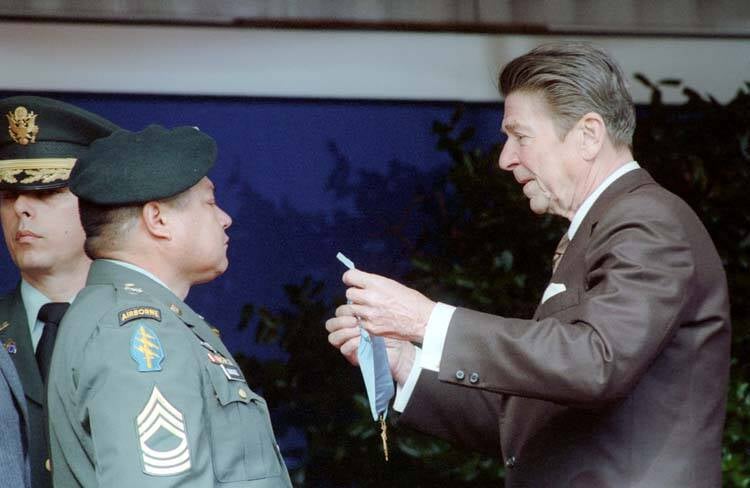
Dù sao đi nữa, Benavidez cần một nhân chứng sống cho việc làm anh hùng của mình, và phải chờ đến năm 1980 chính phủ đã tìm được người đó -- đó là O'Connor. Thế là tháng hai 1981, Roy Benavidez đã được trao tặng Bảo quốc Quân chương bởi tổng thống Ronald Reagan.

"Khi thấy các đồng đội của mình đang gặp nguy hiểm, TS Benavidez đã tình nguyện xông vào lửa đạn của kẻ thù, và mặc dù bị nhiều vết thương nặng, vẫn ko từ bỏ đồng đội để cuối cùng cứu sống 8 người."

"Khả năng lãnh đạo không sợ hãi, tận tụy bền bỉ với nhiệm vụ và những hành động cực kỳ dũng cảm khi đối mặt với quân số áp đảo của địch đã phù hợp với truyền thống cao nhất của quân đội Mỹ và phản ánh sự tín nhiệm tối đa đối với ông và Quân đội." Tổng thống Reagan đã phát biểu trong lễ gắn huy chương cho ông.

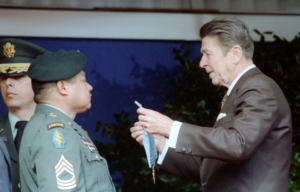
Tổng thống Ronald Reagan trao tặng Bảo quốc Huân chương cho TS Roy Benavidez 
ngày 24/2/1981 tại Ngũ Giác Đài. Có chứng kiến của bộ trưởng QP Caspar Weinberger. 


Ông đã từ trần ngày 29/11/1998 ở tuổi 63.

Thursday, November 28, 2024

 Roy Benavidez, The Fearless Vietnam War Veteran Who Survived ‘Six Hours In Hell’

Green Beret Roy Benavidez earned the Medal of Honor when he ran into enemy fire armed with only a knife to save his fellow soldiers, sustaining such severe injuries that medics placed him into a body bag.

When Roy Benavidez landed in Vietnam for his second tour of duty in 1968, he’d already proven his fortitude. Just three years earlier, Benavidez had stepped on a land mine during his first deployment in Vietnam, and doctors said he would never walk again. He defied their expectations — but his greatest test was yet to come.

On a sizzling day in May 1968, Benavidez heard the crackle of a radio and a desperate plea for help. A Special Forces team was trapped near the border of Cambodia, and Benavidez leaped into action. Without orders and armed with only a knife, he climbed aboard a helicopter.

Over the next “six hours in hell,” Benavidez would defy death again and again. Plunging into the jungle to rescue his fallen comrades and the classified information they carried, Benavidez battled the enemy, saved his fellow soldiers, and nearly lost his life.

This is his remarkable story.

The Incredible Determination Of Roy Benavidez

Roy Benavidez

Ronald Reagan Presidential Museum and LibraryPresident Reagan presents the Medal of Honor to Master Sergeant Roy Benavidez at the Pentagon on Feb. 24, 1981.

Born on August 5, 1935, in Cuero, Texas, to a Mexican-American father and a Yaqui mother, Raul Perez “Roy” Benavidez had to get tough from the beginning. According to the National Museum of the United States Army, he lost both parents by the age of seven and was raised by relatives.

By his own account, Benavidez became a “tough, mean little kid” around the time his mother died. Taunted at school for being Hispanic, he often fought with other children who called him names like “dumb Mexican,” according to Legend: The Incredible Story of Green Beret Sergeant Roy Benavidez’s Heroic Mission to Rescue a Special Forces Team Caught Behind Enemy Lines.

Despite the taunts — or perhaps because of them — Benavidez was determined to make something out of himself. After dropping out of school at 15 to help support his family, he enlisted in the Texas National Guard. Then, in 1955, he transferred to the U.S. Army.

But after Benavidez served in the Korean War, spent time in Germany, and deployed to Vietnam, his military career seemed to come to a shocking, abrupt halt. In 1965, while in Vietnam with the 82nd Airborne Division, Benavidez stepped on a land mine. He woke up paralyzed from the waist down.

Though it seemed all but certain that Roy Benavidez would never walk again, the young soldier was determined to try. In the cover of night, out of the view of medical staff, Benavidez painfully trained himself to walk. To the shock of his doctors, he got out of bed one day and took a step.

Incredibly, Roy Benavidez then returned to the 82nd Airborne Division — and to Vietnam. Back in the conflict, he’d soon prove his grit yet again.

The Brutal Story Of The Soldier’s “Six Hours In Hell”

On May 2, 1968, Roy Benavidez was walking past a bunker in Lộc Ninh, an area on the border of Vietnam and Cambodia, when he heard a cry for help on the radio. A 12-man team deployed on a secret mission had run into trouble. They were outnumbered nearly 100-to-one, and three helicopters had failed to rescue them.

Roy Benavidez In Vietnam

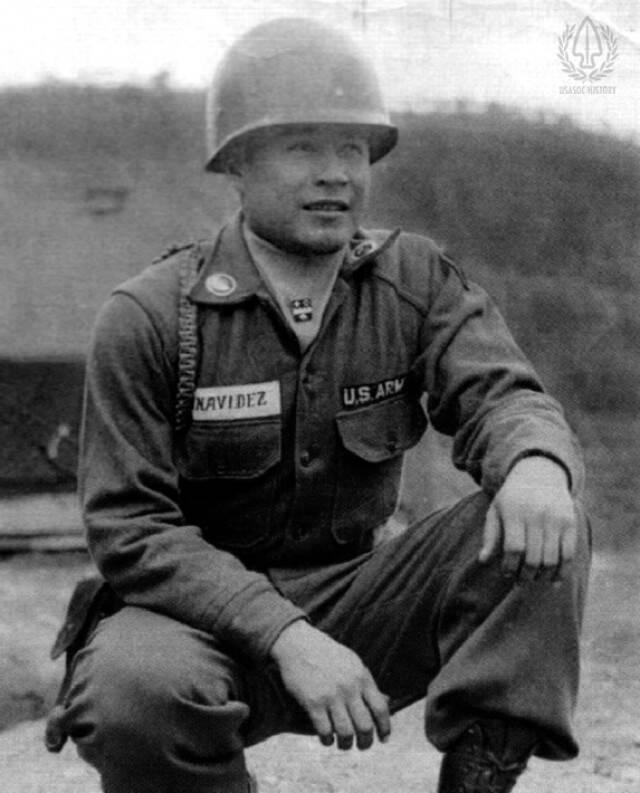
U.S. ArmyRoy Benavidez proved his bravery and toughness during “six hours in hell” in May 1968.

According to the National Museum of the United States Army, one of the trapped men was Sergeant First Class Leroy Wright, a soldier Benavidez knew well and who had saved Benavidez’s life just a month earlier.

“I’m in,” Benavidez said, according to Legend. Then, Benavidez — who other soldiers called Tango Mike Mike or “That Mean Mexican,” according to the Washington Post — grabbed an aid bag and a knife and clamored into a helicopter to try and save Wright and his men.

Acting without orders, Benavidez flew across the border to Cambodia. His helicopter couldn’t safely land — so Benavidez leaped to the ground and ran 75 yards through enemy fire toward the trapped men. Shot in the face and struck with shrapnel from a hand grenade, Benavidez nevertheless made it.

He didn’t know it yet, but his “six hours in hell” had just begun.

Despite his injuries, Benavidez took charge. He organized the survivors and tended to the wounded, then guided the trapped men toward the waiting helicopters, continuing even as he was shot in the stomach and hit with more shrapnel.

Over the next several hours, Benavidez carried the wounded to safety, gathered classified materials from the dead — including his friend, Wright — and defended himself in hand-to-hand combat. When an enemy guerilla stabbed Benavidez with a bayonet, “That Mean Mexican” pulled the blade from his arm and plunged his own knife into the man’s chest, killing him.

But the battle had taken its toll. Another soldier noticed that Benavidez was holding his intestines in with one hand, and he had so much blood on his face that his eyes were nearly crusted shut. According to the National Museum of the United States Army, he nevertheless checked once more for classified materials before getting on a helicopter.

Roy Benavidez had saved at least eight men. But he’d also been stabbed or shot 37 times, and his fellow soldiers thought that he’d succumb to his wounds. Medics were so sure that Benavidez had died that they started to zip him into a body bag — but not before checking for a heartbeat.

“When I felt that hand on my chest, I made the luckiest shot I ever made in my life,” Benavidez said, according to the Washington Post. “I spit in the doctor’s face.”

The Heroic Legacy Of Roy Benavidez

Though Roy Benavidez had survived his “six hours in hell,” he had a long road of recovery ahead and spent nearly a year recuperating from his injuries. In the meantime, he was awarded the Distinguished Service Cross.

Why Benavidez was initially awarded the Distinguished Service Cross and not the Medal of Honor is up for debate, however. Brian O’Connor, a Green Beret who witnessed Benavidez’s bravery, believes that the U.S. government didn’t want to draw attention to their clandestine operations in Cambodia.

In any case, Benavidez needed a living witness to his heroic actions, and it wasn’t until 1980 that the government realized he had one — O’Connor, who eagerly described Benavidez’s bravery. Then, in February 1981, Roy Benavidez was awarded the Medal of Honor by President Ronald Reagan.

Roy Benavidez Receiving The Medal Of Honor

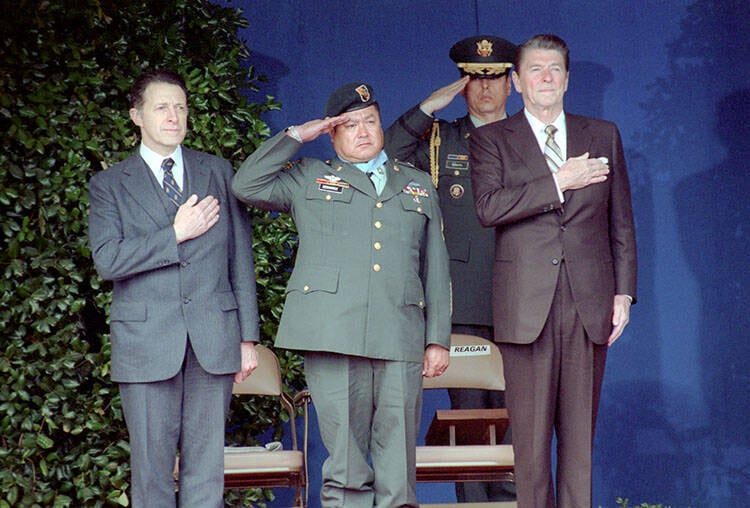
Ronald Reagan Presidential Museum and LibrarySecretary of Defense Caspar Weinberger, Master Sergeant Roy Benavidez, and President Ronald Reagan at Benavidez’s Medal of Honor Ceremony at the Pentagon.

“Sergeant Benavidez’s gallant choice to join voluntarily his comrades who were in critical straits, to expose himself constantly to withering enemy fire, and his refusal to be stopped despite numerous severe wounds, saved the lives of at least eight men,” Reagan said at the ceremony.

“His fearless personal leadership, tenacious devotion to duty, and extremely valorous actions in the face of overwhelming odds were in keeping with the highest traditions of the military service and reflect the utmost credit on him and the United States Army.”

Though Roy Benavidez died on Nov. 29, 1998, at the age of 63, his legacy has re-entered the national conversation in recent years. According to the Washington Post, there was a push to rename Fort Hood, in Texas, after him.

Currently, the base is named for Confederate General John Bell Hood. But some have argued that it should be named for a Texas native like Benavidez and that doing so would honor minority servicemen. As of publication, no military bases in the U.S. are named for a Hispanic service member.

“Who we honor should represent our values,” Ty Seidule, a retired Army general who taught history at the U.S. Military Academy, told the Washington Post. “I don’t want to be like John Bell Hood. I want to be like Roy Benavidez.”

But Benavidez didn’t necessarily see it that way. According to The New York Times, he often shrugged off suggestions that he’d been a hero.

“The real heroes are the ones who gave their lives for their country,” he said. “I don’t like to be called a hero. I just did what I was trained to do.”


After reading about Roy Benavidez, discover the story of Adelbert Waldron, the Vietnam War’s deadliest sniper. Or, look through these stunning photos of the Vietnam War as seen by its fearless photographers.

Kaleena Fraga
A staff writer for All That's Interesting, Kaleena Fraga has also had her work featured in The Washington Post and Gastro Obscura, and she published a book on the Seattle food scene for the Eat Like A Local series. She graduated from Oberlin College, where she earned a dual degree in American History and French.
John Kuroski
John Kuroski is the editorial director of All That's Interesting. He graduated from New York University with a degree in history, earning a place in the Phi Alpha Theta honor society for history students. An editor at All That's Interesting since 2015, his areas of interest include modern history and true crime.
COPY
Cite This Article
Fraga, Kaleena. "Roy Benavidez, The Fearless Vietnam War Veteran Who Survived ‘Six Hours In Hell’." AllThatsInteresting.com, July 20, 2022, https://allthatsinteresting.com/roy-benavidez. Accessed November 29, 2024.


Roy Benavidez Survived ‘Six Hours of Hell’ to Save His Comrades

Photo Credit: Unknown Author / Reagan White House Photographs / Wikimedia Commons / Public Domain 
Photo Credit: Unknown Author / Reagan White House Photographs / Wikimedia Commons / Public Domain

Roy Benavidez served during the Korean War and in Vietnam, although it’s his actions in the latter that he’s best known for. In an incredible act of bravery, he survived what became known as “Six Hours in Hell” against a ferocious enemy force in order to help his comrades get back to their extraction helicopters. For these heroics, he was awarded the prestigious Medal of Honor.

Roy Benavidez’s early service with the US military

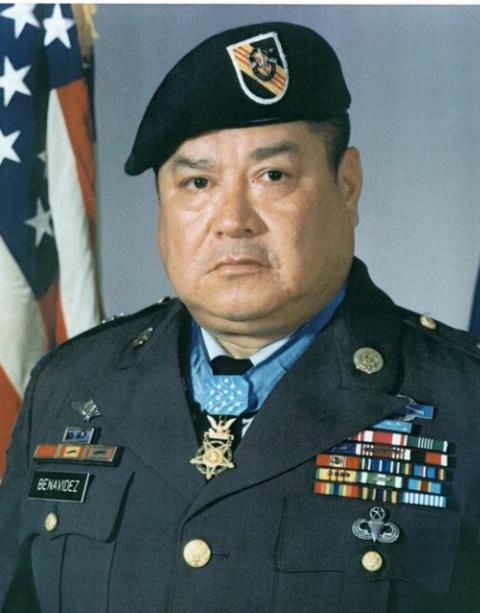
Military portrait of Roy Benavidez
US Army Master Sgt. Roy Benavidez. (Photo Credit: US Army / Wikimedia Commons / Public Domain)

Roy Benavidez was born on August 5, 1935 to a poor family, and had lost both his parents by the time he was seven. When he was 15, he dropped out of high school to financially support his remaining family through work on cotton and sugar beet farms. Two years later, with little other prospects, he enlisted with the Texas Army National Guard while the United States fought in Korea.

Benavidez served with the National Guard between 1952-55, before moving into active service with the US Army, seeing rotation in South Korea and Germany. By 1959, he’d decided to complete Airborne training and, when finished, was assigned to the 82nd Airborne Division out of Fort Bragg, North Carolina. He later completed training for the Special Forces and became a member of the 5th Special Forces Group and the Military Assistance Command, Vietnam – Studies and Observation Group (MACV-SOG).

Suffering a debilitating injury in Vietnam

USNS Benavidez (T-AKR-306) at sea
USNS Benavidez (T-AKR-306) during sea trials in the Gulf of Mexico. (Photo Credit: Ron Elias / US Navy / Wikimedia Commons / Public Domain)

Roy Benavidez was deployed to Vietnam in 1965 as a Special Forces advisor to one of the allied South Vietnamese regiments. In a devastating accident, he stepped on a land mine and had to return to the US, where he was told that he’d never walk again and, therefore, would be discharged from the Army on medical grounds.

This was unacceptable to Benavidez. He began his own training regimen against doctors orders and in the late hours of the night. He’d crawl across the floor on his elbows to a nearby wall and use it to lift himself into a standing position. Despite being in the hospital for over a year, the Green Beret’s personal training paid off and he eventually walked out unassisted.

He returned to service in Vietnam in January 1968.

A one-man team

Aerial view of the American stronghold in Lộc Ninh
American stronghold in Lộc Ninh, November 1967. (Photo Credit: Bettmann / Getty Images)

On May 2, 1968, Roy Benavidez was stationed in Lộc Ninh, near the Vietnam-Cambodia border, when a call for assistance came over the radio. It was from a 12-man Special Forces reconnaissance team deployed in a neighboring area to gather intelligence on North Vietnamese Army (NVA) and Viet Cong movements. During the mission, they’d become surrounded by roughly 1,000 NVA troops. Although they called for extraction, helicopters were unable to reach them due to heavy enemy fire.

Benavidez decided to take the team’s plights as a personal mission and got into the first chopper he could, running on “autopilot,” as he called it. He was armed with only a knife and medical bag. It wasn’t long after he arrived that the Green Beret was shot in the leg and received a glancing round to the head. Nonetheless, he was able to attend to the wounded as best he could, given the situation, and move the men to a safer location.

‘Six Hours in Hell’

Tanks and armored personnel carriers driving through the Vietnamese jungle
11th Armored Cavalry personnel carriers and tanks moving through Lộc Ninh, October 1969. (Photo Credit: Bettmann / Getty Images)

Roy Benavidez and the men were in an area with difficult visibility for the helicopters that came to pull them out. With no other option, he popped smoke grenades. This alerted the enemy to their location, and the assault restarted with full force. Benavidez returned fire, while also moving the injured Green Berets toward the helicopters. When they landed, he went back into the fray to retrieve the body of the team leader and the secret documents he had on his person.

Benavidez was injured many more times before making it to the helicopters himself, passing out just as he reached them. Luckily, he was dragged onboard by one of the crews. By the time they returned to base, the doctor assessing him assumed he was dead, as he’d sustained roughly 37 bayonet, shrapnel and bullet wounds, as well as a broken jaw.

Benavidez was placed in a body bag, and as the doctor was zipping it up he allegedly spat at him, to which the medical expert said, “I think this one will survive.” As it turned out, he’d fought for his comrades for an astounding six hours straight and helped save the lives of eight men, all the while living to tell the tale.

Roy Benavidez is awarded the Medal of Honor

Roy Benavidez, Ronald Reagan and two other men standing together on stage
US President Ronald Reagan with Master Sgt. Roy Benavidez after presenting him with the Medal of Honor, February 1981. (Photo Credit: Unknown Author / National Archives at College Park / Wikimedia Commons / Public Domain)

Unsurprisingly, Roy Benavidez spent a significant amount of time in hospital recovering from his heroics. For his bravery, he received the Distinguished Service Cross and four Purple Hearts.

The Medal of Honor, given to those who have distinguished themselves through acts of valor, wasn’t awarded, as relatively few details were known about the extent of Benavidez’s actions and his commanding officer didn’t think he’d survive. When he did, Lt. Col. Ralph. R. Drake filed the necessary paperwork for the Green Beret to receive the honor.

By this point, however, the time limit had already expired, and Congress had to grant a one-time exemption. Even this wasn’t enough to warrant Benavidez receiving the award, as there weren’t any eyewitnesses who could attest to his actions. This process was reported by the media, and Brian O’Connor, a radioman who’d been part of the team he’d saved, came forward as a witness.

More from us: Despite Being Up Against 2,000 Enemy Troops, Bernard Fisher Risked His Life to Save a Fellow Airman

In 1981, Benavidez’s previous award was upgraded to the Medal of Honor and presented by Ronald Reagan. Of his actions, the US president said, “If the story of his heroism were a movie script, you would not believe it.”