Tuesday, July 8, 2025

 T.đoàn 1/8 Bb Vnch, Tđ/28 Mỹ: Trận Chiến Tại Dầu Tiếng 9/69

* Tiểu đoàn 1 trung đoàn 8/Sư đoàn 5 Bộ binh QL/VNCH & Tiểu đoàn 2 trung đoàn 28/ Sư đoàn 1 Bộ binh Hoa Kỳ tại mặt trận Dầu Tiếng:
Giữa năm 1969, CSBV đã tung thêm nhiều trung đoàn chủ lực xâm nhập vào miền Đông Nam phần, khu vực trọng điểm là các tỉnh Tây Ninh, Bình Dương. Để truy lùng địch, vào tháng 7/1969, bộ Tư lệnh Quân đoàn 3 VNCH và bộ Tư lệnh Lực lượng Hoa Kỳ tại Vùng 3 chiến thuật (Quân khu 3) đã phối hợp tổ chức một chiến dịch hành quân quy mô trên toàn Vùng 3. Đó là chiến dịch Đồng Tiến với phương thức liên quân: các đơn vị QL/VNCH và Hoa Kỳ phối hợp hành quân chung với nhau.
Theo kế hoạch, tại khu vực Dầu Tiếng, tỉnh Bình Dương, tiểu đoàn 1 trung đoàn 8 BB được phối trí hoạt động cùng với tiểu đoàn 2 trung đoàn 28 thuộc Sư đoàn 1 Bộ binh Hoa Kỳ. (Sư đoàn 1 BB Hoa Kỳ là một trong những đơn vị Hoa Kỳ đến Việt Nam vào mùa thu 1965 với biệt danh là Đệ Nhất Đại Hồng). Vào thời gian chiến dịch Đồng Tiến được khai triển, tiểu đoàn 2/28 Bộ binh Hoa Kỳ đặt bộ chỉ huy tại căn cứ hỏa lực Mahone, phía Nam đồn điền Michelin thuộc quận Dầu Tiếng, còn tiểu đoàn 1/8/Sư đoàn 5 Bộ binh hoạt động tiếp cận. Chỉ huy tiểu đoàn 1/8 BB VNCH lúc bấy giờ là thiếu tá Châu Minh Kiến, tiểu đoàn 2/28 Hoa Kỳ là trung tá Richard W. Hobbs.
Trong hai tuần đầu của tháng 9/1969, hai tiểu đoàn Bộ binh Việt-Mỹ nói trên đã tiến hành nhiều cuộc hành quân truy lùng địch với kết quả khả quan, Cộng quân buộc phải rút khỏi vòng đai hoạt động của hai tiểu đoàn này. Riêng với tiểu đoàn 1/8 BB dưới quyền chỉ huy của thiếu tá Châu Minh Kiến, đã lập nhiều chiến tích trong các cuộc giao tranh với các đơn vị chủ lực Cộng quân. Khả năng chiến đấu của tiểu đoàn 1/8 BB VNCH đã tạo được sự nể phục từ phía đơn vị Hoa Kỳ, nhất là đối với vị tiểu đoàn trưởng tiểu đoàn 2/28 BB Hoa Kỳ: trung tá Richard W. Hobbs (thời gian sau được thăng đại tá). Trong một hồi ký chiến trường, cựu đại tá Hobbs đã vinh danh chiến công của tiểu đoàn 1/8 Bộ binh QL/VNCH và tiểu đoàn trưởng Châu Minh Kiến-đã tử trận ngày 14 tháng 9/1969 khi chiến dịch Đồng Tiến đang tiếp diễn. Sau đây là một số ghi nhận của cựu đai tá Hobbs về tiểu đoàn 1/8BB và cố trung tá Châu Minh Kiến tại mặt trận Dầu Tiếng, phần này trích từ bài hồi ký của tác giả, được sắp xếp lại theo diễn tiến và biên tập dựa theo bản dịch của Thái Dương phổ biến trong tạp chí KBC.

* Tiểu đoàn 1/8 BB VNCH nhìn từ một tiểu đoàn trưởng Bộ binh Hoa Kỳ:
Những ngày đầu tiên, tôi (trung tá Hobbs) đã có một cảm nghĩ tốt là được hành quân chung với 1 tiểu đoàn thiện chiến Việt Nam mà người chỉ huy là thiếu tá Châu Minh Kiến, một chiến sỉ nhỏ bé người Việt Nam. Ở tuổi 28, Kiến là một trong những thiếu tá trẻ tuổi của Quân lực Việt Nam Cộng Hòa. Tốt nghiệp trường Võ bị Đà Lạt vào tháng 11/1964 với cấp bậc thiếu úy, sau đó Kiến đã được thăng cấp một cách mau lẹ vì những chiến công và sự can đảm. Kiến là một người dễ thương và dễ cộng tác trong mọi công việc.
Qua chiến dịch Đồng Tiến tôi có dịp gặp gỡ và biết thiếu tá Châu Minh Kiến, hai tiểu đoàn của chúng tôi đóng tại cùng một vùng hành quân và chúng tôi đã đóng quân chung với nhau không phân biệt ranh giới Việt Mỹ. Đây là một điều trái với quy luật hành quân của các đơn vị Mỹ tại Việt Nam. Nhưng với đơn vị của thiếu tá Kiến, chúng tôi đã làm việc chung, hành quân chung, không đơn vị nào đặt dưới quyền đơn vị nào. Tại căn cứ yểm trợ hỏa lực, chúng tôi sử dụng chung một lều làm trung tâm hành quân và mỗi đơn vị Việt Mỹ tự trách nhiệm một nửa chu vi đóng quân. Cách đóng quân chung này nhiều khi tạo ra nhiều chuyện điên đầu lo sợ vì hàng đêm tôi và Kiến đều đi kiểm soát đơn vị.
Tôi luôn luôn giữ khoảng cách của tôi là không chỉ huy cả hai đơn vị Việt Mỹ. Trước đây tôi đã từng cố vấn cho một tiểu đoàn Nhảy Dù vào năm 1964 nên tôi hiểu được ý nghĩa của các cấp chỉ huy Việt Nam về sự liên hệ của họ với các sĩ quan Mỹ. Vị tiểu đoàn trưởng Dù năm 1964 đã nói với tôi rằng: “Nếu tôi thi hành theo những lời cố vấn của ông hơn 50% thì tôi đã biến ông thành tiểu đoàn trưởng tiểu đoàn của tôi rồi”. Chính vì thế mà tôi cố gắng đưa ra những đề nghị hơn là cố vấn họ.
Tôi làm kế hoạch hành quân Scarf để kiểm soát vùng đóng quân dọc theo trục lộ trong vùng hành quân dọc theo sông Sài Gòn. Với một hải đoàn khoảng 25 giang thuyền được tăng phái bởi lực lượng Hải quân, đơn vị chúng tôi tổ chức phục kích hàng đêm dọc theo bờ sông Sài Gòn (chảy ngang địa phận Bình Dương) để ngăn chận Cộng quân sử dụng đường thủy để tiếp tế. Khi tôi thuyết trình kế hoạch này với thiếu tá Châu Minh Kiến, ông ta lập tức muốn hành quân chung với chúng tôi và cuộc hành quân Scarf đã trở thành cuộc hành quân phối hợp Việt Mỹ. Những sự phấn khởi như trên là chuyện thường xuyên xảy ra trong các đơn vị QL/VNCH, bất cứ lần nào tôi đề nghị họ cũng tình nguyện tham dự ngay.
Thiếu tá Kiến và tôi thường bay trên chiếc trực thănh Bell UH-1 “Huey” để lập kế hoạch hành quân. Nằm sấp trên sàn trực thăng nhìn xuống những vùng sắp hành quân, chúng tôi bàn về những chỗ nào chúng tôi sẽ tiến quân và cánh quân nào sẽ đi lộ trình nào. Chúng tôi dự tính một cuộc hành quân trực thăng vận với 1 đại đội Việt Nam và 1 đại đội Hoa Kỳ cùng nhảy xuống một lần, hoặc giả sử dụng thiết quân vận M 113 để càn quét.


Theo kế hoạch phối hợp, thông thường thì trong căn cứ lúc nào cũng có 1 đại đội Mỹ, 1 đại đội Việt Nam để làm lực lượng trừ bị, trong khi các đại đội khác thì đóng quân hoặc hành quân bên ngoài căn cứ. Những chi tiết về cuộc hành quân được trình bày rất rõ ràng: điểm tập trung, giờ trực thăng bốc quân hoặc giờ M 113 khởi hành.
Nhiều lần, cuộc xuất quân bắt đầu, tôi phải về trung đoàn, tôi thường nói với thiếu tá Kiến chỉ huy cả hai đơn vị Việt Mỹ. Quả thực đây là một kinh nghiệm mới mẻ cho một sĩ quan Việt Nam chỉ huy một đơn vị Hoa Kỳ. Các sĩ quan Mỹ của tôi đều hiểu rõ những gì tôi dự định và những gì tôi làm. Thiếu tá Kiến cũng vậy, đã tạo được rất nhiều sự kính nể đối với các sĩ quan Mỹ. Do đó không có một trở ngại nào xảy ra.
Tôi rất gần gũi với các anh em thuộc trung đội quân báo của tiểu đoàn, do đó nhiều khi họ rất bực mình khi tôi và sĩ quan Ban 3 (Hành quân) đi bộ đến thăm các đơn vị đóng quân hoặc hành quân. Tại chiến trường Việt Nam, các vị tiểu đoàn trưởng Mỹ thường sử dụng trực thăng để điều khiển cuộc hành quân, riêng tôi, tôi muốn có cảm thức thật sự về tình hình hành quân, nên trung đội quân báo thuộc tiểu đoàn của tôi lúc nào cũng sẵn sàng một toán nhỏ để bảo vệ tôi khi tôi bất thường đến thăm đơn vị. Họ nói là để bảo vệ “Ông Già”. Tôi nhớ rất rõ, nhiều lần, một vài quân nhân thuộc trung đội quân báo của tiểu đoàn đến nói với tôi là họ muốn đi hành quân chung với trung đội quân báo Việt Nam. Tôi rất mến phục vị sĩ quan trung đội trưởng trung đội quân báo Việt Nam, vì tôi biết anh là một sĩ quan rất giỏi, ngay cả các quân nhân của tôi cũng biết như vậy nên họ mới xin đi hành quân chung như thế. Tôi cũng thường nhấn mệnh với các quân nhân của tôi điều sau đây: tất cả các chiến binh trong trung đội quân báo Việt Nam cũng đều giỏi như sĩ quan trung đội của họ với nhiều năm kinh nghiệm chiến đấu.
Cuộc hành quân Scarf và những cuộc hành quân khác mà chúng tôi phối hợp làm chung đều mang lại kết quả tốt đẹp. Việt Cộng bắt đầu rút khỏi vùng hành quân của chúng tôi. Hai đơn vị chúng tôi tung ra nhiều hơn những toán phục kích nhỏ để lùng địch, và những lần như vậy đều có kết quả.
Nhưng rồi tai họa đã đến vào ngày 14 tháng 9/1969. Vào lúc 1 giờ sáng, máy truyền tin từ một đại đội Việt Nam báo về trung tâm Hành quân cho biết rằng 1 trong những tiền đồn của đại đội này bị tấn công. Như thường lệ, thiếu tá Châu Minh Kiến đi tiếp cứu đơn vị chạm địch. Thiếu tá Kiến và một thành phần nhỏ đi theo ông tới bộ chỉ huy đại đội, chỉ khoảng 3 km. Trên lộ trình, cánh quân tiếp ứng của thiếu tá Kiến bị Việt Cộng chận đánh và ông bị thương. Những chiến binh cùng đi với thiếu tá Kiến đưa ông ra khỏi vùng hỏa lực và gọi trực thăng tản thương. Trực thăng đã đến tức thì và chính tôi hướng dẫn trực thăng này đến vùng chạm địch. Tuy nhiên khi trực thăng vừa đáp xuống mặt đường ngay giữa ấp Cổ Trác thì hai trái phóng lựu của Việt Cộng đã phóng trúng trực thăng. Một trái gây tử thương thiếu tá Kiến, hai quân nhân khác và người cận vệ của ông. Trái phóng lựu thứ hai làm tử thương hai quân nhân Mỹ thuộc nhóm tiền sát viên Pháo binh. Phi công trực thăng bị thương và chiếc trực thăng bị hư hại nặng nề. Chúng tôi liền cấp tốc gọi một chiếc trực thăng khác, nhưng chiếc này cũng bị trúng đạn Việt Cộng. Suốt đêm đó, chúng tôi đã dùng lực lượng tiếp viện khác để di tản những người chết và bị thương, đồng thời bảo vệ chiếc trực thăng bị trúng đạn. Đêm đó, Việt Nam đã mất một anh hùng và tôi mất một người bạn chí thiết.

* Câu chuyện về việc đổi tên Căn cứ Mahone thành căn cứ Châu Minh Kiến:
Ngày hôm sau, tôi tự động đổi tên căn cứ Yểm trợ Hỏa lực Mahone thành căn cứ Châu Minh Kiến (Mahone là tên của một người lính Công binh Mỹ bị tử thương khi thi hành nhiệm vụ gỡ mìn dọc theo trục lộ thuộc quận Dầu Tiếng). Đây là một căn cứ Hoa Kỳ đầu tiên tại Việt Nam mang tên người Việt Nam. Tin này về đến cơ quan MACV (bộ chỉ huy Yểm trợ Quân sự Hoa Kỳ tại VN, còn được gọi là Phái bộ Quân sự Hoa Kỳ) và tôi được lệnh không được phép đổi tên căn cứ Mahone vì làm như vậy MACV sẽ đổi hết cả bản đồ. Nhưng câu trả lời của tôi là: Rất tiếc đã quá trễ. Một vài tuần sau đó, khi đại tướng Creighton W Abrams, tư lệnh Lực lượng Hoa Kỳ tại Việt Nam (đồng thời là chỉ huy trưởng MACV), đến thăm căn cứ Châu Minh Kiến, ông đã thân mật gọi tôi là “đồ chó đẻ” vì đã tạo cho ông nhiều trở ngại. Tôi hỏi lại tướng Abrams những điều ông nói hàm ý gì và ông đã trả lời rằng việc đổi tên này đã lên tới văn phòng ông. Nhiều người đã hỏi ông về việc này, ông tướng đã trả lời rằng: Việc đổi tên căn cứ là việc của người trực tiếp chỉ huy căn cứ đó.

* Vài nét về tiểu đoàn 1/8 Bộ binh VNCH:
Thành lập từ năm 1954 với danh hiệu đầu tiên là tiểu đoàn 72. Ngày 1 tháng 7/1955 trở thành tiểu đoàn cơ hữu của trung đoàn Bộ binh số 35 (tiểu đoàn số 72, 75, 88) thuộc Sư đoàn 41 Dã chiến. Ngày 17 tháng 9/1955, theo SVVT số 3975/TTM/1/1/SC, Sư đoàn 41 Dã chiến được cải danh thành sư đoàn Dã chiến số 3, trung đoàn số 35 thành trung đoàn Bộ binh số 8 và tiểu đoàn 72 được đổi thành tiểu đoàn 1 của trung đoàn này. Cuối năm 1958, theo kế hoạch của Bộ Tổng Tham mưu, Sư đoàn dã chiến số 3 đổi thành Sư đoàn 5 Bộ binh, trung đoàn Bộ binh số 8 đổi thành trung đoàn 8 Bộ binh và tiểu đoàn này được đổi thành tiểu đoàn 1/8.

Kỳ sau: Trận kịch chiến tại Đức Cơ tháng 7/1965 của lực lượng đặc nhiệm Nhảy Dù-Biệt động quân VNCH.

Gửi ý kiến của bạn
Vui lòng nhập tiếng Việt có dấu. Cách gõ tiếng Việt có dấu ==> https://youtu.be/ngEjjyOByH4
Tên của bạn
Email của bạn
)

Monday, July 7, 2025


Chapter 22: Preparing for Battle

At the most northern position of the Black Lions’ perimeter, PFC Victoriano Perez Sosa and PFC Richard Anderson were manning their two-man outpost. Things were quiet there, and PFC Sosa was probably daydreaming about his beautiful two-year-old daughter, Cynthia, who he often bragged about.

Twenty-two-year-old Sosa had been in-country less than three months and was fortunate to have a wife, Lydia, who habitually wrote letters and sent him food packages. Victor often shared his good fortune with his comrades, so Lydia’s kindness made her a favorite among Victor’s friends. Sosa’s partner, twenty-year-old PFC Richard Anderson of Brooklyn, New York, had been in-country for just over three months.

Before the battle began, they were waiting to be relieved by men of the Black Lions’ Alpha Company so they could move to a new position further south on the western perimeter of LZ X-Ray. That move would never happen.

While all this was going on, a few choppers circled above us with supplies. They had mail, ammo, food, and other supplies.

A few hundred meters from our command group, two Vietcong machine guns lay hidden in the thick brush, taking aim at our men. One machine gun was on the east side and one on the north side of the clearing, according to Ronald Moreno[i], Don Koch, and Fred Hill.[ii] Other VC waited patiently and silently in the brush and in fighting holes that had been prepared the previous day. VC snipers were also sitting high up in trees with a clear line of sight into the clearing. Their preparations were elaborate: the Vietcong had created a web of crisscrossed wires hidden in the thick vegetation covering the jungle floor. The wires linked their field phones together around the LZ’s perimeter, providing communications between the VC commanders in charge of the ambush.

The commanders of the Vietcong regiment knew that the Americans would prep the area with bomb runs and artillery prior to their insertion into the LZ, so the bulk of the VC troops had left the area after it was prepared for the ambush. They had moved a safe distance away from the LZ so they could rest up for the impending battle. A few VC lookouts stayed behind to observe and report any activity happening around the LZ to their commanders. Other VC continued to observe the American units back at LZ Rufe.

Around noon of June 17, a steady stream of Vietcong stealthily moved into the jungle surrounding LZ X-Ray. They arrived from a staging area north of the LZ. They were  armed with RPGs, AK-47s, recoilless rifles, grenades, claymore mines, carbines, 60 mm mortars, and even .51 caliber machine guns. Still unobserved by us, the VC companies set up their mortar tubes and sent their forward observers closer to our perimeter.

As the VC’s 271st units set up, their men waited nervously in their concealed positions. They watched American soldiers eating C-rations, taking a smoke, reading letters, taking a piss, and some even cleaning their weapons. The seconds ticked by and each moment brought the scythe of death a bit closer to the Americans and Vietcong in wait.


[i] Dec 17th 2015 Phone Call conversation with Ronald Moreno about recollections of XOM BO II

[ii] http://freepages.military.rootsweb.ancestry.com/~realmccoy/billings.html article by Fred Hill and Don Koch see map

 Image

NVA Try Daring Dau Tieng Siege, 

All-Night Battle Rids Base Of Foe


   DAU TIENG - Lifting an all-night siege of Dau Tieng base comp, infantrymen, cooks, clerks and other support soldiers of the 3d Brigade killed 73 enemy who had overrun portions of the installation.  There were 14 detainees.

   By the time a red alert was called, shortly after midnight, portions of the camp’s perimeter had already been overrun.  For more than eight hours North Vietnamese Army soldiers held a rubber forest near the south end of the camp and a part of the camp near the east end of the Dau Tieng air strip.

   At the height of the fighting, when the enemy flanked brigade headquarters from two sides, Major General Ellis W. Williamson, 25th Infantry Division commanding general, flew his helicopter into Dau Tieng personally and led the counterattacks that drove off the enemy.

   Colonel Louis J. Sehelter, Jr., brigade commander, of Columbus, Ga., said, “The troops performed magnificently. In every respect they did the job that had to be done.”

   The North Vietnamese troops, attacking in a force of two battalions, hit the base camp from four sides, storming the perimeter at two points and also entering by way of a tunnel.  They surrounded portions of the bunker line and trapped a number of Tropic Lightning soldiers behind the lines.  During the attack hundreds of rounds of rockets, mortars, and RPG’s struck the base camp.

   Some of the heaviest fighting centered around an area of French buildings and swimming pools just south of brigade headquarters.  The NVA mounted a machinegun on the porch of the base library while a group of five infantrymen huddled inside with rifles trained on the doors.

   All night long the NVA kept a force of combat engineers and infantrymen pinned down in ditches alongside a road in front of the old house belonging to the Michelin family of French rubber planters.

   At dawn, a group of enemy snipers had holed up inside the Michelin house and were laying down fire into areas controlled by the military police and brigade headquarters.

   Special Forces troops and a 40mm duster leveled portions of the second floor of the house killing some of the snipers.

   Meanwhile armored personnel carriers of the 2d Battalion (Mechanized), 22d Infantry, and Wolfhounds of the 1st Battalion, 27th Infantry, along with an assortment of support personnel, blasted the main enemy force away from the area near the swimming pools.  Four dead NVA lay in a road beside the officers’ pool when the fighting stopped.

   The enemy retreated past the post exchange and into the woods near the base camp communications center of the 587th Signal Company’s White Platoon.  Heavy fighting drove this force of NVA toward the perimeter.

   Meanwhile other Triple Deuce armored personnel carriers drove the enemy off the east end of the air strip, but not before several spotter planes and a helicopter had been damaged with satchel charges.

   With the coming of daylight and the driving out of enemy main forces, there remained the job of cleaning out snipers from many of the base camp’s trees.  This job took almost until noon.  Shortly after one p.m., a group of eight soldiers was found hiding inside a culvert near the (Continued on Back Page)


Siege . . .

(Continued From Page 1)

east end of the runway and were detained.  During the long night there were many instances of individual heroism.

   “As the fighting became savage we had to commit our reaction forces into the hottest areas,” said Captain Joseph Heeney of Fords, N.Y., assistant brigade operations officer.  “We formed small reaction forces from cooks, clerks mechanics engineers, and military policemen.  It’s amazing how such an amalgam of units that are trained primarily for other jobs were able to function so well.”

   Meanwhile helicopter gunships and an AC-47 dragonship provided illumination and additional fire power to infantrymen on the ground.

   The fighting was the heaviest in and around the base camp in the three years that American infantrymen have used it as a jumping-off point for large-scale operations near War Zone C.

   Sergeant First Class Preston Rowser, Detroit, Mich., moved to a position during the attack where he could see the advancing enemy, knocking back any who dared advance.

   Grenadier Specialist 4 Bruce Brauman, Baltimore, Maryland, located a bunker held by the NVA soldiers and poured fire on the enemy.

   A final, powerful punch was provided by Tropic Lightning artillery and gunships.  The big guns pounded the advancing enemy throughout the assault.

   Fighting got so close at one time that according to artilleryman Specialist 4 John Jasinkski, St. Paul, Minn., “When I turned around and saw them on top of our protective berm, we traversed the gun on them and started firing point blank.  It was just like a firefight but we were using 105’s.”

   Helicopter gunships poured walls of lead on the enemy making low level passes in the midst of enemy fire.  Air strikes brought their powerful bombs up to the perimeter forcing the enemy to retreat.

   Combined body count for the two nights of action approached upwards of two hundred NVA soldiers and delivered serious damage to a prime enemy division.

https://bbiggs.tripod.com/tln10mar1969.html


Sunday, July 6, 2025

 Battle of Xom Bo II 17 June 1967


VÙNG HOẠT ĐỘNG CỦA TRUNG ĐOÀN 16
SĐ 1 BỘ BINH MỸ.


Operation BILLINGS was planned and conducted by the 1st Infantry Division to destroy elements of the 9th PLAF Division which appeared to have moved back into a suspected base camp areas north of Phuoc Vinh. The operation called for two brigades to conduct S&D missions north of the Phuoc Vinh Base Camp. On 12 June, three battalions, under 1st Brigade control, inserted into two LZs about seven to ten kilometers north of the city. Concurrently, the 3rd Brigade inserted the 2nd Battalion, 28th Infantry, Black Lions, into a LZ at Chi Linh to secure a FSB there. The following day, the 1-16 IN inserted into LZ RUFE, seventeen kilometers due north of Phuoc Vinh. Later that day, the 2-28 Infantry moved from Chi Linh into LZ RUFE as well. The two battalions secured the area around RUFE and dug in for the night.


On the morning of 14 June, B and C Companies of 1-16 IN moved out to the west of RUFE to seek out the enemy. Just after noon, troops from C Company spotted five VC soldiers about two kilometers southwest of the LZ, but was not able to engage them. Two hours later, B Company received sporadic small arms fire about one kilometer north of C Company. The firing was brief, then tapered off, seeming to indicate that the enemy had broken contact. Fifteen minutes later, however, B Company was struck in full force, in the front and flanks, by a VC battalion. The company commander frantically brought artillery and air strikes to bear, as the battalion commander, LTC Lazzell, ordered C Company to move to B Company’s aid. The fighting was desperate as B Company repulsed the VC assaults. By the time C Company arrived at the battle site about 1800, the B Company had beat back the VC attack but had suffered six killed and fifteen wounded. A search of the area before dark revealed sixty-two enemy dead.


The next two days of patrolling and sweeps were uneventful. Intelligence indicated that the 271st Regiment had moved toward a vast area of bamboo stands farther north. One location, designated LZ X-RAY on operations maps, looked like a good place to search for the evasive prey. Lazzell’s 1-16 was only about two kilometers south of that location so on the morning of 17 June, the battalion moved from RUFE toward LZ X-RAY. The 2-28 Infantry was to follow later but its A and B Companies traveled along with the 1-16. Concurrently, 1-16 IN’s C Company remained behind to come up with the 2-28 IN.


By noon, the 1st Rangers had arrived at the LZ and as the lead elements of the battalion entered the area, a number of troops noticed that there appeared to be many freshly dug pits and trenches as if the VC had previously prepared ambush positions in case the Americans tried to conduct an insertion there. The battalion formed a perimeter around the entire LZ to wait for the Black Lions to come up for the follow-on S&D mission. Just after the lead elements B Company, 2-28 IN began to take positions, Lazzell received reports of groups of VC troops moving toward the perimeter from the northwest. At about 1245, the enemy initially attacked into the positions held by the Black Lions’ B Company. The initial attacks against B Company, 2-28, were designed to fix that unit while other assault elements moved into position to attack elsewhere.


About 1300, fierce assaults were launched against A Company, 1-16 IN from the northeast. Soon pressed hard in the sectors held by A and B Companies, Lazzell called for heavy artillery concentrations and gunship support. The combined effects of the indirect fire and airpower successfully defeated those attacks. The victory was short-lived. The VC then attacked into the Rangers’ recon platoon from the southeast. The Rangers in that sector responded with a withering fire that killed scores of enemy troops, but this second attack succeeded in overrunning part of the Recon platoon’s line. Only a few of the scouts escaped to link up with other units on the flanks.


Initially, the contact appeared to be a chance encounter with VC local forces. Before long, however, the enemy effort took on the hallmarks of a well-planned and rehearsed ambush by a veteran force estimated to be at least two battalions. These troops were well-uniformed in khaki, wore steel helmets, and were equipped with the latest AK-47 assault rifles, which indicated they were main-force unit. It was later discovered that their attack routes had been carefully marked and they had moved quickly to try and engage the Rangers before the US troops were able to fully dig in. Post-battle analysis revealed that the unit was the 271st PLAF Regiment.


Soon, the situation grew serious and Ranger casualties mounted. For a time, it seemed that the enemy might break through to the center of the LZ, but air strikes by F-100 fighter-bombers had stabilized the situation by 1500. Due to the heavy concentrations of small arms fire and air support, the VC commander decided that he had had enough and began to break contact under the cover of a two-hour mortar barrage. About 1900, the division RRF arrived, but the battle was long over, and the Rangers had been bloodied. The battalion had lost twenty-six men killed and the Black Lions lost another eleven. An additional 150 men were wounded between the two battalions. The 271st Regiment had not gotten away unscathed, however. A search of the area immediately after the fight revealed seventy-two bodies and a sweep deeper into the AO the next day found twenty-six additional enemy KIA.

Battle of Xom Bo II 17 June 1967 | 16th Infantry Regiment Association


Image


Saturday, July 5, 2025

 trung tá 

nguyễn = 7

 văn = 615 = 12 = 3

tư = 46 = 1 


Landing Zone Albany: The Lessons of a Battle Lost

FacebookXPinterestEmailEmailEmailShare
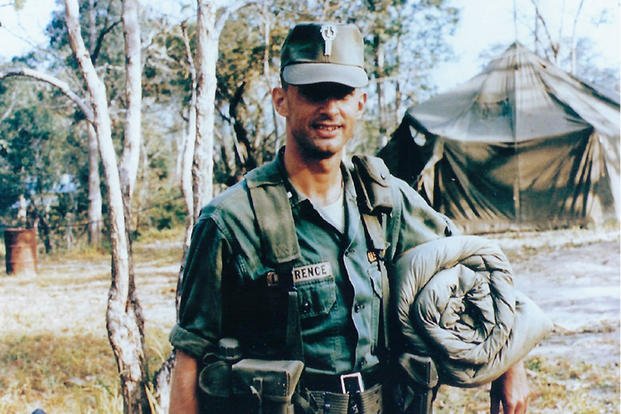
1st Lt. James Lawrence at his base camp in Vietnam, shortly before the battle of Landing Zone Albany.
1st Lt. James Lawrence, 24, at his base camp in Vietnam, shortly before the battle of Landing Zone Albany. (Photo courtesy of James Lawrence)

On Nov. 17, 1965, Lt. Don Cornett, along with 154 troopers from 2/7 Cav, were killed in the Ia Drang Valley at a small clearing known as Landing Zone Albany. He died less than 100 yards from where his best friend lay wounded.

James Lawrence, a 77-year-old Vietnam veteran from Alabama, tells people about his best friend and the battle he died in whenever he gets the chance.

Advertisement

"Survivor's guilt is something that most people who have seen combat, seen friends die, deal with almost daily," Lawrence said. "Why did I deserve to live? I ask that question every day. I believe it is so I can share our story."

Lawrence and Cornett were roommates at Infantry Officer Basic School, roommates in jump school and on the ship that brought them to Vietnam. They were platoon leaders together in the 2nd Battalion, 7th Cavalry Regiment, 3rd Brigade, 1st Cavalry Division. They were promoted to first lieutenant at the same time, and both became executive officers on the same day, Lawrence with Delta Co. and Cornett with Charlie.

For Lawrence, telling the story of LZ Albany is not only a way to keep the memory of those who died alive, but also a way to educate others. He has written a book about his experiences and has spoken more than 20 times to veterans organizations, junior high and high school students, and civic groups. In 2016, he joined a panel of Ia Drang survivors at the Maneuver Center of Excellence at Fort Benning, Georgia, to share their experiences with both young and seasoned officers and NCOs.

Advertisement

His Story

The battle of LZ Albany began after the battle of LZ Xray made famous in the Mel Gibson movie, "We Were Soldiers." The troopers of 2/7 Cav relieved their sister unit, 1/7 Cav, on Nov. 16 after 1/7 Cav's three-day battle with the People's Army of Vietnam near the base of the Chu Pong Massif.

"The next morning, we were told the B-52s out of Guam were going to bomb the mountains and that we were to move to LZ Albany," Lawrence said. "The way it was presented, at least from my perspective, was, we were making an administrative move to be airlifted out so we wouldn't be in the way of the bombers."

The column was strung out about 550 yards in the open with dense vegetation to their right. After about a three-mile march, the front of the column reached the landing zone, and the 2/7 Cav commander, Lt. Col. Robert McDade, called his company commanders forward to discuss how to best array their forces in preparation for extraction. They were unaware that two battalions of fresh People's Army of Vietnam (PAVN) soldiers had been camped out along the Ia Drang River on the other side of the landing zone.

The men were still in an administrative maneuver, so when the word to halt came, they plopped down where they were. Some of the men who hadn't slept for close to 48 hours closed their eyes; others smoked or ate. No one pulled security.

"When things started, it just erupted," Lawrence said. "They [the PAVN] were everywhere on our right flank, even in the trees. We were caught inside of what was essentially an L-shaped ambush."

Lawrence dropped to the ground to take cover in the tall elephant grass and began to return fire like any other rifleman. He didn't know that he was the one in charge at that time.

"I realized it when Sgt. Baker, who was less than a foot away from me, was screaming that I was in charge and that I had to do something," Lawrence said. "To do it, you've got to get up. You've got to be in command, and as I was on the way up, with my helmet strapped on, a North Vietnamese soldier in a tree put two bullet holes right through my helmet."

The bullets missed Lawrence's head by fractions of an inch, but the impact knocked him backward and he couldn't move from the waist down. He was paralyzed. Later, after he was evacuated, the doctors thought his spine was severed but discovered later that he had a severely bruised spine from the force of the bullets whipping his head back. Lawrence recovered after physical therapy and returned to duty in 1966 to finish his tour.

"I thought I was dying and laid there, waiting for death to come," he said. "When someone shook me and tried to get me moving, I was actually offended. 'Can't you see I'm dying?' I thought to myself. Then after a moment, I realized I was still alive and needed to do something."

LZ Albany is essentially two clearings with a large copse of trees in the middle. Alpha company, along with most of the command group, had set up a perimeter in the trees, but the rest of the battalion was cut off. Lawrence, even in his paralyzed state, gave some direction to his company.

"It looked as if our best bet was to make for the copse of trees in the clearing, so I pointed my men in that direction and said, 'We need to get over there,'" Lawrence said.

Somebody grabbed him under his arms and dragged him toward the trees, but dropped him in the clearing where air support was dropping napalm.

"I can't even begin to explain it," he said. "The emotions are so high, the noise is tremendous, the confusion is everywhere; they had overrun us by now. When I was down, men were running past me, swishing the elephant grass and speaking Vietnamese and executing the wounded. Why I wasn't killed, I couldn't say."

He knew he had to get out of the clearing, so he started pulling himself along the ground, using only his arms, when someone grabbed him and dragged him the rest of the way into the trees. He spent that night among the dead and wounded. He was taken away in a medevac helicopter the next morning.

He did not know at the time that his friend, Don Cornett, had died. In a 1967 article for the Saturday Evening Post, former ABC reporter Jack Smith, who was a private first class in Charlie Company during the battle, wrote about Cornett's last moments.

"The XO let out a low moan, and his head sank. I felt a flash of panic. I had been assuming that he would get us out of this. Enlisted men may scoff at officers back in the billets, but when the fighting begins, the men automatically become dependent upon them. Now I felt terribly alone.

"The XO had been hit in the small of the back. I ripped off his shirt and there it was: a groove to the right of his spine. The bullet was still in there. He was in a great deal of pain, so a rifleman named Wilson and I removed his gear as best we could, and I bandaged his wound. It was not bleeding much on the outside, but he was very close to passing out.

"The XO was going fast. He told me his wife's name was [Sylvia]. He told me that if he didn't make it, I was to write her and tell her that he loved her. Then he somehow managed to crawl away, saying that he was going to organize the troops. It was his positive decision to do something that reinforced my own will to go on."

The Aftermath and Lessons Learned

The bulk of the fighting lasted about six hours, and in that time, 2/7 Cav lost 155 killed and 124 wounded -- the single-bloodiest day in the Vietnam War.

Initially, Lawrence's thoughts and feelings after he was safe were just moments captured in his mind. It wasn't until about two weeks later, as he read the Stars and Stripes newspaper, that it hit him what he had survived.

"Back then, Stars and Stripes would carry the casualty reports, and I had a red pen and started checking off the names of guys I knew who were listed as KIA," Lawrence said. "I marked off 65 names, and that's when it really hit me what had happened, and it just overwhelmed me. I couldn't grasp it."

The late Lt. Gen. Hal Moore, author of "We Were Soldiers Once ... and Young," is said to have closed every speech with the phrase, "Hate the war, love the American warrior." That is the theme of Lawrence's book and of his talks. For him, war is something that will always be a necessity as long as there is evil in the world, but it is something that is not to be glorified or desired.

He shares this message with the groups to which he speaks. Imparting some wisdom and knowledge from his experiences to soldiers is special to him, because it is an opportunity to maybe bring a soldier home safely.

"The main point that I try to get across when I speak to soldiers, and this is what saved me, is the training," he said. "The fear factor, when you know someone is within yards of you and is trying to kill you desperately, the fear factor can shut you down. If you yield to it, it will absolutely paralyze you. The training kicks in and can save you."

Lawrence also talks about the failure of leadership. From the lack of training and understanding of the situation to the haphazard way they conducted their movement and their halt. He is brutally honest, even with his actions as a leader.

"I'm just as guilty," Lawrence said. "I was standing back there in the column, and the column was stopped. We were taking an administrative break, guys were taking off their packs and lighting cigarettes, and the enemy was less than 100 yards on our right flank and deploying, and we couldn't see 'em or hear 'em. My gut told me, 'This is wrong. This isn't right. Something's wrong here.' But I remember thinking that I'm just a lieutenant. There's captains and majors and colonels, and I assume they know what they are doing. I didn't do as I should have."

Don Cornett's Name 58,000 Times

Lawrence's story is one that he has told so often to so many people that it is fluid and impactful without being rehearsed. It is laced with hard facts, observations, anger, sadness and even some humor.

Although each survivor's story is unique, they all carry the same lessons. Lessons in leadership and in the importance of training and in courage, sacrifice and loss.

"I always end my talk with telling my audience, 'When people go to the wall [Vietnam Veterans Memorial], they see 58,000 names. When I go to the wall, I see Don Cornett's name 58,000 times.'"

He tells his audience this to help them understand. Cornett had a wife and a son, a mother and a father and two sisters. The other 58,000 names on that wall are men and women who also had a spouse, or children; they had mothers and fathers, brothers and sisters. They are all Don Cornett to him, his best friend.

In the same way, the story of his experiences at LZ Albany is a story that could be told by the nearly 400 troopers of 2/7 Cav who fought and died at LZ Albany, or the 1/7 Cav troopers at LZ Xray or the more than 2.6 million U.S. personnel who served in Vietnam. They are stories that not only serve to maintain our connection with history, but also educate us and force us to confront the good and the bad and learn from it.

Want to Know More About the Military?

Be sure to get the latest news about the U.S. military, as well as critical info about how to join and all the benefits of service. Subscribe to Military.com and receive customized updates delivered straight to your inbox.