Tuesday, May 13, 2025


10 Products Created By Nazi Germany That Are Still Used Today
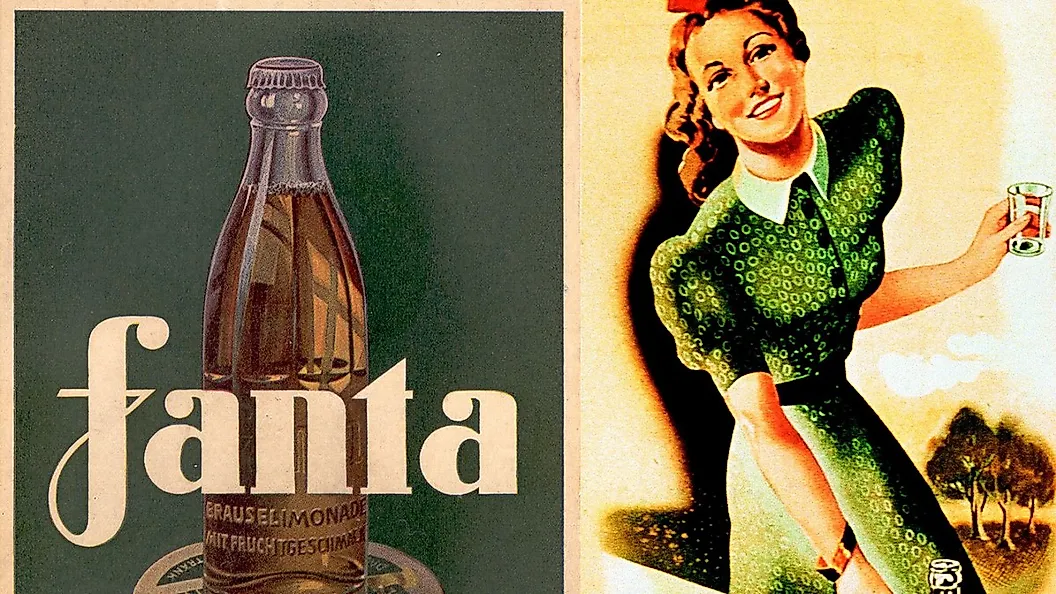
Image credit: timeline.com
  • The Volkswagen Beetle was commissioned by Adolf Hitler in the 1930s.
  • The first functional helicopter was developed in Nazi Germany in 1937.
  • Jägermeister was developed in Germany in 1933 by Curt and Wilhelm Mast, sons of the German vinegar manufacturer Wilhelm Mast.

While innovation in Nazi Germany is often associated with its weapons of mass destruction,  there are also a number of surprising products people take for granted on a daily basis that can trace their origins to Nazi Germany. The Volkswagen Beetle is a prime example. An iconic car on the road today, few would look at it and think of the car's association with Adolf Hitler. While some of these products were created in response to military needs, others were developed for widespread use. Nazi German was responsible for the creation of a number of products that reached international markets in the wake of World War II and still persist today.

10. Volkswagen Beetle

The Beetle was designed by automotive engineer Ferdinand Porsche. Image credit: wikimedia.org

An iconic vehicle today, the Volkswagen Beetle was commissioned by Hitler in the 1930s as the “peoples car”, designed as a practical, affordable car for German families.

The Beetle was designed by the Austrian-German automotive engineer Ferdinand Porsche, a member of the Nazi Party. First manufactured in 1938, the Beetle was discontinued in the 1970s, only to be revived in 1998. Due to declining sales, Volkswagen announced that it would discontinue production of the Beetle in 2019.

9. Anechoic Tile

Anechoic tiles were designed by Nazi Germany’s Navy. Image credit: reddit

Used on the outer hulls of military ships and submarines, anechoic tiles are rubber or synthetic polymer tiles designed to absorb and distort sonar sound waves and dampen noise to avoid detection.                                        

Anechoic tiles were designed by Nazi Germany’s Navy in World War II, and first applied on a German U-boat in 1940. Today use of anechoic tiles on military submarines is common, though there are problems with the tiles falling off of vessels.

8. Anti-ship Missile

The effectiveness of anti-ship missiles against Allied vessels in 1943-1944 prompted other countries to develop their own.Image credit: www.savetheroyalnavy.org

First developed in Nazi Germany during World War II, the effectiveness of anti-ship missiles against Allied vessels in 1943-1944 prompted other countries to develop their own. They have been used in active combat by Soviet Russia, India, Israel, Argentina, Iraq, Iran, the United States, and Lebanon. Many other countries have tested their own missiles.

Anti-ship missiles have been refined over the years. While the original German design was radio-guided, subsequent missiles used various guidance systems including manual guidance, radar, infrared, laser, GPS, video, imaging IR, terrain referenced imaging, and automatic target recognition. In March 2020, Russia tested its hypersonic anti-ship missile.

7. Acoustic Torpedo

Acoustic torpedoes are still in use today as anti-submarine weapons. Image credit: YouTube

The first acoustic torpedoes were developed for Nazi Germany’s navy in 1943, at the same time at the United States Navy was developing its own torpedoes, and used extensively for the remainder of World War II as a weapon against naval ships and submarines. Acoustic torpedoes, modified from their original German and American designs over the years, are still in use today as anti-submarine weapons.

6. Helicopter
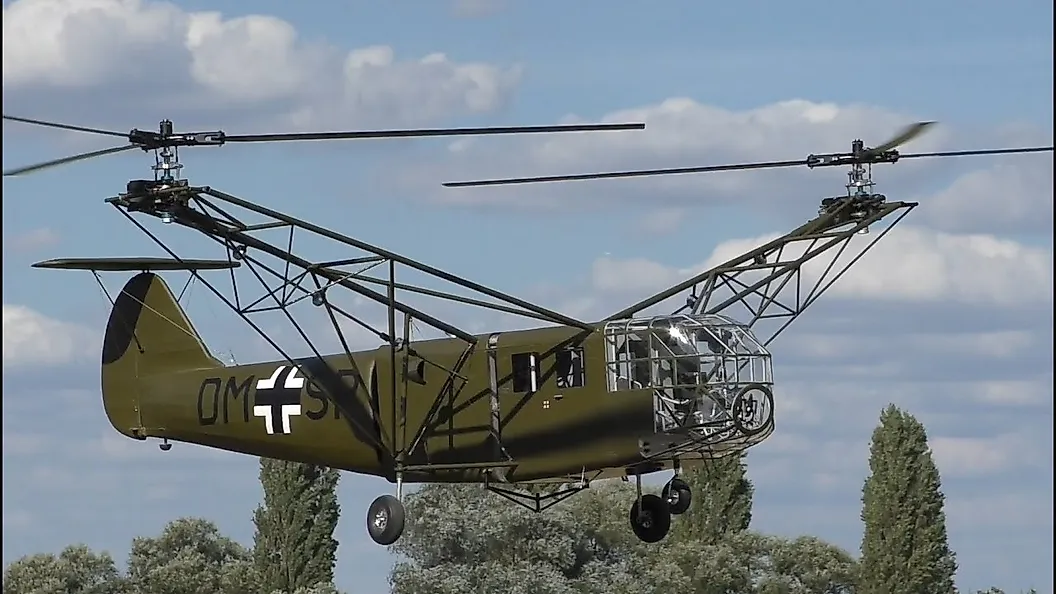
The Focke-Achgelis was the world’s first practical helicopter. Image credit: YouTube

The invention of the helicopter cannot wholly be credited to Nazi Germany, as the development of the Focke-Achgelis FA-61 in 1937 followed on decades of theory and experimentation in helicopter design. As far back as 1480, Leonardo da Vinci was drawing sketches of flying devices powered by a spiral rotor. Nevertheless, the Focke-Achgelis was the world’s first practical helicopter, and it naturally influenced the design of helicopters to come.

5. Jerrycan
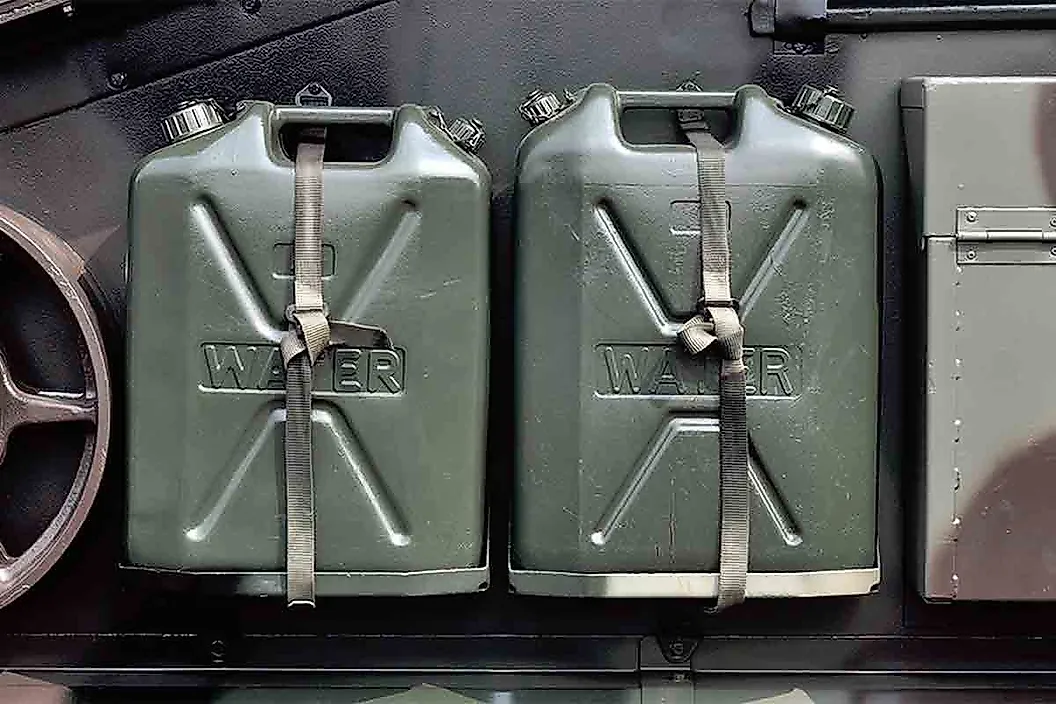
The British learned of the jerrycan in 1940 and worked to duplicate the design. Image credit: hiconsumption.com

Many would not give a thought to the origins of a regular, unassuming object like the jerrycan, a steel container used today both for military purposes and in every-day life to hold liquids such as fuel and water.                      

The jerrycan (Wehrmacht-kanister) was developed by the German engineer firm Müller in 1937 commissioned by Hitler to meet the need for efficient fuel distribution systems for the military. Though the jerrycan was developed in secrecy, the design fell into American hands in 1939. American attempts to redesign it were unsuccessful, but the British learned of the jerrycan in 1940 and worked to duplicate the design, and began mass production in 1944.   

4. Sarin
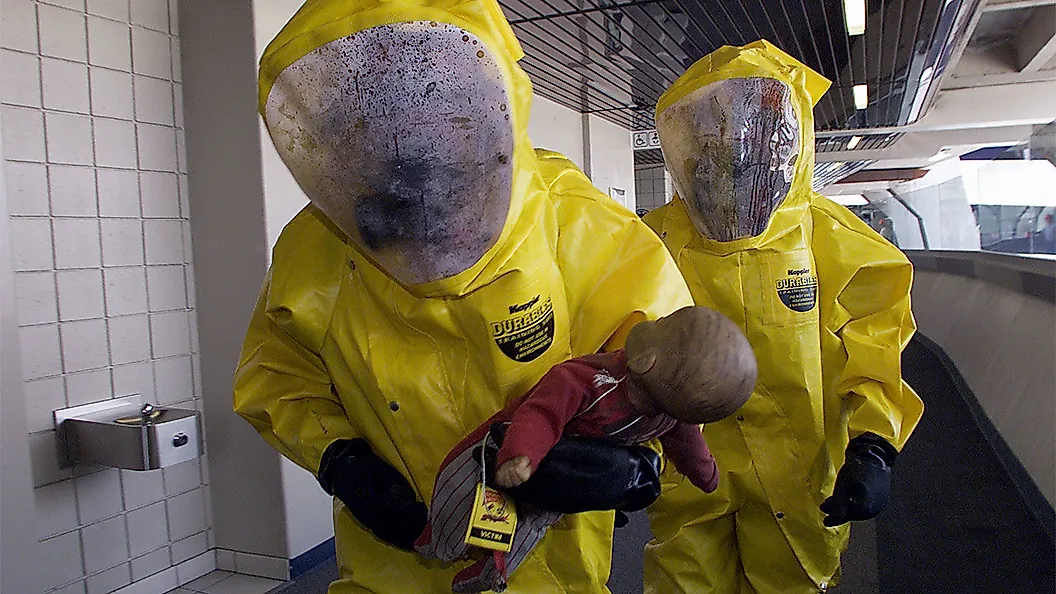
Image credit: www.sciencemag.org

Even Hitler was hesitant to use the deadly nerve agent sarin, developed by Nazi scientists while they were actually searching for a cheaper pesticide to use against weevils. Nazi Germany produced 12,000 tons by 1945. Despite pressure from his advisers, Hitler never used the compound as a chemical weapon in World War II. But the compound persisted, and in the following decades others used sarin to deadly effect.                        

Sarin was later labeled as a weapon of mass destruction, and the Chemical Weapons Convention of 1993 outlawed the compound. Nevertheless, there have been several instances of the use of sarin since. In 2017 the Syrian Air Force released sarin gas in against a rebel town in the Idlib Province of Syria.

3. Methadone

Image credit: www.beachesrecovery.com

Today methadone, an opioid drug, is used as a pain-reliever and as a treatment for addiction to other opioids. The drug was developed in Germany in 1939 as a product of the search for a solution to Germany’s opium shortage. Following the War, the Allies confiscated the German research on this drug, and the drug was introduced in the United States in 1947. 

2. Fanta
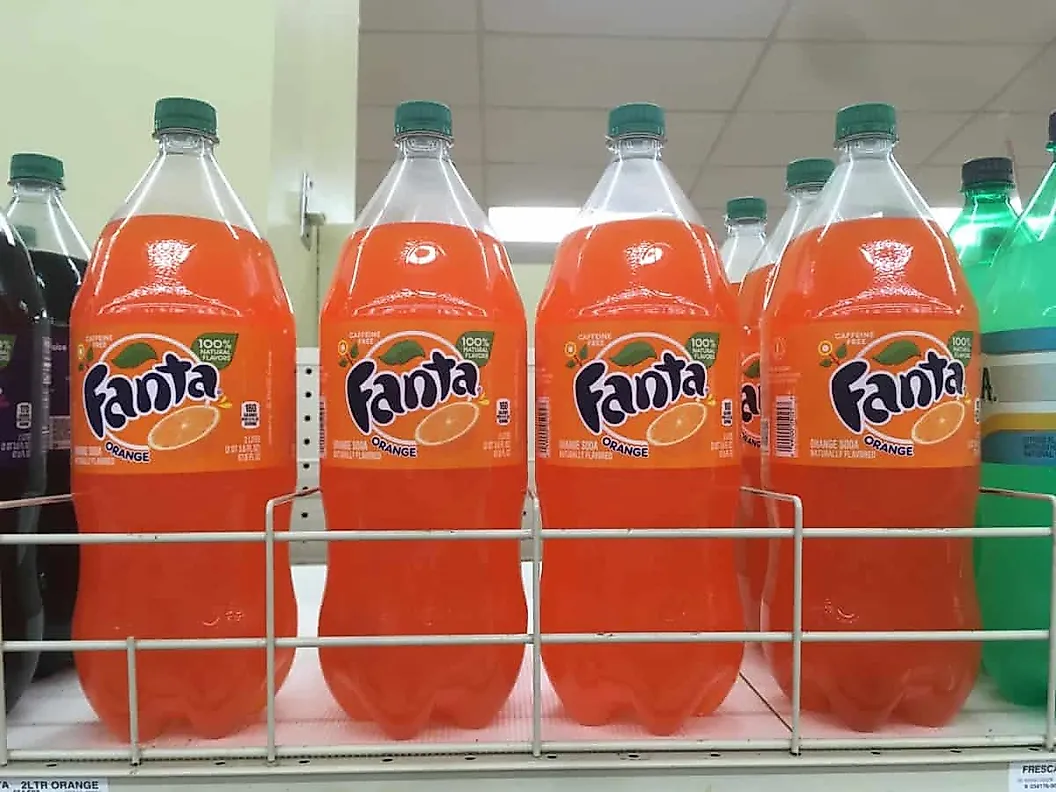
Fanta was developed in Germany during the Second War as a result of the American trade embargo. Image credit: Iamgoingvegan.com

Though not strictly speaking a Nazi invention, Fanta was developed in Germany during the Second War as a result of the American trade embargo in 1941 that blocked access to necessary ingredients for Coca-Cola. In order to maintain the business in, the German branch of the American Coca-Cola company concocted a new recipe based on the availability of wartime rations. The name Fanta comes from the German word fantasie, meaning imagination or fantasy.

Fanta was a wartime hit in Germany, and though discontinued at the end of War, when it was reintroduced in 1955 it soon spread to markets around the world. Today Fanta can be found in a large variety of flavors, and is sold in many countries worldwide.

1. Jägermeister

Jägermeister was developed in Germany in 1933. Image credit: vinepair.com

A popular alcoholic beverage today, Jägermeister was developed in Germany in 1933 by Curt and Wilhelm Mast, sons of the German vinegar manufacturer Wilhelm Mast. While the drink was marketed in Germany as an “after-dinner digestive aid,” in the 1970s and 80s American Sidney Frank promoted Jägermeister as a party drink for students and youths and sparked its international popularity. 

Share

More in History


Life on Firebase Six - 1969


by David L. Mull

 Fire Support Base Six (FSB 6) was located in the Central Highlands of the Republic of Vietnam in the vicinity of Kontum, near the borders of Cambodia and Laos. It was possible to view both these from Firebase Six even thoughthe jungle looked the same on both sides of the border and it was difficult to distinguish where the border was.

 
 The mission of the Field Artillery Battery located on FSB 6 was to provide fire support for U.S. and allied units in the area. Survival on the firebase was possible, but most of the time not very comfortable, it was downright aggravating, but the ingenuity and flexibility of young American Soldiers is unlimited.

 FSB 6 was only about three hundred meters long and two hundred meters wide. The soldiers of B Battery, 1st Battalion, 92nd Field Artillery lived in this small area. The position consisted of six M114A1 (155mm) Howitzers, a Fire Direction Center (FDC) and mess facilities. Additionally, the Command Post, a helicopter landing pad and other facilities necessary for survival in combat occupied this small mountain top. It was a rugged looking place to say the least. To a 19 year old private just out of AIT at Fort Sill, this place seemed like the end of the world. I had no idea when I arrived there that I would spend eight out of the 12 months of my tour in Vietnam on this firebase.

 The general living conditions on FSB 6 were not great, but they were toleable. The bunkers were constructed of perforated steel plating (PSP), sandbags, timbers or logs and either elephant hide or ponchos for waterproofing. We also discoveed that half of a large culvert made an excellent bunker. It was waterproof so all you had to do was sandbag it and build a blast wall for cover at each end. At times, the rain seemed like a greater enemy than the NVA; it was with us more frequently. We could never get dry. As soon as you put a pair of dry fatigues on, the FDC sent down a fire mission.

 I arrived at FSB 6 in May, 1969. Duringmy first weeks I got very little sleep. It rained constantly and we fired hundreds of fire missions. On 9 May, 1969, at 1035 hours Dak To, FSB 6 and Ben Het began receiving constant standoff attacks. During the weeks that followed, these three positions received a total of 397 incoming rounds of almost every caliber in the enemy arsenal. The battery continued to provide fire support to the maneuver forces and counterfire despite the devasting attacks. The month of June brought no respite for the beseiged Ben Het-Dak To region. By the week of 7-13 June 1969 it became apparent that the enemy was turning the brunt of its attack toward Ben Het. Throughout the battle of Ben Het, the 1st Battalion, 92nd Artillery expended 49,041 rounds against enemy forces estimated to be in excess of 5,000. This indoctrination provided me an excellent opportunity to enhance my gunnery skills and figure out what was going on in the Field Artillery.

 The nights were very long interrupted by numerous firemissions. We were fortunate if we could get a few minutes of sleep each night. Days were spent maintaining our equipment, receiving ammunition and firing more missions. We kept this pace up for two months.

 We had to be ready at all times to deliver fire. To do this the Cheif of the firing batteryand the XO would lay the battery each evening, just before dark, on azimuths of 6400 and 3200 mils. We would then emplace our aiming post at a deflection of 2400 mils. I have never seen the technique that we used in a book, but it worked. Azimuth markers were emplaced every 400 mils around the parapet to make it easier for us to get on the correct azimuth. The M12-seruespanoramic telescope was used on the M114A1. All a gunner had to do was remember 2400, 5600 and 8800 and he could calculate the base deflection for any azimuth. If the azimuth of fire was less than 2400 he subtracted it from 2400; if it was greater than 2400 but less than 5600 he subtracted it from 5600; and if it was greater than 5600 he subtracted it from 8800.

 To lay the howitzer, the gunner placed the calculated deflection on the pantel and shfted trails until the vertical hair line in the panoramic telescope was on the aiming post. A speedjack was used to make it easy to shift trails to any azimuth. All the Cheif of Smoke had to do was to give us a safety check from the safety circle and we were ready to fire. This was an extremely fast method of laying without using an aiming circle.

 To stabilize the howitzer in position, we drug in heavy timbers that the spades could push against to keep the hositzer in the center of the pit. After the fire mission, we could tilt the speedjack to the rear, jack the howitzer down, and it wold pull the spades out of the mud and the howitzer back to the center of the firing pad which we had constructed in the middle of the pit. On my second tour in Vietnam, we used a M88 track in our pit. We dug in until only the top was above the ground, and connected it into a continuous circle around the pit. This worked even during monsoon season, and was very good for a permanent firebase. However, it was impractical if you displaced frequently.

 The only way to reach FSB 6 was by helicopter. All resupply had to be done by air. This was satisfactory most of the time, but during the monsoon season, heavy fog would make it impossible for aircraft to reach the firebase. These conditions would normally only last a few days, but sometimes lasted for weeks. When this happened, we ate a lot of C-rations and used our ponchos to catch rain water for use, and stored it in powder canisters.

 In the dry season, we found that a VT fuse can, or powder canister with small holes punched in the bottom of it, served as a pretty good shower. We heated the water by leaving the canister on top of our bunker, letting the sun's warmth heat the water.

 We lived with a constant threat of sapper, mortar, artillery and recoiless rifle attacks on our position. Recoiless rifle attacks were the most common form of harassment. With experience, it became second nature to get into a hole, bunker or wherever you could when you heard the shout, "Incoming!" I consider myself lucky to be assigned to the hositzer section that returned fire on the recoiless rifle positions. My section was always called on to return the enemies fire. After being fired upon for several days from a ridge just to the west of us, we nicknamed the ridge "Rocket Ridge." The fires we were receiving were from a recoiless rifle. Each time Charlie fired at us, we would return twenty or so high-explosive projectiles in his direction with various fuse types. Our fires never seemed to suppress him. Charlie managed to knock out a helicopter that was bringing in supplies, put a round through our mess hall and wound a few of our soldiers. We tried air strikes but Charlie continued to reappear each day to shoot at us.

 Finally, a special forces team, with "tunnel rats," left the firebase on a mission to capture the recoiless rifle position. The team returned with the recoiless rifle. That ended our problems from "Rocket Ridge." But that's how well the NVA could dig into a position and be able to sustain artillery as well as air strikes.

 The Defensive perimeter was manned by soldiers of the Army of the Republic of Vietnam (ARVN). We pulled howitzer pit guard but never perimeter guard. The perimeter was made of concertina wire, and we employed trip flares, claymore mines and tangle foot. It looked impassable, but believe me, it wasn't. The ARVN Soldiers had dug a ditch all the way around the top of the mountain. Their fighting positions and living areas were inside the ditch. The parapet we built around our howitzer was high enough to protect the howitzer from enemy direct fire. I also provided us with a fighting position if the situation warranted it. Ammunition bunkers lined the inside of the parapet with blast walls in front of them to protect the ammunition from the blast of incoming rounds.

 Even though FSB 6 will never be the subject of a movie, to the men that manned the howitzers of B Battery, 1st Battalion, 92nd Field Artillery, there will always be vivid memories of it. I can still remember seeing men cry as they left the firebase upon completion of their tour in Vietnam. There was something about sharing hardships on the firebase that developed a bond between the artillerymen serving there that will last forever.


David L. Mull Retired as a Command Sergeant Major

Monday, May 12, 2025


Humor in a Near Death Experience
 

by (Lt.) Henry Hickman

Occasionally, even in an armed conflict, there is humor in being wounded.


   One form of entertainment that I have always enjoyed is the old, silent, black and white comedies such as Keaton and Chaplin. The top of the list falls to the Keystone Cops. It seems that in every episode, at least once, there's someone who falls or is knocked into a mud hole. What tickles my funny bone is the manner in which they end up in the hole. But funnier yet is that stupid expression on the individuals face as he is spitting mud out. Unbeknownst to me at the end of February 1968, I would find myself in a similar situation, but the hole I ended up in did not have mud in it.

   At the end of December, 1967, the artillery unit that I was stationed with was moved to a Fire Support Base fourteen (14) kilometers west-southwest of Dak To, Vietnam. This base was called LZ Dogbone. When viewed from the air you could see how it got its name. Two bald, dirt knolls with a saddle in between situated on a valley plateau between two mountain ranges, due east and west. Three kilometers west of the base, the plateau plunged into a deep valley that butted up to the west range of mountains. The infantry perimeter around the base was shaped just like the dog biscuit you see advertised on TV or on the grocery shelves, hence the name.

   They placed our firing battery on the western knoll and it took us a couple of days to finally get settled in. During those two days, things were quiet and there wasn't any enemy action going on around us. I had just finished a book about the French defeat by the Viet Minh at Dien Bien Phu back in the 1950's, this place reminded me of the same position the French had been in, in a valley with mountains basically all around. Needlesss to say, this did not give me a very comforting feeling. The closest friendlies were fourteen (14) kilometers away and it was just us, in the artillery and one (1) infantry company in this position.

   The third day fortified my "gut" feelings; about two (2) in the afternoon, three (3) mortar rounds hit the fire base, luckily no one got hurt. One thing about mortar rounds is that when they hit the ground and explode, they leave a pattern that will give you a general idea as to the direction they came from. By the time we left this base, we had fired enough artillery rounds to almost denude this forest from due west to due south, three kilometers out.

   As it got nearer to the Chinese New Year (Tet) the mortar attacks became more frequent and sometimes there was more than one a day. This was not a great moral builder for any of us. We couldn't understand why they had put us in this position, the infantry hardly left the fire base on sweeps, and then they only went out a couple of kilometers and came back to the base. This basically left the area around us free for the enemy to come and go as he pleased. To this day it still baffles me as to why they ever put us in that position. During our whole stay there, not one major ground action by American or Vietnamese forces took place in or around the area that would be covered by our artillery howitzers. In the ocurse of this stay we had one kid killed (Bob Alexander) and five wounded, for what?

   Finally on the evening of February 28th a radio message came in that we would be leaving this place and going back to Dak To to convoy back to base camp for a month, we had been in the field for nine (9) months. You can't know just how happy we were to get that message. This place had been a "Hell Hole", dirty, mortar attacks and a feeling of despair, "God" I was glad to be leaving it. The only good thing about it was that we hadn't had the experience of a ground attack by enemy infantry.


   The next morning about 0800hrs the choppers started coming in to pick up personnel and our howitzers. With our equipment and the altitude that we were at, it usually took almost six (6) hours to completely get us moved off of a fire base. Because this base was totally void of vegetation, we wore gas masks so we could keep the flying dirt and debris out of our eyes that was churned up every time a chopper hovered to pick up something. Every time a chopper would hover, mortar rounds would hit the base, so this really created more havoc and of course really created adrenaline flow. And each time you hit the ground and swore thinking to yourself, "God, get me off this blankety blank place".

     At last, about 1 pm a chopper came in to pick up the last howitzer. I and my radio operator (I think it was Grasso from Seattle) were standing on the north east portion of the west knoll as the chopper lifted up this howitzer and left, again mortar rounds. I told the operator to get his stuff and get over to the other knoll so we could get on another chopper to get out of there. As he headed down the saddle I took off my gas mask and put it in its case. I started to turn to go pick up my stuff and it felt like someone with a big foot kicked me from the rear. The next thing I remember is that I'm spread eagle face down in a hole, spitting grit and dirt out of my mouth. My left arm is mumb and as I looked at my elbow, its scraped up, so I figured I'd hit my "crazy bone" when I hit the ground. I looked back over my shoulder and about fifteen feet behind me is a hole (mortar round) still smoking. About then, Armstrong a kid in the ammo section jumped in the hole with me. His eyes were big as saucers, and fear was written all over his face. He asked me if I was hit, I told him that I didn't think so, the shock hadn't worn off yet. I'll never forget what Armstrong then said, "Sir, let's get the blank of this place". I told him to get over to the other knoll. I got up and walked over to get my equipment. Suddenly I realized that I couldn't pick anything up with my left arm.

   Finally, after struggling with a steel pot, a M-16, a rut sack, and a waterproof bag, I got everything in my right arm. As I wobbled down the saddle, heading for the other knoll, I suddenly felt something warm flowing down my left arm. As I looked down at my arm, it didn't take a rocket scientist to tell me that I had been hit.

   When I finally got back to Dak To, I was as green as the jungle fatigues I had on. Luckily the mortar fragment had gone clean through the meaty portion of the inside of my arm pit. Luckier still, by being uphill from where the round hit, I probably would have ended up paralyzed or worse, in a body bag.

   Now, I look back at that day and kind of chuckle, because I'm sure that I looked exactly like one of those characters in the Keystone Cop films. I would give anything to have a picture of the look on my face as I was spitting dirt out of my mouth, I'll never know.

Henry Hickman