Tuesday, April 15, 2025

 Assault on LZ Brown (Cambodia, May 12 & 13, 1970)

Robert J. Gouge   


Tuesday, May 12th, 1970, dawned as another unbelievably hot, sweltering day. It ended in an unusually heavy monsoon rainstorm that utterly drenched the already saturated jungle.  For the exhausted grunts from Bravo and Charlie Companies of the 5th Battalion, 12th Infantry, 199th Infantry Brigade (Sep)(Lt), that day, especially late that evening and into the early morning hours of May 13th was anything but ordinary.  Unbeknownst to them, before the sun broke over the horizon ushering in a new day, they would fight in a bloody, savage, and desperate contest for survival against an equally tough, motivated, and battle-hardened enemy.         


Eleven days prior, after spending nearly six months patrolling the rolling hills and triple canopy jungles of Long Khanh and Binh Tuy Provinces in the III CTZ, the 5-12th Infantry and Delta Battery, 2-40th Artillery were op-conned to the 2nd Brigade of the 1st Cavalry Division.  This rapid shift in control was done in anticipation for the much-awaited cross-border Cambodian Incursion, which kicked-off with both a military and political boom on May 1st, 1970.     


Beginning in the early morning hours of May 1st, after a ground-shaking mission of thirty-six B-52 “Arc-Lights,” a World War I vintage walking artillery barrage, and 151 tactical air strikes, a trooper from C/2-7th Cavalry became the first American trooper to combat assault into the Fishhook region of Cambodia.    For those organic and attached units of the force being deployed into Cambodia, specifically into the Fishhook region, their primary mission was to neutralize the COSVN Headquarters and wipe Base Area 351 from the face of the earth.      


On May 3rd, after a pleasant but intoxicated two-day stand-down at Camp Frenzell-Jones, the Brigade Main Base for the 199th Infantry Brigade, the entire “Warrior” battalion reluctantly made the journey northward from Bien Hoa Airbase towards the Vietnamese-Cambodian border.       


Reid Mendenhall, a combat veteran Echo Company, 5-12th Infantry describes the wave of emotions that came along when they were told they were going to Cambodia.  “It all started with rumors, like so many other things, and nobody could have imagined something quite so bazaar.  We all knew that Cambodia was a major problem, but we thought that it was out of reach, until now.  We had heard stories about covert units going into Laos and Cambodia, but now the story was ours.  Soon after the rumors began, the word finally came down that we were going.  There was some trepidation in our small unit, but we were all together, at least for the moment, and that was of great comfort.”    


Ironically, when the battalion reached Bien Hoa Airbase, they were given their monthly pay.  Many soldiers in the battalion wondered, “Just what in the hell are we going to do with this money in Cambodia?”


Packed aboard noisy Air Force C-123 cargo planes at the 8th Aerial Port at Bien Hoa, the trip was a solemn one as the young soldiers could sense that they were getting into something big.  Horseplay and joking around was kept to a minimum as the men were preoccupied with thoughts of home and a foreboding feeling about what was to come.  By 1905 that evening, the airlift was completed at Duc Phong, with all companies of the battalion on the ground and dispersed to FSB Buttons.      


From May 4th to May 11th, the Redcatchers conducted mundane screening operations and short-range patrols along the Vietnamese side of the border at Song Be and Bu Dop.  Elements of the battalion also guarded the dilapidated earthen airstrip at Bu Gia Map, located just two kilometers from the Cambodian border.        


John Wensdofer had been with Charlie Company since January 15th, 1970.  “When we started the move to Cambodia, we were sent up north to Song Be for a little over a week.  As soon as we got there, action started to pick up.  They expected the place to be hit and hit hard when we moved in.  Where we had been operating in Vietnam, the Viet Cong rarely moved in groups larger than four or five soldiers.  Around Song Be and once inside Cambodia, they moved in groups anywhere from 20 to 100.”     


With each passing day, the young men from the 199th LIB wondered just when the time would come when they too would cross the border and take part in what was commonly called “The Great Souvenir Hunt.”      The time came on the morning of May 12th, when Colonel Carter Clarke, the commanding officer of the 2nd Brigade, 1st Cavalry Division, summoned his reserves.  The Redcatchers were ordered to take up the slack left by the 5th Battalion, 7th Cavalry, and quickly re-deploy to a place called LZ Brown after the Cavalry soldiers had been ordered to assault an enemy basecamp several klicks to the north.    Landing Zone Brown had been a target hit by the 5-7th Cavalry on the first day of the Incursion. 


Located approximately three kilometers north of the border and two kilometers west of Route 14-A (one of the only major roads in the region) in a natural clearing that was surrounded by the thick Cambodian jungle, the “hole called LZ Brown” was used as a patrol base by the 5-7th Cavalry for the first week and a half of the Cambodian operation.  The site was also in the middle of a huge North Vietnamese logistical complex.    By midday on May 12th, the 5-7th Cavalry had vacated LZ Brown, taking anything of use with them and leaving the small perimeter all but vacant and bare.  The patrol-base now consisted of a pitiful-looking dirt berm roughly four feet in height and a single strand of floppy razor wire. 


“When we received the word to go into Cambodia,” relates John Wensdofer, “Charlie Company flew in by Huey late in the afternoon of May 12th.    “We were the first ones from the battalion to cross the border.  Bravo Company came in later that evening by Chinook.  For some reason, we dug no foxholes or fighting positions on our side of the perimeter.       


The 1st Platoon of Charlie and the Company CP were the first elements of the battalion to land at LZ Brown.  They began the lift at 1800 hours and were flaring into the landing zone at 1810.  It took six sorties for them to get in.  The rest of the company followed.  Bravo Company did not start the move until 1825.  After 17 sorties, all of Bravo was inside by 1930, quite late to be settling into a new and unfamiliar area of operations.   


Allen Thomas had been with the 2nd Platoon of Bravo Company in the field as an infantryman since July, 1969.  He had 63 days to go in-country when the battalion moved to Cambodia.  Thomas remembers that, “When the Chinooks started ferrying troops out, it was late in the day.  Everyone who could held back and waited.  LZ Brown, when viewed from the air, looked like a very small, very dirty hole in the middle of the jungle.  We built no bunkers nor did we dig any foxholes.  I was on the last Chinook to arrive and it was almost dark when I walked over the berm.”    


Terry Braun, a veteran sergeant and squad leader with the 3rd Platoon of Bravo Company states, “My squad arrived by Huey’s about an hour before sunset.  It was a magnificent sight.  The afternoon rains were finally beginning to lift and the sun sparkled off the green vegetation surrounding LZ Brown.  It almost had the appearance of a well-kept golf course.  LZ Brown consisted only of dirt surrounded by a berm.  The entire base could have fit inside a football field.  It was more oblong than circular and had a smaller berm located within the larger perimeter towards the western half.  One single strand of concertina wire surrounded the entire landing zone.  It was located about 35 to 40 meters from the berm.  There were no bunkers, just mud and dirt pushed up about chest high.  Those of us arriving had no idea that the Ho Chi Minh Trail was approximately 100 yards to our west.  Also, as we were leaving the Bien Hoa airport a few days earlier, we were issued M8 bayonets for the first and only time in Vietnam.”    


By the time complete darkness had crept in, only Bravo and Charlie Companies of the battalion and one 81 mm mortar from Bravo Company’s mortar platoon had been airlifted into the perimeter.  All other lifts for the night were cancelled.    CPT David Ashworth, the S-4 officer for the Warriors during Cambodia recalls, “When all the lifts were called off going into LZ Brown, only Bravo and Charlie Companies down.  No 105’s from Delta Battery made it in that night.  The guns were not flown in until the morning of the next day.”   For the exhausted infantrymen of Bravo and Charlie Companies, all that could be done the night of May 12th was to set up the small number of claymore mines and trip-flares that were on hand a few meters beyond the perimeter wire, eat a cold meal of C-rations and huddle silently on the soggy ground, hoping that nothing major happened until the next day.  There was, however, an unexplained, deep feeling of apprehension amongst most there that night that something big was about to happen.Terry Braun remembers this dreadful premonition.  


 “That evening, we sensed that something was different.  As we positioned our claymore mines by the concertina wire, we listened to the Armed Forces Radio Network, which was something we normally did at basecamp as we were getting ready to pull guard.  We set up five soldiers to a position that night, not the usual four.  LZ Brown was split in half.  On a clock, Charlie Company took the western half from 6 to 9 to 12.  Bravo Company took the eastern half from 12 to 3 to 6.”  


 In the surrounding jungle, the change in tempo and activity at LZ Brown did not go unnoticed by the NVA.  As early as mid-afternoon on the twelfth, the 1st Cav’s, 2nd Brigade intelligence units began receiving reports from roving aviation and reconnaissance patrols that the NVA had watched the cavalrymen vacate the base.  There were even a couple of reports stating that large numbers of NVA had been spotted moving in the direction towards LZ Brown.     


Stealthily moving toward the LZ were veteran NVA regulars from the 174th North Vietnamese Regiment.  Originally formed in North Vietnam in the early 1960’s, the regiment had seen considerable combat in the II and III Corps Tactical Areas of South Vietnam.  Barely two and a half years before in November of 1967, the 174th NVA Regiment had fought against the 173rd Airborne Brigade and the 4th Infantry Division in one of the Vietnam War’s largest and costliest battles.  The battle was Dak To and it was fought on a little-known mountainside called Hill 875.  By the time the hill was secured by the weary paratroopers on Thanksgiving Day, 1967, the 174th NVA, along with several other supporting Communist units had lost over 1,600 personnel killed in action.


 Sometime after midnight on May 13th, the last of the sputtering afternoon monsoon rains slackened and then finally quit.  The muggy and humid temperatures immediately returned, along with the serenading noises of millions of tropical insects and mosquitoes.   


Unnoticed and slowly inching closer to the dirt berm were enemy sappers.  Clad in only dark loincloths, their deliberate movements and sounds concealed by the thin layer of ghostly fog that was emanating from the tree line, the sappers proceeded to disarm or cut the wires on the claymore mines that were pointed outwards surrounding the Redcatcher positions.    


On Charlie Company’s side of the perimeter, John Wensdofer, draped in heavy belts of 7.62mm machine-gun ammunition, peered into the darkness from behind his M60.  Suddenly, less than ten feet to his right, an enemy sapper with his AK-47 at the ready jumped up on top of the berm and cut loose with a long, sweeping burst of automatic rifle fire.     


According to Wensdofer, “The AK fire hit my squad leader, who was a muscular black sergeant with a size 15 jungle boot.  The rounds missed me and plowed into the foot of the guy who was to my right.  Despite being hit, our squad leader then killed the NVA soldier on the berm.”  Sp4 William Barry, who was also on that side of the berm, saw the opening shots.  “One enemy soldier got on the berm and was shooting into the camp.  He was the first to get it.”    Staff Sergeant Malcolm Smith had previously served as a platoon sergeant in the second platoon of Bravo Company from September of 1969 until April of 1970, at which time he was moved to the Company CP.  When the battalion moved into Cambodia, he was then on his second of three combat tours.  Smith recounts his version of the opening shots.     


“Shortly before the fireworks started, I remember making rounds and speaking briefly with exhausted Bravo Company soldiers.  At approximately 0310 hours, the firing suddenly began in the C Company area, followed by a brief stillness.  Our lone mortar fired a flare or two to illuminate the night.  After this brief exchange of gunfire, which was immediately followed by the crump of grenades and the deafening crack of claymore mines, there was a brief silence around the firebase that seemed almost surreal. Smith continues.  “Then, all hell broke loose.”   


Terry Braun, who was just a few meters from SSG Smith remembers, “My second shift of guard duty was to begin at 3:15 AM.  At 3:00 a.m., I awakened and watched PFC Davis from Tennessee pull his final few minutes of guard.  I approached the berm and joined him.  His attention was towards Charlie Company‘s position.  He pointed out to me three silhouettes standing on the berm.  His first comment was that although those guys must be having a tough time sleeping they should not be silhouetting themselves in the moonlight on top of the berm.  We immediately knew then that was not something a GI would do. 


Seconds later, M16’s and M60’s started firing and a claymore mine blew.  Then the battle started.”     


The waiting NVA assault force in the tree line cut loose and slammed the base with intensive rocket, mortar, and .51 caliber machine gun fire.  For 15-20 minutes, the North Vietnamese lobbed round after round of 60mm mortar and RPG rounds into the perimeter.  A full-scale ground attack by an estimated two reinforced companies from the 3rd Battalion of the 174th NVA Regiment was fanatically launched when the mortars stopped firing.   


When the flares went up on John Wensdofer’s side of the perimeter, he quickly looked over the berm and to his shock, watched as a large human wave of screaming NVA soldiers charged crazily out of the tree line.  “When the flares went up, I could see them running at us and I immediately opened up with the M60.  On and on they came.  I fired so many rounds, the barrel got white hot.  We were firing so furiously, I think that we almost ran out of ammo.  I know that I had several belts of 100 rounds linked together.  It is hard to remember how much time went by from when the gook got on top of the berm to when I stopped firing the M60.  I can remember praying for daylight.”   


Allen Thomas, who was on the eastern side of the perimeter with Bravo Company states, “The attack was mostly on Charlie Company’s side of the perimeter.  The fire was the heaviest that many of us had heard and experienced in Vietnam and I remember that the NVA were firing all different sorts of tracer rounds at us.  Red and green tracers were lighting up the sky, explosions were all over the place, both inside and outside, and illumination was going up from either parachute flares or from the smaller, hand-held white star clusters.     


John Wensdofer can testify as to how danger close the contact was.  “At times, the fighting was so close, we crawled up to the top of the berm and either emptied magazines from our weapons straight down at them or just rolled grenades off the top of the dirt and let them roll down.”  One of Wensdofer’s M60 bi-pod legs was literally bent from the force of an explosion from one of the grenades that he rolled over the berm.  Several of the claymore mines that had been placed outside the wire and armed before the attack were useless.  The detonation wires had been cut or the mine had been removed altogether by the sappers.    At one point in the firefight, some of the men on the perimeter line could hear the NVA shouting commands and blowing whistles at one another.         


“Tracers were coming in and different colored tracers were going out from the berm.  It was actually very colorful.  The guys at our position, myself included, began singing ‘Sunshine Superman’ during the firefight for no apparent reason.  A Spooky gunship was called in to support us and we could see the tracers from their .51 caliber gun just missing the back of our aircraft.  Fortunately, they were not leading the aircraft enough so they continued to miss,” recounts Terry Braun.    Jim Horine had served as a line grunt in Bravo for six months and was humping the battalion RTO at the time of Cambodia.  He remembers, “I was inside the LZ perimeter at the CP with our company commander.  It was the heaviest firefight that most of us had ever seen.  The noise from the machine gun and rifle fire was unbelievable.  While on the battalion net, I overheard the pilot of the Spooky gunship (call sign Blind Bat) that was supporting us call back and say that he had expended every single round for his mini-guns on targets of opportunity.  As he veered off, there was a long line of green .51 caliber machine gun rounds trailing him.”    


A Cobra gunship was also dispatched for close air-support.  The Cobra’s deadly 2.75 rocket and mini-gun fire was called in so close to the fighting that the men on the berm were actually ordered to pull back a few meters so the gunship could make gun-runs up, down, and around Brown’s perimeter.  Terry Braun states, “The fighting had raged on for about an hour and a-half when unbelievably, Bravo got a call on the PRC-25 radio from our CO to, “Fix bayonets!  They’re coming in!!!”  Fighting persisted until dawn when the Air Force dropped a series of concussion bombs just west and slightly south of our perimeter.  When each of those bombs went off, there was a brief instant magnified by stillness in the air followed by a loud explosion that just seemed to suck the air out all around us.  The only thing I can recall that was more impressive was being in the vicinity of B-52s when they dropped their payload and the ground actually shook like an earthquake.”    


For two and a half hours, despite the withering fire coming from the Redcatcher M60’s, M16’s, and M79 grenade launchers, the determined NVA still kept coming.  The lone 81mm mortar crew from Bravo was loading and firing illumination their small supply of high-explosive rounds like men possessed.  While doing so, they were terribly exposed to the incoming enemy fire.   


“We conserved our ammunition the best that we could,” remembers 1LT Charles Barnes, the Bravo Company mortar platoon leader.  “We fired our last round just prior to 5:45 a.m.”    


Throughout the firefight, enemy bullets and shrapnel whined and bounced around the mortar-men hanging rounds in the tube.  About an hour into the firefight, Sp4 Richard G. Desillier of the mortar platoon was shot and killed as he prepared to fire a round.  Despite the loss, the rest of the crew continued to thump out what rounds were available.        


Captain David Thursam, the Charlie Company commander at LZ Brown praises the mortar crew.  “The mortar gave my men great supporting fire.  They moved their gun around and hit on target every time.  What amazes me to this day about that fight was how we won.  With all of the fire that we were put out, an equal amount or more was coming in, including mortars and rockets.”    Jim Horine watched from the CP as the mortar crew worked.  “They fired and fired and fired.  I would bet that they set some kind of record for the amount of both HE and Illumination rounds that they were putting out.”   


“We had a great medic in Bravo Company,” recalls Allen Thomas, “named Doc Uhde.  He was a Japanese-American from California.  The medics carried an enormous rucksack full of medicine, bandages and salves.  To keep from carrying the big rucksack around, he carried a smaller Claymore bag.  Doc Uhde made his rounds, as he called it, around the perimeter periodically to see if the men needed anything.  During the middle of this firefight, Doc Uhde decided go make his rounds.  Here came this little, black-haired Japanese-American carrying a shoulder bag, running with his head down.  My friend, Tony Reece, saw Doc and naturally thought that he was a sapper and drew a bead on him.  He could make out his silhouette in the flashes of light.  Reece, however, never pulled the trigger.  Something was telling him not to do it.”     


From 0300 to 0545, the opposing sides were locked in mortal combat for control of LZ Brown.  The North Vietnamese onslaught signaled the first major Communist counter-attack of the Cambodian Incursion.   At approximately 0500 hours, much needed support from helicopter gunships, Air Force A-37 jets, and fixed wing “Shadow” gunships began pounding the attacking NVA from the air.  Incredibly, the NVA in the tree line responded to the thundering air strikes and gun-runs with more .51 caliber machine gun fire.Luckily, when the 81mm mortar fired its last round at approximately 0545, the fight for LZ Brown finally began to fizzle out.  Several minutes later, when the first rays of sunlight began streaking over the horizon, the firing eventually ceased and the surviving NVA melted back into the dark jungle, dragging away significant numbers of their dead and wounded.   


With full daylight, the rest of the 5-12th Infantry was hurriedly airlifted into the base.  Combat engineers from the 31st Combat Engineer Battalion, along with their heavy equipment, arrived at the base after literally carving a new road through the jungle.  One of the first tasks for the engineers was to dig a trench in which to bury the dead enemy soldiers.    


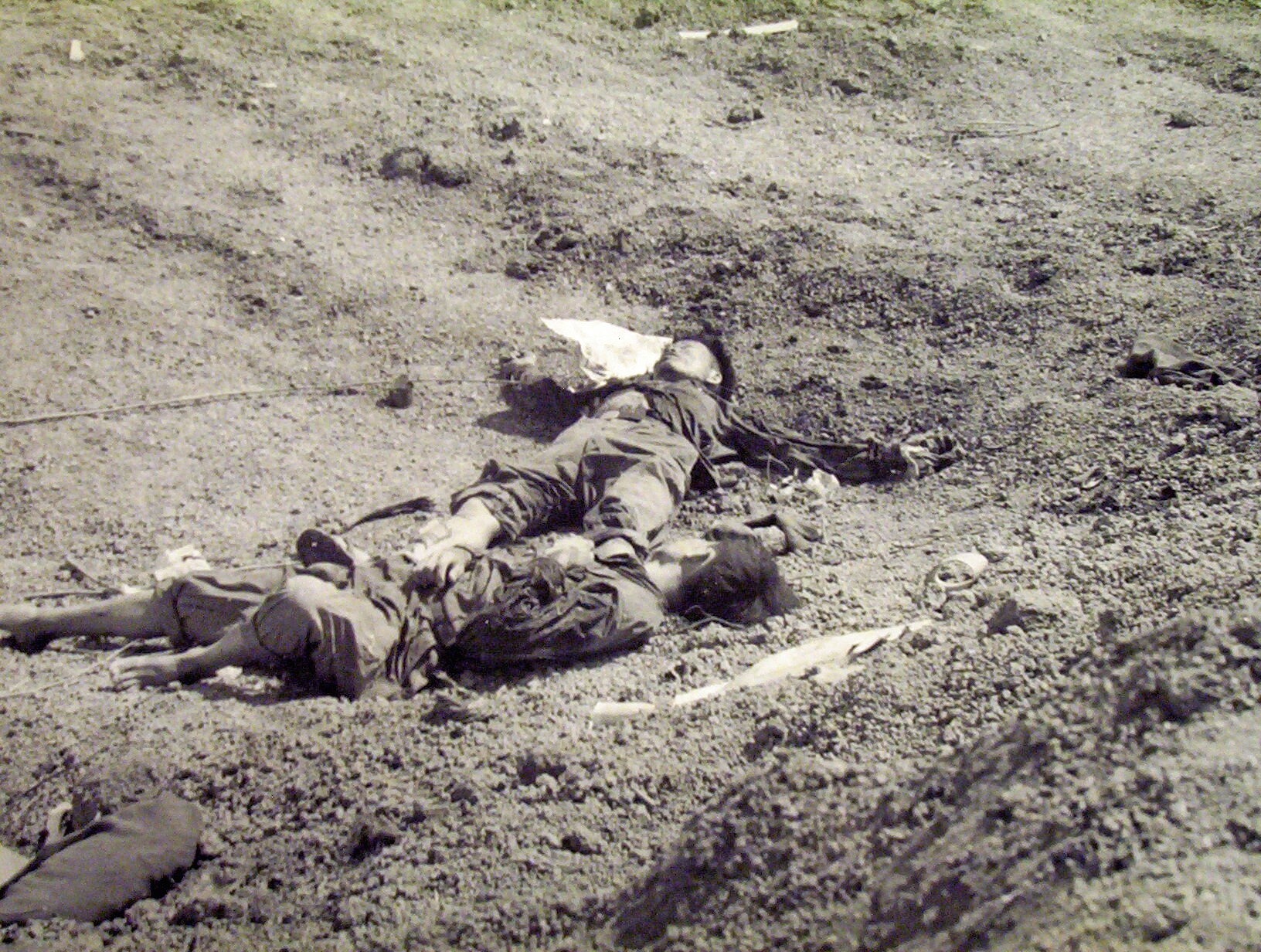
 The scene around Brown was one of utter death, carnage, and destruction.  Only those who have fought in war can understand its pitiful sufferings and tragic ramifications.  Fifty-three enemy bodies and pieces of bodies surrounded the perimeter.  Heavy blood trails were seen from the berm leading back into the jungle.  Discarded weapons and equipment were strewn everywhere.    The Redcatchers lost one man killed in action along with eight others from Bravo and Charlie who were wounded.   “At the conclusion of the firefight, some of the Redcatchers started to shout expletives and vulgar comments at the retreating NVA, challenging them to stand and fight some more,” recalls Malcolm Smith.  “In the aftermath, I remember carrying the dead to the bulldozed hole and throwing them in.  Some of the enemy had been hit multiple times and were bandaged more than once.  Some were not complete bodies either.”     


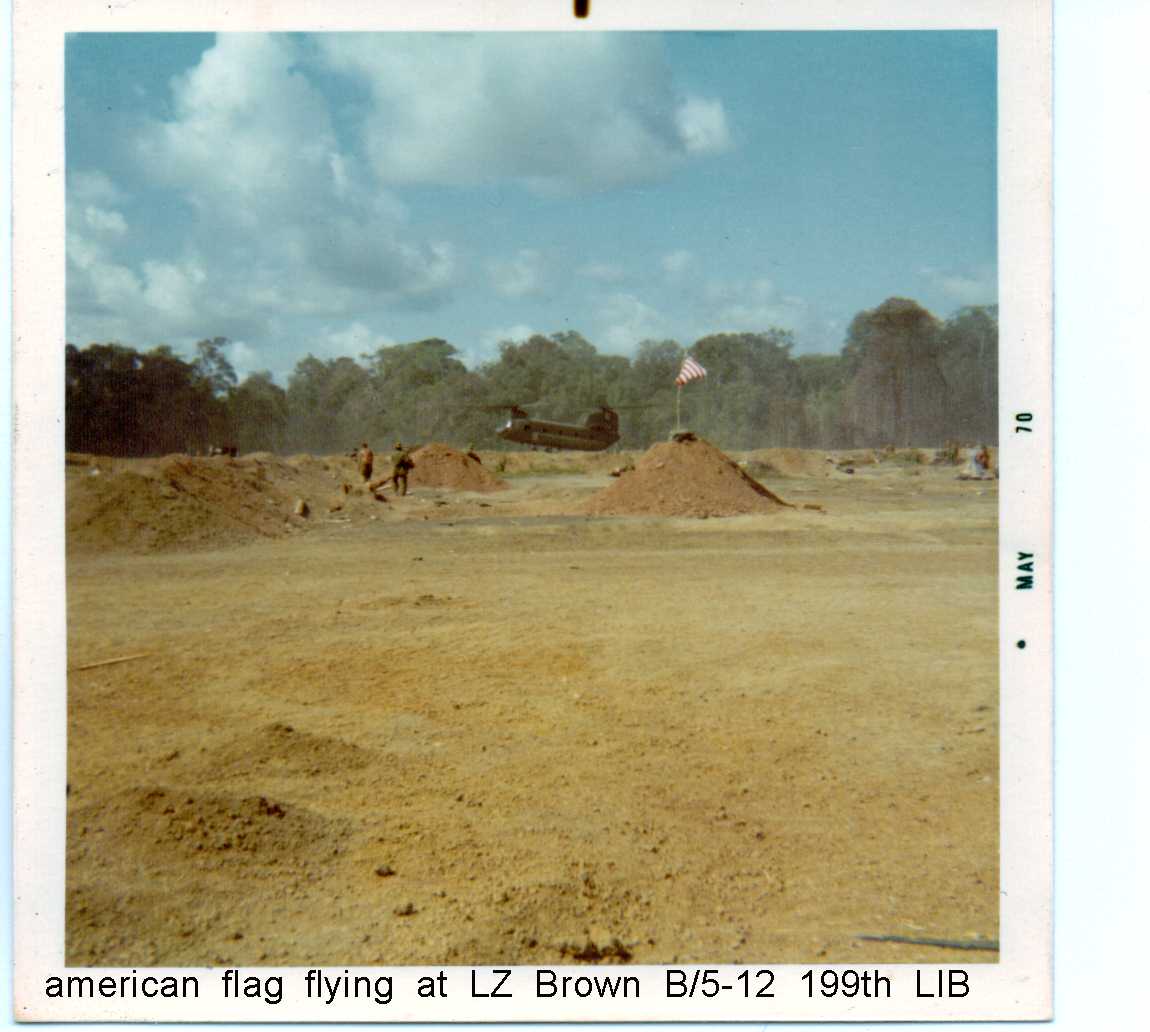
Terry Braun states, “As the sun rose and daylight crept in, to our amazement the area west of Brown was littered with bodies and body parts.  It almost looked like an Easter egg hunt with the eggs poorly hidden.  Heavy blood trails led back into the jungle.  This was a sight that we rarely saw in Vietnam.  Usually after a firefight, the NVA would withdraw and we would see very few bodies.  My machine gunner from Chicago, Ken Burmeister, raised an American Flag that he had carried with him on a flag pole and placed it on the berm.  That picture appeared with headlines on the front page of the New York Times.  Burmeister was later verbally reprimanded for raising an American Flag in Cambodia, but at the time it seemed appropriate.”   


In front of John Wensdofer’s red-hot M60 machine-gun were 12 dead NVA.  “They were all wearing regular green and khaki, NVA uniforms with pith helmets.  There were six enemy bodies inside the wire.  I took a 9mm pistol from what looked like to be a Chinese advisor.  His body was lying just inside the wire, close to the bottom of the berm.  I know he was not Vietnamese as he was taller than the rest and he looked to be about 180 lbs. or more.  He even had body fat on him.”   


Allen Thomas explains that, “One thing that has always stuck out in my mind is that all of the enemy dead were facing the berm.  They didn’t die retreating.”    Several soldiers also recall seeing what they believed were Chinese advisors among the dead.  Another odd find on the enemy KIA’s were what was thought to be drugs and vials of liquid speed.    According to Smith, “Some of the dead looked too big to be Vietnamese.  Most of the bodies were found with speed in their possession.  They had fresh haircuts and their uniforms, as I recall, were light green, khaki and even light blue.  I also remember that when we started to police up the enemy weapons, their bayonets were affixed.  What really stood out in my mind was the number of discarded bandages, blood trails and drag marks that were going in all directions from Brown.  The ground was even soft and mushy in spots.  I remember thinking to myself that the battlefield looked as if a blood bank blew up.”   


In addition to the bodies, blood trails and discarded equipment, 34 individual weapons were collected which included SKS and AK-47 rifles, three light RPD machine guns, four RPG’s, and two 60mm mortars.    As for the 5th Battalion, 12th Infantry’s first day in Cambodia, Allen Thomas sums up of the thoughts of many that fought there.  “In Cambodia, we learned that the enemy stood and fought.  The enemy soldiers here were smart and hardcore.  Most of us wanted to go back to Vietnam, not stay in Cambodia.”


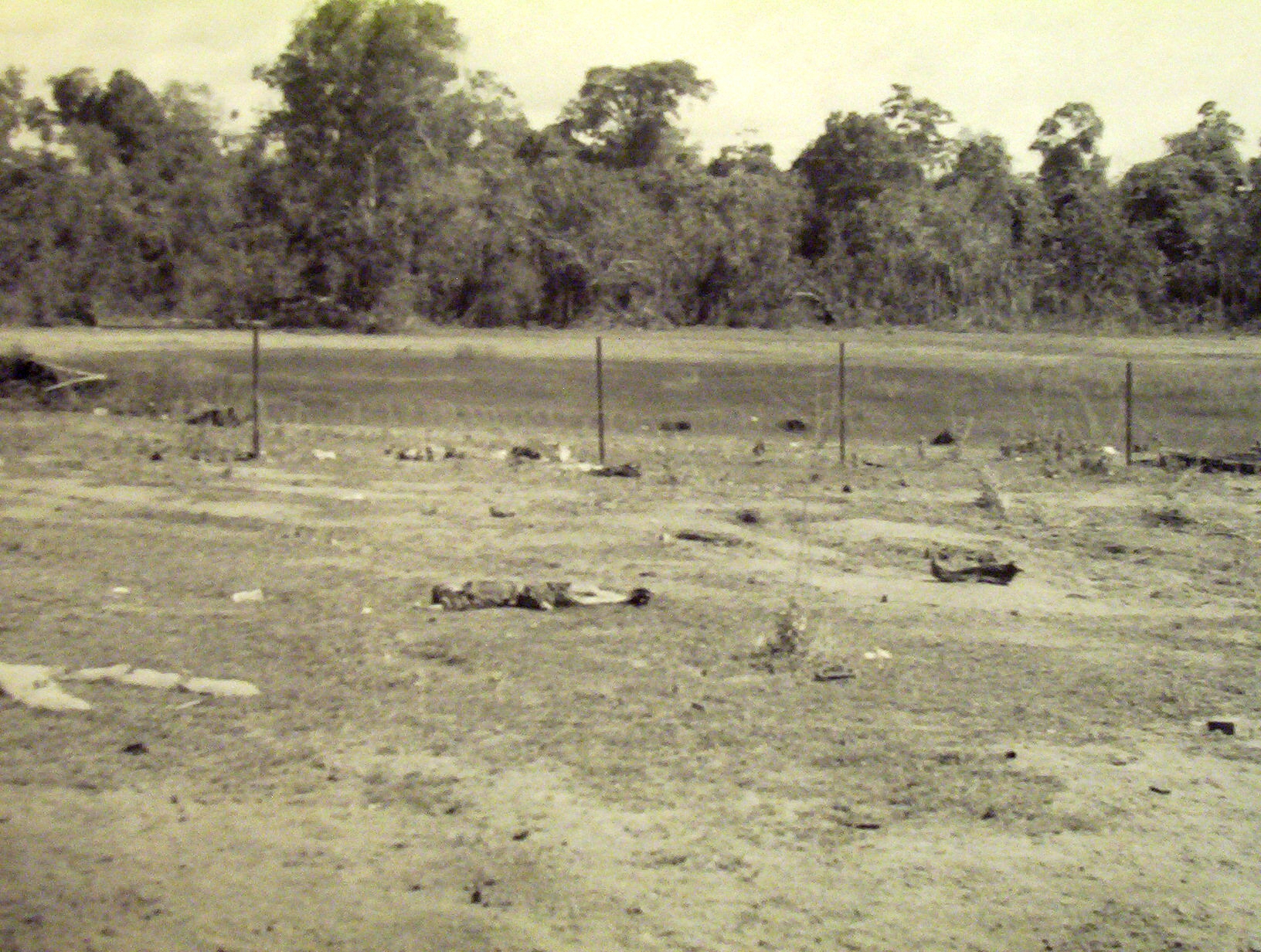
Scenes from the berm and immediate perimeter area of FSB Brown the morning after the fight, 13 May 1970.  Image by SP4 Peter Nagurny, 40th PIO.


                                                                Stanley Buchanan, B/5-12

 Assault on LZ Brown (Cambodia, May 12 & 13, 1970)

Robert J. Gouge   

Tuesday, May 12th, 1970, dawned as another unbelievably hot, sweltering day. It ended in an unusually heavy monsoon rainstorm that utterly drenched the already saturated jungle.  For the exhausted grunts from Bravo and Charlie Companies of the 5th Battalion, 12th Infantry, 199th Infantry Brigade (Sep)(Lt), that day, especially late that evening and into the early morning hours of May 13th was anything but ordinary.  Unbeknownst to them, before the sun broke over the horizon ushering in a new day, they would fight in a bloody, savage, and desperate contest for survival against an equally tough, motivated, and battle-hardened enemy.      
   

Eleven days prior, after spending nearly six months patrolling the rolling hills and triple canopy jungles of Long Khanh and Binh Tuy Provinces in the III CTZ, the 5-12th Infantry and Delta Battery, 2-40th Artillery were op-conned to the 2nd Brigade of the 1st Cavalry Division.  This rapid shift in control was done in anticipation for the much-awaited cross-border Cambodian Incursion, which kicked-off with both a military and political boom on May 1st, 1970.  
   

Beginning in the early morning hours of May 1st, after a ground-shaking mission of thirty-six B-52 “Arc-Lights,” a World War I vintage walking artillery barrage, and 151 tactical air strikes, a trooper from C/2-7th Cavalry became the first American trooper to combat assault into the Fishhook region of Cambodia.
    For those organic and attached units of the force being deployed into Cambodia, specifically into the Fishhook region, their primary mission was to neutralize the COSVN Headquarters and wipe Base Area 351 from the face of the earth.      

On May 3rd, after a pleasant but intoxicated two-day stand-down at Camp Frenzell-Jones, the Brigade Main Base for the 199th Infantry Brigade, the entire “Warrior” battalion reluctantly made the journey northward from Bien Hoa Airbase towards the Vietnamese-Cambodian border.       

Reid Mendenhall, a combat veteran Echo Company, 5-12th Infantry describes the wave of emotions that came along when they were told they were going to Cambodia.  “It all started with rumors, like so many other things, and nobody could have imagined something quite so bazaar.  We all knew that Cambodia was a major problem, but we thought that it was out of reach, until now.  We had heard stories about covert units going into Laos and Cambodia, but now the story was ours.  Soon after the rumors began, the word finally came down that we were going.  There was some trepidation in our small unit, but we were all together, at least for the moment, and that was of great comfort.” 
   

Ironically, when the battalion reached Bien Hoa Airbase, they were given their monthly pay.  Many soldiers in the battalion wondered, “Just what in the hell are we going to do with this money in Cambodia?”

Packed aboard noisy Air Force C-123 cargo planes at the 8th Aerial Port at Bien Hoa, the trip was a solemn one as the young soldiers could sense that they were getting into something big.  Horseplay and joking around was kept to a minimum as the men were preoccupied with thoughts of home and a foreboding feeling about what was to come.  By 1905 that evening, the airlift was completed at Duc Phong, with all companies of the battalion on the ground and dispersed to FSB Buttons.      

From May 4th to May 11th, the Redcatchers conducted mundane screening operations and short-range patrols along the Vietnamese side of the border at Song Be and Bu Dop.  Elements of the battalion also guarded the dilapidated earthen airstrip at Bu Gia Map, located just two kilometers from the Cambodian border.     
   

John Wensdofer had been with Charlie Company since January 15th, 1970.  “When we started the move to Cambodia, we were sent up north to Song Be for a little over a week.  As soon as we got there, action started to pick up.  They expected the place to be hit and hit hard when we moved in.  Where we had been operating in Vietnam, the Viet Cong rarely moved in groups larger than four or five soldiers.  Around Song Be and once inside Cambodia, they moved in groups anywhere from 20 to 100.”  
   

With each passing day, the young men from the 199th LIB wondered just when the time would come when they too would cross the border and take part in what was commonly called “The Great Souvenir Hunt.”  
    The time came on the morning of May 12th, when Colonel Carter Clarke, the commanding officer of the 2nd Brigade, 1st Cavalry Division, summoned his reserves.  The Redcatchers were ordered to take up the slack left by the 5th Battalion, 7th Cavalry, and quickly re-deploy to a place called LZ Brown after the Cavalry soldiers had been ordered to assault an enemy basecamp several klicks to the north.    Landing Zone Brown had been a target hit by the 5-7th Cavalry on the first day of the Incursion. 

Located approximately three kilometers north of the border and two kilometers west of Route 14-A (one of the only major roads in the region) in a natural clearing that was surrounded by the thick Cambodian jungle, the “hole called LZ Brown” was used as a patrol base by the 5-7th Cavalry for the first week and a half of the Cambodian operation.  The site was also in the middle of a huge North Vietnamese logistical complex.
    By midday on May 12th, the 5-7th Cavalry had vacated LZ Brown, taking anything of use with them and leaving the small perimeter all but vacant and bare.  The patrol-base now consisted of a pitiful-looking dirt berm roughly four feet in height and a single strand of floppy razor wire. 

“When we received the word to go into Cambodia,” relates John Wensdofer, “Charlie Company flew in by Huey late in the afternoon of May 12th.    “We were the first ones from the battalion to cross the border.  Bravo Company came in later that evening by Chinook.  For some reason, we dug no foxholes or fighting positions on our side of the perimeter.    
   

The 1st Platoon of Charlie and the Company CP were the first elements of the battalion to land at LZ Brown.  They began the lift at 1800 hours and were flaring into the landing zone at 1810.  It took six sorties for them to get in.  The rest of the company followed.  Bravo Company did not start the move until 1825.  After 17 sorties, all of Bravo was inside by 1930, quite late to be settling into a new and unfamiliar area of operations.
   

Allen Thomas had been with the 2nd Platoon of Bravo Company in the field as an infantryman since July, 1969.  He had 63 days to go in-country when the battalion moved to Cambodia.  Thomas remembers that, “When the Chinooks started ferrying troops out, it was late in the day.  Everyone who could held back and waited.  LZ Brown, when viewed from the air, looked like a very small, very dirty hole in the middle of the jungle.  We built no bunkers nor did we dig any foxholes.  I was on the last Chinook to arrive and it was almost dark when I walked over the berm.”    

Terry Braun, a veteran sergeant and squad leader with the 3rd Platoon of Bravo Company states, “My squad arrived by Huey’s about an hour before sunset.  It was a magnificent sight.  The afternoon rains were finally beginning to lift and the sun sparkled off the green vegetation surrounding LZ Brown.  It almost had the appearance of a well-kept golf course.  LZ Brown consisted only of dirt surrounded by a berm.  The entire base could have fit inside a football field.  It was more oblong than circular and had a smaller berm located within the larger perimeter towards the western half.  One single strand of concertina wire surrounded the entire landing zone.  It was located about 35 to 40 meters from the berm.  There were no bunkers, just mud and dirt pushed up about chest high.  Those of us arriving had no idea that the Ho Chi Minh Trail was approximately 100 yards to our west.  Also, as we were leaving the Bien Hoa airport a few days earlier, we were issued M8 bayonets for the first and only time in Vietnam.”    

By the time complete darkness had crept in, only Bravo and Charlie Companies of the battalion and one 81 mm mortar from Bravo Company’s mortar platoon had been airlifted into the perimeter.  All other lifts for the night were cancelled.
    CPT David Ashworth, the S-4 officer for the Warriors during Cambodia recalls, “When all the lifts were called off going into LZ Brown, only Bravo and Charlie Companies down.  No 105’s from Delta Battery made it in that night.  The guns were not flown in until the morning of the next day.”   For the exhausted infantrymen of Bravo and Charlie Companies, all that could be done the night of May 12th was to set up the small number of claymore mines and trip-flares that were on hand a few meters beyond the perimeter wire, eat a cold meal of C-rations and huddle silently on the soggy ground, hoping that nothing major happened until the next day.  There was, however, an unexplained, deep feeling of apprehension amongst most there that night that something big was about to happen.Terry Braun remembers this dreadful premonition.  

 “That evening, we sensed that something was different.  As we positioned our claymore mines by the concertina wire, we listened to the Armed Forces Radio Network, which was something we normally did at basecamp as we were getting ready to pull guard.  We set up five soldiers to a position that night, not the usual four.  LZ Brown was split in half.  On a clock, Charlie Company took the western half from 6 to 9 to 12.  Bravo Company took the eastern half from 12 to 3 to 6.” 
 

 In the surrounding jungle, the change in tempo and activity at LZ Brown did not go unnoticed by the NVA.  As early as mid-afternoon on the twelfth, the 1st Cav’s, 2nd Brigade intelligence units began receiving reports from roving aviation and reconnaissance patrols that the NVA had watched the cavalrymen vacate the base.  There were even a couple of reports stating that large numbers of NVA had been spotted moving in the direction towards LZ Brown.  
   

Stealthily moving toward the LZ were veteran NVA regulars from the 174th North Vietnamese Regiment.  Originally formed in North Vietnam in the early 1960’s, the regiment had seen considerable combat in the II and III Corps Tactical Areas of South Vietnam.  Barely two and a half years before in November of 1967, the 174th NVA Regiment had fought against the 173rd Airborne Brigade and the 4th Infantry Division in one of the Vietnam War’s largest and costliest battles.  The battle was Dak To and it was fought on a little-known mountainside called Hill 875.  By the time the hill was secured by the weary paratroopers on Thanksgiving Day, 1967, the 174th NVA, along with several other supporting Communist units had lost over 1,600 personnel killed in action.


 Sometime after midnight on May 13th, the last of the sputtering afternoon monsoon rains slackened and then finally quit.  The muggy and humid temperatures immediately returned, along with the serenading noises of millions of tropical insects and mosquitoes.
   

Unnoticed and slowly inching closer to the dirt berm were enemy sappers.  Clad in only dark loincloths, their deliberate movements and sounds concealed by the thin layer of ghostly fog that was emanating from the tree line, the sappers proceeded to disarm or cut the wires on the claymore mines that were pointed outwards surrounding the Redcatcher positions.
    

On Charlie Company’s side of the perimeter, John Wensdofer, draped in heavy belts of 7.62mm machine-gun ammunition, peered into the darkness from behind his M60.  Suddenly, less than ten feet to his right, an enemy sapper with his AK-47 at the ready jumped up on top of the berm and cut loose with a long, sweeping burst of automatic rifle fire.  
   

According to Wensdofer, “The AK fire hit my squad leader, who was a muscular black sergeant with a size 15 jungle boot.  The rounds missed me and plowed into the foot of the guy who was to my right.  Despite being hit, our squad leader then killed the NVA soldier on the berm.”  Sp4 William Barry, who was also on that side of the berm, saw the opening shots.  “One enemy soldier got on the berm and was shooting into the camp.  He was the first to get it.”
    Staff Sergeant Malcolm Smith had previously served as a platoon sergeant in the second platoon of Bravo Company from September of 1969 until April of 1970, at which time he was moved to the Company CP.  When the battalion moved into Cambodia, he was then on his second of three combat tours.  Smith recounts his version of the opening shots.     

“Shortly before the fireworks started, I remember making rounds and speaking briefly with exhausted Bravo Company soldiers.  At approximately 0310 hours, the firing suddenly began in the C Company area, followed by a brief stillness.  Our lone mortar fired a flare or two to illuminate the night.  After this brief exchange of gunfire, which was immediately followed by the crump of grenades and the deafening crack of claymore mines, there was a brief silence around the firebase that seemed almost surreal.
 Smith continues.  “Then, all hell broke loose.”   

Terry Braun, who was just a few meters from SSG Smith remembers, “My second shift of guard duty was to begin at 3:15 AM.  At 3:00 a.m., I awakened and watched PFC Davis from Tennessee pull his final few minutes of guard.  I approached the berm and joined him.  His attention was towards Charlie Company‘s position.  He pointed out to me three silhouettes standing on the berm.  His first comment was that although those guys must be having a tough time sleeping they should not be silhouetting themselves in the moonlight on top of the berm.  We immediately knew then that was not something a GI would do. 

Seconds later, M16’s and M60’s started firing and a claymore mine blew.  Then the battle started.”  
   

The waiting NVA assault force in the tree line cut loose and slammed the base with intensive rocket, mortar, and .51 caliber machine gun fire.  For 15-20 minutes, the North Vietnamese lobbed round after round of 60mm mortar and RPG rounds into the perimeter.  A full-scale ground attack by an estimated two reinforced companies from the 3rd Battalion of the 174th NVA Regiment was fanatically launched when the mortars stopped firing.
   

When the flares went up on John Wensdofer’s side of the perimeter, he quickly looked over the berm and to his shock, watched as a large human wave of screaming NVA soldiers charged crazily out of the tree line.  “When the flares went up, I could see them running at us and I immediately opened up with the M60.  On and on they came.  I fired so many rounds, the barrel got white hot.  We were firing so furiously, I think that we almost ran out of ammo.  I know that I had several belts of 100 rounds linked together.  It is hard to remember how much time went by from when the gook got on top of the berm to when I stopped firing the M60.  I can remember praying for daylight.”
   

Allen Thomas, who was on the eastern side of the perimeter with Bravo Company states, “The attack was mostly on Charlie Company’s side of the perimeter.  The fire was the heaviest that many of us had heard and experienced in Vietnam and I remember that the NVA were firing all different sorts of tracer rounds at us.  Red and green tracers were lighting up the sky, explosions were all over the place, both inside and outside, and illumination was going up from either parachute flares or from the smaller, hand-held white star clusters.  
   

John Wensdofer can testify as to how danger close the contact was.  “At times, the fighting was so close, we crawled up to the top of the berm and either emptied magazines from our weapons straight down at them or just rolled grenades off the top of the dirt and let them roll down.”  One of Wensdofer’s M60 bi-pod legs was literally bent from the force of an explosion from one of the grenades that he rolled over the berm.  Several of the claymore mines that had been placed outside the wire and armed before the attack were useless.  The detonation wires had been cut or the mine had been removed altogether by the sappers.
    At one point in the firefight, some of the men on the perimeter line could hear the NVA shouting commands and blowing whistles at one another.         

“Tracers were coming in and different colored tracers were going out from the berm.  It was actually very colorful.  The guys at our position, myself included, began singing ‘Sunshine Superman’ during the firefight for no apparent reason.  A Spooky gunship was called in to support us and we could see the tracers from their .51 caliber gun just missing the back of our aircraft.  Fortunately, they were not leading the aircraft enough so they continued to miss,” recounts Terry Braun.
    Jim Horine had served as a line grunt in Bravo for six months and was humping the battalion RTO at the time of Cambodia.  He remembers, “I was inside the LZ perimeter at the CP with our company commander.  It was the heaviest firefight that most of us had ever seen.  The noise from the machine gun and rifle fire was unbelievable.  While on the battalion net, I overheard the pilot of the Spooky gunship (call sign Blind Bat) that was supporting us call back and say that he had expended every single round for his mini-guns on targets of opportunity.  As he veered off, there was a long line of green .51 caliber machine gun rounds trailing him.”    

A Cobra gunship was also dispatched for close air-support.  The Cobra’s deadly 2.75 rocket and mini-gun fire was called in so close to the fighting that the men on the berm were actually ordered to pull back a few meters so the gunship could make gun-runs up, down, and around Brown’s perimeter.  
Terry Braun states, “The fighting had raged on for about an hour and a-half when unbelievably, Bravo got a call on the PRC-25 radio from our CO to, “Fix bayonets!  They’re coming in!!!”  Fighting persisted until dawn when the Air Force dropped a series of concussion bombs just west and slightly south of our perimeter.  When each of those bombs went off, there was a brief instant magnified by stillness in the air followed by a loud explosion that just seemed to suck the air out all around us.  The only thing I can recall that was more impressive was being in the vicinity of B-52s when they dropped their payload and the ground actually shook like an earthquake.”    

For two and a half hours, despite the withering fire coming from the Redcatcher M60’s, M16’s, and M79 grenade launchers, the determined NVA still kept coming.  The lone 81mm mortar crew from Bravo was loading and firing illumination their small supply of high-explosive rounds like men possessed.  While doing so, they were terribly exposed to the incoming enemy fire.
   

“We conserved our ammunition the best that we could,” remembers 1LT Charles Barnes, the Bravo Company mortar platoon leader.  “We fired our last round just prior to 5:45 a.m.” 
   

Throughout the firefight, enemy bullets and shrapnel whined and bounced around the mortar-men hanging rounds in the tube.  About an hour into the firefight, Sp4 Richard G. Desillier of the mortar platoon was shot and killed as he prepared to fire a round.  Despite the loss, the rest of the crew continued to thump out what rounds were available.     
   

Captain David Thursam, the Charlie Company commander at LZ Brown praises the mortar crew.  “The mortar gave my men great supporting fire.  They moved their gun around and hit on target every time.  What amazes me to this day about that fight was how we won.  With all of the fire that we were put out, an equal amount or more was coming in, including mortars and rockets.”
    Jim Horine watched from the CP as the mortar crew worked.  “They fired and fired and fired.  I would bet that they set some kind of record for the amount of both HE and Illumination rounds that they were putting out.”   

“We had a great medic in Bravo Company,” recalls Allen Thomas, “named Doc Uhde.  He was a Japanese-American from California.  The medics carried an enormous rucksack full of medicine, bandages and salves.  To keep from carrying the big rucksack around, he carried a smaller Claymore bag.  Doc Uhde made his rounds, as he called it, around the perimeter periodically to see if the men needed anything.  During the middle of this firefight, Doc Uhde decided go make his rounds.  Here came this little, black-haired Japanese-American carrying a shoulder bag, running with his head down.  My friend, Tony Reece, saw Doc and naturally thought that he was a sapper and drew a bead on him.  He could make out his silhouette in the flashes of light.  Reece, however, never pulled the trigger.  Something was telling him not to do it.”  
   

From 0300 to 0545, the opposing sides were locked in mortal combat for control of LZ Brown.  The North Vietnamese onslaught signaled the first major Communist counter-attack of the Cambodian Incursion.   
At approximately 0500 hours, much needed support from helicopter gunships, Air Force A-37 jets, and fixed wing “Shadow” gunships began pounding the attacking NVA from the air.  Incredibly, the NVA in the tree line responded to the thundering air strikes and gun-runs with more .51 caliber machine gun fire.Luckily, when the 81mm mortar fired its last round at approximately 0545, the fight for LZ Brown finally began to fizzle out.  Several minutes later, when the first rays of sunlight began streaking over the horizon, the firing eventually ceased and the surviving NVA melted back into the dark jungle, dragging away significant numbers of their dead and wounded.   

With full daylight, the rest of the 5-12th Infantry was hurriedly airlifted into the base.  Combat engineers from the 31st Combat Engineer Battalion, along with their heavy equipment, arrived at the base after literally carving a new road through the jungle.  One of the first tasks for the engineers was to dig a trench in which to bury the dead enemy soldiers.  
  

 The scene around Brown was one of utter death, carnage, and destruction.  Only those who have fought in war can understand its pitiful sufferings and tragic ramifications.  Fifty-three enemy bodies and pieces of bodies surrounded the perimeter.  Heavy blood trails were seen from the berm leading back into the jungle.  Discarded weapons and equipment were strewn everywhere.
    The Redcatchers lost one man killed in action along with eight others from Bravo and Charlie who were wounded.   “At the conclusion of the firefight, some of the Redcatchers started to shout expletives and vulgar comments at the retreating NVA, challenging them to stand and fight some more,” recalls Malcolm Smith.  “In the aftermath, I remember carrying the dead to the bulldozed hole and throwing them in.  Some of the enemy had been hit multiple times and were bandaged more than once.  Some were not complete bodies either.”     

Terry Braun states, “As the sun rose and daylight crept in, to our amazement the area west of Brown was littered with bodies and body parts.  It almost looked like an Easter egg hunt with the eggs poorly hidden.  Heavy blood trails led back into the jungle.  This was a sight that we rarely saw in Vietnam.  Usually after a firefight, the NVA would withdraw and we would see very few bodies.  My machine gunner from Chicago, Ken Burmeister, raised an American Flag that he had carried with him on a flag pole and placed it on the berm.  That picture appeared with headlines on the front page of the New York Times.  Burmeister was later verbally reprimanded for raising an American Flag in Cambodia, but at the time it seemed appropriate.”
   

In front of John Wensdofer’s red-hot M60 machine-gun were 12 dead NVA.  “They were all wearing regular green and khaki, NVA uniforms with pith helmets.  There were six enemy bodies inside the wire.  I took a 9mm pistol from what looked like to be a Chinese advisor.  His body was lying just inside the wire, close to the bottom of the berm.  I know he was not Vietnamese as he was taller than the rest and he looked to be about 180 lbs. or more.  He even had body fat on him.”
   

Allen Thomas explains that, “One thing that has always stuck out in my mind is that all of the enemy dead were facing the berm.  They didn’t die retreating.”
    Several soldiers also recall seeing what they believed were Chinese advisors among the dead.  Another odd find on the enemy KIA’s were what was thought to be drugs and vials of liquid speed.    According to Smith, “Some of the dead looked too big to be Vietnamese.  Most of the bodies were found with speed in their possession.  They had fresh haircuts and their uniforms, as I recall, were light green, khaki and even light blue.  I also remember that when we started to police up the enemy weapons, their bayonets were affixed.  What really stood out in my mind was the number of discarded bandages, blood trails and drag marks that were going in all directions from Brown.  The ground was even soft and mushy in spots.  I remember thinking to myself that the battlefield looked as if a blood bank blew up.”   

In addition to the bodies, blood trails and discarded equipment, 34 individual weapons were collected which included SKS and AK-47 rifles, three light RPD machine guns, four RPG’s, and two 60mm mortars.
    As for the 5th Battalion, 12th Infantry’s first day in Cambodia, Allen Thomas sums up of the thoughts of many that fought there.  “In Cambodia, we learned that the enemy stood and fought.  The enemy soldiers here were smart and hardcore.  Most of us wanted to go back to Vietnam, not stay in Cambodia.”


Scenes from the berm and immediate perimeter area of FSB Brown the morning after the fight, 13 May 1970.  Image by SP4 Peter Nagurny, 40th PIO.


                                                                Stanley Buchanan, B/5-12

 Fishhook (Cambodia) - Wikiwand


The Fishhook was the name given to a salient of Kampong Cham Province, southeast Cambodia that protrudes into Bình Long and Tây Ninh provinces, Vietnam, approximately 80 km northwest of Saigon. The area consisted of generally flat plains adjacent to Mimot northeast through roughly rolling plains; and east to the roughly dissected hills and low mountains near O'Rang. Multi-canopied, dense undergrowth forest was the dominant natural vegetation throughout the area. Rubber plantations were found primarily in the western section.
A map of the Cambodian Incursion, showing the Fishhook to the upper left
During the Vietnam War the Fishhook was a base and rest area for the

BÀI 1. MẺ CÁ LỚN Ở VÙNG LƯỞI CÂU - Lời khai của 6 tù binh CSBV đã cứu mạng hàng ngàn chiến sĩ Việt-Mỹ.

-Theo báo chí, ngày 9/8/1969, khoảng 50 máy bay B-52 ném bom vào một căn cứ địa csbv "dọc biên giới Cam bốt" ở 65 đến 75 dặm cách thủ đô SG. Một đv Mỹ được gửi đến để đánh giá kết quả ném bom, đã đụng độ với khoảng 100 bắc quân, giết chết 64 tên và bắt sống 6 tù binh.

Nhưng lúc đó ko ai nghĩ rằng việc bắt sống 6 tù binh tại khu vực Lưởi Câu này sẽ tiết kiệm rất nhiều xương máu của hàng ngàn quân nhân Việt-Mỹ vì tin tức tình báo thu lượm trong trận đánh này sau đó đã giúp các tướng lãnh Việt Mỹ biết trước rất nhiều về các trận tấn công xảy ra từ 12 đến 19/8/1969 của hai đến ba sđ csbv tại tỉnh Bình Long. Thật vậy, dù có tin tức từ sáu tù binh, tổn thất của quân đồng minh cũng rất cao: chỉ trong 24 g đầu, có 90 lính Mỹ chết và khoảng 500 bị thương. Quân VNCH có 170 chết và 371 bị thương.

Giữa 12/8 và 19/8, gần 4.000 quân CS bị giết -- 1.450 tên trong 24 giờ đầu, và 251 tên bị bắt. Vào cuối tuần thứ ba của tháng 8, kẻ thù đã thua và rút về Cam bốt. Quân csbv chưa bao giờ có thể tiến hành một tấn công qui mô như vậy lần thứ hai khi quân Mỹ còn hiện diện. 

====

Sau đây là phần chuyển ngữ.

"Một trong những khu vực nguy hiểm tại Đông Nam Á trong Chiến tranh Việt Nam là 1 khu vực ở phía đông tỉnh Kampong Chàm của Cam bốt, có tên Lưởi Câu. Khoảng 11 dặm hay 17.7 km tây của Quản Lợi (và bãi đáp Andy nằm trong làng này), nó có tên như vậy vì giống 1 lưởi câu trên bản đồ giữa 2 nước. Từ 1967, Trung ương Cục Miền Nam, viết tắt theo tiếng Anh là COSVN, đầu não của mọi hoạt động quân sự của CS tại miền Nam, đã lập những căn cứ địa và kho tiếp tế phức tạp (elaborate) tại Lưởi Câu để hỗ trợ nỗ lực chiến tranh của vc và csbv. Cuộc tổng tấn công Tết 1968 đã được chỉ huy từ khu vực này. Vào năm 1969, khoảng từ 40 đến 60 ngàn bộ đội bảo vệ các căn cứ địa này và thực hiện các tấn công kiểu 'hit-and-run' xuyên biên giới.


Trong năm 1969, tôi phục vụ tại trung đoàn 11 thiết giáp Mỹ, viết tắt theo tiếng Anh là ACR, với tư cách là một tiểu đội trưởng trong Trung đội Viễn thám Đường không hay ARP. Đơn vị này có nhiệm vụ phục kích, đột kích, tìm kiếm phi công lâm nạn và các sứ mạng tối mật. Dù thuộc thiết giáp, nhưng phần lớn nhiệm vụ của chúng tôi giống như một đv xung kích của bộ binh, và phần lớn xuyên biên giới, nghĩa là trên đất Cam bốt. 

Ngày 29/7/1969, một cán binh vc tên Nguyễn Cẩn An, ra hồi chánh với một đơn vị ĐPQ Nam VN tại làng Bình Minh, 3 km tây của thị xã An Lộc, tỉnh Bình Long.

Ngày 31/7, một toán tình báo của trung đoàn 11 thiết giáp Mỹ phỏng vấn tên hồi chánh này và đã nghe 1 câu chuyện khó tin (cock-and-bull story). Y kể rằng bị buộc làm dân công cho sđ 9 VC. Phần lớn thông tin của y ko có gì mới. Nhưng y cũng nói sđ 9 vẫn hoạt động phía tây của An Lộc gần Lưởi Câu. Trước đây sđ này đã hoạt động ở đó, nhưng quân Mỹ nghĩ rằng hiện nay chúng ở xa hơn về phía nam trong khu vực "Cánh Thiên Thần" (Angel's Wing) ở biên giới Cam bốt, khoảng 85 km tây nam An Lộc.

Lúc đầu chuyên viên tình báo Mỹ ko tin y, nhưng vài ngày sau, tên hồi chánh này đã nói sự thật: y là một trung đội trưởng của đại đội Đặc công Trinh sát H-21 của trung đoàn 272, thuộc sđ 9 VC. (Dù trên danh nghĩa một sđ VC, nhưng thực tế 90/100 là lính CSBV). 

Y nói sẽ có đánh lớn và nỗ lực chính nhắm vào tỉnh Bình Long. Y nói sđ 9 sẽ gửi trung đoàn 271 và 272 để giúp TĐ D-368 địa phương tấn công các căn cứ QLVNCH và Mỹ trong khu vực An Lộc. Y cũng nói sđ 9 cũng gửi trung đoàn 209 tấn công Quản Lợi, nơi đặt BCH của trung đoàn 11 thiết giáp và lữ đoàn 3 của sđ 1 Không kỵ. (NÓI THÊM: An Lộc là tỉnh lỵ của tỉnh Bình Long, trong khi làng Quản Lợi, ở đông bắc của An Lộc, trước khi quân Mỹ trú đóng vào 1965, là nơi đặt trụ sở và nhà máy chế biến của Đồn điền Cao su Đất đỏ của Pháp. Do vậy có hồ bơi rất lớn, xem hình, trường học, bịnh viện cho nhân viên đồn điền. Tôi đã ra đời ở làng này năm 1947 -- ND). Chúng cũng tấn công quận lỵ Bố Đức hay Bù Đốp, tây bắc của An Lộc, thuộc tỉnh Phước Long. SĐ 1 csbv sẽ chận QL-15 ở gần quận lỵ Chơn Thành, phía nam Quản Lợi. Y cũng nói trung đội y đã điều nghiên các mục tiêu của trung đoàn 272, và cuộc tấn công phối hợp này sẽ diễn ra đầu tháng 8/1969.                          

HAI HỒ BƠI VÀ HAI SÂN TENNIS


Trung đoàn 11 thiết giáp thu lượm thêm tin tức khi các xác VC trong 1 trận đánh nam An Lộc lại thuộc trung đoàn 271. Ngày 1/8, một tù binh csbv bị bắt phía đông Lộc Ninh, đã khai sđ 7 CSBV sắp đánh Quản Lợi. Ngày kế, một hồi chánh viên VC đã khai hai đại đội của sđ 9 VC đang thám sát khu vực tây của An Lộc. Y cũng nói 40 bộ đội của TĐ D-368 đã có mặt ở khu vực này ngày 31/7.

Với thông tin này, ĐT Leach, chỉ huy trung đoàn 11 thiết giáp đã kết luận địch sẽ đánh lớn ở khu vực này. Ông lập tức gửi chuyên viên tình báo tới Phước Vĩnh, nơi đặt BTL của sđ 1 Không kỵ, mà trung đoàn 11 thiết giáp tăng phái. 

Ngày 7/8/1969, tướng Creighton Abrams thăm BTL của 1 Không kỵ và được báo cáo tình hình này. Ông hứa sẽ gửi thêm quân và gia tăng các phi vụ B-52 nhắm vào các đường tiến sát tới các căn cứ này trong tỉnh Bình Long. Ông cũng sẽ gia tăng (ratchet up) các phi vụ bí mật của B-52 ở vùng Lưởi Câu, tây của Quản Lợi. Tuy nhiên quân đồng mình nay cần có thêm tin tức chính xác hơn về kế hoạch, qui mô và ý định của lực lượng CS.

Chỉ 1 thời gian ngắn sau 9 giờ sáng của ngày thứ bảy 9/8, các máy bay trực thăng và thám thính của chi đội B, chi đoàn 1/9 thiết kỵ (1-9th Cav) của sđ 1 không kỵ và trung đoàn 11 thiết giáp, đã bay vào khu vực Lưởi Câu ở khoảng 15 dặm Anh hay 24,14 km tây của Quản Lợi. Chi đội B trên đây đã thấy địch gần Lưởi Câu và giết 24 quân csbv khi bọn này bất ngờ bị máy bay tấn công trong lúc di chuyển giữa đồng trống. Những tên sống sót đã trốn thoát và ko để lại bất cứ thông tin nào về đv của chúng. Trận đánh xảy ra khoảng 10 g sáng.

Khoảng cùng thời gian chi đội B 1/9 gặp địch, một số máy bay Mỹ đang thám sát một khu có tên Căn cứ địa 352, ở điểm xa nhứt về phía nam của Lưởi Câu. Khu vực này đã là mục tiêu của khoảng 50 phi vụ B-52 đêm trước đó. Một phi công Mỹ đã thấy 1 tên VC lang thang trong khu vực vừa bị thả bom, và 1 gunship nhào xuống bắt y. Các gunship cũng thấy nhiều VC khi họ tác xạ vào khu vực này. Kinh nghiệm cho thấy lính VC vẫn còn bị choáng váng (daze) sau khi bị B-52 ném bom. 

Vì ko có chỗ trống để trực thăng UH-1 đáp xuống, quân Mỹ quyết định dùng OH-6A thả xuống 8 người. Trung úy Douglas Rich, chỉ huy trung đội viễn thám đường không, viết tắt là ARP (Aero Rifle Platoon) của trung đoàn 11 thiết giáp chỉ cần 8 người tình nguyện, nhưng cả trung đội 18 người dơ tay. Ông chọn 7 người.

Họ đi trên hai chiếc OH-6A có sự yểm trợ của gunship Cobra AG-1. Khi hướng tới mục tiêu, do bị trục trặc máy móc, một OH-6 tiếp đất quá sớm (land short), nên đã đụng cây và chúi đầu vào một bunker. 

8 lính Mỹ đã nhanh chóng âm thầm xâm nhập vào căn cứ địa này và nhận thấy nhiều VC hình như vẫn còn choáng váng từ trận ném bom của B-52. 

Tiến sâu hơn vào căn cứ địa, họ bắt sống 3 cán binh, chúng khai rằng nhiều đồng chí của chúng đang lẩn trốn. "Chúng tôi nhìn vào 1 bụi tre và thấy 1 đại đội trưởng của chúng và 1 kẻ khác giả chết," chuyên viên bậc 4 John Montgomery nói. Họ đã thấy một lính CSBV ở bunker kế cận, một kho gạo hơn 4 tấn và một số nhỏ đạn dược. Họ đã hạ hai Bắc quân ở kho gạo. Khi rút khỏi kho gạo, họ hướng dẫn Cobra đốt cháy kho gạo.

Đám cháy này đã khiến nhiều lính csbv rời chỗ núp và ít nhứt 34 tên đã chết vì rocket và đạn minigun 7.62 ly của trực thăng Cobra. Máy bay của không quân đang ứng chiến (on station) giết thêm 2 tên. Giờ đây quân Mỹ đã nhận dạng được kẻ thù. Các xác này thuộc trung đoàn 271 của sđ 9 vc và trung đoàn 101-D của sđ 1 csbv. Một tù binh csbv, có tên Văn Nghĩa, cho biết thuộc TĐ 1 trung đoàn 101-D và căn cứ của y đã trúng bom B-52. Y đã ở trong bunker suốt đêm và khi sáng dậy phát hiện chỉ có 5 người trong đv sống sót.

Dưới sự yểm trợ của các Cobra và OH-6, trung đội và các tù binh đã được triệt xuất bằng trực thăng. Nhìn ánh mắt của các tên này khi triệt xuất, tôi đã thấy họ rất hài lòng vì đã rời địa ngục trần gian này.

Ngay khi đáp xuống Quản Lợi, các tù binh này đã được lập tức thẩm vấn vì ảnh hưởng đến sinh mạng hàng ngàn quân nhân Việt Mỹ. Chiều hôm đó, các máy bay Cobra đã thấy nhiều VC di chuyển vào khu vực khác ở 15 dặm tây bắc An Lộc và giết 25 tên. 

Ngày 11/8/1969, các viên chức Mỹ tại SG tiết lộ rằng tài liệu tịch thu hay tin tức do tù binh khai báo đã cho thấy đối phương đang chuẩn bị chiến dịch hè thu. Các căn cứ ở tỉnh Bình Long báo động 100/100. Nhưng khu vực này đã phần lớn yên ổn trừ 1 đụng độ tại CCHL Becky của sđ 1 không kỵ. 

Tin tức do tù binh cung cấp đã chứng tỏ chính xác khi khoảng 1:20 g sáng ngày 12.8, Trung ương Cục Miền Nam hay COSVN đã tung ra hai hay có thể ba sđ vào quân đồng minh tại tỉnh này. Trong một số cuộc giao tranh dữ dội nhấtchúng tôi từng thấy trong nhiều tháng, họ đã tấn công ít nhất 150 thành phố, thị trấn căn cứ.

Dù có tin tức từ sáu tù binh này, tổn thất của quân đồng minh rất cao: chỉ trong 24 g đầu, có 90 lính Mỹ chết và khoảng 500 bị thương. Quân VNCH có 170 chết và 371 bị thương.

Giữa 12/8 và 19/8, gần 4.000 quân CS bị giết -- 1.450 tên trong 24 giờ đầu, và 251 tên bị bắt. Vào cuối tuần thứ ba của tháng 8, kẻ thù đã thua và rút về Cam bốt. Quân csbv chưa bao giờ có thể tiến hành một tấn công qui mô như vậy lần thứ hai khi quân Mỹ còn hiện diện. 

Dịch từ: Big Catch in the Fishhook.

Big Catch in the Fishhook

====

BÀI 2. HÀNH QUÂN KENTUCKY COUGAR NGÀY 12/8/1969 TẠI TỈNH BÌNH LONG.

Từ đầu tháng 8/1969, sđ 1 bộ binh đã xác định rằng kẻ cựu thù (nemesis) của họ, sđ 9 quân đội giải phóng nhân dân, viết tắt theo tiếng Anh là PLAF, đang chuẩn bị một cuộc tấn công mới trong tỉnh Bình Long. Vào lúc này, sđ 9 đã được tái tổ chức như một sđ csbv. Vì sau tổn thất lớn lao trong những trận đánh dữ dội năm 1966 và 1967, và đặc biệt là thất bại thảm hại của sđ trong Tổng Tấn công Tết 1968, phần lớn những chiến binh VC đã chết và được thay thế hoàn toàn từ dân bắc. Những chỉ dấu tình báo cho thấy sđ có thể tấn công khu vực dọc theo QL-13 giữa An Lộc và Quản Lợi từ các căn cứ bên kia biên giới. Khu vực này giờ đây là khu vực trách nhiệm hay AO của lữ đoàn 3 sđ 1 không kỵ, vì sđ này chịu trách nhiệm tỉnh Bình Long.

Trong lúc có sự chuyển dịch khu vực trách nhiệm này, trung đoàn 11 thiết giáp đặt dưới quyền điều động của sđ 1 không kỵ. Để đối phó với sđ 9 csbv nhắm vào An Lộc, thiếu tướng Elvy Roberts, TL của 1 không kỵ, đã phát động hành quân (HQ) Kentucky Cougar với trung đoàn 11 thiết giáp tăng phái. Cuối tháng 7, sđ 1 bộ binh đặt TĐ 1/16, có biệt danh Iron Rangers dưới quyền của trung đoàn 11 thiết giáp để cung cấp khả năng bộ binh cho đv này. Theo lịnh, TĐ này từ Lai Khê tiến về phía bắc dọc QL13 để giúp thiết kỵ chận đường tiến về phía đông của trung đoàn 272 và 273. 

Trong 30 ngày kế, TĐ 1/16 đã đánh 2 trận lớn và nhiều trận nhỏ. Trận đầu tiên xảy ra 5 km tây bắc An Lộc vào 12/8. Trong 5 ngày trước trận này, TĐ 1/16 với đại đội (đ.đ.) chỉ huy và đ.đ. A và C, được dùng để bảo vệ các CCHL trong khu vực giữa an Lộc và Quản Lợi. Vào buổi chiều ngày 11/8, TĐ này, trừ đ.đ. A, tập hợp tại CCHL Allons, khoảng 8 km bắc của An Lộc, như là lực lượng phản ứng nhanh hay RRF của trung đoàn 11 thiết giáp. Vì thấy quân số của TĐ quá ít cho nhiệm vụ này, trưa hôm đó, lữ đoàn 3 của 1 không kỵ, đã tăng phát đ.đ. D của TĐ 5/7 không kỵ để gia tăng hỏa lực và khả năng lục soát của bộ binh. Dù có thêm 1 đ.đ. bộ binh tăng phái, trung tá Kenneth Cassels, vẫn chỉ có hơn 300 tay súng dưới quyền.

Vào sáng ngày 12/8, Cassels được lịnh tập trung binh sĩ ở kế gần CCHL Eagle II để phản công 1 lực lượng cs vừa tấn công CC này vài giờ trước đó.

Di chuyển trong bóng tối, các thành phần của TĐ đã bắt tay ở Eagle II khoảng rạng đông mà ko gặp kháng cự. Cassels quyết định di chuyển dọc con đường mà ông nghĩ VC sẽ dùng để rút lui về phía đông nam. Với đ.đ. A dẫn đầu, đ.đ. C đi kế, và lính của 7 Thiết kỵ đi trên chiến xa của đ.đ. C. 


Khi gặp một chỗ vượt suối khá nông nhưng đáng nghi, đ.đ. A đã thám sát kỹ trước khi vượt suối. Cassels, vì thấy chậm trễ, đã lên tuyến đầu để tìm hiểu. Xe của Cassels chỉ cách chiếc đầu tiên 5 chiếc. Đoàn xe đi thêm khoảng 4 km, những thành phần đi đầu đã bị tấn công bằng B40 và súng tự động lúc 0705 g. Chiếc đi đầu, có trung đội trưởng, bị trúng 1 phát B-40, và vài giây sau, trúng 1 phát 57 ly không giật khiến tài xế chết và xe cháy. Trung đội trưởng văng khỏi xe, nhưng chỉ choáng váng nhẹ. Chỉ trong giây phút, lính của TĐ 1/16 đã đụng với 1 TĐ 600-quân của trung đoàn 272. 

Cassels đã tấn công theo tây bắc-đông nam, với đ.đ. C bên phải, đ.đ. A bên trái, và BCH tiểu đoàn ở giữa. Hỏa lực của đại liên 12.7 ly đã áp đảo, trong khi lính bộ binh của đ.đ. D từ xe nhảy xuống đất để chiến đấu. Lính bộ binh của đ.đ. A và C cũng được triển khai, nhưng đối phương vẫn chống trả mãnh liệt khiến TĐ dừng lại. Cassels gọi phi pháo. Sau khoảng 40 phút, xe của Cassels và của chỉ huy đ.đ. C đều bị trúng đạn khiến họ phải bỏ xe và dùng xe khác. Chẳng bao lâu, đối phương định đánh bọc sườn của TĐ, nhưng quân Mỹ phản công và bắt đầu đẩy địch quân ra đồng trống để trực thăng của TĐ 2/20 không kỵ tấn công chúng. Tới trưa, thêm ba M-113 bị trúng B40 trong khi địch tiếp tục chiến đấu. Trận đánh kéo dài tới 1600 khi lữ đoàn 3 ra lịnh Cassels đoạn chiến. Những lục soát sau đó tìm thấy 29 xác của trung đoàn 272 và nhiều súng và đạn. TĐ 1/6 có 2 chết, 27 bị thương, và 5 xe M113 bị phá hủy.

Dịch từ: Operation Kentucky Cougar 1969.

Battle of Binh Long Province (KENTUCKY COUGAR) 12 August 1969 | 16th Infantry Regiment Association

SJ ngày 17/4/2025.

Tài Trần