George hào phóng đề nghị giữ mức lương của mình ở mức 150.000 đô la để đổi lấy hai yêu cầu dường như không đáng kể: # 1) Rằng anh ấy giữ lại tất cả các quyền bán hàng và # 2) rằng anh ấy sẽ giữ lại quyền đối với bất kỳ phần tiếp theo nào. Nghe có vẻ điên rồ như bây giờ, vào thời điểm đó, đây thực sự là một thỏa thuận tuyệt vời cho hãng phim. Fox trước đây đã mất một gia tài trong lĩnh vực kinh doanh bán hàng với thất bại hoành tráng của Doctor Dolittle năm 1967, vì vậy họ không hẳn muốn trở lại thế giới đó. Hơn nữa, hàng hóa không phải là một nguồn doanh thu có ý nghĩa nói chung vào thời điểm đó. Đối với quyền phần tiếp theo, đây cũng không phải là một yếu tố quan trọng đối với Fox khi không có giám đốc điều hành nào nghĩ rằng bộ phim có cơ hội kiếm tiền ngay lần đầu tiên. Vì vậy, George đã hoàn thành kịch bản của mình với 150.000 đô la và một hợp đồng tưởng như một hợp đồng cực kỳ ngây thơ trong túi của anh ấy. Như chúng ta đã biết bây giờ, Chiến tranh giữa các vì sao là một thành công khổng lồ khi cuối cùng nó được phát hành vào năm 1977. Chiến tranh giữa các vì sao tiếp tục trở thành
/2009/09/George-Lucas-2.jpg)
George Lucas
Net Worth- STAR = 3412 = 10 = 1
- WARS = 6123 = 12 = 3
How One Risky (And Ultimately Brilliant) Decision In 1973 Made George Lucas A Multi-Billionaire Today
By Brian Warner on October 18, 2023 in Articles › Entertainment
George Lucas is a very rich man. With a net worth of $7 billion, George is the third-richest celebrity in the world, behind only Jami Gertz and Steven Spielberg. What's perhaps most incredible about the Lucas fortune, at least compared to other entertainment billionaires, is that it was earned almost entirely from one idea: Star Wars.
As a director, George's resume is surprisingly thin. Technically speaking, Lucas has only directed six feature films in his entire career… four of which were Star Wars movies. By comparison, Steven Spielberg has directed more than 30 different feature films, many of which went on to become some of the most successful classic films of all time. So how did George Lucas generate such a huge personal fortune from a single movie franchise?
It all comes down to one incredibly simple, yet amazingly brilliant billion-dollar decision in 1973…
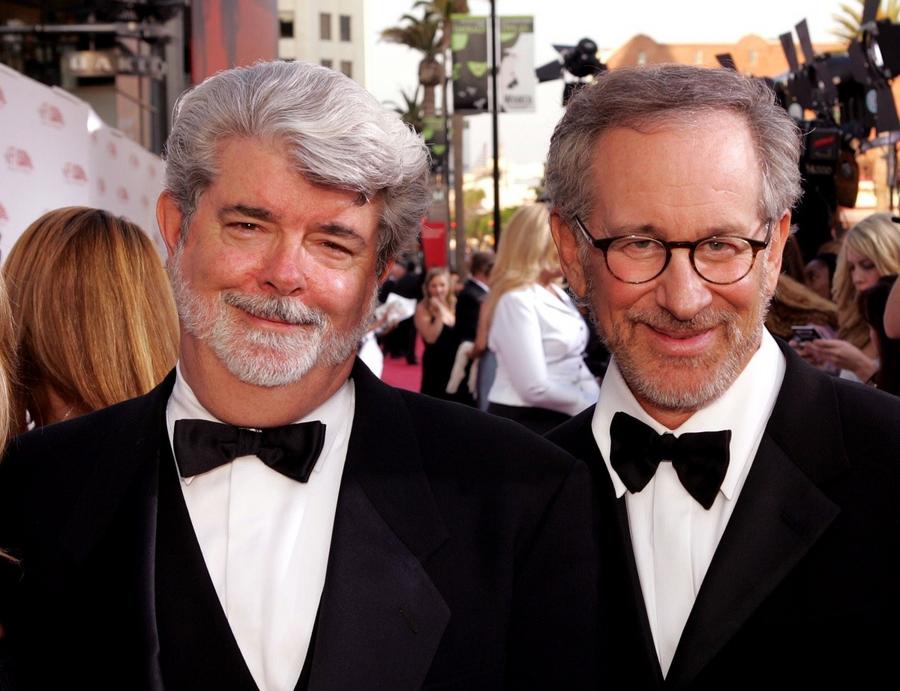
George And His "Poor" Friend Steven Spielberg, (Getty)
Prior to 1973, George Lucas was still very much struggling to make his way in Hollywood. His first major directorial debut was 1971's THX 1138, which starred Robert Duvall in a futuristic world, where android robots control society with drugs that suppress human emotions. Lucas' next movie was 1973's American Graffiti. Unlike THX 1138, American Graffiti was a monster hit. It eventually became one of the most profitable movies of all time, earning $200 million with a budget of just $775,000. It was also nominated for an Academy Award for Best Picture, Best Director, Best Original Screenplay, Best Supporting Actress and Best Editing. Lucas was now a hot commodity.
Lucas first had the idea for what he described as a "western set in space," called The Star Wars, in 1971. He worked on the script for the next two years, while his personal debt mounted and his film career floundered. After the massive success of American Graffiti, Lucas was in the best possible position to negotiate for his next film. He earned $150,000 for directing American Graffiti and his managers encouraged him to ask for a huge salary bump. Simultaneously, an executive at 20th Century Fox studios, named Alan Ladd, Jr., loved American Graffiti but did not understand this "Star Wars" concept. Despite the fact that no other executive at Fox thought the movie would be a success, Ladd was able to secure Lucas a deal to direct the film beginning in 1976 for a budget of $8.25 million. The final budget eventually swelled to $11 million.
The Brilliant Decision
Thanks to the success of American Graffiti, Lucas was entitled to a salary of $500,000 for directing what was now being called simply "Star Wars." Instead of accepting the nearly 300% pay raise, George approached the Fox executives with a proposition. George generously offered to keep his salary at $150,000 in exchange for two seemingly insignificant requests: #1) That he retain all merchandising rights, and #2) that he would retain the rights to any sequels. As crazy as it sounds now, at the time this was actually a fantastic deal for the studio. Fox had previously lost a fortune in the merchandising business with monumental failure of 1967's Doctor Dolittle, so they weren't exactly dying to get back into that world. Moreover, merchandise just wasn't a meaningful revenue stream in general back then. As for sequel rights, these were also not an important factor for Fox considering the fact that no executive thought the movie had a snowball's chance in hell of making money the first time around. So off George went to finalize his script with $150,000 and a what seemed like an incredibly naive contract in his pocket.
As we all know now, Star Wars was a humongous hit when it was finally released in 1977. Star Wars went on to become one of the highest grossing films of all time. When you adjust for inflation, Star Wars is the second highest grossing movie in history. In six months, the film had earned $220 million in the United States alone ($830 million in inflation adjusted dollars). To date, Star Wars has earned $775 million at the box office ($2.5 billion after adjusting for inflation).
But the real money for George didn't come from box office receipts. Between 1977 and 1978, Star Wars sold $100 million worth of toys. 35 years later and Star Wars themed toys have generated $12 billion in revenue. Today, Star Wars licensed toys produce $3 billion a year in revenues. And keep in mind, after the first film George owned 100% of the rights to the entire franchise. The next five Star Wars movies would go on to earn an additional $3.5 billion at the box office. In total, the Star Wars empire has sold $4 billion worth of DVDs and VHS, $3 billion worth of video games, $2 billion worth of books and another $1.3 billion through various other licensing deals. That brings the grand grand revenue total after 35 years worth of Star Wars licensing to $27 billion. After expenses, taxes, fees, etc. George Lucas had earned himself an impressive $3.3 billion net worth by 2012. Then, Disney came calling.
Back in 2012, Disney paid George $4 billion to purchase the entire franchise outright.
With the sale George Lucas received $2.21 billion in cash and 37 million shares (37,076,679) of stock, which at the time was trading at around $50. So at the time the deal closed, he received $1.85 billion worth of Disney shares. Prior to the sale he was already worth $3.3 billion.
In March 2021, with Disney's share price nearing $200, those 37 million shares, had grown to be worth $7.4 billion. At that point George was worth $10 billion! Today his shares are worth around $3.2 billion and with Disney's semi-annual $0.88 dividend, Lucas earns around $64 million per year in dividend payments.
Without retaining these rights, Lucas would have done very well, but his earnings would have been a tiny fraction of what they became. This windfall would not have been remotely possible if it wasn't for that single brilliant decision made back in 1973. George Lucas essentially traded $350,000 for more than $7 billion. That might be the smartest business decision of all time! So the lesson here is, if you believe in your idea, don't give up your rights easily!


.jpg)