Monday, February 10, 2025

 Tolkien is considered one of the best British writers of his time and continues to be one of the top-earning dead celebrities. His books generate tens of millions in royalties each year and the estate has gone on to earn hundreds of millions of dollars in royalties and licensing fees, especially to television and film studios.

Today his estate is controlled by the aptly named Tolkien Estate. For example, decades after his death, the Tolkien Estate earned $200 million from a licensing deal with Amazon Studios.

In 2008, the Tolkien Estate sued New Line Cinema, the studio behind the unimaginably successful "Lord of the Rings" original trilogy, seeking $100 million in unpaid royalties. At the time of their filing, the estate claimed to have not yet received "one penny" from the studio. The case was eventually resolved for an undisclosed amount.

Early Life and Education

John Ronald Reuel Tolkien was born on January 3, 1892, in Bloemfontein, in the Boer sovereign republic of the Orange Free State. His parents were Arthur, an English bank manager, and Mabel. Tolkien had one sibling, younger brother Hilary. At the age of three, Tolkien traveled to England with his mother and brother for a family visit; his father passed away of rheumatic fever before he could leave South Africa to join them. Without income as a result, Tolkien's mother took him to Birmingham to reside with her parents. They subsequently moved to Sarehole, and then to Worcestershire. Tolkien was homeschooled and was able to read by the age of four. When he was 12, his mother passed from acute diabetes; she had previously assigned guardianship of her two sons to her friend Father Francis Xavier Morgan.

In 1911, Tolkien attended King Edward's School. In October of that year, he enrolled at the University of Oxford's Exeter College, where he began studying classics. After changing his course to English language and literature, he graduated in 1915 with first-class honors.

World War I

Following his graduation, Tolkien was commissioned as a temporary second lieutenant for the British Army's Lancashire Fusiliers. For 11 months, he trained with the 13th Reserve Battalion. In 1916, he was summoned to a posting in France, where he was assigned as a signals officer for the 11th Service Battalion. Arriving at the Somme in July of that year, he was involved in the assaults on the Leipzig salient and on Schwaben Redoubt. In October, when his battalion attacked the Regina Trench, Tolkien came down with trench fever; he was subsequently invalided to England.

Tolkien was frail when he returned to the home front, spending the remainder of the war performing duties at garrisons and hospitals. Although his illness was recurrent over the following two years, he was promoted to the temporary rank of lieutenant in 1918. In 1919, he was removed from active service.

Academia and Writing

After being officially demobilized in 1920, Tolkien took his first postwar civilian job with the Oxford English Dictionary. The same year, he became a reader at the University of Leeds, where he was the youngest of all the professors. While there, he produced the academic works "A Middle English Vocabulary" and "Sir Gawain and the Green Knight." In 1925, Tolkien returned to his alma mater of Oxford as the Rawlinson and Bosworth Professor of Anglo-Saxon and had a fellowship at Pembroke College.

It was at Pembroke that Tolkien wrote "The Hobbit," as well as the first two volumes of "The Lord of the Rings." He also undertook a translation of the Old English epic poem "Beowulf," which he completed in 1926. Ten years later, Tolkien gave a renowned lecture on the work that revolutionized how literary critics interpreted the poem. "Beowulf" and Old English literature were major influences on Tolkien's writings. Other influences included archaeology, Christianity, and Germanic, Finnish, Greek, and Celtic mythology and languages. The author's work was also heavily informed by his childhood experiences in the urbanizing English countryside, as well as his later experiences fighting in World War I.
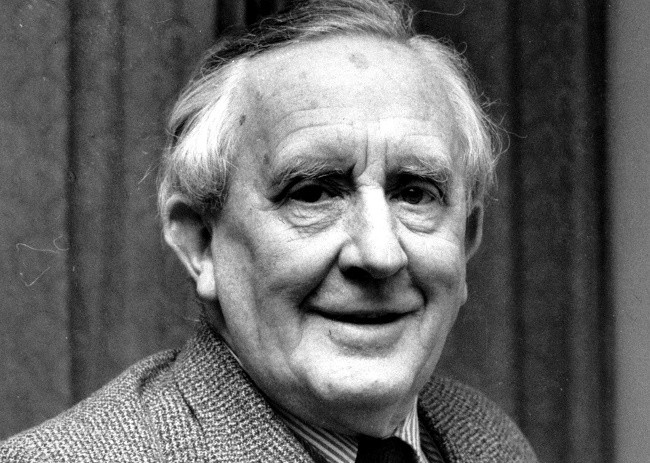
John Ronald Reuel Tolkien

Sunday, February 9, 2025

 Charles Francis Feeney (April 23, 1931 – October 9, 2023) was an Irish-American businessman and philanthropist who made his fortune as a co-founder of Duty Free Shoppers Group, the travel retailer of luxury products based in Hong Kong. He was the founder of the Atlantic Philanthropies, one of the largest private charitable foundations in the world. Feeney gave away his fortune in secret for many years, choosing to be anonymous, and donating more than $8 billion in his lifetime.

Thay các chữ bằng trị số tương ứng, ta có.

CHARLES = 3512353 = 22 = giữ nguyên

FRANCIS = 8215313 = 23 = 5

FENNEY = 855551 = 29 = 11 = giữ nguyên = 2

Cộng lại: 22 5 11 = 38 

Saturday, February 8, 2025

 Peter Andreas Thiel (/tiːl/; born 11 October 1967) is an American entrepreneur, venture capitalist, and political activist.[1][2][3] A co-founder of PayPal, Palantir Technologies, and Founders Fund, he was the first outside investor in Facebook.[4][5] As of July 2024, Thiel had an estimated net worth of US$11.2 billion and was ranked 212th on the Bloomberg Billionaires Index.[6]


peter = 85452 = 24 = 6

 andreas = 1542513 = 21 = 3

 thiel = 45153 = 18 = 9

 Recover Your Apple Account - Apple

 Ca sĩ Leon Vũ tên thật là Trình Vũ Đông Nghi, sinh ngày 14/10 tại tỉnh Tây Ninh, Việt Nam. Leon Vũ là ca sĩ hải ngoại sinh sống tại Mỹ. Anh sở hữu giọng ca trữ tình sâu lắng, mang âm hưởng miền Tây Nam Bộ.

TRÌNH = 42155 = 17 = 8

VŨ = 66 = 12

ĐÔNG = 4753 = 19 = 10 = 1

NGHI = 5351 = 14 = 5

LEON = 3575 = 20 = 2

 Cuộc đời của người chồng tỉ phú của ca sĩ Bích Tuyền qua lăng kính của Lý thuyết Số (Numerology).

I/ Tuy viết là Gerard William III, nhưng phải đọc (pronounce) là Gerard William the Third.
Thay thế các chữ bằng trị số tương ứng, ta có:
Gerard = 352124 = 17 = 8
Williams = 61331143 = 22 (giữ nguyên)
The = 455 = 14 = 5
Third = 45124 = 16 = 7
Cộng lại: 8 22 5 7 = 42 = 24, rất may mắn, vì có tu từ nhiều kiếp trước, cùng số với ca sĩ Quang Lê (24/1/1979), nên 2 người rất hợp với nhau.
II/ Nếu thế chữ "the Third" bằng số III ta có:
Gerard = 352124 = 17 = 8
Williams = 61331143 = 22 = giữ nguyên.
III = 3.
Cộng lại: 8 22 3 = 33 = một số rất may mắn. Sau đây là ý nghĩa của số này.
Số 33
"Số này không có ý nghĩa riêng của nó, nhưng ngoài việc có cùng tác động của số 24 (một số rất may mắn.-- người dịch) – còn có ma lực (magic) của tình yêu, mức độ/phạm vi (extent) của sự độc đáo và sáng tạo, và những hứa hẹn của thành công sau cùng (eventual) về tài chính thì sâu rộng hơn (deepened and increased). Do có số 3 kép, nguời có tên bằng 33 thì may mắn hơn trong mọi mặt (every way) khi dính dáng tới việc hùn hạp hay làm ăn hài hòa ở dạng nào đó với nguời khác phái, điều này áp dụng trong nghề nghiệp cũng như những quan hệ lãng mạn và hôn nhân. Đây là số huởng NGHIỆP QUẢ TỐT TỪ KIẾP TRƯỚC. Nguời mang số 33 đuợc khuyên không nên lạm dụng sự may mắn gây kinh ngạc (astounding luck) này sẽ đến với họ vào một lúc nào đó (sometime) trong cuộc đời khi họ để sự may mắn này làm cho họ luời biếng, tin tuởng quá mức, và cảm giác tự tôn (superiority). Khi tinh thần hài huớc và khiêm tốn (humility) thật sự đi cùng với tác động của số 33, thì số này sẽ là số may mắn một cách kỳ lạ (wonderfully)"./.
Dịch từ trang 206 của sách Linda Goodman's Star Signs.

 Trần Thị Thúy Nga (sinh ngày 5 tháng 8 năm 1976), thường được biết đến với nghệ danh Thúy Nga, là một nữ diễn viên, nghệ sĩ hài kiêm Á hậu người Việt Nam.[1]

Với 30 năm trong nghề, Thúy Nga đã gặt hái được cho mình nhiều giải thưởng như: Huy Chương Vàng Liên hoan Sân khấu Hài kịch, Cù Nèo Vàng, Giải Mai Vàng, Giải Nụ cười Vàng, Giải HTV Awards, Nữ diễn viên được yêu thích ở nhiều hạng mục hài kịch và các giải khác.

TRẦN = 4215 = 12 = 3

THỊ = 451 = 10 = 1

THÚY = 4561 = 16 = 7

 NGA = 531 = 9

Cộng lại: 3 1 7 9 = 20.

Sau đây là ý nghĩa của số này.

Sự tỉnh thức (awakening)
Ngoài việc được gọi là "sự tỉnh thức", số kép này được mô tả (is pictured) bởi người cổ Can-Đê (Chaldean) là "Sự Phán Xét". Đó là một giải thích kỳ lạ (peculiar), và được tượng trưng bởi "một thiên thần có cánh, thổi kèn, trong khi từ bên dưới, một đàn ông, một đàn bà, và một đứa nhỏ sống lại/nổi lên (arise) từ một nấm mộ, với tay chấp lại cầu nguyện (hands clasped in prayer). Ở một lúc nào đó (at some time) trong kinh nghiệm/thử thách của người hay thực thể thay mặt bởi số 20, có một sự tỉnh thức mạnh mẻ, mang lại một mục tiêu mới, các kế hoạch mới, các tham vọng mới - (đó là) lời kêu gọi hành động cho đại nghĩa hay ý tưởng nào đó (some great cause or ideal). Thỉnh thoảng có thể có những trì hoãn hay chướng ngại cho kế hoạch cho y, nhưng những điều này có thể chinh phục hay vượt qua bằng cách phát triển kiên nhẩn (cũng là thách thức của số 20) và bằng cách tiếp tục trau dồi (cultivate) niềm tin vào các khả năng tự biến đổi của y (in one's own powers to transform). Số 20 đem lại phước lành (blessing) qua những giấc mơ sống động về nhận thức (vivid precognitive dream), cộng thêm khả năng bày tỏ những giấc mơ may mắn và triệt tiêu những giấc mơ tiêu cực (negative). Số 20 không phải là số vật chất (material), vì thế ko chắc có được thành công về tài chánh (doubtful regarding financial success). Nếu cần thiết có số tiền lớn để hỗ trợ thực tế cho một đại nghĩa hay ý tưởng mới, sau đó y có thể chọn một con số nặng về vật chất tích cực hơn (a more positive materialistic number) bằng cách đổi chánh tả của tên, với giả dụ rằng 20 là ngày sanh. Nếu tên cộng lại bằng 20, vậy, hy vọng rằng, ngày sanh này sẽ ban cho (bestow) một tác động tài chánh may mắn hơn (the birth number will bestow a more fortunate financial vibration). Tuy nhiên, những ai hợp với sự tác động/rung động của số 20 ít khi để ý vấn đề tài chánh. Tiền bạc không quan trọng với họ -- và số 20 sẽ, như một luật phổ quát, cung cấp đủ cho những nhu cầu căn bản".
Dịch từ trang 257-8 của sách Linda Goodman's Star Signs.
(Xong lúc 1:35 sáng ngày 17/4/2020 trong mùa đại dịch Covid-19).