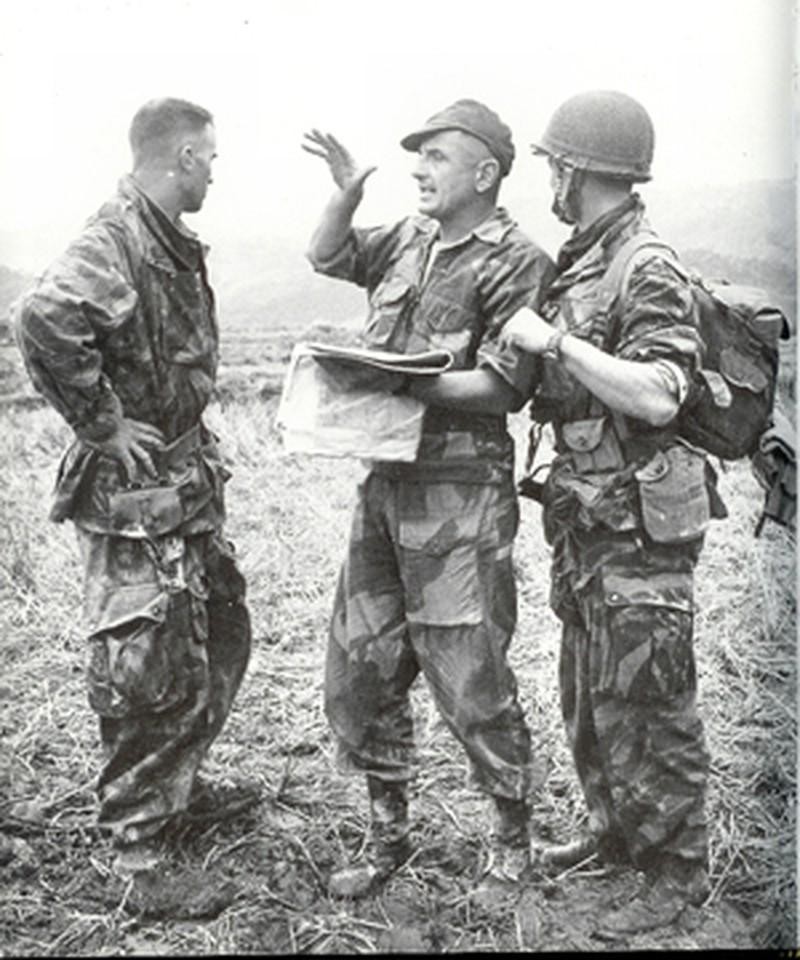
Le drame de la RC4, vue par un touriste, photos superbes (forumsactifs.net)
Poma: a look back at a successful but poorly exploited raid...
Those who are closely interested in the fighting of RC 4 know that a few days before the Coc Xa tragedy, the group under the orders of LClr Le Page had carried out a raid in a basin located north-east of That Khê, in the border area with China. During this raid, a great deal of information gathered led to the conclusion that the Viet Minh had strengthened considerably and that after the fall of the citadel of Dong Khê, it was likely that the effort would be focused on That Khê because Cao Bang was too big an objective for him.
As is well known, despite its richness, this information was never exploited by the command, which persisted in pursuing its plan of operation, as if nothing had happened. More than the tactical errors or inadequacies that punctuated the rest of the operation, it is in my opinion, in this failure to take into account the intelligence data that lies the biggest mistake that can be deplored in this case...
If the testimonies of Lt. Stien and S/Lt de Pirey provide us with the vision of the performers, the account given by Lt. Le Page in his book "Cao Bang" is very interesting for the details it provides... It is precisely this story used to resituate the fight on the ground during the hike that Antoine and I did on a Sunday in the direction of Poma and which allowed us to retrace the footsteps of our elders, that I give below illustrating it as usual with our photos...
LCol Le Page's story:
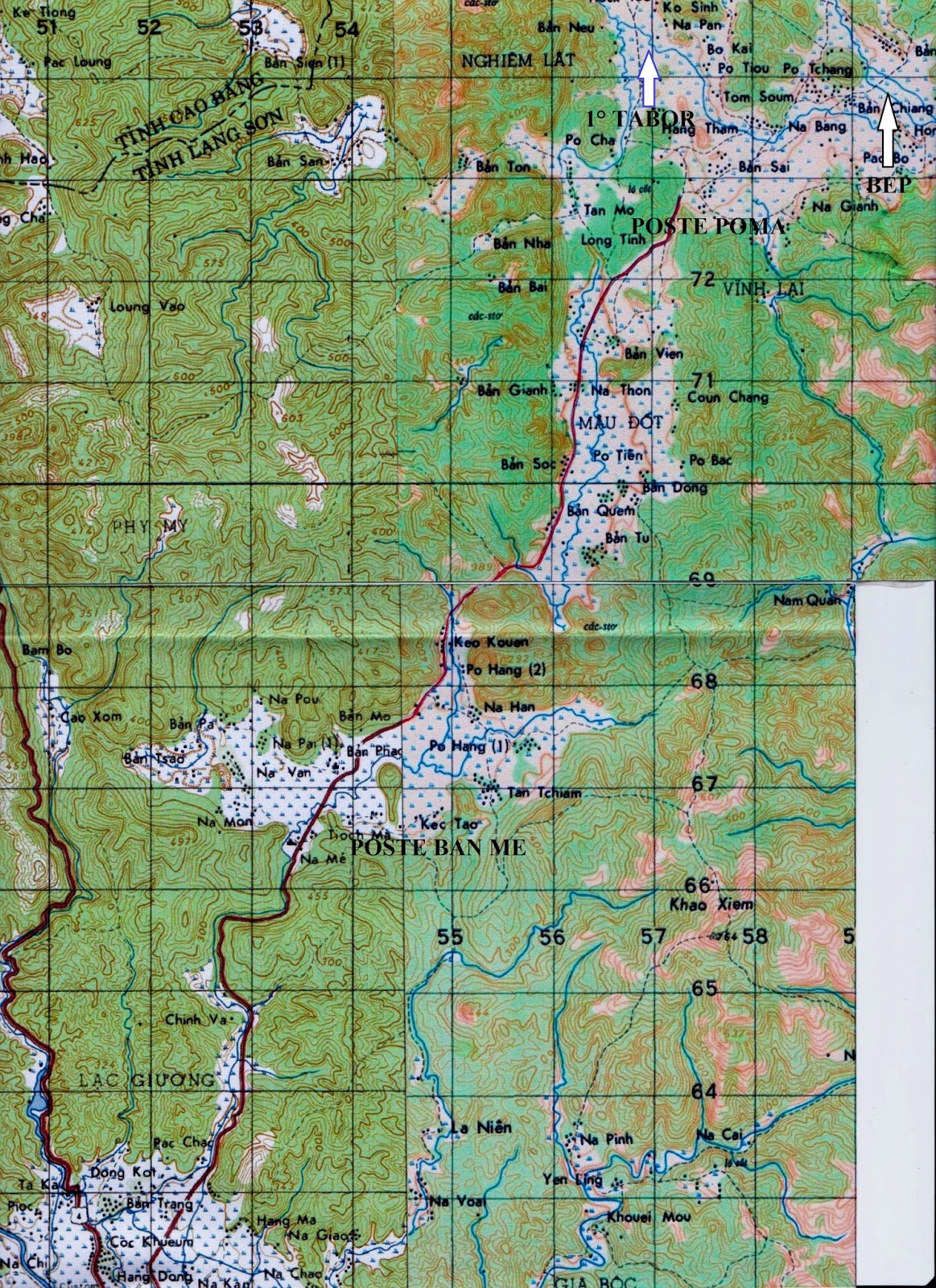
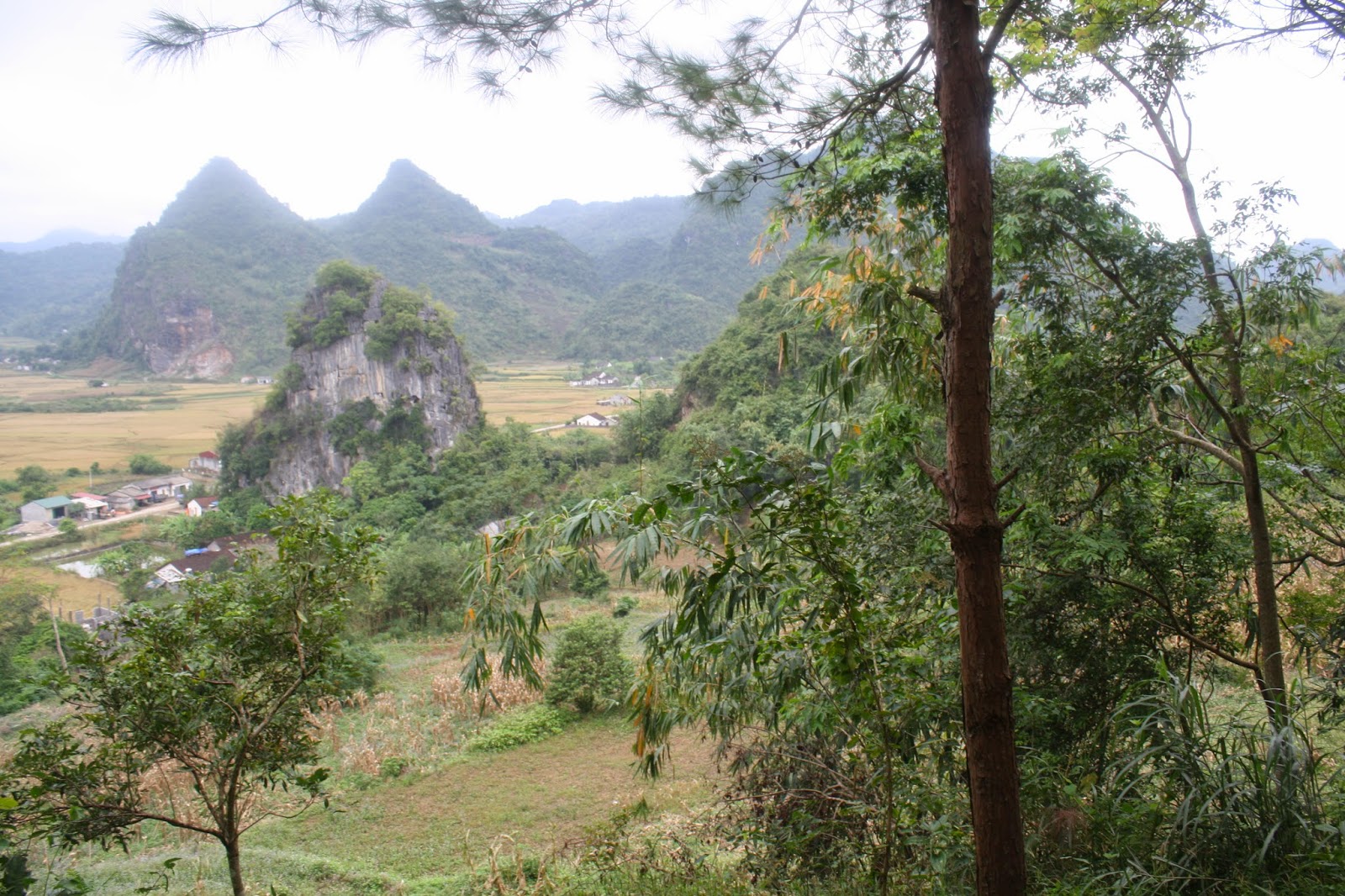
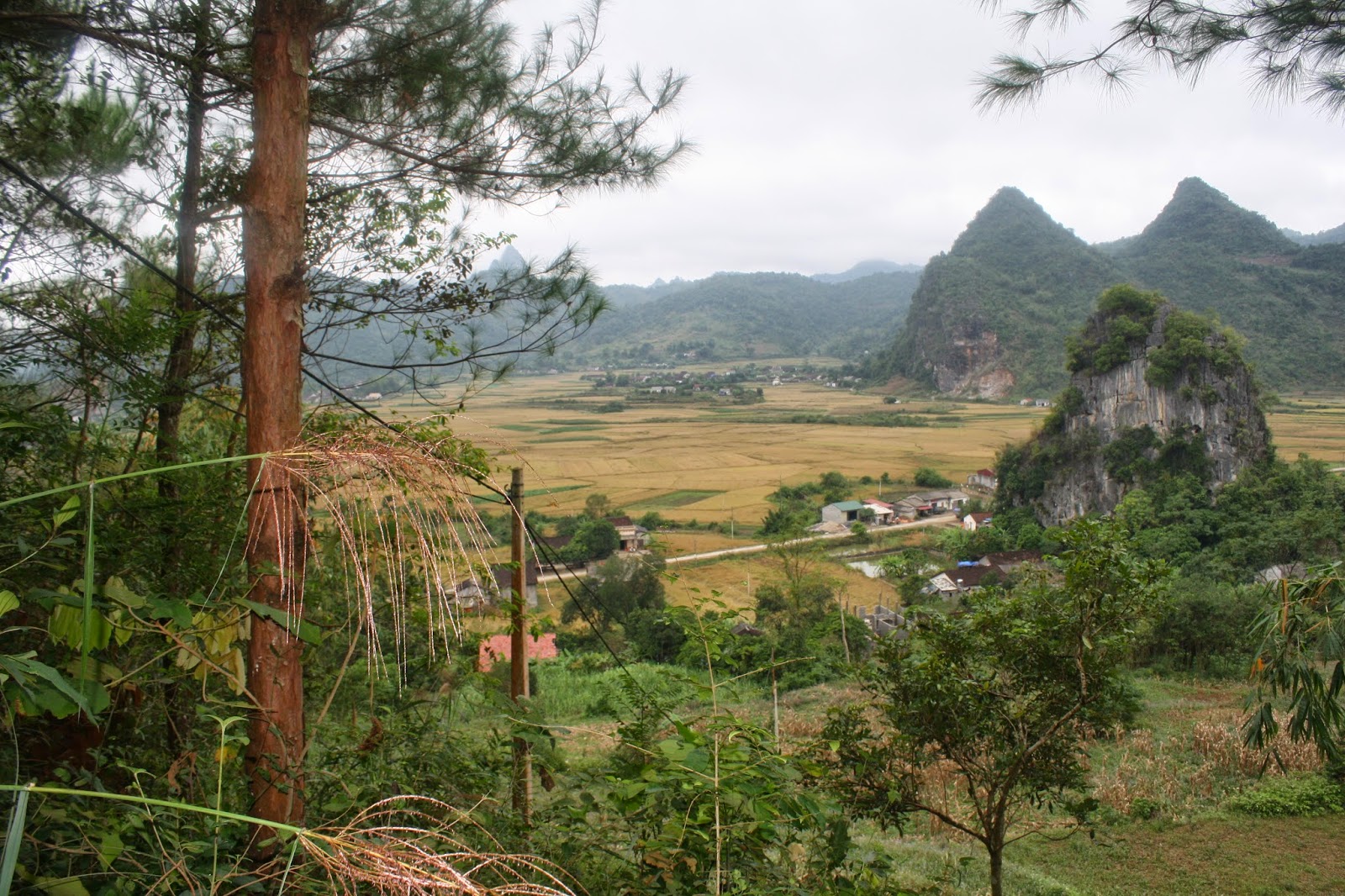
"On 23 September, the Group received the order to carry out a raid on the Poma basin, where, according to information gathered by the 2nd Bureau of the zone, large Viet-Minh forces were transiting from China. Poma is a village located south of a wide basin close to the border with China. At a distance of about ten kilometres from That Khê, it is connected to RC 4 by a road, which served the post of Ban Mé and that of Poma itself, which has long since been evacuated."
Note: three distinct compartments of land can be distinguished:
- the basin located north of the Ban Mé post, a post still occupied by the French in September 1950 but which was to be taken by the Viet Minh in the last hours before the evacuation of That Khê;
- the narrow valley of Mau Dot;
- the Poma basin controlled by a post that had been abandoned in May 1949 after a brief occupation of 14 months.
The Chinese border is only a few kilometers away and if you continue north towards Talung, you cross several valleys that all flow towards China and are traditional axes of penetration into Vietnam. Over the years, these west-east oriented valleys have seen the passage of Chinese invasions, the Black Flags, the retreating Nationalist troops, then the men of the Viet Minh from 1949, the Chinese divisions in 1979 and finally the smugglers and drug traffickers of today...
"In the morning, a Morane landed on the airfield of That Khê. He brought Colonel Constans, who came to the scene, to give his final instructions on the raid. I'm going to welcome him. When he got off the plane, he immediately got to the heart of the matter, and handed me a rhodoïd, on which the region of the operation was schematically shown. Red pencil arrows converge on Poma, starting from Ban Mé to the west and east of the road. He said, "I'll pass you this diagram. Of course, you are responsible. It's up to you. »
At a glance, I saw the diagram. It is classical, quite orthodox, in the "School of War" style. The colonel is commissioned. But for my part, quite certain that, in this terrain of limestone and inextricable brushwood, if I strayed from the road I would not find my battalions at the appointed time, and that it was necessary to move quickly and bet on surprise, I replied: "Colonel, for me, there is no problem. We leave at night and simply hit the road. This is done by successive overtakings. Two battalions or tabors opened the road and then took care of the collection. At dawn at the end of the road in the basin, a tabor on the left, the1st, the BEP on the right, after a wide pincer movement, raked the ground and then fell back on the collection axis. The manoeuvre is simplistic, but it is a back and forth, in my opinion, it is the only valid one. »
Skeptical, the colonel replied, in all his haughtiness, with an inspired smile that he would nevertheless like to be benevolent: "I told you, you are responsible, you will decide."
Units are alerted. At the beginning of the afternoon, a briefing brings together the battalion or tabor commanders and their deputies. The start is staggered from 23 p.m. at the blackout, initial point Ban Mé – marching order 11th Tabor, 8th RTM, BEP and 1stTabor.
The 11th Tabor will open the road as soon as it leaves Ban Mé, it will hold the limestones immediately north of the post (hill 694), it will extend its covering mission, in conjunction with the8th RTM, which will be installed in the limestones of Mau Dot and in those of Ben Bai, so as to hold the outlet of the road in the basin. The apparently easiest mission was given to the 11th Tabor, which recently landed, has not yet been engaged."
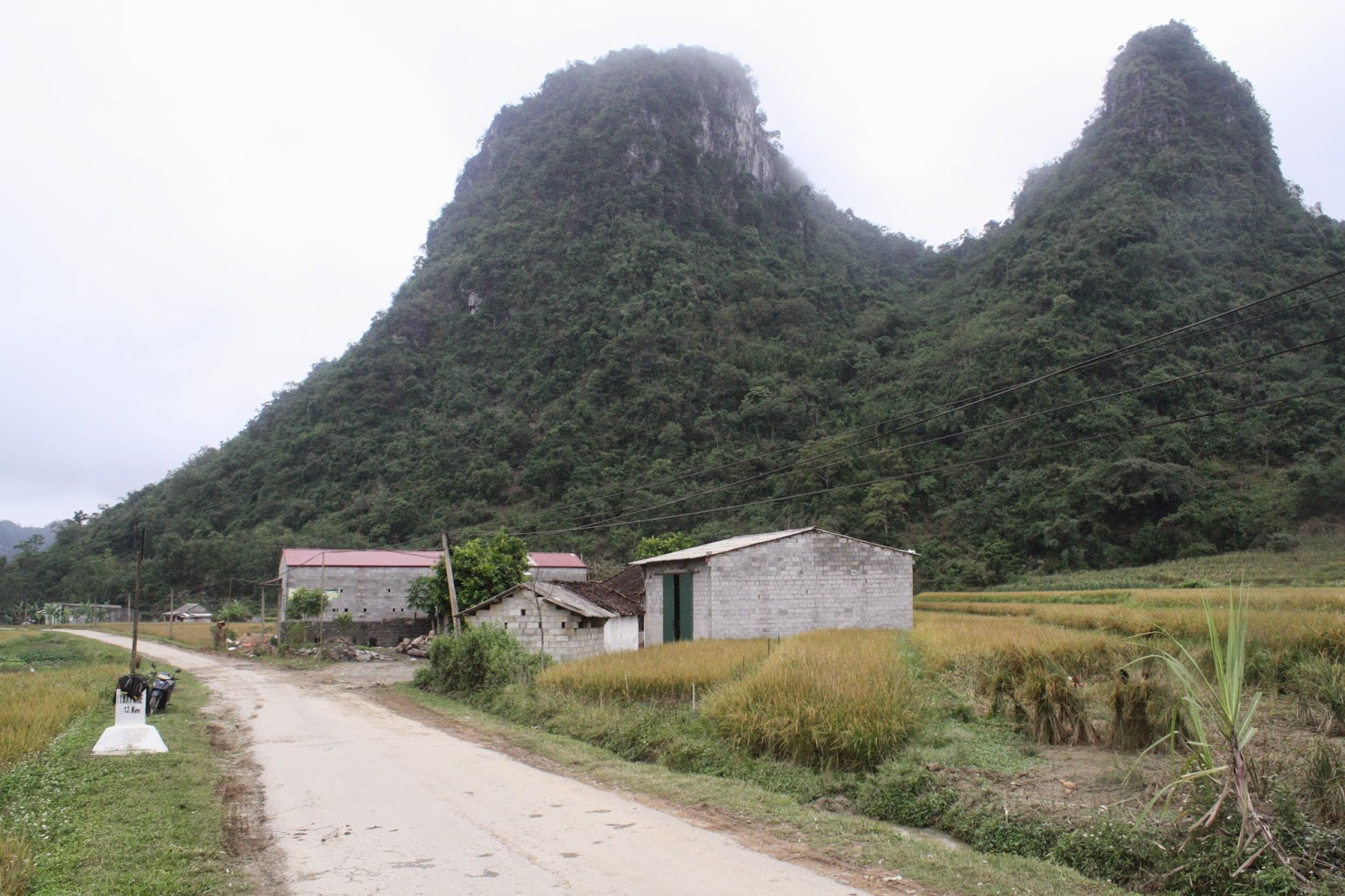
In the background, north of Ban Mé, the heights of Hill 694
- 11° Tabor sector -
(View from the north)
The Mau Dot area south of the Poma substation
- 8° RTM, in collection of the 1st tabor and the BEP -
(View taken from the south)
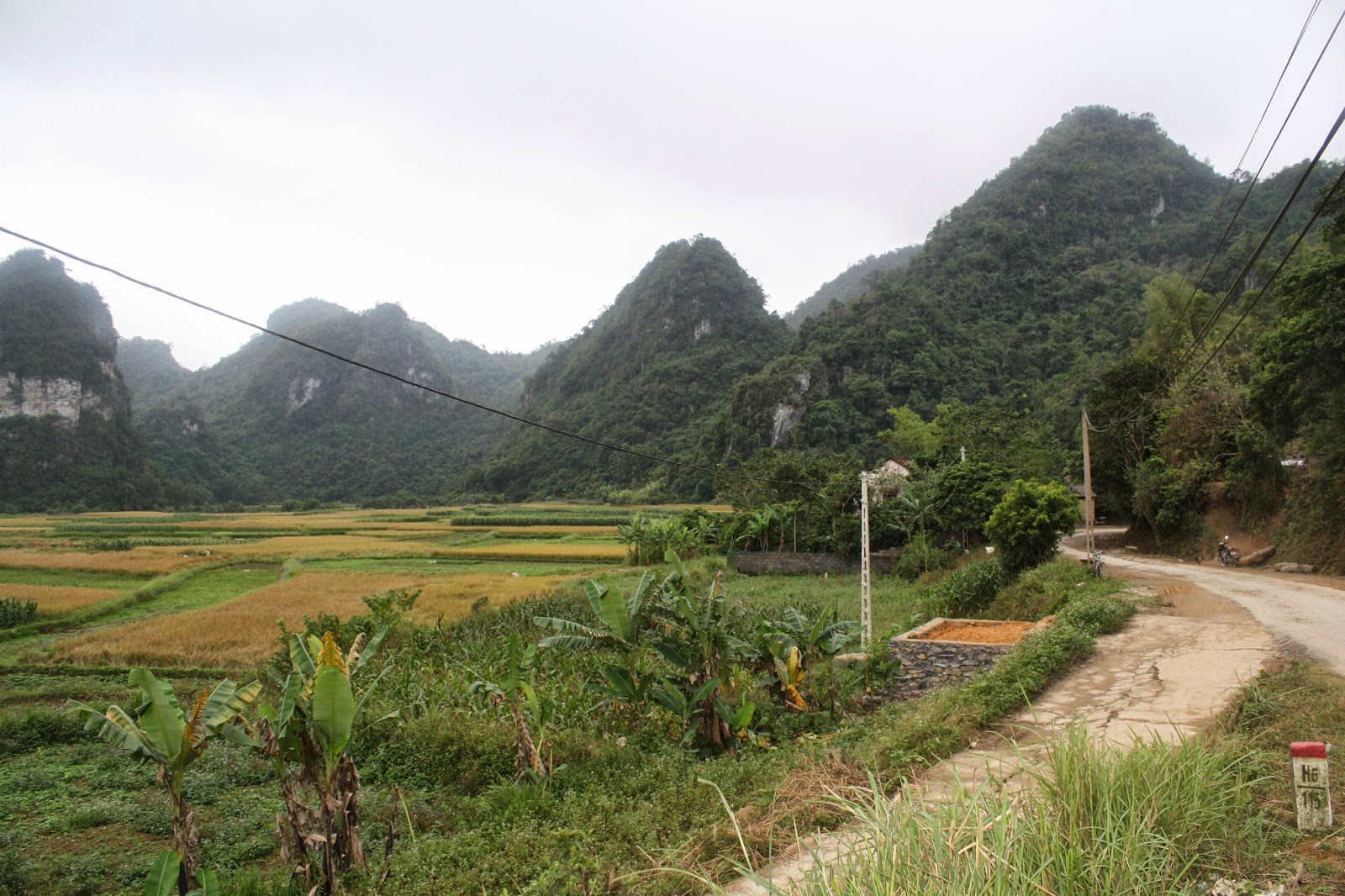
The Mau Dot sector south of the Poma
substation - 8° RTM, in collection of the 1st Tabor and the BEP -
(View taken to the south)
"The BEP should have reached Po Chiang (NE of the basin) and the1st Tabor the old post of Poma before dawn.
At daybreak, the two battalions will execute a pincer maneuver, the first in a northwesterly direction, the second in a northerly direction, which will encompass the entire basin. After making a connection, they will retreat by raking the ground and then reach the road. The manoeuvre should be completed by noon. The order to withdraw will be given by the Group Commander.
The Group's HQ was set up in Ban Mé, as well as a 105 mm artillery section. An advanced CP with Commander La Bataille will operate, in daylight, at the mouth of the road in the basin."
View of the Ban Mé basin from the site of the old post
- PC Le Page and Artillery Support Positions (540 / 665) _-
(View from the north)
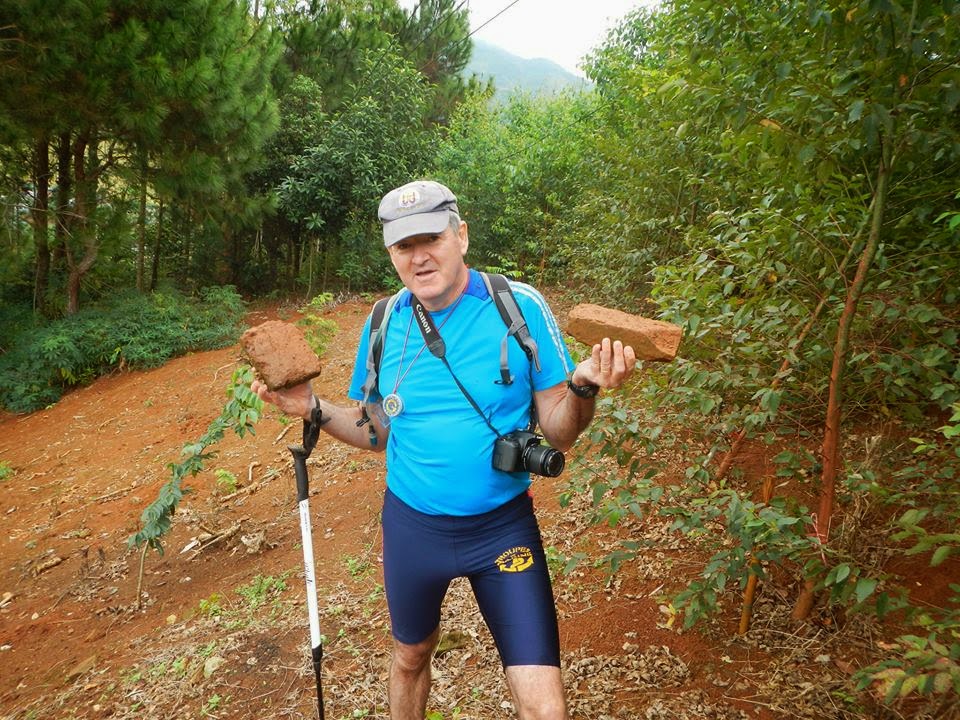
Remnants of the post
"The approach march and the set-up of the device are carried out as planned, during the night, without the slightest incident.
The1st Tabor arrived at the village of Poma at about 5 a.m. Around 59 a.m., the 6th Goum occupied the former military post. He soon surprised a VM unit in the process of assembling nearby, which he immediately took under fire from his FM and machine guns. The Viets dispersed with heavy casualties. Food, 75 mm Chinese shells, small arms ammunition and many documents were recovered."
The village of Poma and on the hill the site of the old post
- Forward CP position of Cdt La Bataille and 81 mm 1st Tabor mortars -
(View taken from the south)
The location of the former Poma post
"The 60th Goum advanced northwards towards Bokai but, as soon as it approached the limestones, it was subjected to 12.7 mm fire and mortar fire. The intervention of our artillery succeeded in neutralizing two machine guns. But the position is still too tightly held for us to be able to dislodge the defenders without too much damage."
The axis of advance of the 1st Tabor in the direction of Bokai
Located behind the Crete line
"The goum will then try to settle on a limestone that does not seem to be occupied, immediately to the south-west of that held by the Viets. On his way there, he came across a column of artillery ammunition carriers. Surprised, the panic-stricken coolies abandoned their load and dispersed into the bush, while the escort rushed towards the limestone, which the goum intended to occupy. The battle began, but the Viets had a head start and were the first to arrive. As soon as they were settled, they laid down on the ground, at the FM, the goumiers who were chasing them.It was shortly afterwards that the order to unhook was issued. The platoons, caught under heavy fire from their opponents, dispersed to be less vulnerable, in the bush, which was very dense at this point. They are invisible and it takes some time to give them the order to retreat and regroup the men. The last to be hit was Chief Warrant Officer Loubes, an experienced goumier. His orders given, he stayed behind, to answer the calls of a wounded goumier, whom he helped to leave. But at that moment, a mortar shot fell on them, fired from Bokai. A shell burst right between his legs. Miraculously, he is not hit, but he falls to the ground groggy. He is alone with a goumier, a Marmouchi, to whom he owes his salvation. When he got up, he had lost his sense of direction and was heading straight for the Viets, when, fortunately, the Marmouchi shouted at him: "Bale krak machi and el Viets – Ouilli, ouilli, ienha (Be careful, don't go to the Viets, come back, come back this way!)
The two of them set off again, at full speed, to catch up with their unit, which was already far away. They push a captured prisoner in front of them, at the beginning of the fight, whom the Marmouchi has not let go.
The 58th GOUM, which operated further east, to link up with the BEP, did not have any serious clashes.
The GCA (Command and Support Gun), which remained at the former Poma post, intervened with its vehicles for the benefit of the two goums engaged."
Assumed position of the GCA of the 1st Tabor
(View from the north)
Note: Immediately south of the ridge overlooking the village of Poma and on the east side of the road, a location seems particularly suitable for mortar support. Relatively protected on the flanks and easily positioned topographically, it offers direct views for observing the fire on both axes of advance. Logically, this could be where the GCA must have set up while the advanced CP of Commander La Bataille occupied the old disused post of Poma, on the other side of the road, on a height facilitating radio links with the group's HQ which remained at Ban Mé and the advanced units in the basin (1st Tabor and BEP)...
During the withdrawal of the elements, after the detachment of the GCA and the advanced CP, the Viet Minh tried to seize this pass to cut off the road to the delayed elements of the 1st Tabor and the BEP by overflowing through the ridges. It is also at this pass that the episode of Chief Warrant Officer Loubes is located, described by Second Lieutenant de Pirey in his book and evoked by Lcl Le Page...
"The enemy's reaction was swift and swift. A threat from the ridges has become clear on the rear of the tabor. It was pushed onto the limestone immediately west of the outlet of the road into the basin.
The general disengagement of the Tabor took place around 10 a.m. under the protection of the 59th goum and a company of the BEP for the collection of the commando.
The Tabor brought back six prisoners, but she had to abandon many 75 and 81 shells of Chinese origin. His losses amounted to two goumiers and five coolies killed and eight goumiers wounded who could be evacuated.
In the meantime, the BEP, which was in position at Po Chiang at daybreak, had begun a manoeuvre from the west to encircle and sweep the basin. At the head of the group, his commando, made up of a dozen Viets recruited and chosen from among the prisoners, commanded by a corporal, a certain Constant, not to be confused, a remarkable warrior, surprised another element of coolies-bearers of artillery ammunition. This led him to discover an ammunition depot, which he seized at the same time as he captured the escort.
The find was good. Inside, in addition to 75 and 81 shells, there were carefully stored optical elements, including several compass goniometers. In the pockets of the men of the escort we will find badges bearing on a blue background, below two intersecting cannons, the numbers, 35 – 42 – 48, which testify to the existence of VM artillery battalions.
The extreme limit of the BEP's progress on the eastern axis
(view taken from the south)
The Po Chiang Limestone
(view taken from the north)
The BEP continued its combing operation, but like the 58th and 60th goums with whom it was in visual contact, it too was attacked by increasingly violent machine gun and mortar fire. The basin was literally ablaze, while the encirclement manoeuvre, which had worried the 1stTabor for a moment, was now taking shape on the 8th RTM installed in Banbai, at the mouth of the road. The Viets, who were leading the way to the baroud, coming from the ridges of Ban Sien and Ban Ban, would try to cut off the attackers from the axis of collection.
The Col du Poste de Poma: a speed race with the enemy to cross it...
The difficult stall had to be done at high speed and in a diluted formation. The commando's retreat was even more delicate. Delayed by the prisoners he was bringing back and the optical instruments he had recovered and which he had to abandon in order to be able to reach, he arrived at the end of the road with the last elements of the 1st Tabor who were bringing back the wounded. The BEP had suffered no casualties, only a few wounded, and brought back about fifteen prisoners.
The retreat through the collection axis will be carried out without a hitch. By 17 p.m., all units had returned to their bivouacs.
Subsequent intelligence indicated that the Viets suffered heavy casualties. Surprised, they could hardly hide their disappointment.
The next day, General Carpentier, the superior commander, sent a telegram of congratulations to the "Bayard" Group for the success of its raid on Poma. The operation had paid off. It confirmed in all respects the information gathered by the OWA, the area and the sector. Prisoners claimed that "12 battalions, which had not taken part in the attack on Dong Khê, had just arrived from China, where they had received their weapons. This, added to the 18 battalions that had taken part in this attack," Jean Pierre had noted in his logbook, "made 30 battalions, all located in the region, a day's march from either Dong Khê or That Khê."
The information gathered further specified the presence among these troops of 2 new artillery battalions equipped with 75 mm guns, that the 40th battalion had received 6 pieces of 75 and that the armament of a VM infantry company consisted of 9 FMs – 3 machine guns of 12.7 and 2 mortars of 60, the equivalent or more of the armament of a company of the BEP".
Let us leave the conclusion of this raid to Lieutenant Stien:
"For us, the authors of the coup de main, Poma is of course a success, but above all it is a confirmation and a warning. The Viets were there, numerous, aggressive, well armed. And, in a new development, they maneuver quickly. This is a clear sign of the quality of their command as well as a very good supply of communications equipment. The dimension of the war has changed. Apparently, we are the only ones who have noticed..."
Let us now add to the use of those who would like to venture in the direction of Poma that this sector, which is located in the border zone, requires a certain amount of caution...
On the one hand, the memory of the Chinese invasion of 1979 is still vivid in people's minds, on the other hand, this area, like all border areas, is a place conducive to trafficking and smuggling and is therefore closely monitored. It was precisely for this reason that I had to give up my original plan to reach Ta Lung from That Khê by taking the opposite route followed by the prisoners of Camp No. 1 during a journey to the south. As the path followed passed exactly on the border route, only a few meters wide, between the limestone peaks or along the talwegs, it was impossible to expose oneself to problems...
Following the new trip we made in this valley in April 2016, we lingered "a little too long" in front of the Poma police station... The result was not long in coming and we were "invited" to come in to get in touch with the head of the station... who, once the "misunderstanding" had been cleared up, offered us tea... without asking us for our passports... Like what...
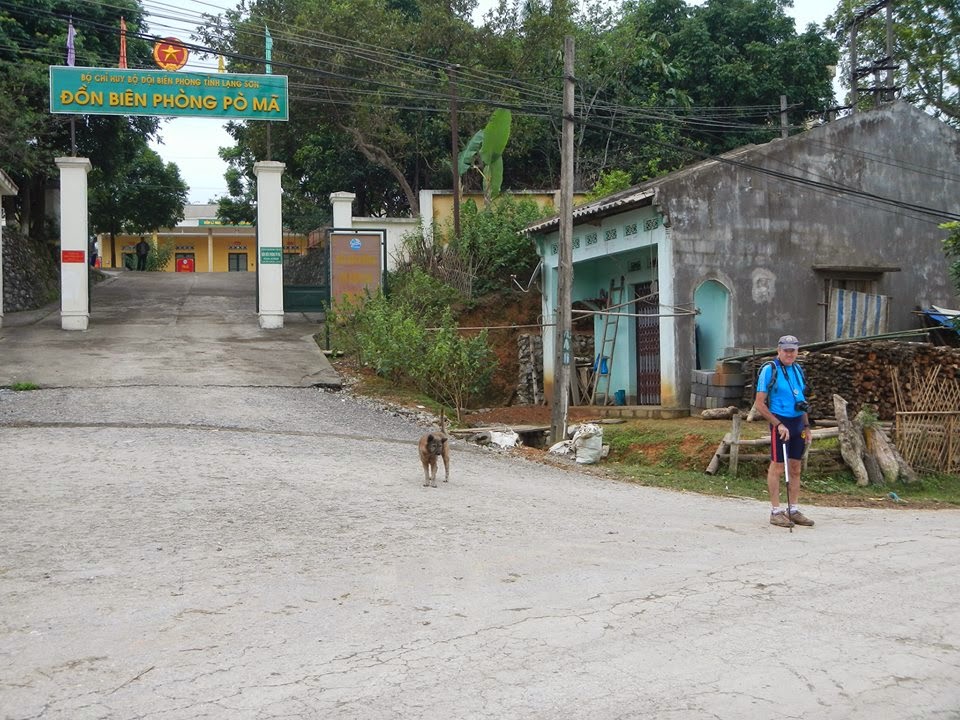
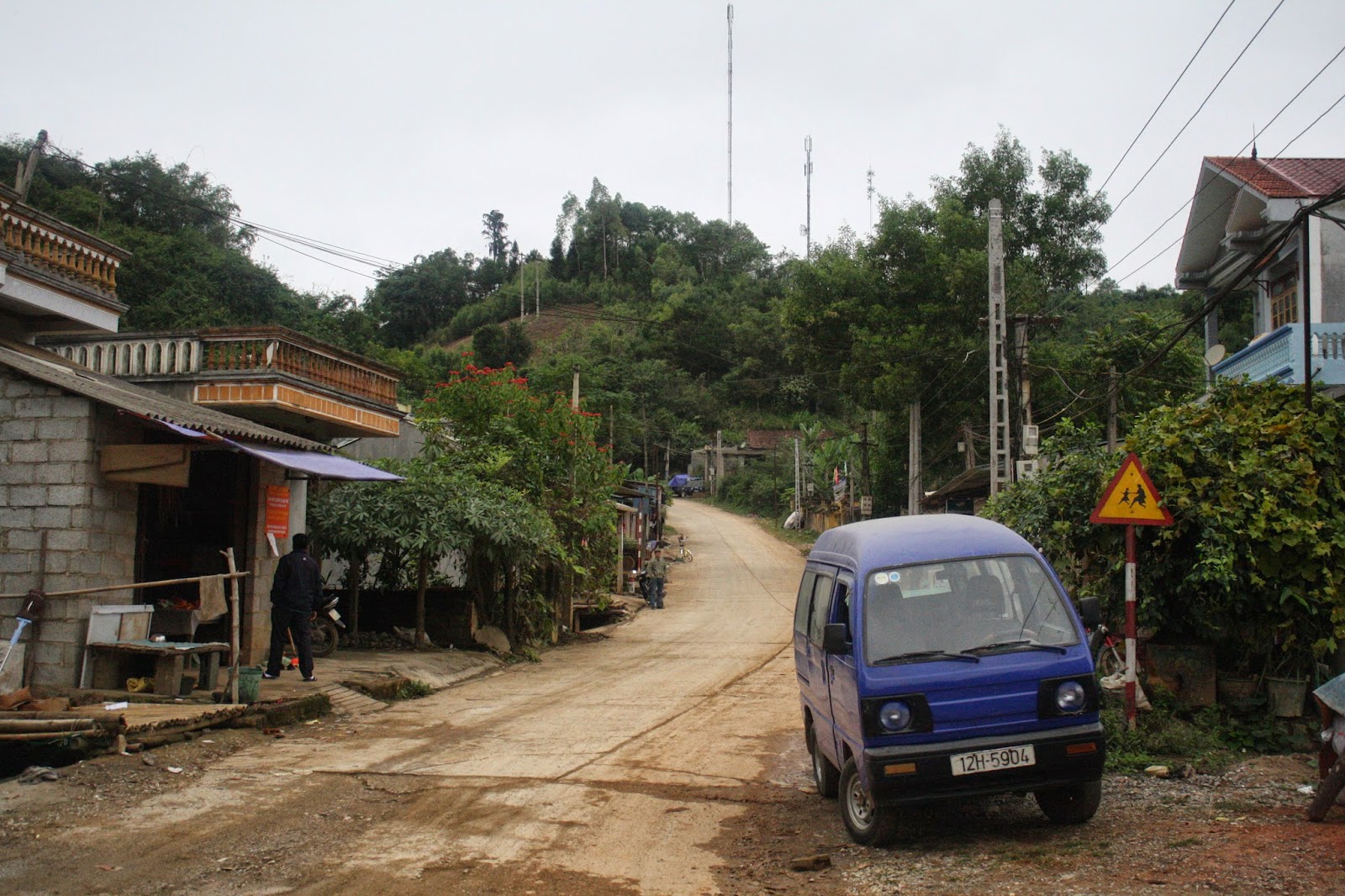
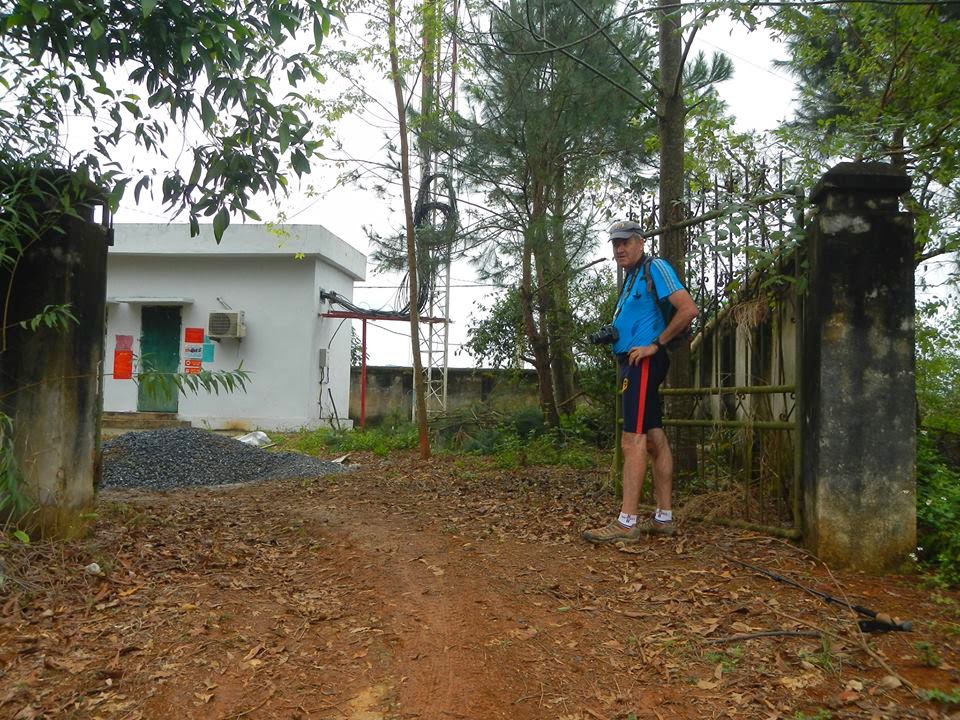
Poma: it's marked but we don't go any further... Border Zone...
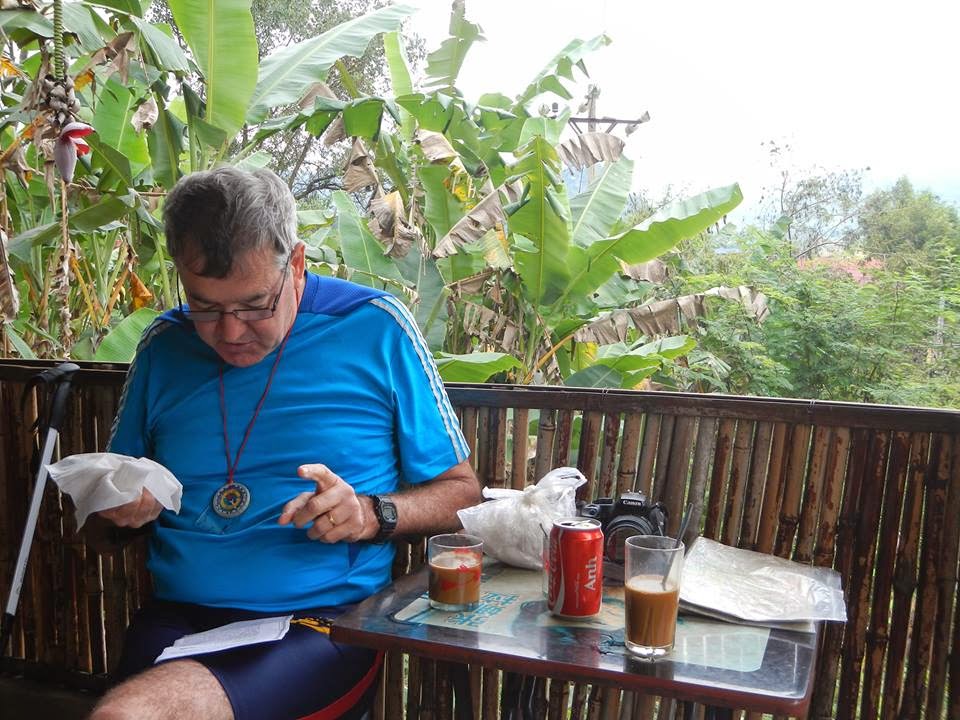
Just like at the War College: talking tactics in front of the field...
but with a full belly...
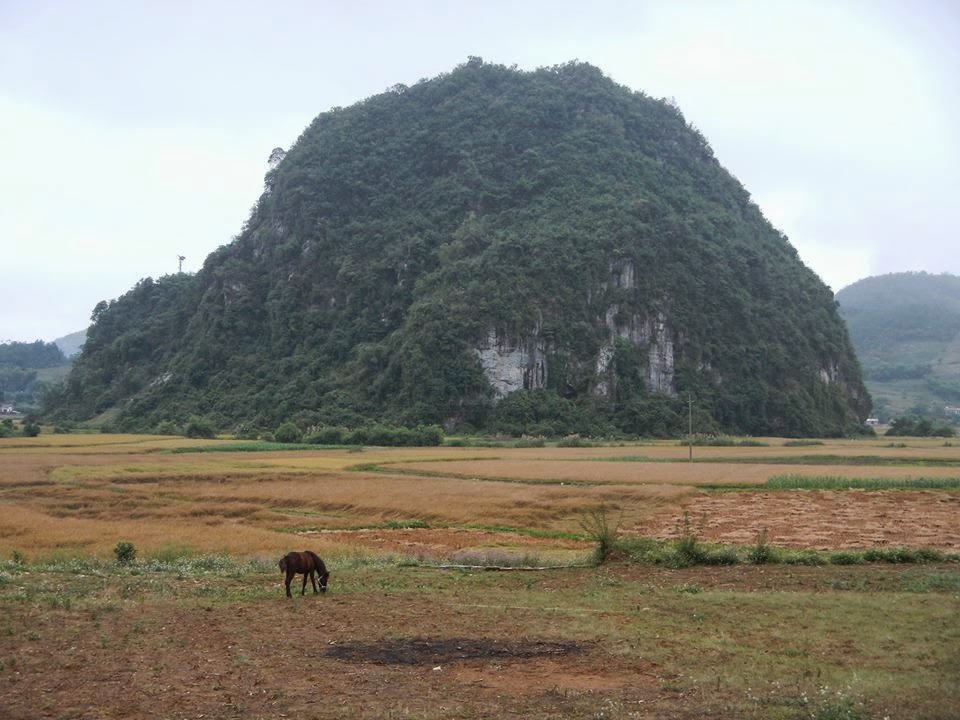
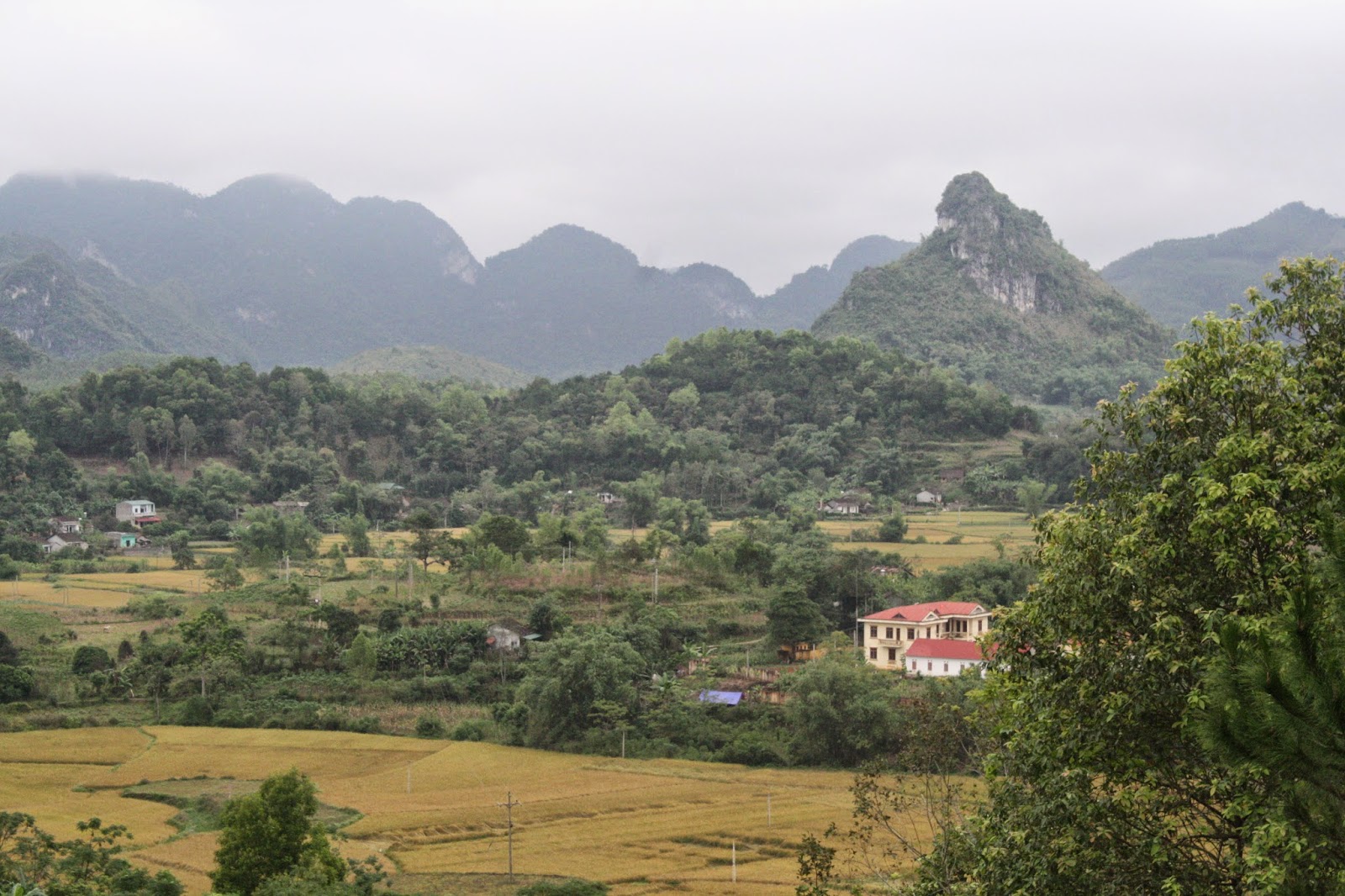
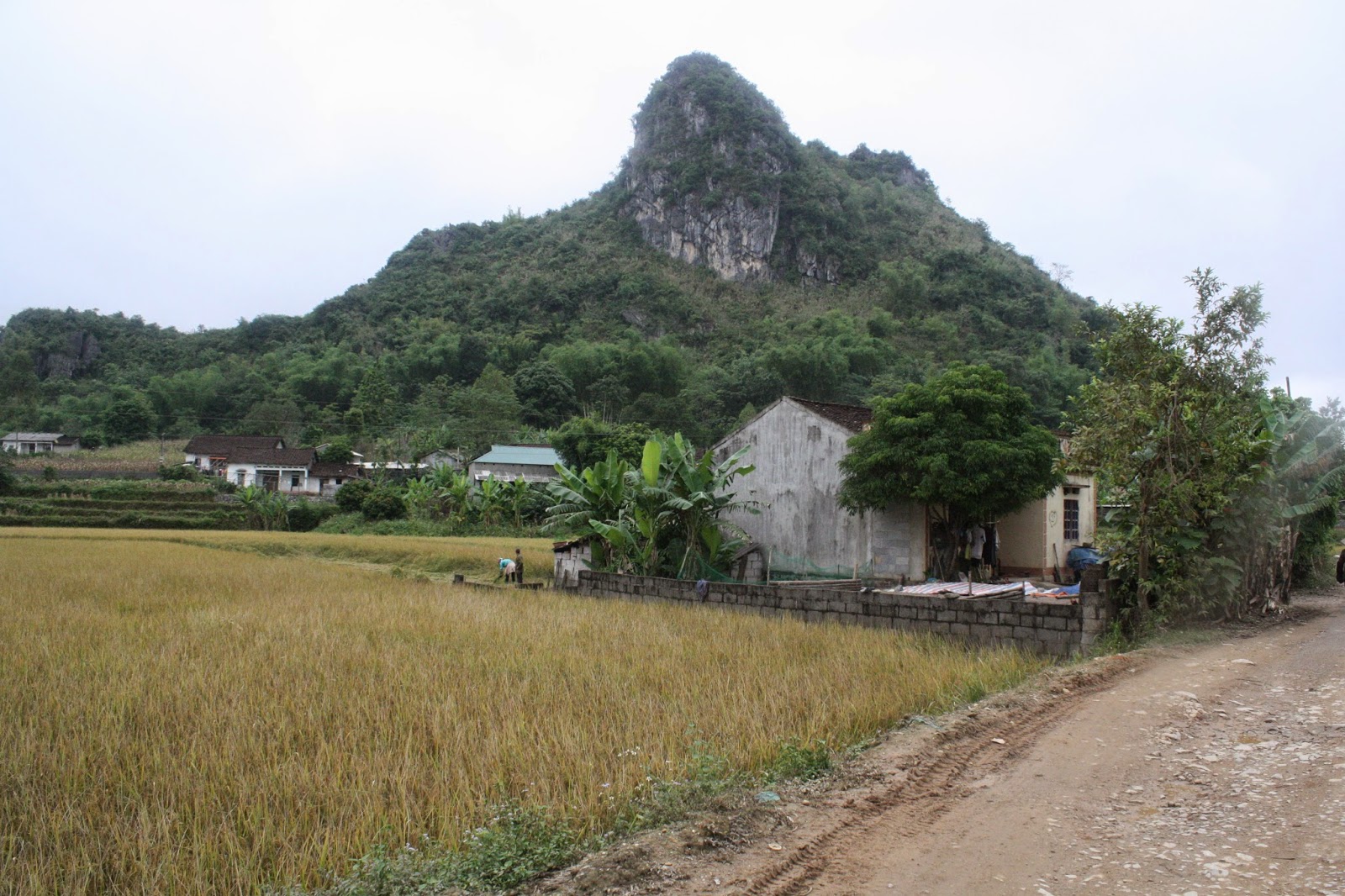
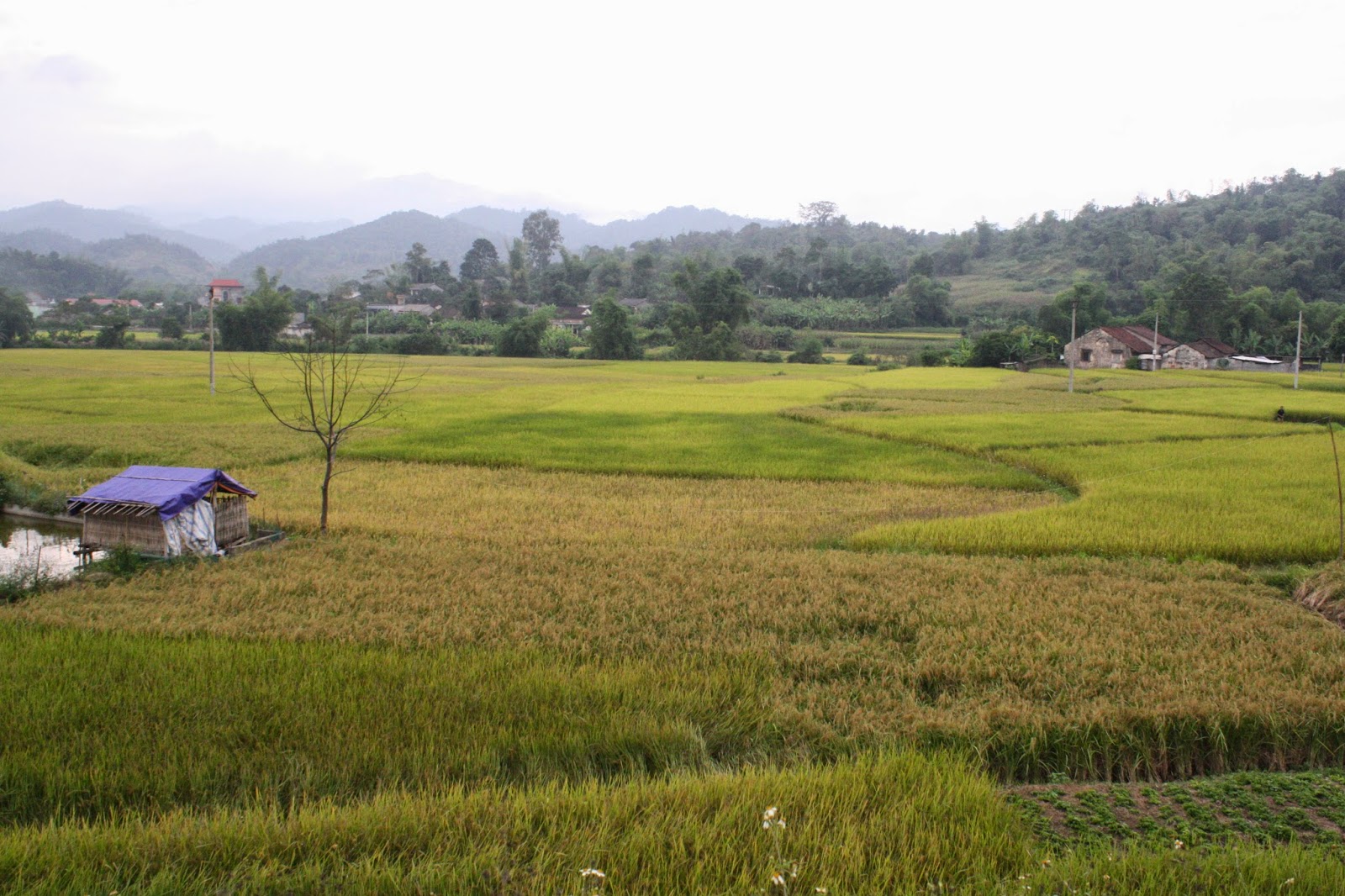
Limestone and rice fields...
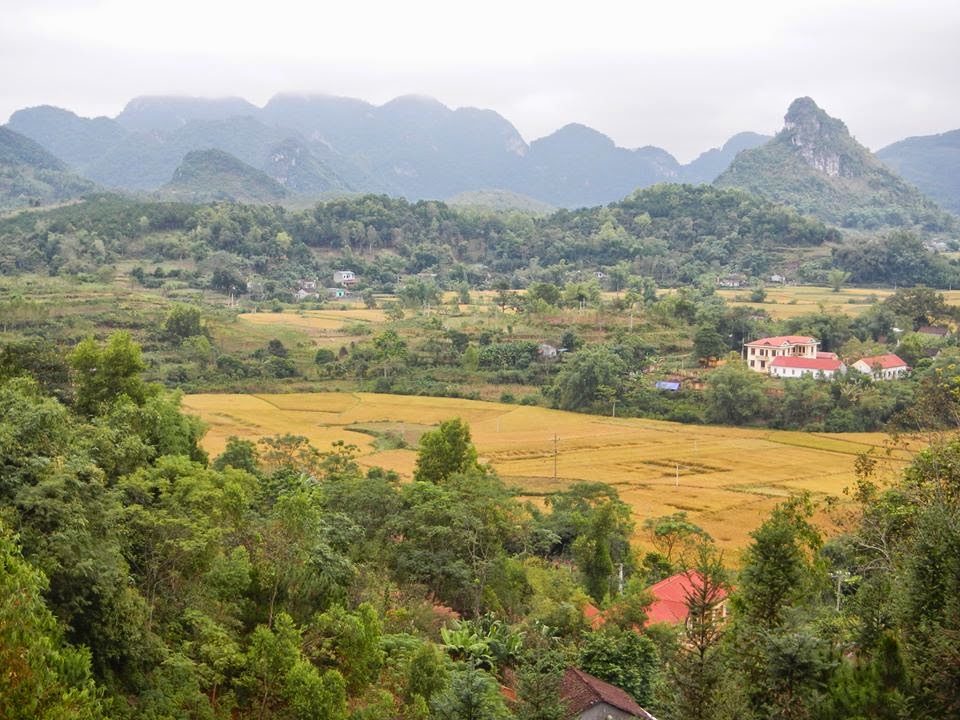
In the distance... another country: China
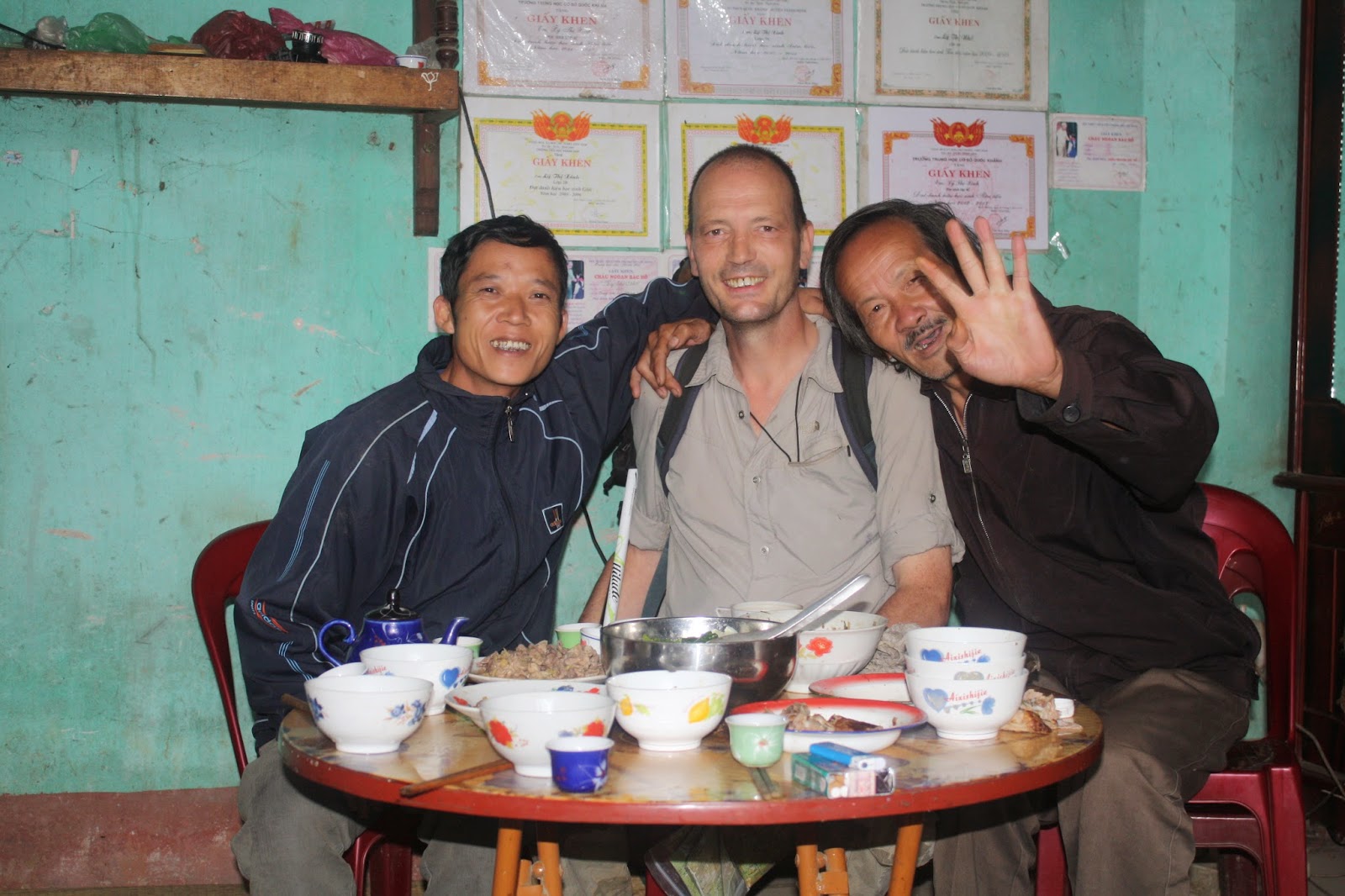
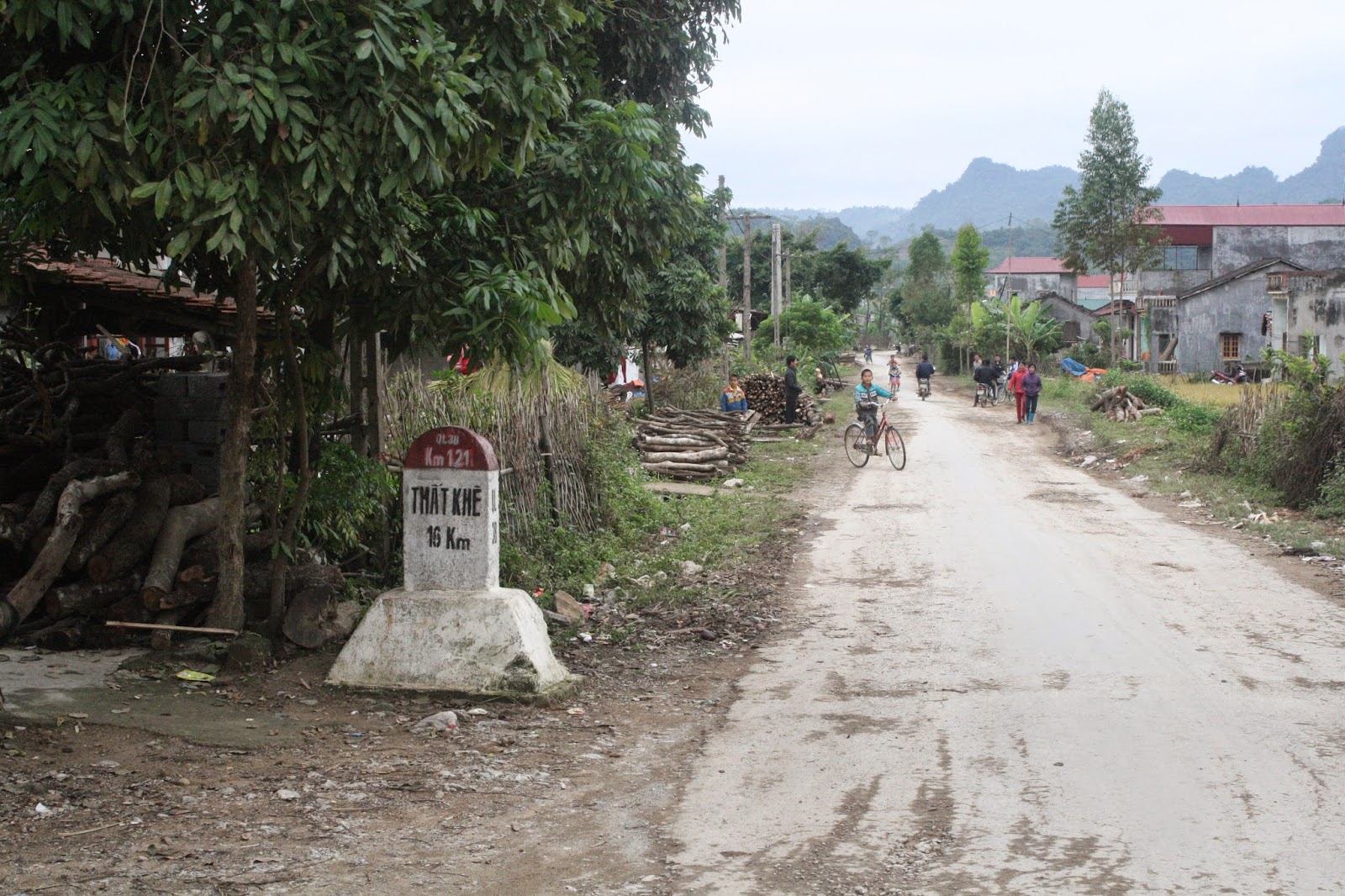
A welcoming population...
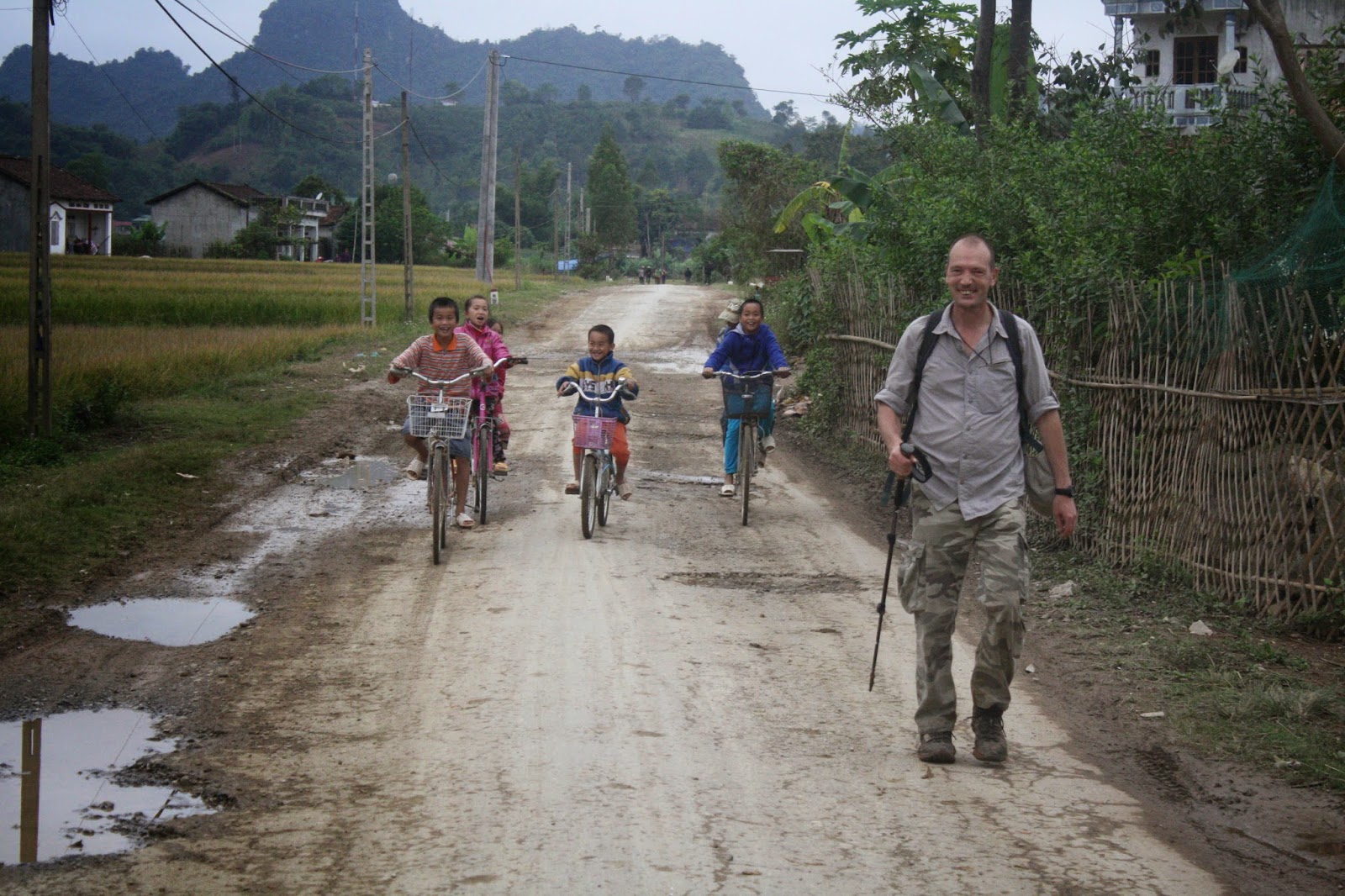
Children who don't see many Western visitors...
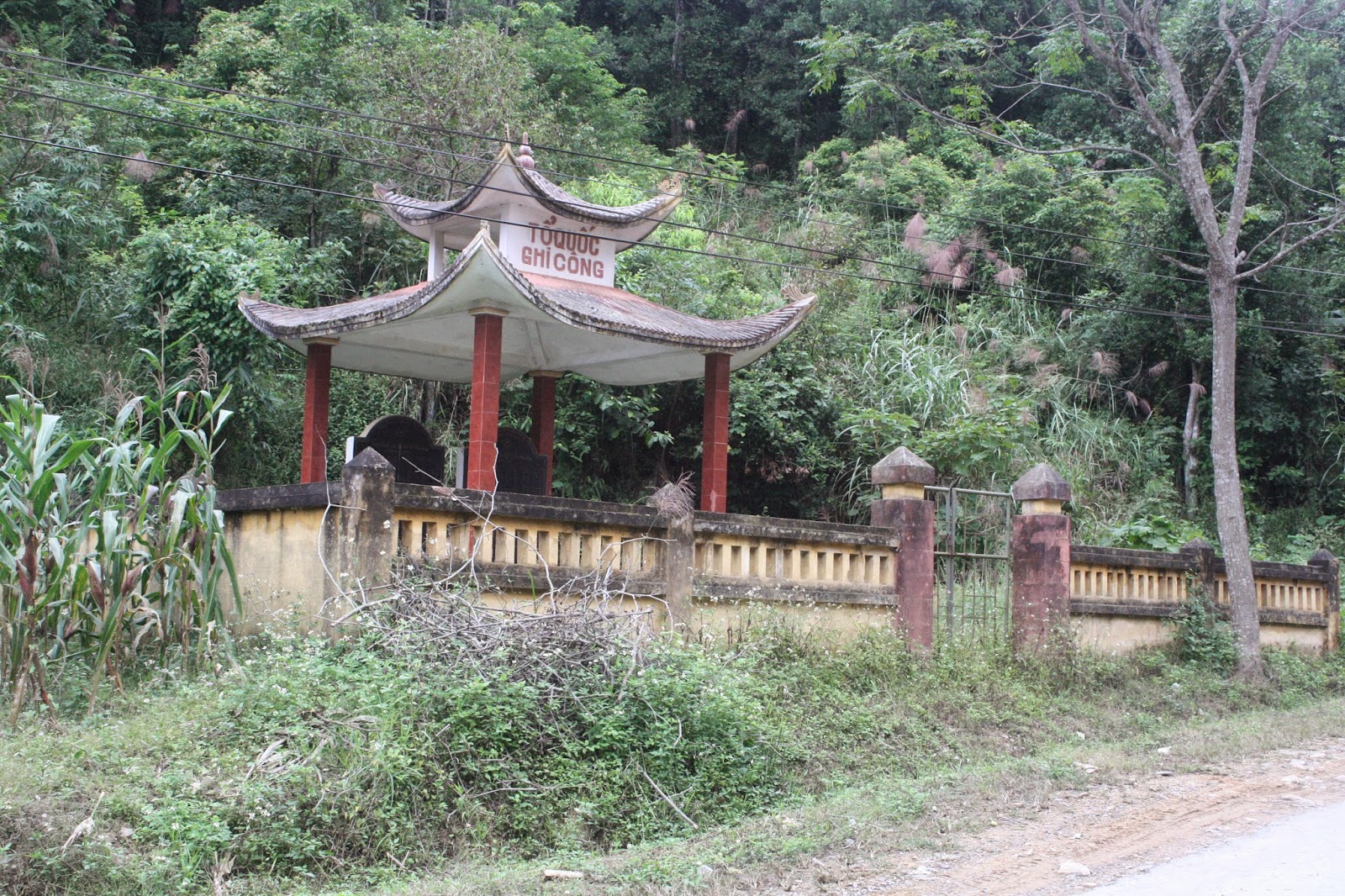
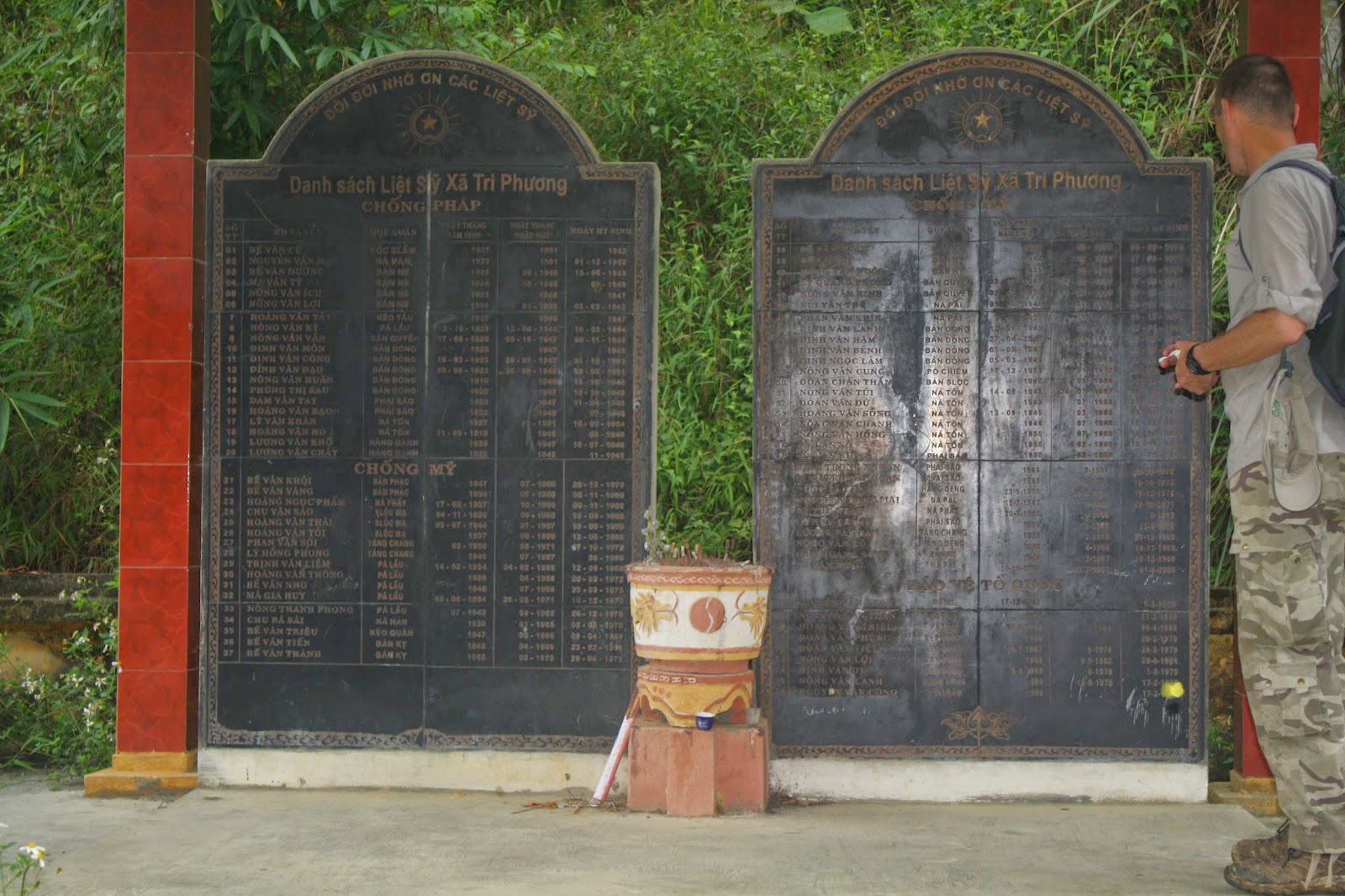
Without going beyond Po Chang, the hike on Poma is nevertheless a route to be taken because the natural environment as well as the welcome of the inhabitants is a real pleasure...
Here is what Lieutenant Stien wrote:
"We come out into the basin of Poma. I can clearly identify the location of our raid in September 1950, when our battalion came to reinforce That Khê. With my bare feet now well protected by a thick layer of horn, I no longer need to walk with my eyes on the ground in order to avoid the sharp stones. I am on the very trail where, two years ago, after we had plunged into the Viet system at night, I retreated at a gallop with my followers, as well as our precious harvest of Viet prisoners and documents. It was rattling everywhere, our fighters and artillery intervening as close as possible to block the columns of bo doïs launched after us. This time, I'm travelling the road as an "accompanied" tourist. The Chinese landscape is splendid, in 1950 I hardly realized it. As a matter of location, a beautiful hill loses all its appeal when it is riddled with machine guns shooting at you. And the gymnastic step that follows obviously doesn't make you contemplative."
If you decide to go, have a good trip!
Posted by Jean luc Martin at 05:02 1 comment: Labels:
[url=http://indochine-images.blogspot.com/search/label/That Kh%C3%AA]That Khê[/url]
Wednesday, May 7, 2014
That Khê
Once crossing the Song Ky Cong, the former RC 4 crosses the plain of That Khê to enter this village street. On both sides of the town there are rice paddies and even though many houses have been built since the fifties, it is not too difficult to find your way around.
Those who wish to stop at That Khê can refer to the article written above which gives the coordinates of a relatively comfortable and clean hotel.
The south-east entrances to That Khê
The plain to the west of the village
That Khê in 1950
That Khê is of little interest as the only places worth a stop are the old citadel and the chapel.
As is the case almost everywhere, the French Citadel is now occupied by the Vietnamese People's Army and it is therefore impossible to enter or take photographs.
In the photo below, you can clearly see the old citadel. It would seem that this photo was taken during the parachute drop of the first wave of the 1st BEP (PC, 1st and 3rd company) carried out on the afternoon of September 17, 1950 or the rest the following day, in order to cover the progress of the Lepage column which was going up from Na Cham in a northerly direction.
During its advance, Colonel Lepage's CP took up residence in this citadel while the units of the column carried out reconnaissance in the direction of the Lung Phaï pass.
The Lepage group was stationed for about ten days at That Khê (until 30 September 1950) before resuming its advance towards Dong Khê. It was from this locality that the raid on Poma (23st BEP and 1st Tabor) was launched on 1 September, a hamlet located about fifteen kilometres north-east (towards the Chinese border), a raid which allowed the collection of important and valuable information which unfortunately was not taken into account by the command in Lang Son and Hanoi. The interrogation of the prisoners and the exploitation of the documents clearly showed that the enemy, after having crossed the frontier with his maneuver elements and regrouped his regional forces, was on the lookout with significant means (30,000 men) with a view to seizing That Khê...
The citadel of That Khê in 1950
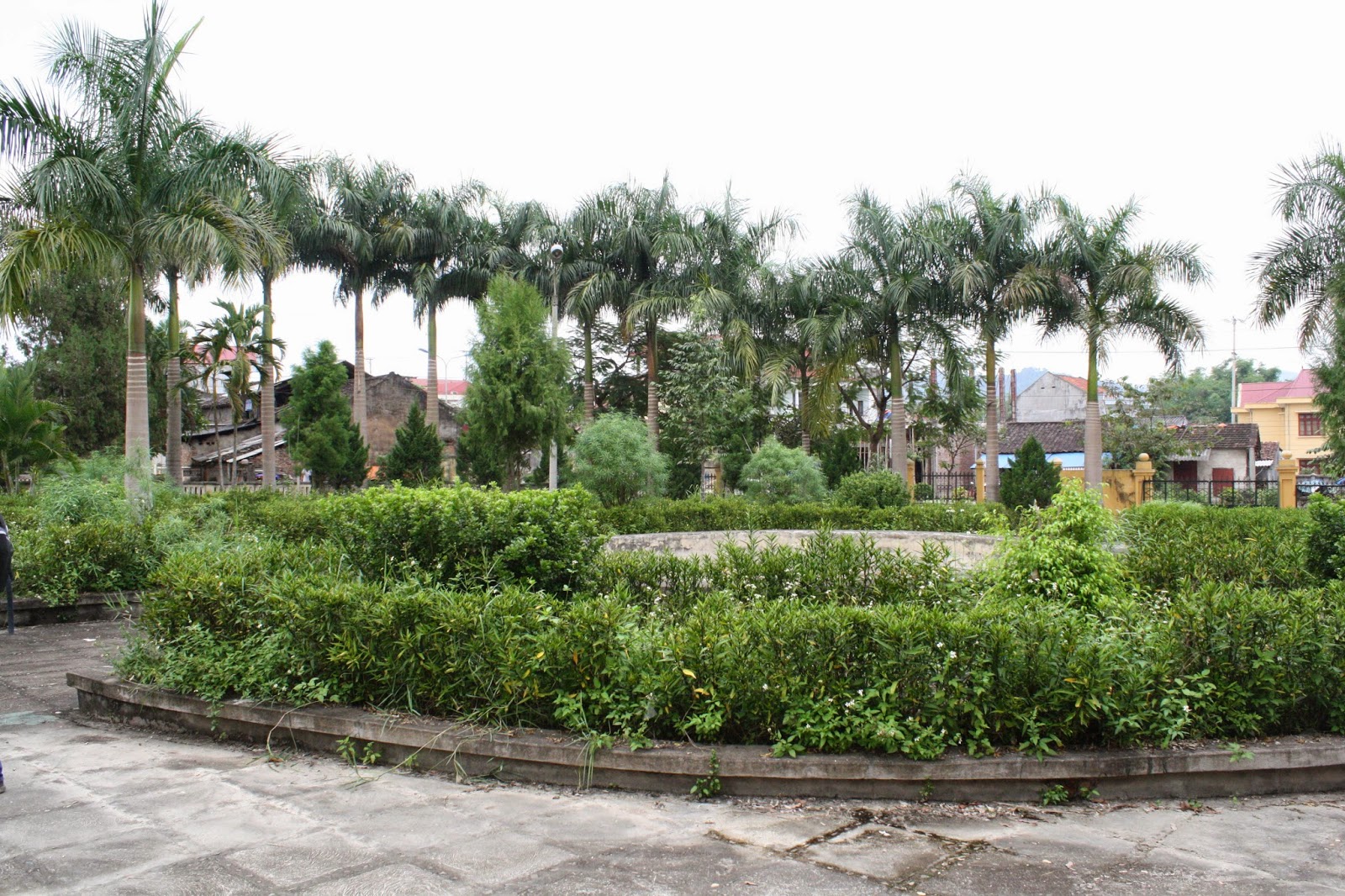
The photo below shows the old gate of the citadel: a green space has been set up between the road and the enclosure, which allows you to photograph this right-of-way under the cover of photos of the garden and the commemorative stele.
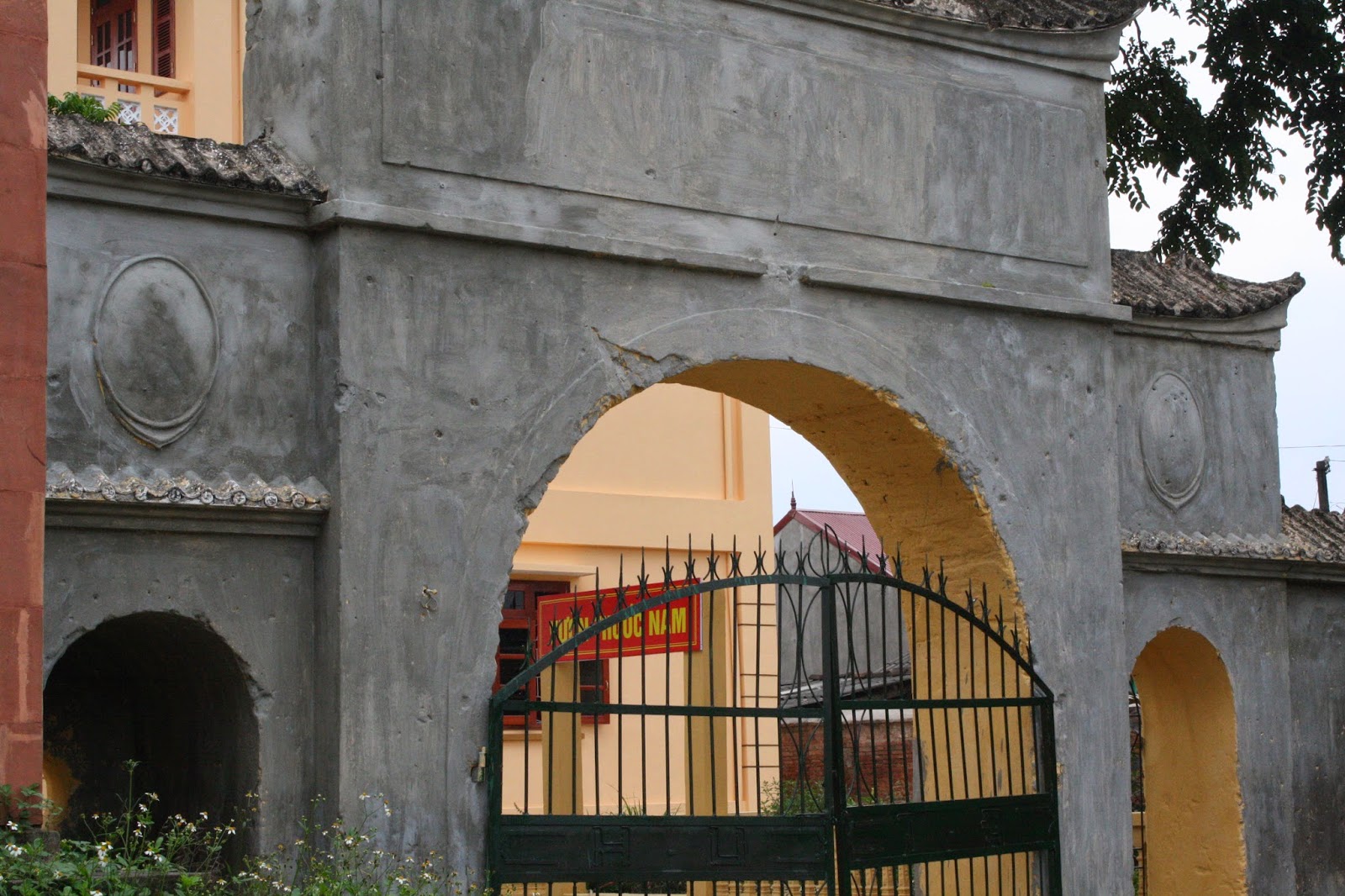
The gateway to the ancient citadel of That Khê
The detail of the door shows that the old anchors of the colonial are still in place even if the symbols that appeared above have been covered...
Detail of the door
The 1950 Fighting Memorial
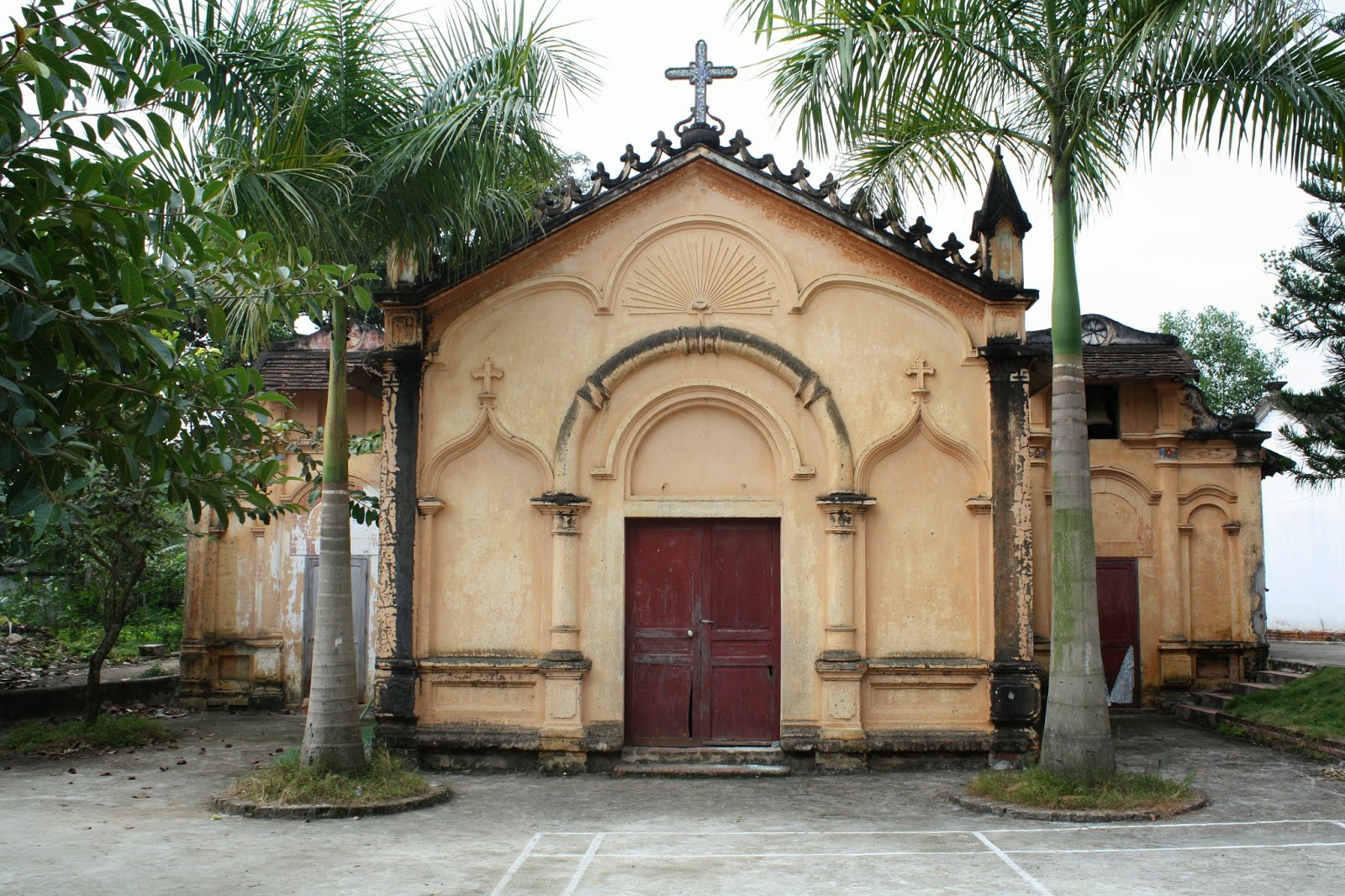
On the other hand, the chapel is easily accessible and we can refer to the article written previously (Le difficile devoir de mémoire sur la RC 4) to get a more precise idea of this building which will be rehabilitated...
The chapel of That Khê
The only visible remnant of the 1950 fighting is in fact the carcass of this machine-gun car recovered after the evacuation of October 1950 and which was installed on a concrete base in the grounds of the police barracks. Even if the craft is visible from the road, it is safer to ask permission from the officer to photograph it.
During our visit, we were refused, but by insistence we were finally allowed to take pictures of this wreck... but under the control of the policeman on duty...
One of the machine guns of Lt Pasca's platoon
Antoine in search of details...
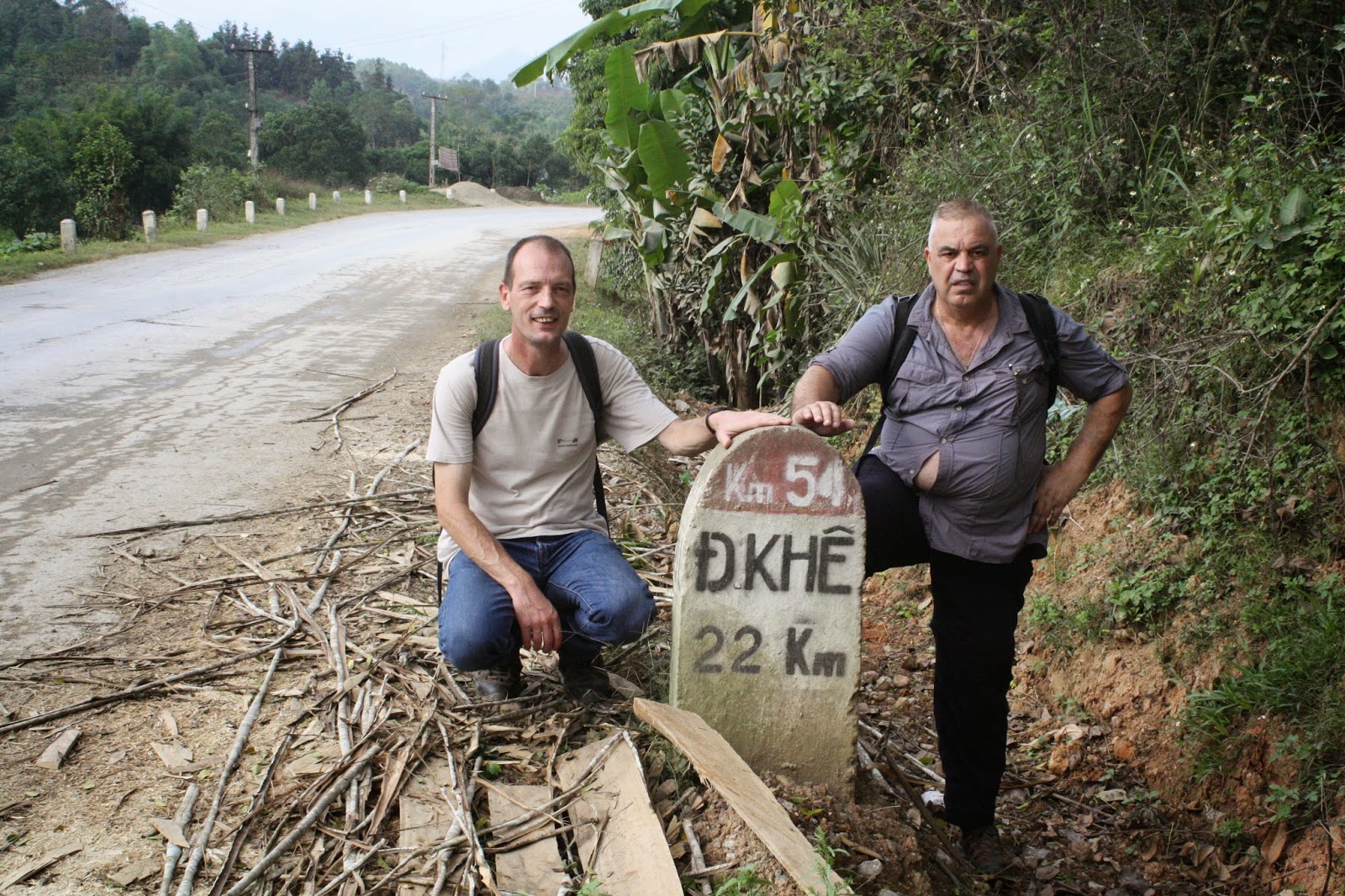
Once past the northern exits of the village, you can continue in the direction of Dong Khê, located about 24 km from That Khê: very quickly the road reaches the foothills of the massifs that follow one another until Hill 703, a landslide that has gone down in history and dominates the Lung Phaï pass.
The northwestern plain of That Khê
The RC 4 between the northern exits of That Khê and the Bascou bridge

The foothills of the landslides separating That Khê from Dong Khê

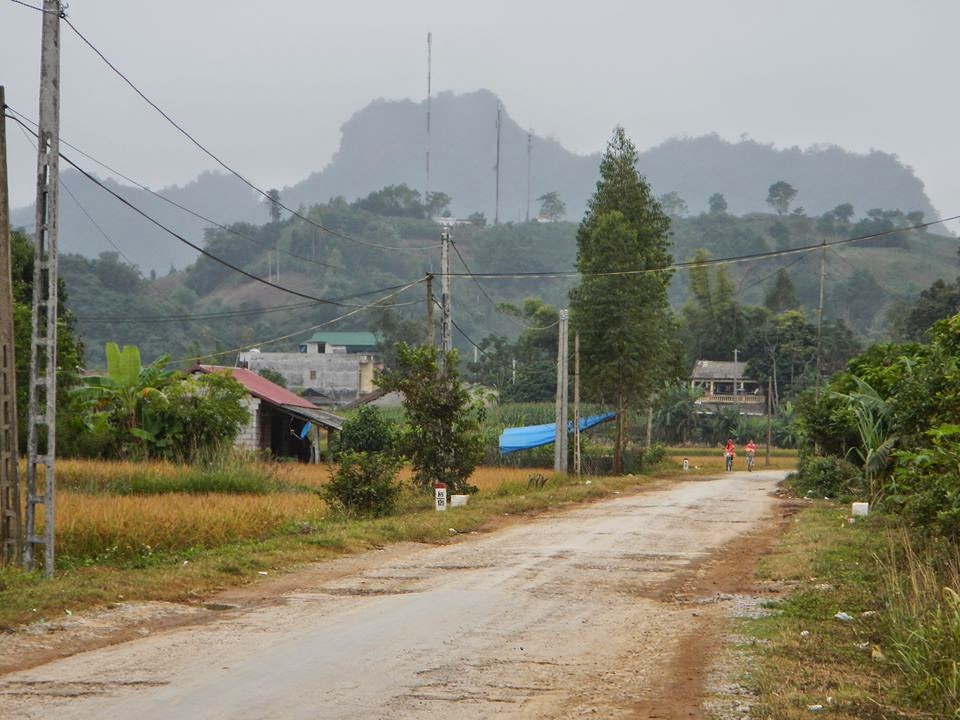
RC 4 in the direction of the Bascou Bridge
A vestige that saw the men of the Lepage column pass by...
Four kilometers north of That Khê we finally arrive at the Bascou bridge, a site that will be the subject of the next article because it is from this place that we start the climb of the Loung Phaï pass...
Arrival on the Bascou Bridge
Published by Jean luc Martin at 20:24 2 comments: Labels:
[url=http://indochine-images.blogspot.com/search/label/That Kh%C3%AA]That[/url]



 photos Fri Jan 25 2019, 14:41








 .