Thursday, December 14, 2017

Cars with automatic transmissions are very popular for both new and experienced drivers, as they are generally simpler to operate than manual transmissions and can be more comfortable for long trips. These simple steps will guide you in learning to operate an automatic transmission, but remember: before operating any motor vehicle, please make sure you have a valid driver's license and understand all local traffic laws.

Part1
Preparing to Drive

  1. 1
    Get into your car. Unlock the vehicle with a clicker or key and climb into the driver's side.
  2. 2
    Adjust the car to your needs. Adjust your seat in any direction you are able to/find necessary so that you can comfortably reach any controls and see well out of windows. Move the mirrors so you can see behind and to the sides of the vehicle clearly. Identify the car's blind spots before you start driving, so that you can check them before making any turns or lane changes.
  3. 3
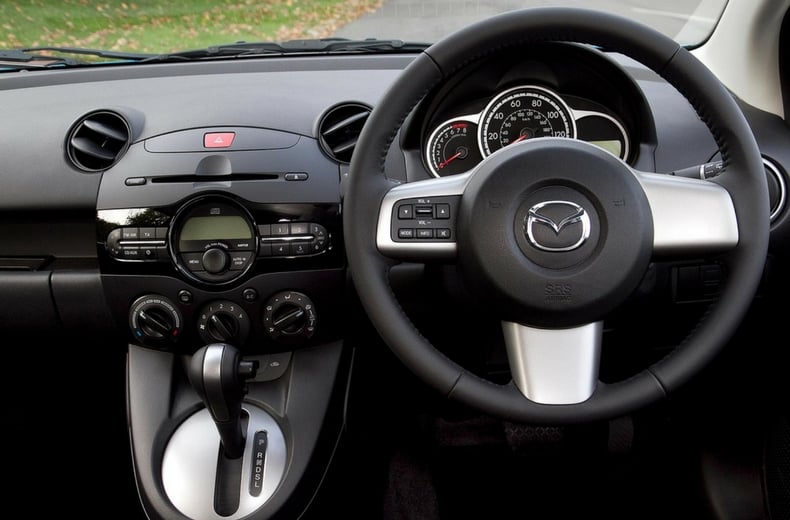
    Identify the controls. It essential to find the accelerator and brake pedals, the steering wheel, the gear selector lever, the light controls, the defroster, and the windshield wipers before you begin.
    • The brake and accelerator pedals are located at the bottom front of the area where your feet are. The brake pedal is on the left, the accelerator is on the right.
    • The steering wheel is the large wheel in the center of the driver's console. Turn it to the left and right to turn the wheels of the vehicle.
    • Located on the steering column (usually on the left side) is a small lever that has a rest position in the middle and two locking positions above and below. This is the turn signal. Often on the left side of the steering wheel mounted into the console or a knob on one of the levers on the steering column is the control which turns the headlights on and off.
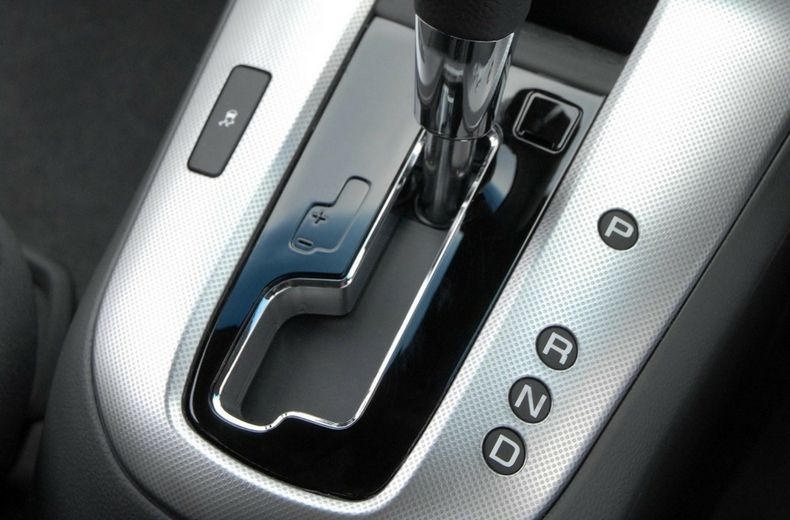
    • The gear selector lever will usually be in one of two places: it is either mounted to the right side of the steering column or in-between the driver's and passenger's seats. It will have a display showing gear indicators, usually marked with the letters "P", "D", "N", and "R" and a few numbers. On steering-column shifting levers, this display is usually located on the instrument panel, underneath the speedometer.
  4. 4
    Fasten your seat belt. Ensure that you and any passengers in your vehicle are wearing seat belts at all times.

Part2
Operating the Vehicle in "Drive"

  1. 1
    Start the car. Place your right foot on the brake pedal and push it down, then insert the key and turn it clockwise to start the vehicle.
  2. 2
    Select your gear. Keep your foot on the brake pedal and shift the gear lever into "Drive." This gear is marked with a "D" on the display panel, and will be highlighted when you've successfully selected it.
    • For shift levers mounted on the steering column, pull the lever towards you before moving it up and down to select a gear.
    • For shift levers mounted on the floor, there is usually a side button to unlock the lever. It can then be moved along its track into position.
  3. 3
    Release the parking brake. This is either a lever between the two front seats or a pedal on the far left side of the foot area. There may be a release lever above the lower parking brake or a button to push on the topside model before you can disengage it.
  4. 4
    Check your surroundings. Look all around the car, including blind spots, to see if there are any moving objects or beings in the vicinity. Make sure to keep your eyes mainly on the direction you're moving.
  5. 5
    Get your car moving. Slowly release pressure on the brake pedal and the car will start to move slowly. Take your foot off the brake, use the same foot to press the gas pedal gently, and the car will begin to move faster. There is no need to change gears in relation to speed in regular road driving.
  6. 6
    Turn the steering wheel to turn the car. In "drive," turn it to the left to turn the car left and turn it to the right to turn the car right.
  7. 7
    Apply the brakes to slow or stop the car. Take your right foot off the accelerator pedal and move it to the brake, applying gradual pressure so as not to jerk to a halt. When you wish to start again, switch your foot back to the accelerator.
  8. 8
    Park the car. When you have reached your destination, bring the vehicle to a complete stop by applying gradual pressure to the brake pedal and slide the shift lever back into the "P" position. Turn off the engine by turning the key counter-clockwise. Don't forget to turn off the headlights and apply the parking brake before getting out of the car.

Part3
Operating Alternative Gears

  1. 1
    Travel in Reverse. If you need to travel backward, make sure the vehicle is at a complete stop before changing gears in or out of "reverse." Slide the gear shift to select the gear marked "R" and check behind/ around you for any possible obstructions. Gently remove your foot from the brake and place it on the accelerator.
    • When turning in Reverse, your car will turn in the same direction that you turn the wheel. You're just going backwards, so the end of the car will swing in that direction, rather than the front.
  2. 2
    Use "neutral." The "neutral" gear is only to be used when you have no need to control the speed of your car, not when driving regularly. Examples of this include when idling parked for a short time or when being pushed/towed.
  3. 3
    Use the lower gears. The gears marked "1," "2," and "3" are known as lower gears. These can work as a sort of in-engine brake system when you need to save your actual brakes. Going down steep hills is a good use of this technique. 1st gear, however, is only to be used when you must go very slowly. There is no need to stop when shifting between these gears and Drive.

How to drive an automatic car - a dummy’s guide

How to drive an automatic car - a dummy’s guide
Once only popular with elderly drivers and those unable to drive a manual car, automatic cars are now increasingly common.
Not only are they easier (and more relaxing) to drive than a manual, in some cases they can be better on fuel and can cost less to maintain.
If you haven’t driven an automatic car before, however, it can be all too easy to get behind the wheel and be totally perplexed by the lack of a clutch pedal and the array of options provided by the shifter.
Here’s how to get going quickly.

The basics

Most automatic gearboxes will let you select between ‘P’ (for park), ‘R’ (reverse), ‘N’ (neutral) and ‘D’ (drive).
  • Park should only be used when you’re stopped and getting out of the car. This ‘locks’ the transmission, preventing it from rolling away (but you still need to apply the handbrake when parked as well).
  • Reverse does as it says - acts the same as a reverse gear in a manual, and should be selected when you want to drive backwards.
  • Neutral is the same as knocking a manual gearbox out of gear. It shouldn’t be selected when moving - this is known as coasting - but can be used (along with the handbrake) if you’re stopped for a short period of time.
  • Drive will select gears automatically and allow the car to move forwards.
Some automatic gearboxes will also give you the option to select first or second gear. This will help in situations where you want to use the gearbox to keep your speed down - such as driving down a steep hill.
Having this option also helps to keep the revs down and stop the wheels from spinning when pulling away in certain situations.
For instance when moving off in snowy or icy conditions it is sometimes advisable to pull away in second gear to stop the wheels from slipping if it is particularly snowy - some automatics have a dedicated 'winter mode', however, that takes care of this. You can read more about driving in adverse conditions on our driving in snow page.
Other automatics will let you manually select any gear, either using the selector or paddles mounted behind the steering wheel. This gives the driver more control over how the car moves up and down through the gears.
Some drivers prefer this as it better suits their driving style and gives them more control over how the car performs, but the more you drive a manual car the more you will find out about the type of manual gearbox you prefer.

What to do when setting off

Although automatic gearboxes are generally very easy to use, the confusion comes when starting and stopping.
When you get into a car with an automatic gearbox, it should have been left in ‘park’.
Put your right foot on the left-hand pedal (the brake) and push down, start the car using the key or start button, and (with your foot still on the brake), move the shifter to ‘D’ (if you want to drive forward) or ‘R’ (if you wish to reverse).
Lifting your foot off the brake will cause most automatic vehicles to ‘creep’ forwards - this helps with parking or in low-speed traffic.
It might need a bit more gas if you’re on a hill or want to move off quicker.
Once moving, the gearbox will select the correct gear for the situation and do all the hard work for you.
When you’ve finished your journey and the car is stopped, keep your foot on the brake and shift the lever to ‘P’, turn the ignition off and exit the car.

The different types of automatic gearboxes

Although any car which changes gears itself without the driver having to use a clutch pedal is generally considered to be an automatic, there are in fact a number of different types of automatic gearboxes.

Conventional automatic gearboxes

These use a ‘torque-converter’ to do the job of the clutch, and are more refined than other automatic ’boxes, but will use more fuel than manuals.
Luxury cars such as the Range Rover and Volvo XC90 stick with a conventional automatic transmission - using as many as nine gears.

Continuously variable transmissions (CVT)

CVTs are popular in hybrid cars such as the Toyota Prius, as they do away with cogs in favour of a belt which acts as a single gear ratio.
As well as being more efficient and more reliable, they also make for a smoother drive as the car doesn’t have to skip between gears.
A downside is slower acceleration than other automatic gearboxes, and a loud, strained engine sound can occur if you attempt to make rapid progress.

Dual-clutch automatics

These types of gearboxes are similar to a conventional automatic gearbox, but two clutches (operated automatically) replace the torque converter.
They line up alternating gears, meaning the next ratio is prepared and allowing rapid gear changes.
They’re popular in VW Group cars - ranging from the DSG gearbox found in the Volkswagen Golf to the PDK used in Porsches.

Automated manual gearboxes

These aren’t as popular as they used to be, but are still used in cheaper cars such as the Skoda Citigo.
These act like a normal manual, but select gears automatically and operat the clutch by computer rather than using a pedal.
The downside of this is they can be a little jerky - just like a manual, there’s a small pause as the system works through gears.
KHỞI ĐỘNG VÀ NGỪNG XE , áp dụng cho xe số tay (manual gearbox) như Peugeot 404 , xem hình . 
Nên nhớ : một khi bạn biết lái xe số tay , bạn sẽ dễ dàng lái xe số tự động (automatic gearbox) . 
Trước mặt bạn , phía dưới có 3 bàn đạp (plate) : bên trái là bàn đạp ly hợp (clutch) hay gọi tắt là LY HỢP , bên phải là bàn đạp thắng hay gọi tắt là THẮNG , và bên phải của thắng là bàn đạp để tăng hay giảm tốc hay GA , xem hình .


Người ta khuyên nên để chân phải giửa thắng và ga , chân trái giử ly hợp .
. . .
4 . Trước nhứt xem bộ phận sang số (gear) có ở Neutral hay N ko ? (Neutral nghĩa là hộp số ko nối kết với động cơ) .

- Mở máy .
- Để chân trái hoàn toàn lên ly hợp (clutch) .
- Sang số từ Neutral (hay N) sang số 1 cùng lúc với chân trái từ từ nhả ly hợp và đồng thời chân phải đạp tốc độ hay GA (accelerator) .
Xe bạn bắt đầu chạy . Bạn có thể nhẹ nhàng tăng tốc và sang qua số 2 bằng cách đạp ly hợp lần nữa và chuyển sang số 2 bằng cách dùng chân trái đạp ly hợp và chân phải đạp nhẹ GA .
. . .
6 . Bạn có thể tăng tốc hay giảm tốc bằng cách lần nữa đạp ly hợp - sau đó sang số và nhả ly hợp đồng thời chân phải đạp GA .
7 . Trước khi thắng hay quẹo phải - ko nên quên nhìn kiếng chiếu hậu hay kính hông để kiểm tra khoảng cách - vì có thể có ai chạy nhanh sau xe bạn . Nhớ dùng đèn báo hiệu trước khi quẹo .
8. Tôn trọng luật giao thông , và giử khoảng cách với xe trước , ko nên thay đổi lane liên tục . . .
10 . Ko nên sang số thường xuyên ; cố gắng duy trì tốc độ tùy theo điều kiện giao thông .
11 . Cuối cùng là cách dừng xe . Chạy chậm bằng cách chuyển sang số 1 hay 2 . Trước chỗ bạn muốn đậu khoảng 40-50 m , đạp ly hợp và từ từ dùng thắng để giảm tốc .Khi bạn tới chỗ đậu , ngừng xe , lấy chìa khóa , rút chân khỏi ly hợp và thắng nhẹ để xe khỏi bị giựt (jerk) .

Dịch từ nguồn : https://www.quora.com/What-is-the-way-to-move-off-a-car-Should-I-release-the-clutch-very-slowly-and-then-give-more-gas-or-give-more-gas-first-then-release-the-clutch-very-slowly
Starting to Stopping the Car
4. Starting the car is the first step and what more if you start and take the first acceleration smoothly. Our personal recommendation for initial learning. Ensure that Gear is on Neutral /đầu tiên là để số ở neutral hay N .
» Switch on the ignition/mở máy .
» Put Left Foot on the clutch plate completely/để chân trái hoàn toàn trên bàn đạp Ly Hợp (clutch) .
» Time to Change Gear by Shift from neutral to first gear along with your Left Foot releasing clutch slowly/Bắt đầu sang số từ N sang số 1 (first gear) cùng lúc nhả bàn đạp ly hợp từ từ  and right foot simultaneously pressing accelerator/và 
đồng thời chân phải đạp tăng tốc 
Hurray !! the car has started moving/Hoan hô , xe bạn bắt đầu chạy. You can slightly increase the speed and shift gear to 2nd gear /Bạn có thể từ từ tăng tốc và chuyển sang số 2 by again pressing clutch plate and shifting to second gear using left leg/bằng cách đạp ly hợp và chuyển sang số 2 bằng cách dùng chân trái . and from right leg pressing accelerator slightly/ và chân phải đè bàn đạp tăng tốc vừa phải .
5. Remember, Its not Car Racing Competition. Slow Drive is a Safe Drive. Be Cool and Relax and Follow Lane Driving Approach
6. You can accelerate or slow down by again /Bạn có thể tăng tốc hay giảm tốcfollowing this process of pressing Clutch Plate/bằng cách  - followed with change in gear and releasing pressure from clutch with simultaneous foot pressure on acceleration
7. Before applying brakes or taking side turn - never miss to see rear view mirror or side rear mirror to check distance - there could be some one who may be on speed to overtake. Do not miss to give Proper Indicator with Apt Distance before taking Turns
8. Obey Traffic Signals, Rules and keep a distance with a car in your front ahead . Dont frequently change lane and dont make sudden jackup and jackdown speed of car
9. Avoid Attending Mobile Phone Call - It seriously diverts attention. While overtaking - be relax to make a wise judgement to overtake
10. Do not attempt to change gears very frequently. Like in split of seconds some people changes gears numerous times. Try to maintain a speed depending on traffic condition
11. Last comes stopping the car. Slow the car by coming back to either 1st or 2nd gear. Before 40 - 50 meters where you need to park the car,Press clutch plate and slowly use Brake to bring down the acceleration. When you have reached, stop the car, take the key out, pull your leg away from the clutch and brake gently and simultaneously to avoid a jerk.
Like one can not learn swimming by reading a book, one can not also learn driving while reading these tips - But If one follow the basics and Rules and go on the road - within a very short span of time - one can find him/her driving a real pleasure and fun


If you want a video tutorial, click here: