CUỘC ĐỜI CỦA NHẠC SĨ SONG NGỌC QUA LĂNG KÍNH CỦA LTS.
Chúng tôi khẳng định một chân lý hiển nhiên rằng mọi người sinh ra đều bình đẳng, rằng tạo hóa đã ban cho họ những quyền tất yếu và bất khả xâm phạm, trong đó có quyền sống, quyền được tự do và mưu cầu hạnh phúc . . . (Lời Mở Đầu Của Tuyên Ngôn Độc Lập Mỹ)
CUỘC ĐỜI CỦA NHẠC SĨ SONG NGỌC QUA LĂNG KÍNH CỦA LTS.
Feature: Maj. Peter Dewey, America's First Vietnam Casualty
06 September 2005
U. S. Adolph
Like the last, the first U.S. casualty in Vietnam is shrouded in controversy, mystery and political intrigue. Even the statement "the first," like "the last," is open to question. You won't find his name on the Vietnam Veterans Memorial, nor will it appear on any Missing in Action list, even though his body was never recovered.
However, there is little doubt that Major A. Peter Dewey was the first American soldier to be struck down by Communist bullets in what would later become America's longest and most controversial war.
Dewey's main purpose when he arrived in Saigon on the 4th September 1945 was to arrange for the repatriation and evacuation of U.S. POWs being held there by the Japanese. When he landed at Tan Son Nhut Airport on that first day of what were to be the last three weeks of his life, American fighting men had been involved in an air and naval war with the Japanese in the skies and water of Indochina for nearly three years. Even the harbour of Saigon had been raided and bombed by U.S. carrier based aircraft.
The OSS team that Major Dewey headed, code name Project EMBANKMENT, was to locate 214 Americans at two Japanese camps in Saigon. The majority of them had been held in Burma for most of the war and employed, as slave labour building a railroad line that was to cross the Kwai River, later made famous by the movie Bridge On The River Kwai.
Camp Poet in Saigon held five POWs, and Camp 5-E, just outside of Saigon, contained 209. Of these, 120 were from the 2nd Battalion, 131st Field Artillery of the 36th Division, a National Guard antiaircraft outfit from Texas that had landed in Java by mistake and had been captured intact. They would later become known as the “Lost Battalion.” Of the remaining POWs, 86 were survivors of the cruiser Houston, sunk on the night of 28-29th February 1942 off the coast of Java. Their fate was also unknown until Dewey liberated them. The other eight were airmen shot down over Indochina.
Peter Dewey was born in 1916 in Chicago, had been educated in Switzerland, St. Paul's School (London), Yale (where he studied French history) and Virginia Law, and head worked as a journalist in the Paris office of the Chicago Daily News. While reporting on the German invasion of France for his paper, Dewey decided to become more directly in volved. In May 1940, during the Battle of France, he enlisted as a lieutenant in the Polish Military Ambulance Corps with the Polish army then fighting in France.
This was somewhat to be expected for his father, Charles S. Dewey, who was a conservative, anti-New Deal isolationist and former Republican congressman from Illinois, had at one time been an international banker with the Northern Trust Company of Chicago as a financial advisor to the Polish government. After World War I, he had played an important part in the establishment of the modern Polish fiscal system.
After the Petain government capitulated, Dewey somehow escaped to Portugal through Spain where he was placed in an internment camp. Later, when he was released, he returned to the U.S. and wrote a book entitled, As They Were, about the French defeat. Not able to stay away from the action for long, he then joined Nelson Rockefeller's Coordinator of Inter-American Affairs as that agency's liaison to de Gaulle's Free French.
In August 1942, Dewey entered the U.S. Army as a lieutenant and served as an intelligence officer with the Air Transport Command in Africa. Finding that he had been rejected as “unsuitable” in a request to transfer to OSS, he took his case to the head of that organization, an old family friend, General Bill Donovan. After his second try was successful, he lad a parachute team of three Americans and seven Frenchmen in August 1944 in to South Western France. The operation, named ETOILE, was to provide coordination between the Allied commander of the invasion of southern France (DRAGOON) and the left-wing maquisards along the Spanish Republican frontier. These forces, it was known, were under Spanish Republican command and were planning for an invasion of Franco Spain as soon as the Germans left. In circumstances that Dewey would find repeated in Saigon, the political delicacy of the task was compounded by the many different organizations of the region oriented in every which direction. There was even some concern that the Gaullist Etoile mission would be in as much danger from “friendly” forces as from the Wehrmacht.
With Dewey in the B-17 that departed on 10th August 1944 from Blida Airport outside Algiers, was Jack Hemingway, son of Ernest Hemingway. In what must be considered on of the oddities of gear ever taken on a combat operation behind enemy lines, Jack jumped with his trout rod strapped to his leg. However, considering the terrain that they parachuted in to (a thirty mile wilderness at the headwaters of the Loire) perhaps the fishing gear was intended for survival.
At the beginning, the operation started of badly. Dewey and his group landed over 20 miles from their intended destination. Then the linkup with the second drop (consisting of the French contingent for the operation) was not completed until five days later. The linkup problems were compounded by the Gaullist team losing their radio during the jump. It was only after they had “borrowed” a radio from local peasants and arranged for an emergency re-supply that the entire team go together.
By now it was 15th August, DRAGOON D-day, and Dewey was to learn that his original mission had been changed due to the undreamed success of the invasion assault ashore. His task now was to concentrate on intelligence gathering on the left flank of the DRAGOON forces in their movement up the Rhone Valley toward the southern German border.
Dewey, with the help of the maquis, was able to find the headquarters of the Corps Franc de la Montagne Noire. As a result, Mission Estoile's first intelligence report was also one of its most important: Information on the details of the Wehrmacht's withdrawal was immediately transmitted to the invasion fleet. U.S. carrier based Hellcat fighter-bombers were able to intercept these forces with devastating results. It was also learned that the Germans would not stand in the French Alps as had been expected, but on the German Rhine.
Soon afterwards, Dewey's team began a 600-mile journey through enemy territory in what was to become an OSS legend. Travelling in two captured German Volkswagen staff cars with an escort of maquisards, they sent back valuable intelligence as well as destroying two German Mark III tanks and capturing one (it was given to the maquis to use) along with nearly 400 German prisoners. It was also one of Dewey's reconnaissance teams that replaced the American Flag after its several years in absence on the American Embassy in the capital of the French New Order, Vichy.
On the 5th September, Dewey and his team met Donovan at Seventh Army forward headquarters. Dewey was greeted with the promise that he would be made a lieutenant colonel, a promise that was to be kept shortly after his death just over a year later.
Returning to Washington in October, Dewey worked on the OSS history project under the direction of New Yorker columnist Geoffrey Hellman. In July 1945, he was selected to head up the OSS team that would enter Saigon after the Japanese surrender. But difficulties arose when British Major General Douglas D. Gracey, commander of occupation forces in Indochina south of the sixteenth parallel (the Potsdam Conference split the reoccupation of Indochina between the British and the Chinese) objected to an American presence and sought to bar their participation. However, Admiral Lord Louis Mountbatten intervened, and Dewey's team of OSS men was allowed to leave Ceylon for Saigon on the 1st September.
Preceding Dewey was an advance element of Embankment, a prisoner of war evacuation team that was parachuted in to Saigon. After stops at Rangoon and Bangkok, Dewey and the remaining members of his team landed at Tan Son Nhut on the 4th September. There they were met by members of the Japanese high command and enthusiastic crowds of Vietnamese. On the following day, the surviving American prisoners of war were flown out of Saigon on seven DC-3's. Until the 12th September the OSS team was the only Allied presence in Saigon. On that day, the first British soldiers (an Indian Ghurkha division from Rangoon) flew in at about the same time as a company of French Paratroopers from Calcutta.
In the interim, the Americans under Dewey's command, made contact with the “Committee of the South.” Set up by the Viet Minh, the Committee advocated “peaceful tactics” in the belief that they could prevent the return of the French through negotiations and with Allied help – Russian, Chinese and American. Opposing the Committee were the pro-Japanese Phuc Quoc Party as well as the United National Front comprised of Trotskyites, Cao Dai, Hoa Hao and other nationalist groups. They maintained that independence could not be supported by negotiations alone and fuelled that contention with rumours that the British planned to bring back French colonial rule. Stirring the pot was the Binh Xuyen (Saigon gangsters), who were taking advantage of the confusion to wreak havoc.
It is anyone's guess why Dewey and his team remained in Saigon beyond the 12th September, by which time their primary goal had been accomplished. That they were OSS, and as such undoubtedly had secondary intelligence type missions, is a distinct possibility. More likely, with the war effort rapidly winding down, no one quite knew what to do with them, as the bureaucracy hadn't caught up to them yet. However, the events on Sunday the 23rd September did catch up to Major Dewey and were to indirectly cost him his life. On that morning, before first light, the French forces under the command of Colonel Jean Cedile took over the control of all the main buildings of Saigon. When the curfew was lifted at 5.30am, the French citizenry bean a day long orgiastic fit of violence in the name of revenge for “Black Sunday.”
As the senior American in Saigon, Dewey attempted to register his complaint with Gracey whose job it was as commander of the British forces in Saigon to disarm the Japanese. It was Gracey's order that released and armed the interned French troops, and it was Gracey who failed to act to prevent the bloodshed. On the next day, the 24th of September, suspecting Dewey of having connived with the Viet Minh and having interfered with British control Gracey declared Dewey persona non grata and ordered him out of the country. Major Dewey had two days to life.
At 9.30am on the morning of the 26th of September 1945, Major Dewey was scheduled to fly out of Tan Son Nhut airport to Kandy, Ceylon. With him on his trip to the airport was his deputy, Captain (later Major) Herbert J. Bluechel. Upon arriving at the terminal it was learned that Dewey's flight was delayed and would not leave until noon. Returning to the Hotel Continental in the centre of Saigon, where he had been staying, Dewey was to discover that one of the members of his team (Captain Joseph R. Coolidge) had been shot and wounded at a Viet Minh roadblock ten miles outside of Saigon on the previous night. Dewey and Bluechel then drove to the British 75th Field Ambulance Hospital and briefly saw Coolidge who was suffering from a serve neck wound. In what was to prove ironic, Coolidge had been shot by the Vietnamese after speaking French and apparently being mistaken for a Frenchman.
After arriving back at the airport at 12.15 pm, the two OSS officers found Dewey's flight had been further delayed. It was decided that they would eat lunch at the OSS headquarters located in the Villa Ferier just North East of the airport. With Dewey driving, they went past the golf course at the end of the runway and left the airport by the rear entrance. In the process, they passed near the spot where the spot where the last American, of many, was to die nearly thirty years later. For the previous several days many of the roads in the Saigon area had been blocked by the Viet Minh in an attempt to stop the movement of Allied forces. One of these roadblocks consisting of brush and tree limbs was a short distance down the road from the Villa. Both officers were familiar with it, having driven around it several times in the previous few days, including once that very morning.
This time it was different. Major Dewey, having reduced speed to about five miles per hour, noticed several Vietnamese hiding in the ditch alongside of the road. Shaking his fist at them, he yelled something in French that Captain Bluechel was not able to understand. At this time he was shot in the head by a burst of automatic weapons fire and killed instantly. After Dewey was shot, the jeep rolled in to the ditch and overturned. Captain Bluechel was not hit in the initial burst of fire and was protected by the jeep chassis from subsequent firing. Crawling in the ditch and running behind a row of hedges while firing his .45 calibre pistol at the Vietnamese, Bluechel was able to reach the OSS headquarters a short distance away. U.S. soldiers that were there, along with server war correspondents, held off the attacking Vietnamese in a battle that lasted several hours.
Accounts vary, but at least three to eight Vietnamese were killed while the Americans suffered no further casualties. In trying to call for help, it was discovered that the telephone lines had been cut. Being unable to contact anyone locally, Bluechel radioed OSS Headquarters Detachment 404 in Kandy, Ceylon, which in turn radioed the British in Saigon. The rescue was accomplished by two platoons of the 31st Ghurkha Rifles around 3.00 pm. Evacuation of all personnel to the Continental Hotel in downtown Saigon was completed by 5.00 pm.
There can be no doubt that the Vietnamese knew that the Villa Ferier was an American compound. However, Dewey's jeep was not marked as to nationality; therefore, upon hearing him speak French it is probable to assume that he was mistaken for a Frenchman. His body was never recovered, making him the first American MIA in Vietnam, even though Ho Chi Minh ordered the Viet Minh to find it so that it could be returned. A reward of 5,000 piasters (an astronomical sum at that time) was offered by them for the Major's body. For a short period, charges of plots and counter plots were raised by the war correspondents in the press around the world.
The Japanese had been providing support to the Vietnamese dissident groups since the early 1900s and had provided arms to the Cao Dai Church's private army in the Saigon area during the war. Realizing this the British blamed the Japanese and placed Field Marshal Count Terauchi Hisaichi, the Japanese commander in Saigon, under house arrest. The French suspected the Americans of being anti-colonialist and the Vietnamese accused the French of creating the incident. The French, of course, said that the Viet Minh were guilty of cold-blooded murder, while some Americans, to complete the circle, pointed the finger at the British SOE claiming that they were attempting to remove their OSS competitors from Vietnam.
The point to realize here is that in 1945, in the southern portion of Indochina, much more so than in the north, there were many diverse political and religious groups. The Viet Minh didn't control the south, in fact no one group did. In truth, the French were probably in the best position to bring everything back together again and prevent massive bloodshed. While there might be some validity to the revisionist argument that the U.S. should not have backed the French in Vietnam, that turning point had not been reached in 1945.
The final chapter of this saga was told in 1981 by a Vietnamese refugee who had escaped from Vietnam to France. In a statement made to the U.S. Embassy in Paris, it was learned that Dewey was ambushed by a group of Advance Guard Youth (military arm of the Viet Minh to Committee of the South). Led by a Vietnamese named Muoi Cuong, the group burned Dewey's jeep and dumped his body in to a nearby well. Later, fearing discovery when they learned Dewey was an American, they recovered his body from the well and buried it in a nearby village of An Phu Dong. Both Cuong and his deputy Bay Tay, a deserter from the French colonial troops, were later killed fighting with the Viet Minh against the French.
This article was originally published in Behind The Lines magazine. VietnamGear.com has reproduced this article with the kind permission of Gary Linderer.
Follow us on Follow VietnamGear on Twitter Follow VietnamGear on Instagram
Copyright © VietnamGear.com. All rights reserved. This material is intended solely for internal use within VietnamGear.com. Any other reproduction, publication or redistribution of this material without the written agreement of the copyright owner is strictly forbidden and any breach of copyright will be considered actionable
NGUỒN TIN THỨ 2.
Theo sách One Last Look Around của Duell, Sloane và Pearce, trang 200-211: "Ngày kế đó, trung tá Dewey đã mời 2 người trong nhóm của chúng tôi, phóng viên Bill Downs và Jim McGlincy, đến ăn trưa tại trụ sở của OSS ở bắc SG. Hai người đến nơi, ngồi uống rượu ở hiên nhà và chờ Dewey. Năm phút có súng nổ dữ dội ở trên đường, và một sĩ quan Mỹ chạy nhanh về trụ sở. Người sĩ quan này vừa chạy, vừa ngừng lại để bắn trả vài kẻ đuổi theo bởi khẩu súng lục .45 hay 11.43 ly, xem hình súng và đạn. (Nói thêm: Khẩu súng này súng lục tiêu chuẩn của mọi sĩ quan VNCH, tuy nhiên sau này ở các đv tác chiến, các sq, kể cả đ.đ. trưởng cũng trang bị M-16 -- ND). Ông này là đ.u. Bluechel.
Không nơi nào dấu của cải bằng cái đầu của bạn -- Kinh nghiệm bản thân.
- Hiểu tức là nhớ lại.
- Thành La Mã ko thể xây trong một ngày -- Tục ngữ Tây phương.
Hiện nay niềm vui của tôi là tìm hiểu về chiến tranh VN bởi lẽ đơn giản là từ khi tôi có trí khôn, cuộc đời tôi tác động bởi cuộc chiến tranh này.
Đầu tiên, dù bịnh tật triền miên từ lúc 14 tuổi, năm 21 tuổi, tôi vẫn đủ sức khỏe để nhập ngũ sau khi xảy ra Trận Mậu Thân 1968. Tôi đã rời quân trường năm 1969 với cấp bậc chuẩn úy. Sau khi phục nhiều đv, cuối cùng tôi ở 1 đv tác chiến của trung đoàn 10 sđ 7 bộ binh.
Tôi quên nói, lúc ở VN trước 1975, dù đang đi lính, nhưng lúc rảnh rổi, (vì có lúc làm việc tại SG từ 1969-73), tôi đọc rất nhiều sách báo về KHKT, văn chương và văn phạm Anh ngữ, y khoa (do bịnh nhiều), ngoại cảm, khảo cổ, chiến tranh VN, v.v... bằng tiếng Anh và tiếng Pháp. (Vì tôi chọn Pháp văn là sinh ngữ chánh, mà có gia sư đến nhà dạy kèm, do vậy tôi giỏi nhứt lớp Pháp văn đệ tam của thày Hoàng Cung). Tiếng Anh tôi giỏi là do TỰ HỌC từ lúc 16 tuổi, chứ chương trình Anh văn ở lớp chỉ là Let's Learn English, chưa học tới English For Today. Cũng vì do tự học, nên tuy đọc sách được nhưng nói rất dở vì có thực tập lần nào đâu (sic) -- ko như những ai học Hội Việt Mỹ, v.v... Tuy nhiên, nhờ tự học ở VN, khi tới Mỹ, tôi có thể nghe và hiểu các cassette hay CD của American Streamline. Có lẽ tôi có thể HIỂU được là do NHỚ LẠI những gì mình học trong các kiếp trước. Do vậy, tôi hay nói với bạn bè, tiếng Anh là tôi HỌC CHƠI, chứ tiếng Pháp mới HỌC THIỆT (có gia sư dạy kèm, và trước khi đi Mỹ làm thông dịch 4 năm cho Pháp). Ấy vậy, mà tôi đã "ăn nên làm ra" vì việc học chơi này!
Do vậy, lúc ở trong tù, tôi được bạn tù quí mến, vì biết nhiều thứ (một thứ "mọt sách"). Ra tù năm 1981, tôi đã dạy Anh văn cho đứa cháu, điền đơn giúp bạn bè gửi TĐS Mỹ ở Bangkok, và làm thư ký đánh máy cho một HTX xây dựng. Có bao nhiêu tiền, tôi mua sách về các đề tài nêu trên bao gồm sách của các sở Mỹ trước 75, sách của những người bỏ nước ra đi và sách từ các nước XHCN (sách này rất rẻ, đến độ, người ta bán cân ký, sau khi tháo bìa cứng!).
Qua Mỹ tôi dạy Toán và Anh Văn trong 3 năm cho những học sinh mới sang Mỹ. Sau đó tôi tự học về computer.
Từ ngày về chúng cư người già từ cuối năm 2012, đầu năm 2013, tôi giúp đỡ láng giềng và bạn bè về đơn từ, dịch thuật, vi tính và smartphone kể cả iPad và các loại tablet khác.
Khoảng 4-5 năm trở lại, tôi dịch các bài về chiến tranh VN để gửi đăng trên YouTube. Nói chung nhờ có vốn liếng cũng như ĐAM MÊ về ngoại ngữ và khảo cổ, mà đam mê là yếu tố quan trọng vì rất nhiều người giỏi Anh và Pháp văn hơn tôi nhưng họ ko có đam mê hay hứng thú để dịch thuật về đề tài này (rất khô khan).
Trước khi về chúng cư này, tôi đã nhiều lần nhập viện khẩn cấp vì nhức đầu do căn thẳng. Lúc đó tôi đã định ko dùng computer vì nghĩ rằng bịnh này sẽ tái phát nếu còn dùng computer. Nhưng từ từ, các cơn nhức đầu giảm dần rồi biến mất -- tuy nhiên lúc nào trên đầu giường cũng có 1 hộp Naproxen 375 mg. BS nói thuốc rất độc hại vì lâu ngày sẽ làm thủng dạ dầy hay gây nghiện.
TB. Nghĩ sao viết vậy, trong lúc trời nóng, nên tôi đã ko sắp xếp hợp lý ý tưởng của mình.
SJ ngày 31/5/2025.
October 12, 2012
Not for the first time but likely the last a dozen or so senior level Viet Minh and American OSS officers held a public reunion at the Asia Society in New York City in 1997. Among the OSS agents present: Charles Fenn, who contacted Ho Chi Minh to rescue downed Allied pilots and send intelligence and weather reports to the OSS. Henry Prunier, who parachuted into Tan Trao to provide small arms and training and who marched with General Vo Nguyen Giap, later hailed as the architect of America’s defeat in Vietnam. And Frank White, who served under Peter Dewey, possibly the first American killed in Indochina.
Among the Viet Minh: Tran Minh Chau, Head of the Administrative Office of Tan Trao, prior to 1945. Nguyen Chinh, who worked with Tran Minh Chau. Nguyen Kim Hung, commander of the Viet Minh/OSS team that worked together in 1945. And Trieu Duc Quang and Tran Trong Trung, who served under Nguyen Kim Hung.
For the next hour the aging veterans related some of their war experiences to an audience of perhaps one hundred people. Memorable was Frank Tan’s recalling that Ho entrusted to him a letter conveying his dream of American support for Vietnamese independence. But no one ‘important’ would read it. “People said,‘Frank, forget it. Nothing can or will happen.’ Now, perhaps, I would have given the letter to the newspapers, but then I was not up to the task.” Tan nodded and said plaintively. “I have been suffering for fifty years with this.”
Few Americans know that Ho Chi Minh worked hand in hand with the US government. During World War II the Office of Strategic Services (OSS), forerunner of the CIA, operated in southern China and Southeast Asia. After the Japanese invaded the French colony then known as Indochina OSS operatives collected reports from French agents living under loose Japanese rule. After the Japanese took complete control in 1945 they arrested all French citizens, including all OSS contacts.
Around this time a group of Viet Minh (forerunner of the Viet Cong) emerged from the jungle escorting a downed US pilot to safety. The group was led by Ho Chi Minh who for many years had sought Vietnamese independence. Previously, French agents had informed the OSS that Ho was a communist. However the US administration felt the Japanese might move from northern Vietnam into southern China and instructed the OSS to ignore Ho’s leanings. He was too valuable an asset against the Japanese, and his goals dovetailed with the official US strategy: defeat Japan and support, at least in words, Vietnamese independence.
Thereafter the OSS referred to Ho as Agent 19 (code name Lucius) and began training the Viet Minh in combat, providing weapons, explosives, radios, food and money. In return, Ho and the Viet Minh provided the OSS with weather information (there were no satellites), harassed Japanese troops, rescued shot down American flyers and provided intelligence about the Japanese.
At wars end the OSS-Viet Minh alliance faded even though America expressed sympathy for Vietnamese self-rule, in stark contrast to the British and French aim of re-establishing French authority in Indochina. Ho proclaimed complete independence after the Viet Minh led “August Revolution” in 1945 but no country recognized his provisional government. Ho petitioned Truman and the Department of State for support but his letters went unanswered and unacknowledged. Some historians feel the OSS-Viet Minh alliance was a lost opportunity. Actual participants implied that if Washington had listened to Ho Americas long war in Vietnam might have been avoided.
In 1950 Truman sent the Military Assistance Advisory Group to Vietnam to supervise the use of $10 million worth of military equipment to support the French against the Viet Minh. However the French military was resistant to MAAG oversight. Four years later, lead by Nguyen Vo Giap, the Viet Minh defeated the French in the battle of Dien Bien Phu. After the 1955 Geneva Accords permanently divided Vietnam in half at the 17th parallel, President Eisenhower sent increased MAAG funding and military advisors to the Diem government to ensure a noncommunist South Vietnam. The Kennedy administration famously escalated US military aid and advisors (i.e. Special Forces and CIA personnel) to the South, setting in motion America’s long war in South East Asia.
Sometimes called America’s first Vietnam War casualty, Peter Dewey was born in 1916 in Chicago. The son of a Congressman, educated in Switzerland and at Yale, he saw action in World War II; through family connections he joined the OSS shortly thereafter. His arrival in Saigon in August 1945–to arrange for the repatriation and evacuation of U.S. POWs who had been held by the Japanese–angered the French and British, who warned Dewey against his sympathies to Ho and the Viet Minh. In the complex alliances and political turmoil of the day, tensions were further heightened by the Potsdam Conference, where the Allied Chiefs of Staff temporarily partitioned Vietnam at the 16th parallel, the violent August uprising announced by Ho, and provocations by the British and French, which put the Viet Minh on high alert. Dewey communicated his dislike to Washington about the British treatment of the Vietnamese. During the final week of September 1945 the British pressured the OSS to recall Dewey back to Washington.
There are various accounts regarding how Dewey died. This much is certain: Dewey and Major Herbert Bluechel drove to Ton Son Nhut airport in Saigon on the morning of September 26th but Dewey’s flight was delayed. Deciding to drive to a nearby OSS villa Dewey shouted in French as they neared a Viet Minh checkpoint. Because the British had forbidden Dewey to fly the American flag on his jeep, he was likely mistaken for a member of the hated Corps Expéditionnaire Français en Extrême-Orient. When the jeep came under fire Dewey was shot in the head and killed. Bluechel managed to escape to the OSS villa, where a fire fight with the Viet Minh raged for three hours. A rescue team of British Gurkhas arrived after the Viet Minh had retreated, taking Dewey’s body and jeep with them.
Rumors swirled as to who had killed Dewey. The Americans blamed the British Special Operations Executive; the British blamed the Japanese (who had entered a truce on August 26th, a day after mainland Japan’s formal surrender); the French blamed the Viet Minh. Ho Chi Minh sent condolence letters to Dewey’s parents and to President Truman, and ordered a search for Dewey’s body, which was never found. Some scholars believe Ho was insincere and had long manipulated the OSS. Having photos of their agents stand at his side, or posing with US weapons, demonstrated his international stature among the Vietnamese. And failing to see Ho as a Soviet-trained communist ideologue may have led to his emergence as a national leader and ultimately, as an enemy of the United States.
Among those attending the Asia Society meeting was Nancy Dewey Hoppin, the daughter of Peter Dewey, killed when she was an infant. When the floor was finally opened to questions she demanded to know how her father had died. A hush swept over the elegant room. Those on stage were awkwardly silent. Finally, a modest answer was trotted out. But the full truth lay elsewhere.
In 2005 in Saigon, still searching for answers to the fate of her father, Dewey Hoppin spoke with Tran Van Giau, an historian, former secretary of the Viet Nam Communist Party and chairman of the South Viet Nam Resistance Committee. Citing a September 1945 report he received as commander of Viet Minh in South Vietnam, Giau said Viet Minh guerrillas, after attempting to retake Ton Son Nhut airport from the French, retreated to Saigon, set up a check point and fatally machine gunned the misidentified Dewy. After killing him, they stole the jeep and tossed Dewey’s body into a river. Having confirmed that the officer killed was not French, but a member of the OSS, Giau then offered his condolences to the Colonel’s daughter.
Sadly, Dewey’s name does not appear on the Vietnam Veterans Memorial in Washington, D.C. The Department of Defense has ruled the American war in Vietnam began on November 1, 1955, after the US took over following the French defeat at Dien Bien Phu. Instead, Dewey is listed on the Tablets of the Missing at Manila American Cemetery. In France, a metal plaque inside Bayeux Cathedral bears his name, rank and decorations. The epitaph reads,“Pray for him.”
In Dewey’s last OSS report, written the day before he died, he had concluded: “Cochinchina is burning, the French and British are finished here, and we ought to clear out of Southeast Asia.”
Marc Levy was an infantry medic with the First Cavalry in Vietnam and Cambodia in 1970. Website: Medicinthegreentime.com Email: silverspartan@gmail.com
Clearance Sale of Vintage
CounterPunch T-Shirts!
We’ve marked down some of CounterPunch’s most popular t-shirts to only $8.00,including the CP shirt featuring Alexander Cockburn’s own scrawl.
Marc Levy served as a medic with Delta Company 1-7 1st Cav in Vietnam/Cambodia in 1970. His website is Medic in the Green Time. Email: silverspartan@gmail.com.
The Case of Peter Dewey: A Revisit Chau Huy Ngoc, Master Candidate National University of Singapore.
Life and Death (1916-1945) _ Son of Charles S. Dewey, U.S. Representative from Illinois (1941-1945) _ Educated in Switzerland, Yale, and University of Virginia _ Was a journalist for Chicago Daily News in Paris before enlisting in 1940.
_ Exceptional military career: + Polish Military Ambulance Corps + Liaison officer between Free French and Latin America + 1942-43: 8 intelligence missions after joining U.S. Army
_ Joined OSS in 1943: Mission Etoile, Southern France 1944: valuable intelligence and helped to capture 400 Nazis, destroyed 3 tanks
_ Decorations: various incl. Croix de Guerre and Legion of Merit.
_ July 1945: appointed leader of Operation EMBANKMENT to Saigon.
_ Arrived at Saigon on September 4, killed 22 days later on September 26
Peter Dewey in Saigon
_ Mission: “investigation of war crimes, prisoners of war, and the condition of (U.S.) properties…the collection of such documents and published materials…”: not a full disclosure of the team real aims.
_ Had close interaction with the Vietnamese, including Viet Minh leaders in South Vietnam: Trần Văn Giàu, and Phạm Ngọc Thạch
_ Planned for Thạch (Foreign Minister) to go to the U.S. appealing directly to President Truman
_ Moved the OSS HQ from the center of Saigon to the outskirt: better observation of Vietnamese political “atmosphere”
_ Clashed with the British and French: tension grew high esp after September 23
_ Ordered to leave Saigon on September 26 1945
_ Killed when passed a roadblock 500 yards away from OSS HQ, close to the Airport
The “myth” surrounding the death of Peter Dewey
_ The body has never been recovered despite much effort
_ Who killed?: top Viet Minh leaders denied involvement, even blame the French, sent out letters of apology, and called for investigation
_ 1970: the “revolution” memoir Phạm Văn Chiêu, prominent Viet Minh leader in Gia Định: Viet Minh guerrillas did.
Directive: “destroy the evidence, totally”, and concealed the incident from their superiors.
_ At the height of the Vietnam War: Peter Dewey turned into an “American advisor” and his death became a “victory”
Peter Dewey and the understandings of the Vietnam Wars
_ “Cochinchina is burning, the French and British are finished here, and we ought to clear out of Southeast Asia”: seen as an unheard warning to U.S. involvement in Vietnam
_ Access to his dispatches would provide greater knowledge on his ideas regarding the future role of the U.S. in Viet Nam: another possible answer to the question Why Vietnam? Why did a French sympathizer switch to anti-French and pro-Viet Minh?
_ The 1s and 2nd Vietnam Wars: failure due to misunderstanding? May help to prevent further cases?
_ What was the real mission of Dewey’s team? _ Urgent need for writing a history of Peter Dewey’s team in Saigon; Vietnamese version and effort to “clear” his name in Viet Nam historiography
_ History from below and micro history? + Voice of the unheard: postwar-early Cold War transitional generation: OSS men and women + American ideologies as reflected in Peter Dewey + Multi voices from U.S. military.
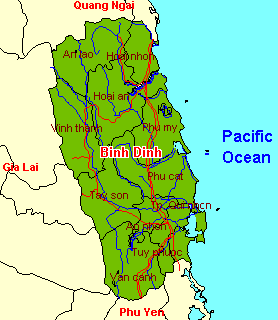
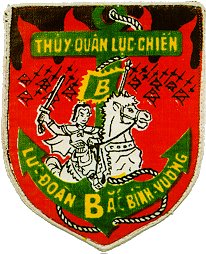
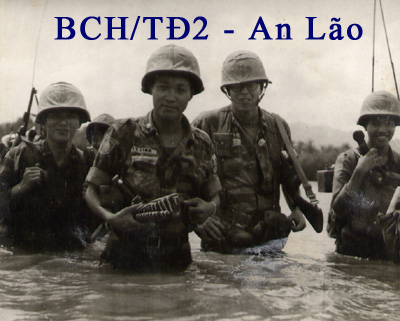
Chiến Đoàn B/TQLCVN hành quân An Lão 1967 Thung lũng An Lão thuôc tỉnh Bình Định, nối dài với thung lũng Vĩnh Thạnh rồi đi qua đèo An Khê, hoặc đổ ra Tam Quan, thuôc quận Bồng Sơn để ra tận bờ biền ở phía Đông. Vì địa thế có vị trí chiến lược quan trọng, nên QLVNCH đã cho thành lập Chi Khu An Lão, cách quận lỵ Bồng Sơn 25 cây số về hướng Tây Bắc; mục đích ngân chận sự xâm nhập của các lực lượng cộng sản từ các mật khu ở ngã ba Biên Giới, mật khu Đỗ Xá ... xuống vùng đồng bằng trù phú và đông dân cư của tỉnh Bình Định.
Giữa năm 1965, Chiến Đoàn A-TQLC của Trung Tá Nguyễn Thành Yên CĐT, và Thiếu Tá Cổ Tấn Tinh Châu TMT/CĐ, cùng với Tiểu Đoàn 1/TQLC do Thiếu Tá Tôn Thất Soạn TĐT và Tiểu Đoàn 3/TQLC của Thiếu Tá Nguyễn Thế Lương TĐT, đã tham dự cuộc hành quân tìm và diệt địch tại thung lũng An Lão. TĐ1 đã tiến chiếm mục tiêu đồi 193, có tên địa phương là đồi Thánh Giá, vì có xây cất một Thánh Giá kích thước rất lớn bằng bê-tông cốt-sắt, sơn màu trắng xóa, sừng sửng trên cao, giữa nền xanh biết của núi non, hiểm trở. A. Bộ Chỉ Huy Chiến Đoàn:
- Pháo Binh: Ngoài pháo đội 105 ly TQLC đặt tại phi trường Đệ Đức, còn có thêm 2 khẩu 155 ly của SĐ22/BB đặt tại phi trường Bồng Sơn và còn có những pháo đội 105 ly của Kỵ Binh Không Vận (KBKV) HK đặt rải rác trên các cao điểm trong vùng hành quân để yểm trợ cho CĐ-B/TQLC khi có yêu cầu. Vào ngày N giờ G của trung tuần tháng 3-1967, CĐ-B/TQLC tổ chức cuộc hành quân “Tìm và Diệt” các đơn vị CSBV cấp tiểu đoàn đang ẩn núp trong khu vực thung lũng An Lão, tiếp theo sau khi đơn vị 1st CAV (KBKV) HK rời khỏi vùng An Lão. Lúc 4 giờ sáng ngày N, Chiến Đoàn xuất phát từ vị trí đóng quân đêm ở phí Bắc Quận Lỵ Bồng Sơn di chuyển về hướng Bắc, dọc theo sông An Lão. TĐ3 cánh trái, TĐ2 cánh phải của bờ sông. BCH/CĐ di chuyển cùng với TĐ2. Hai cánh quân di chuyển song song và theo thế chân vạc để yểm trợ lẫn nhau.
Sáng sớm ngày N + 1, sau khi TĐ3 lợi dụng bóng đêm ngày N, đã bọc hậu sau lưng vị trí chốt của địch, và tiến lên lục soát MT mà đã được pháo binh và không quân oanh kích trong ngày N đầu tiên. TĐ3 tìm thấy 3 tử thi VC tạm nguyên dạng và vài tử thi khác nát từng mảng, ước lượng khoảng 1 tiểu đội. Không tìm thấy vũ khí, chỉ thấy những mảnh kim loại của các vũ khí cá nhân... Ngoài ra còn 2 vị trí khác không thể ước lượng vì những đợt bom đã đè sập các hốc đá... TĐ3 tiếp tục tiến quân vào các MT nghi ngờ kế tiếp. Khi TĐ3 đi ngang hàng so với vị trí của TĐ2 đang bố trí phía bờ Đông của sông An Lão, thì có L-19, do Trung Úy phi công Phil Jones (3) bay vào không phận để làm việc với Cố Vấn Chiến Đoàn B. Thiếu Tá Larry Gabaury, đã chuyển cho Đại Úy Mac xử dụng. Sau khi trao đổi tình hình, Mac yêu cầu Phil quan sát kỷ trên đồi trước mặt của TĐ3 đang tiến quân! VI. Nhận Xét: 1. Thung lũng An Lão, luôn luôn là mục tiêu tranh chấp giữa ta và địch trong suốt cuôc chiến tranh vừa qua; Được bao bọc giữa 2 dãy núi cao, là đường xâm nhập từ các mật khu Đỗ Xá, Ba Biên Giới ở Tây Nguyên... xuyên qua Tam Quan để đi ra tận vùng duyên hải ở phía Đông. CSVN đã tự hào rằng trong suốt 9 năm chiến tranh Việt-Pháp, An Lão là một mật khu an toàn nhất của chúng. Chúng thường truyền khẩu trong dân địa phương rằng: “Suối Đỏ ai qua là bỏ mạng!”, ý muốn nói không sống mà trở về được; Con suối này chảy vào đầu nguồn của sông An Lão. |